

A senior dog doesn’t automatically need a supplement cabinet. The questions to ask your vet about senior dog supplements should start with what your dog’s diet and health actually need. Options may include omega fatty acids, probiotics or prebiotics, glucosamine and chondroitin for joint support, or targeted eye and bladder support. A balanced diet may already provide the nutrients your dog needs, so the right choice depends on the specific concern you want to address.
It’s natural to want to ease stiffness, support digestion, or help your companion stay bright and active as they age. This guide explains how nutritional needs can change, which supplement types may be worth discussing, and what to ask about safety, suitability, and monitoring a new routine. Sharing your dog’s food, medications, and supplement labels with the veterinarian is an important step before adding anything new.
Key Takeaways
- Match a supplement to a specific concern, such as joint comfort, digestion, or skin and coat health, rather than adding products without a clear goal.
- Consider how age-related changes in activity, appetite, and body condition may affect your dog’s nutrition and daily needs.
- Ask how omega-3s may fit your dog’s health priorities, including inflammation and cognitive function.
- Bring your dog’s food, medication list, and supplement labels to the vet so you can discuss safety, suitability, and how to monitor changes.
1. What supplements should I give my senior dog?
Start with the need, not the supplement shelf. Glucosamine and chondroitin are common ingredients for joint support, while omega fatty acids, probiotics, prebiotics, and targeted eye or bladder support may suit other concerns. A dog eating balanced food may not need an extra vitamin. Match any addition to a specific health goal and your dog’s existing diet.
For arthritis or joint pain, glucosamine and chondroitin may support joint health, but they aren’t a substitute for diagnosing osteoarthritis or treating pain. Osteoarthritis affects approximately 80% of dogs over 8 years old. A typical veterinary guideline for a 50-lb dog is around 500 mg of glucosamine daily, but that is not a dose to apply automatically. Ask about your dog’s weight, other conditions, and current medications. Joint and soft-tissue supplements may take 6-8 weeks of consistent use before visible results appear.
Monthly supplement costs in the United States vary by ingredient, dose, dog size, and whether the routine includes one product or several. Ask for a plan that prioritizes your dog’s needs before comparing formats or considering multiple supplements.
New Zealand deer velvet is another ingredient marketed for joint health. Ask what role it would serve in your dog’s routine, what evidence supports its use for the specific concern, and whether it could interact with current medications. Describe mobility changes clearly, such as hesitation on stairs or difficulty getting up.
Don’t assume a human vitamin or a “natural” product is suitable for dogs. The risk of a potentially toxic ingredient depends on the exact ingredient and amount. Bring the full label so your vet can review it alongside your dog’s medications and health conditions.
Introduce one new supplement at a time and record changes in comfort, stool, or activity. This makes it easier to spot unwanted effects and assess whether the product is helping with your dog’s joint or mobility concerns.
2. How do nutritional needs change as dogs age?
Age alone doesn’t determine a dog’s nutrient needs. Veterinarians commonly consider dogs senior at 7 years old, while some large breeds may reach senior age around 5 years old. Another guide is lifespan: senior status may begin when a dog reaches 75% of its expected lifespan. For a dog expected to live 10-12 years, that can mean around age 8 onward.
Activity often changes with age. A less active older dog may need fewer daily calories to maintain a healthy body condition, while adequate protein helps preserve lean muscle. Many senior dogs need diets lower in fat and higher in protein than younger adults. Assess appetite, weight, muscle, and mobility together. Arthritis or digestive changes can affect what a dog eats and how well they manage their routine.
Supplements aren’t automatically necessary. A senior dog eating a balanced diet suited to its needs may already receive essential nutrients. Ask whether a specific issue calls for targeted support rather than adding a general vitamin without a clear purpose. When choosing food, look for an AAFCO statement of nutritional adequacy. The word “senior” on a label alone doesn’t establish that the food meets a particular nutrient profile.
Possible options depend on the concern. Veterinarians may consider omega fatty acids, probiotics, digestive enzymes, vitamin B complex, vitamin E, or joint-support ingredients such as glucosamine. Omega-3s from EPA and DHA sources are worth discussing; dogs don’t efficiently convert plant-based ALA into these fatty acids. Ask how the ingredient fits your dog’s food, medications, and health history.
Joint supplements are used more often for larger and older dogs, but age or size alone doesn’t show that a supplement is needed. For an older dog with changing mobility, discuss the cause and the goal of any added nutrient. If you’re exploring broader whole-body nutrition support, consider how it fits your dog’s individual diet and care plan.
3. Omega-3 fatty acids for inflammation and cognitive function
Omega-3 fatty acids, especially EPA and DHA, have the strongest support among fatty acids for dogs with osteoarthritis. They may help modulate inflammation and support joint comfort, but they don’t replace diagnosis or a broader pain-management plan. Ask how an omega-3 product fits alongside joint supplements and any medication your dog takes.
For skin and coat, omega-3s may support a healthier appearance; coat improvements usually become apparent after 4-6 weeks. These fats may also support cognitive function, although a supplement isn’t a treatment for every behavior change. Track practical examples, such as coat condition, willingness to walk, or changes in sleep, and share them at follow-up.
Source matters. Dogs don’t efficiently convert plant-based ALA into EPA and DHA, so discuss products that provide EPA and DHA directly. Your dog’s weight, usual food, health conditions, and medications all matter when deciding whether supplementation suits their routine. Bring the product label and note how much your dog eats, especially if appetite or weight has changed.
Omega-3s also appear in research on broader aging and cognition. A review described enriched diets combining omega-3s with 5.5% MCTs or 9% MCTs as improving all DISHAA domains after 90 days. This finding concerns enriched diets, not a promise that any single supplement will produce the same result. Ask what outcome the plan targets and how you’ll record it.
Use a simple monitoring plan: record mobility, skin and coat changes, appetite, and any digestive upset. Note when the supplement starts, then bring your observations to the next checkup. Tell the veterinarian if your older dog has a disease or takes medication. These details help distinguish a useful change from normal day-to-day variation and keep whole-body support aligned with your dog’s health needs.
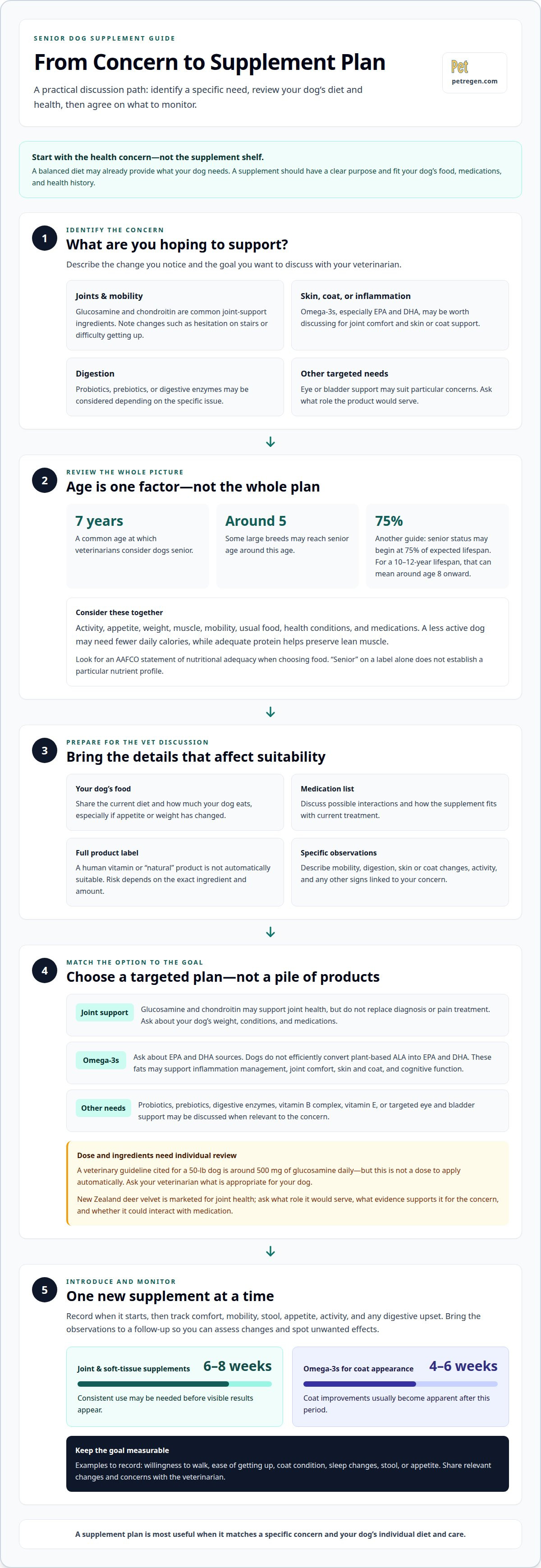
4. Questions to discuss with a veterinarian before choosing supplements
Bring your aging dog’s food, medication list, and supplement packaging to the appointment. Exact ingredients and amounts help the veterinarian assess suitability, especially if your dog has kidney or liver disease, has planned anesthesia, or is receiving treatment. Describe practical changes too, such as reduced activity, difficulty rising, appetite shifts, or muscle loss.
Ask: “What specific need should this supplement address, and how will we measure progress?” A clear goal might be steadier mobility, improved stool, or better skin condition. Then ask whether the ingredients duplicate nutrients in your dog’s food, whether the product fits their health history, and when to review the plan.
There is no single safe dose for every senior dog. The amount depends on the ingredient, body weight, product concentration, and health conditions. Ask for a dose and schedule tailored to your dog, including how kidney or liver disease and current medication affect the recommendation.
Yes, supplements can interact with prescription medications and other supplements. Tell the veterinarian about every product your dog takes, including CBD, and bring each label so the ingredients can be reviewed together.
When choosing a brand, ask which product the veterinarian recommends for your intended goal and what evidence supports its ingredients. A National Animal Supplement Council quality seal reflects quality-control and labeling standards, as well as audits; it doesn’t establish that a product will deliver a specific result. Check the full label rather than relying on claims such as “senior formula.”
Agree on a monitoring plan before starting. Record the start date, activity, mobility, appetite, stool, and any changes in comfort. Ask what unwanted effects to watch for and when to schedule a recheck. Senior dogs benefit from regular wellness checks that assess body condition, muscle, dental health, cognition, nutrition, and mobility. Write down the veterinarian’s assessment, agreed plan, monitoring instructions, and recheck date.
Once you have a veterinary plan, explore whole-body wellness support as a supplement option to discuss in that context.
Have the veterinarian set the dose and schedule after reviewing your dog’s weight, the product’s concentration, health conditions, and medications. A general senior-dog formula isn’t enough information to choose an amount.
PetREGEN: PetREGEN Stem Cell Activator Supplement
PetREGEN Stem Cell Activator Supplement is a nutritional option for owners exploring whole-body support for an aging dog. Its formula includes human-grade ingredients such as amino acids, omega 7, and collagen, and is designed to support the body’s natural regenerative function by enhancing immune function.
PetREGEN may be relevant if you’re looking for broader support for healthy aging, mobility, and recovery, rather than a replacement for a targeted arthritis supplement or veterinary treatment. Before adding it to your dog’s routine, bring the ingredient list to your veterinarian and discuss how it fits with your dog’s diet, health conditions, and current medications. This keeps the choice aligned with your dog’s individual care plan.
To learn more about PetREGEN Stem Cell Activator Supplement, visit petregen.com.
Make your dog’s next step a thoughtful one
Your dog’s needs can change, so focus your next conversation on what matters most to them now. Choose one priority, such as enjoying walks, eating comfortably, or staying engaged with familiar routines. Bring your questions about senior dog supplements to your next appointment and work with your veterinarian on a clear, practical plan.
A supplement should have a clear purpose within your dog’s broader care, not be another product added without a reason. If you’re considering whole-body support as part of that plan, explore PetREGEN Stem Cell Activator Supplement and discuss its suitability with your veterinarian.
Visit PetREGEN to learn more. A considered next step can help you support your companion with care and confidence.
Frequently Asked Questions
What supplements should I give my senior dog?
Choose a supplement to address a defined concern, rather than your dog’s age alone. Among the questions to ask your vet about senior dog supplements, ask which health goal a product is intended to support and what changes to monitor. For example, note when your dog avoids a favorite activity or whether a digestive change follows a food adjustment. Specific observations help focus the discussion.
Are all-in-one supplements as effective as individual products?
Effectiveness depends on the formula and its intended goal. A systematic review found that multi-nutrient formulas performed better than single ingredients for age-related cognitive decline in dogs and cats. That finding doesn’t mean every combination product is suitable for every dog. Compare the listed ingredients with the concern you want to address, and ask whether the formula’s amounts fit your dog’s existing diet and care plan.
Do senior dogs need a multivitamin?
Not automatically. A dog eating complete and balanced food generally meets its nutrient requirements, so a multivitamin may not address a specific concern. One of the questions to ask your vet about senior dog supplements is whether your dog’s diet leaves a particular nutritional need unmet. Bring the food label and mention recent appetite changes or dietary restrictions to make the discussion concrete.
How do I know if a dog supplement is good quality?
Read the full label for ingredient amounts, intended use, and manufacturer quality information. You can ask for a current certificate of analysis for the specific batch, which describes its contents. A seal or marketing claim alone doesn’t show that a product suits your dog. Bring the packaging to the appointment and ask which label details matter given your dog’s health history.
How do nutritional needs change as dogs age?
Needs may shift with changes in activity, appetite, body condition, and muscle, but every dog’s pattern is different. Keep a simple record of meals, walk length, and weight trends, then compare it with earlier observations. For example, shorter walks alongside a changing appetite give the veterinarian useful context for reviewing food portions and whether the current diet remains appropriate.
How do you choose the right supplement for your dog?
Start with one concern and define what you’ll monitor, such as willingness to climb steps or recurring digestive changes. Ask how the product’s ingredients relate to that goal and fit with your dog’s food and care history. Keep the label and a brief observation log together to make it easier to review your choice and discuss whether to continue the routine.


