

Weaning a dog off NSAIDs with supplements should follow your veterinarian’s plan. Supplements are not an automatic replacement for pain medicine. Watch for reduced appetite or activity, vomiting, diarrhea, jaundice, changes in thirst, or skin changes. If you notice a possible side effect, stop giving the NSAID and contact your veterinarian immediately.
It’s understandable to hope a supplement can support your dog’s comfort while reducing medication. Fish oil may help some dogs need less NSAID, but it can interact with other products. Changing a prescribed dose without veterinary guidance can leave pain and inflammation uncontrolled.
This article explains which warning signs matter, why fish oil and other supplements need a medication review, and what to discuss with your veterinarian before adjusting treatment. A clear plan can help protect your dog while keeping comfort and mobility in view.
Key Takeaways
- Bring your dog’s full list of medications and supplements to the veterinary discussion before changing pain treatment.
- Learn which changes can signal an NSAID side effect and why prompt action matters.
- Understand how medication combinations and switching between NSAIDs can affect a safe transition plan.
- Explore what to discuss about fish oil and other supplements as part of your dog’s broader comfort and mobility support.
Discussing joint supplements and other products with a veterinarian
Plan supplements alongside your dog’s NSAID regimen, not as a replacement for it. Share every medication and product with your veterinarian, then agree on monitoring and any dose changes.
Veterinary Guidance for Supplement Use
Before adding supplements or other products to an NSAID regimen, review them with your veterinarian. Bring labels or ingredient lists for joint products, fish oil, and anything given occasionally. Mention previous vomiting or digestive upset, liver or kidney disease, and other medicines. Supplements aren’t regulated like medications, and companies don’t have to prove effectiveness before selling them, so an ingredient name alone doesn’t establish safety or benefit.
NSAID Dose Reduction and Pain Monitoring
When pain is well controlled, a veterinarian may reduce the prescribed NSAID dose or give it less often. Don’t change the dose or schedule yourself. During a planned reduction, watch for returning pain, such as stiffness after rest, reluctance to walk or climb, limping, reduced activity, or difficulty rising. Tell the veterinarian what changed and when. These observations can help distinguish renewed osteoarthritis discomfort from a possible medication problem and guide the next treatment decision.
Exams and Lab Monitoring
Long-term NSAID use calls for follow-up exams and laboratory monitoring, because bloodwork can reveal changes in liver or kidney function. NSAID labels recommend baseline laboratory tests before treatment, with periodic testing during use. For chronic use, veterinarians often recommend an exam and repeated testing at least every six months. They may repeat screening within a few weeks of starting treatment to look for hidden effects. Discuss a schedule suited to your dog’s condition and treatment.
Comparing Joint Supplements and Other Treatments
In the United States, joint supplement costs vary with ingredients, concentration, serving size, and format; compare cost per labeled serving rather than bottle price. Omega-3 fatty acids, glucosamine, and chondroitin sulfate are options veterinarians may discuss for osteoarthritis, but a supplement shouldn’t be assumed to replace prescribed pain control. Ask about suitability and evidence for your dog. Also discuss non-drug support, such as weight management, adjusted activity, or rehabilitation. Include carprofen and any steroidal anti-inflammatory drug on the medication list.
Gastrointestinal, kidney, liver, and blood-clotting adverse effects
NSAID side effects can affect digestion, kidney or liver function, and blood clotting. Recognizing changes early matters because some effects can become serious.
Recognizing Warning Signs
Warning signs include reduced appetite or activity, vomiting, diarrhea, increased thirst, jaundice, and skin changes. Dark stools can signal bleeding in the digestive tract. More severe effects include ulcers, perforations, kidney injury, liver problems, and bleeding. Prolonged use or high doses can damage the kidneys or liver, while dehydration can raise the risk of kidney injury. Aspirin can also interfere with clotting and cause uncontrolled bleeding.
There isn’t one standard dose of glucosamine, chondroitin, and omega-3 that fits every dog by weight. A general fish-oil approach starts at 500-600 mg daily, with a later increase to 1000-1200 mg daily. These amounts aren’t weight-based guidance for every product; the EPA and DHA content and your dog’s size matter. Ask the veterinarian to determine an appropriate dose.
Metacam is a brand of meloxicam, an NSAID, and aspirin is also an NSAID. Devil’s claw may increase the risk of adverse events when combined with an NSAID. Dogs shouldn’t receive two NSAIDs together or an NSAID with a corticosteroid such as prednisone. Tell the veterinarian about these products and any history of kidney, liver, heart, or digestive problems.
Responding to a Suspected Side Effect
If your dog develops a possible side effect, stop giving the NSAID and contact the veterinarian immediately. Share the medication name, prescribed dose, timing, and symptoms, such as vomiting or diarrhea. Don’t give another dose while waiting for instructions. If your dog took more than prescribed, contact a veterinarian or local emergency veterinary center immediately. An overdose needs prompt advice, even before symptoms appear.
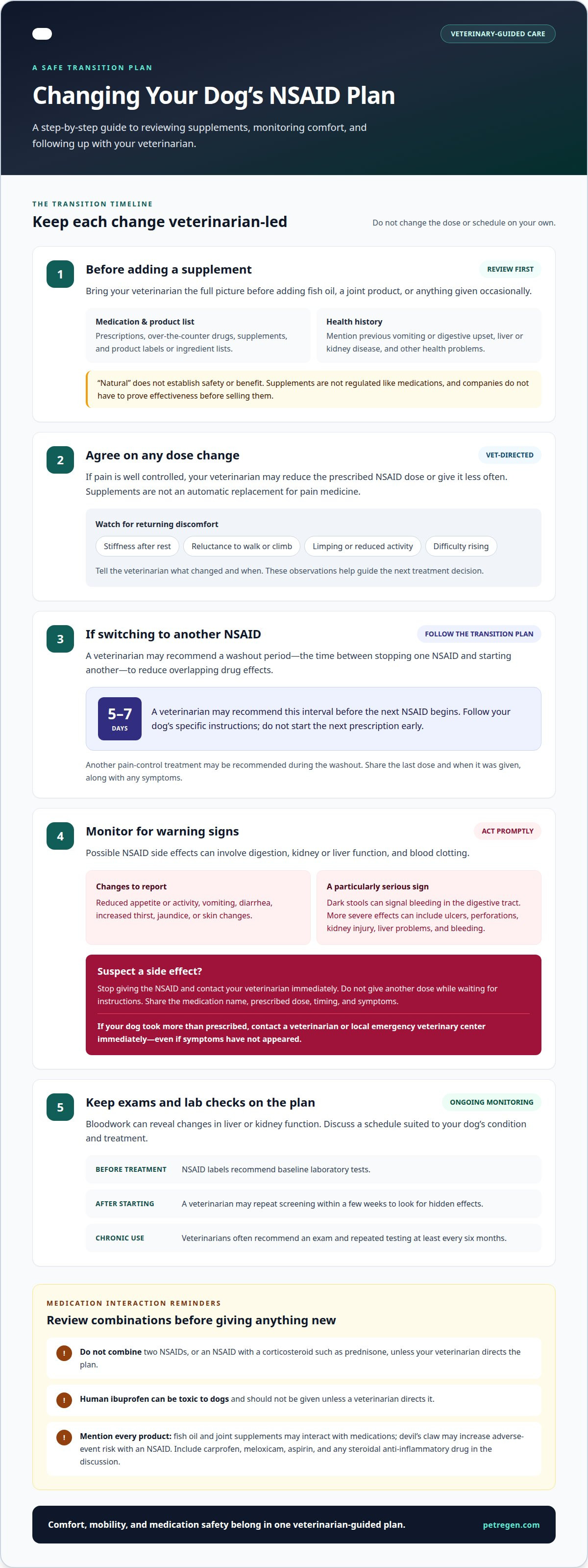
NSAID interactions with medications and supplements
Medication combinations can change the risks of NSAID treatment. Give your veterinarian a complete list of prescriptions, over-the-counter drugs, and supplements to help plan care safely.
Fish oil and joint supplements may interact with medications, so discuss each product with your veterinarian before giving it alongside carprofen, meloxicam, or another dog NSAID. Don’t assume a supplement is safe just because it’s natural or commonly used.
Medication Washout Periods
A washout period is time between stopping one NSAID and starting another, allowing the first drug to leave the body. When switching NSAIDs, a veterinarian may recommend five to seven days before the next medication begins. The interval helps reduce the risk of overlapping drug effects, including gastrointestinal harm.
Follow the specific transition plan rather than starting the next prescription early. During the washout period, the veterinarian may recommend another pain-control treatment. Share the last dose and when it was given, along with any symptoms, so the plan accounts for the medication already in your dog’s system.
Interactions in Treatment Plans
A treatment plan accounts for how every medication and supplement may affect your dog when used alongside an NSAID. Aspirin, another NSAID, and corticosteroids such as prednisone can raise the risk of serious adverse effects when combined. Human ibuprofen can also be toxic to dogs and shouldn’t be given unless a veterinarian directs it.
Rimadyl is a brand of carprofen, and meloxicam is another NSAID. Don’t combine either with a second NSAID without explicit veterinary direction. Tell the veterinarian about prescriptions for inflammatory disease, occasional medicines, and supplements, including glucosamine, chondroitin, and fish oil. Product names, ingredients, doses, and timing help identify possible interactions.
Supplement ingredients can vary, and a label alone doesn’t show how a product fits with your dog’s medications. Before adding or stopping a product, discuss the full regimen and the reason for each item. This gives the veterinarian a clearer basis for balancing pain control, interaction risks, and your dog’s overall health.
Fish oil supplements and NSAID use
Fish oil is one supplement a veterinarian may consider alongside NSAIDs for dogs with osteoarthritis. It may allow some dogs to take less NSAID, but it doesn’t replace a veterinarian’s pain-control plan. When considering weaning a dog off NSAIDs with supplements, remember that medication changes remain part of veterinary care. Don’t reduce carprofen, meloxicam, or another prescribed drug yourself.
Before giving your dog fish oil, discuss the specific product and its serving instructions with the veterinarian. Share the label and list every medication or supplement your dog takes. The appropriate amount of fish oil depends on the product and your dog, so ask the veterinarian for serving guidance. Those amounts aren’t a weight-based prescription for every dog; the product and your dog’s health matter. Ask how the veterinarian wants the supplement introduced.
Keep a simple record of your dog’s mobility as the plan changes. Note walks, stair climbing, rising after rest, limping, and interest in play. Record when fish oil starts and when the NSAID schedule changes. If you’re weaning a dog off NSAIDs with supplements, these observations can help the veterinarian assess changes in comfort and decide whether the treatment plan needs review.
After introducing fish oil, watch for new reactions such as appetite changes, vomiting, or diarrhea, and tell the veterinarian when they occurred. Avoid introducing several new supplements at once, which makes it harder to identify a possible link to symptoms. Fish oil can be considered as part of broader osteoarthritis support, while NSAID adjustments should follow veterinary direction.
Fish oil is the supplement identified here as a possible aid for managing canine osteoarthritis pain. It may help some dogs take less NSAID, but use it with veterinary guidance, not as a replacement for prescribed pain control.
PetREGEN: PetREGEN Stem Cell Activator Supplement
PetREGEN Stem Cell Activator Supplement supports a dog’s natural regenerative function and whole-body wellness. Its ingredients include amino acids, omega 7, collagen, real liver, and phytonutrients, formulated to support immune function, mobility, recovery, and healthy aging.
Fish oil may be worth discussing as part of your dog’s broader wellness plan, but it isn’t a replacement for prescribed NSAIDs or veterinary care. Before adding it during treatment or a dose change, share its ingredients with your veterinarian and ask how it fits your dog’s medications and health needs. Keep following the prescribed NSAID plan unless your veterinarian directs a change.
To learn more about PetREGEN Stem Cell Activator Supplement for your dog, contact PetREGEN.
Build a thoughtful plan for your dog’s next chapter
Weaning a dog off NSAIDs with supplements is about more than changing medication. It’s an opportunity to define what comfort and a good day look like for your companion, then bring those priorities to ongoing conversations with your veterinarian. A favorite walk, easier rising, or more interest in play can help shape meaningful goals for your dog’s care plan.
PetREGEN Stem Cell Activator Supplement is designed to support natural regenerative function, mobility, recovery, and healthy aging. Consider it as part of your dog’s broader wellness routine, while keeping medication decisions and pain treatment under veterinary guidance. Your veterinarian can help determine how it fits your dog’s individual care plan.
For a caring next step, contact PetREGEN about your dog and learn more about its supplement. Thoughtful support and a veterinarian-guided plan can help you focus on the moments that make your dog’s days brighter.
Frequently Asked Questions
What side effects should you watch for?
Watch for appetite or activity changes, vomiting, diarrhea, increased thirst, jaundice, and skin changes. Dark or tarry stools may indicate digestive bleeding and need prompt veterinary attention. Note when signs began, the most recent NSAID dose, and any recent medication or supplement changes. This timeline gives the veterinarian useful context when assessing whether symptoms may relate to treatment or another health issue.
Can My Dog Take Supplements While on NSAIDs?
Some dogs take supplements alongside NSAIDs, but discuss each product with the veterinarian before adding it. Fish oil, glucosamine, and chondroitin are among the supplements that may be considered in a joint-care plan. Ingredients and combinations matter: devil’s claw may raise the risk of adverse events with an NSAID. Bring the full label, including serving directions, so the veterinarian can review the specific product.
Can NSAIDs cause harm?
Yes. NSAIDs can cause gastrointestinal ulcers or bleeding, kidney injury, and liver problems; serious reactions can be life-threatening. Risk also depends on a dog’s health and circumstances, including dehydration or existing kidney, liver, heart, or digestive problems. Human pain relievers such as ibuprofen and naproxen can be toxic to dogs. Give only medication prescribed for that dog, exactly as directed.
If NSAIDs can be harmful, why does my vet recommend them?
Veterinarians prescribe NSAIDs because they can relieve pain and inflammation, including discomfort from osteoarthritis or after surgery. For a dog struggling to rise, walk, or rest comfortably, pain control can support everyday mobility. NSAIDs manage symptoms rather than cure osteoarthritis, so the veterinarian weighs expected relief against health risks and monitors treatment as the dog’s condition changes.
Is there a way to reduce the chance of adverse effects?
Follow the prescription label, give the NSAID with food, and don’t increase the dose or frequency without veterinary direction. Share all medications and supplements, including occasional products, before treatment changes. Veterinary exams and laboratory tests can help monitor your dog during ongoing use. Never combine an NSAID with aspirin, another NSAID, or a corticosteroid such as prednisone unless the veterinarian specifically directs it.
Can dogs safely stop NSAIDs suddenly, or should the dose be tapered?
Don’t stop or taper an NSAID on your own. If it’s discontinued, osteoarthritis pain and inflammation may return. When pain is controlled, a veterinarian may lower the dose or give it less often. Follow the prescribed schedule until you receive an updated plan. If side effects appear, stop giving the NSAID and contact the veterinarian immediately for instructions about the next dose.


