

A cat may start feeling better within several days of stomatitis surgery, but recovery takes longer than the first signs of relief. Extraction sites typically heal within two to four weeks, while the full inflammatory response may take several months to resolve. Supplements for feline stomatitis recovery may support overall wellness, but they cannot determine how quickly a cat’s mouth heals.
It’s understandable to watch each meal and wonder whether your cat is recovering on schedule. Healing, inflammation, and comfortable eating do not always progress at the same pace, so a slow return to normal can feel worrying.
This guide explains what recovery timelines can look like, what follow-up care commonly involves, and how soft food and other comfort measures can help. You’ll also learn where collagen fits into discussions of oral tissue support, and why supplements are supportive care, not a substitute for veterinary treatment and monitoring.
Key Takeaways
- Follow-up visits commonly include progress and viral rechecks after 4 weeks, with ongoing veterinary oral-health monitoring after recovery.
- Soft food helps protect healing sites; hard kibble and crunchy treats can disturb them during recovery.
- Contact a veterinarian if your cat refuses food, has persistent bleeding or significant swelling, vomits after medication, becomes severely lethargic, or still appears painful.
- Collagen is a major component of gums and teeth, but a supplement is supportive care, not a replacement for treatment or follow-up.
- Wait for veterinary guidance before restarting tooth brushing, water additives, or other at-home oral care.
Recovery timelines and follow-up care
Healing, inflammation, and symptom relief follow different timelines after stomatitis treatment. Follow-up helps track oral recovery and identify complications early.
Monitoring Recovery and Complications
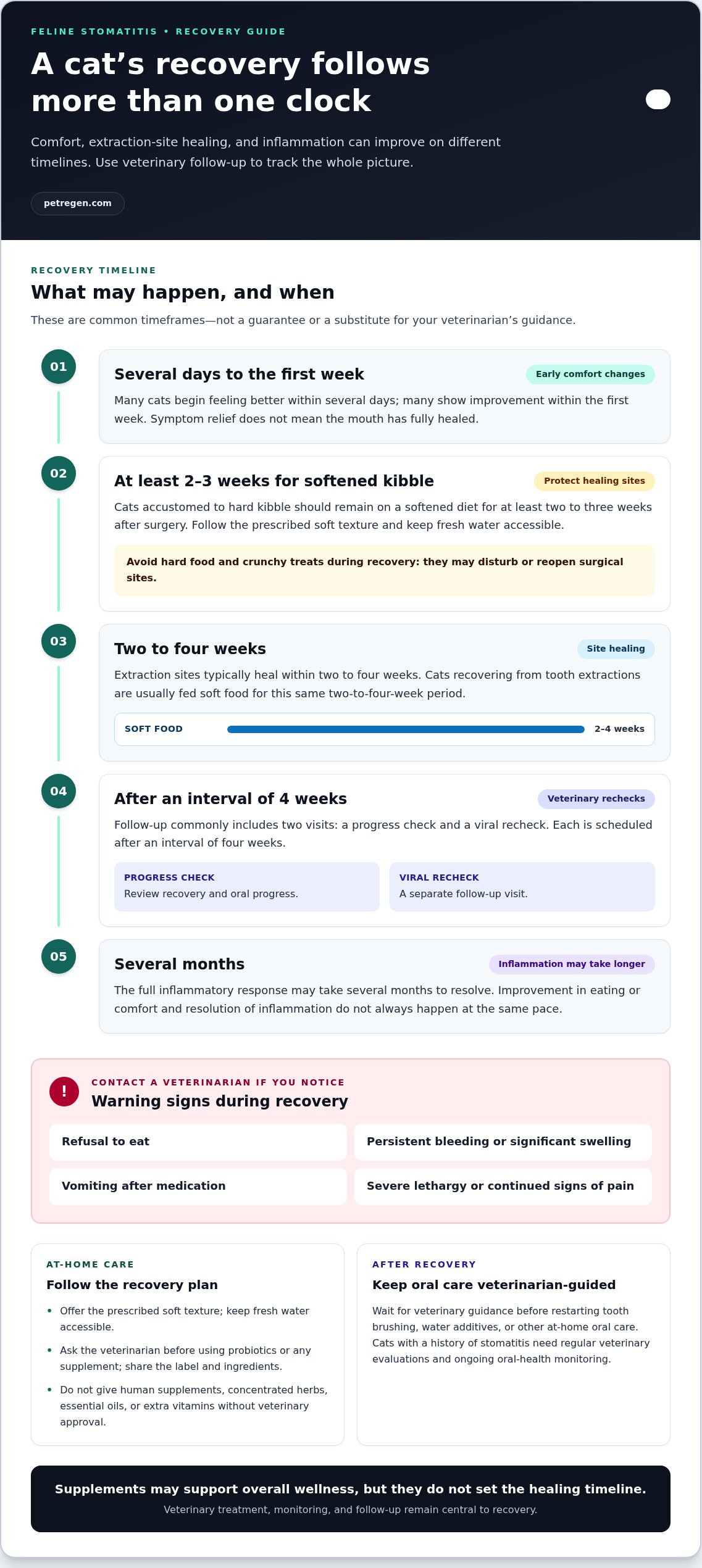
Monitor eating, comfort, swelling, and bleeding as extraction sites heal. Many cats begin feeling better within several days after surgery, while extraction sites typically heal within two to four weeks. The immune response involved in this disease can persist, so symptom improvement and full resolution of inflammation may not happen at the same time.
A progress-check visit and a viral-recheck visit are each scheduled after an interval of 4 weeks. During recovery, seek veterinary assessment if your cat refuses food, has persistent bleeding or significant swelling, vomits after medication, becomes severely lethargic, or still appears painful. These changes can affect hydration, nutrition, and recovery.
In the long term, cats with a history of stomatitis need regular veterinary evaluations and oral-health monitoring. After treatment, the veterinarian should determine when to resume brushing, water additives, or other at-home oral care. Restarting too soon may irritate healing tissue, while a tailored plan helps maintain oral health once recovery permits.
Diet and Nutritional Support
Soft food protects healing sites and makes meals easier to manage. Cats recovering from tooth extractions are usually fed soft food for two to four weeks. Cats accustomed to hard kibble should remain on a softened diet for at least two to three weeks post-op. Crunchy treats and hard food may reopen surgical sites during recovery.
Offer the prescribed soft texture and keep fresh water accessible. If your cat hesitates to eat during the first few days after surgery, the veterinarian may prescribe an appetite stimulant. Probiotics may support digestive balance, but they do not treat stomatitis or replace dental treatment. Discuss their use with your veterinarian.
Supplement Dosing and Veterinary Approval
Use supplements only at a dose suited to the cat and product, and have the veterinarian approve them alongside prescribed medication. There is no single dose for every supplement or cat. Share the product label and ingredient list, especially if your cat has other health conditions or takes medication, so the veterinarian can assess possible interactions.
Do not give human supplements, concentrated herbs, essential oils, or extra vitamins without veterinary approval. Cats can respond differently to ingredients and doses intended for people, and adding products during recovery can complicate care. Follow the product’s cat-specific directions rather than estimating a dose based on your cat’s size.
Feline chronic gingivostomatitis and its causes
Feline chronic gingivostomatitis, often called FCGS, causes severe, persistent inflammation inside a cat’s mouth. Estimates place its prevalence between 0.7% and 12% of cats, reflecting differences across populations and diagnosis. The condition is believed to involve an abnormal immune response, so it cannot always be prevented through routine dental care.
Inflamed tissue can make eating painful and affect a cat’s daily comfort. Signs may include red, swollen gums, drooling, bad breath, pawing at the mouth, or reluctance to eat. These symptoms need veterinary assessment because oral pain and inflammation can have different causes. An examination helps distinguish FCGS from other dental disease.
For persistent FCGS, veterinarians generally recommend partial- or full-mouth tooth extraction as the current treatment approach. Removing all or most teeth addresses dental surfaces associated with ongoing inflammation. Studies report success rates of 67-90% for dental extractions when performed properly, while full or near-full extraction leads to complete or near-complete symptom resolution for most cats. Supplements cannot replace dental treatment, diagnosis, or prescribed medication.
Omega-3 fatty acids may come up in discussions of nutrition and inflammation, but they should not be presented as a proven treatment for FCGS. No supplied evidence establishes that omega-3 supplements resolve oral inflammation or prevent recurrence. Use them only as nutritional support when they fit the cat’s overall care plan, not instead of veterinary dental treatment.
Supplement ingredients can affect a medication plan, so share every product label with the veterinarian before adding anything. This is especially important when a cat receives prescription pain medication or other treatment for oral disease. A veterinarian can review ingredients, health conditions, and existing medicines together, reducing the chance of an unsuitable combination or confusion about treatment response.
FCGS management may involve dental procedures, pain control, and continued monitoring, depending on the cat’s signs and examination. Because an abnormal immune response is believed to contribute, treatment focuses on managing the disease and supporting comfort, not promising prevention. Keep a record of changes such as eating less, renewed drooling, or worsening mouth discomfort. These details help the veterinary team assess the response and plan follow-up care.
Feline stomatitis affects up to 10% of cats. About 10% of the feline stomatitis cases treated by the clinician are already diabetic. These figures describe prevalence and the cases seen in clinical care.
Recovery and inflammation timelines
After feline stomatitis surgery, improvement and complete healing rarely happen on the same schedule. Many cats show improvement within the first week, and some begin feeling better within several days. Extraction sites typically heal within two to four weeks, while comfortable eating often returns within a few weeks after full-mouth extraction. These milestones describe different changes: less pain, healed tissue, and easier meals. A cat may eat more comfortably before inflammation has fully settled.
Inflammation can continue after the surgical wounds have healed. The full inflammatory response may take several months to resolve, and improvement in FCGS inflammation may take 3-6 months after treatment. That gap helps explain why a cat’s mouth may still look irritated after early recovery. Healing tissue and lingering immune activity are not necessarily signs of infection, but worsening symptoms or renewed pain deserve veterinary attention.
Reported outcomes vary across studies and outcome definitions. One summary reports that 60 to 80 percent of cats experience substantial improvement or full resolution after complete tooth extraction. Other reported figures distinguish complete remission, at 28.4-57% of patients, from substantial improvement, at 35-39%. About 90% of cats undergoing partial- or full-mouth extractions are also reported to have complete symptom resolution. These figures should not be treated as one directly comparable result: treatment extent and the definition of improvement differ.
Conventional treatment can have a shorter symptom-relief pattern. Relief may begin within 24-48 hours, then last about 1-3 weeks. This temporary response differs from the longer recovery trajectory after extraction, and the two timelines shouldn’t be confused. A brief return of symptoms after medication may reflect the limited duration of relief, while persistent or worsening signs need reassessment.
Track practical signs of quality of life, such as willingness to eat, grooming, and comfort during meals. Record changes alongside medication or treatment dates to give the veterinary team useful context when assessing the response. Follow-up matters even when a cat seems normal, because symptoms can improve before inflammation resolves. A tailored oral-health plan supports overall health, while supplements cannot shorten surgical healing or replace treatment for active disease.
Timing alone does not capture every cat’s response. Many cats with stomatitis begin showing signs of improvement within the first week after treatment, but that early change is only one part of assessing progress. Keep the difference between an initial sign of improvement and the later course of inflammation in mind when judging how your cat is doing. Consider a slow or uneven response alongside your cat’s comfort, eating, and veterinary follow-up, rather than judging by one observation.
FeLV status is also relevant to expectations: FeLV-positive cats with feline chronic gingivostomatitis have 7.5 times the chance of showing no improvement after treatment compared with other cats. This difference provides context when discussing a cat’s response, but does not establish the outcome for an individual cat. If progress seems limited, share observed changes with the veterinary team and ask how they fit the treatment course, rather than assuming the same timeline applies to every cat. Continued assessment can help put changes in comfort and eating into context.
Collagen and oral tissues
Collagen is part of the structure of gums and teeth. Types I and III collagen are major components of these oral structures, making collagen relevant to discussions about tissue support. That connection alone does not show that an oral collagen supplement heals stomatitis lesions or speeds recovery after extractions. The presence of collagen in the body and proven treatment effects are different claims.
For a cat with severe mouth inflammation, the first priority is identifying and treating the cause. A veterinary examination can assess oral tissue, dental disease, pain, and eating difficulties. If extractions are recommended, collagen or another supplement cannot remove diseased teeth or replace the treatment plan. Consider a supplement as possible nutritional support, not a procedure or medicine.
Are vitamins or supplements useful after feline tooth extraction for stomatitis? They may contribute to nutritional support, but they are not a substitute for dental treatment, prescribed medication, or follow-up. Do not assume a supplement will improve oral inflammation simply because collagen is present in gum tissue.
Nutrition matters because a cat needs to keep eating while oral tissues recover. If discomfort lowers your cat’s appetite, note what they eat and tell the veterinarian about changes. Soft food is commonly used during early recovery because it avoids the crunch of hard kibble around surgical sites. A supplement mixed into food is practical only if your cat accepts that food and the veterinarian approves it.
Read the ingredient list rather than relying on a front-label promise. A formula may contain collagen alongside other ingredients, such as amino acids or omega 7; each ingredient has a distinct role and should be considered separately. Share the full label with the veterinarian, especially when your cat takes medication or has other health concerns. This keeps nutritional choices aligned with the oral-care plan.
The useful question is not whether collagen sounds related to gums, but whether a specific supplement fits this cat’s needs. Ask the veterinarian to consider appetite, current diet, treatment, and any diagnosed nutritional concern. Track changes such as willingness to eat or renewed mouth discomfort, and report them during follow-up. Those notes help distinguish ordinary recovery from a problem that needs reassessment.
Comfort measures during recovery
Comfort care supports eating and rest while a cat’s mouth heals after surgery. During early recovery, veterinarians generally recommend soft food, which is easier to manage around tender oral tissues. Follow the discharge plan for food texture and medication, and keep meals calm and familiar. A quiet feeding spot can help you notice whether your cat approaches food, eats, or turns away.
Food texture matters. Cats recovering from stomatitis extractions are usually fed soft food for two to four weeks. For cats accustomed to hard kibble, a softened diet should continue for at least two to three weeks post-op. Avoid crunchy treats and hard food during recovery because they may reopen surgical sites. Ask the veterinary team when your cat can return to its usual food texture.
Pain control is another part of comfort. Cats typically receive prescription pain medication for several days to weeks following surgery, and multimodal pain management may be used for 7-14 days after dental extractions. Give medication exactly as prescribed; don’t change or stop it based only on how a cat behaves at one meal. If a dose is vomited, or your cat seems painful, contact the veterinary team for guidance.
Appetite can take time to return. Veterinarians may prescribe an appetite stimulant for cats hesitant to eat during the first few days after surgery. Offer small portions of approved soft food, then note what your cat accepts and how much remains. This record gives the veterinary team useful information about eating and comfort. Keep water accessible, too, and mention changes in drinking at follow-up.
Handle your cat gently around the mouth. Do not restart brushing, water additives, or other oral care until the veterinarian says healing allows it. Once approved, daily brushing with cat-specific toothpaste and regular veterinary dental cleanings support oral health. Most cats are recommended to have professional dental cleanings with full-mouth radiographs annually. Your cat’s treatment history and oral exam help determine when to resume at-home care.
Drooling, renewed food avoidance, or visible discomfort can signal that recovery needs attention. Note when these changes occur, including whether they follow medication or a meal. Persistent bleeding, significant swelling, vomiting after medication, severe lethargy, or ongoing pain calls for veterinary assessment. These observations help distinguish expected tenderness from a problem requiring a change in care.
Thoughtful comfort measures work alongside clinical treatment, not in place of it. To explore nutritional support as part of your cat’s broader wellness routine, review whole-body wellness support.
PetREGEN: PetREGEN Stem Cell Activator Supplement
PetREGEN Stem Cell Activator Supplement provides nutritional support for a cat’s overall wellness during recovery. Its formula includes human-grade ingredients such as amino acids, omega 7, and collagen, and is designed to support the body’s natural regenerative function and immune function.
For a cat with feline stomatitis, this supplement is supportive care, not a treatment for oral inflammation, infection, or surgical complications. Keep veterinary treatment, prescribed medication, soft-food guidance, and follow-up at the center of recovery. Discuss the ingredient list with your veterinarian before adding it, especially if your cat takes medication or has other health needs.
If you’re considering nutritional support for your cat’s wellness routine, visit petregen.com to learn more about PetREGEN Stem Cell Activator Supplement.
Choose a Supportive Next Step for Your Cat
Let your cat’s care plan guide any decision about adding nutritional support. Before introducing a supplement, write down its ingredients, your cat’s current medications, and the change you hope to support. This helps you have a focused conversation with your veterinarian and keeps each choice aligned with your cat’s needs. Supplements for feline stomatitis recovery belong alongside appropriate veterinary care, not in place of it.
If broader wellness support is part of your plan, PetREGEN offers the PetREGEN Stem Cell Activator Supplement. Consider it as a supplement, not a treatment for stomatitis, and discuss its use with your veterinarian. For help exploring PetREGEN’s offering, contact PetREGEN for support. Thoughtful decisions, made one step at a time, can help you care for your companion with confidence.
Frequently Asked Questions
How long does recovery take?
Recovery has separate milestones: extraction sites typically heal within two to four weeks, while inflammation may take several months to resolve. Comfort and eating can improve before the inflammatory response settles. Use the scheduled progress visit to discuss lingering drooling, food avoidance, or pain, and bring notes about changes at home. This helps distinguish steady recovery from symptoms that need reassessment.
Can cats live normal lives after treatment?
Most cats can eat comfortably after healing, even without a full set of teeth. Their routines may still need adjustment during recovery: offer the texture approved for healing, then follow veterinary guidance as normal meals return. Notice whether your cat approaches food, swallows comfortably, and resumes usual interactions. Continued oral-health monitoring remains useful because improvement does not remove the need to watch for returning symptoms.
How do I care for my cat at home after stomatitis treatment?
Make home care predictable: give prescribed medications as directed, serve the approved food texture, and keep resting and feeding areas accessible. Write down medication times and whether meals were finished, especially if your cat takes several medicines. Do not restart brushing, water additives, or other oral products until the veterinarian approves them. Keep scheduled follow-up appointments, even when your cat appears comfortable at home.
What About Cats Who Don’t Respond to Surgery?
Persistent signs after surgery call for reassessment of the mouth and treatment plan, not supplements as a substitute. Postoperative radiographs help identify retained tooth roots, which can contribute to ongoing oral problems. Persistent stomatitis after tooth extraction may require further assessment and an individualized treatment plan. Continued pain or difficulty eating warrants veterinary reevaluation.
What supplements may support recovery from feline stomatitis?
Supplements for feline stomatitis recovery can offer nutritional support, not treatment. PetREGEN Stem Cell Activator Supplement is for dogs, cats, birds, and horses, pets of all ages and sizes. Its ingredients include collagen, amino acids, omega 7, AFA algae, and reishi mushrooms. “This product is intended for supplemental use only. It is not intended to diagnose, treat, cure, or prevent any disease. If your pet has a medical condition or is on medication, consult your veterinarian before use.”
What supplements are unsafe for cats with stomatitis?
Do not give human supplements, concentrated herbs, essential oils, or extra vitamins without veterinary approval. Check supplement ingredients with your veterinarian, especially if your cat takes medication or has other health conditions.


