

If my cat cries when I pick her up, pain is one possible cause, especially if the reaction is new or sudden. A cat who suddenly cries as if in pain when lifted should be seen by a veterinarian promptly. Other signs of illness make an assessment even more important. Some cats simply dislike being held, but a change in your cat’s response deserves attention.
It’s upsetting to hear your cat cry, and it can be hard to tell whether she’s hurting, frightened, or asking to be put down. This article covers possible causes, signs that may help distinguish discomfort from a dislike of handling, and when to seek veterinary care. It also looks at arthritis and practical changes at home, such as making favorite resting spots easier to reach and reducing the need to jump, to help support your cat’s comfort while you look into the cause.
Key Takeaways
- A sudden cry when lifted or signs of illness call for prompt veterinary attention; avoid giving human or leftover medication.
- Changes in vocalizing can accompany pain or other health problems, so consider the whole picture, including appetite, energy, and behavior.
- Notice how your cat reacts before, during, and after handling to help distinguish discomfort from a dislike of being held.
- For a cat with arthritis, thoughtful home adjustments can make favorite resting places and daily routines easier to manage.
- Learn how PetREGEN Stem Cell Activator Supplement may support healthy aging and recovery as part of a broader approach to your cat’s well-being.
When to take a cat to the veterinarian
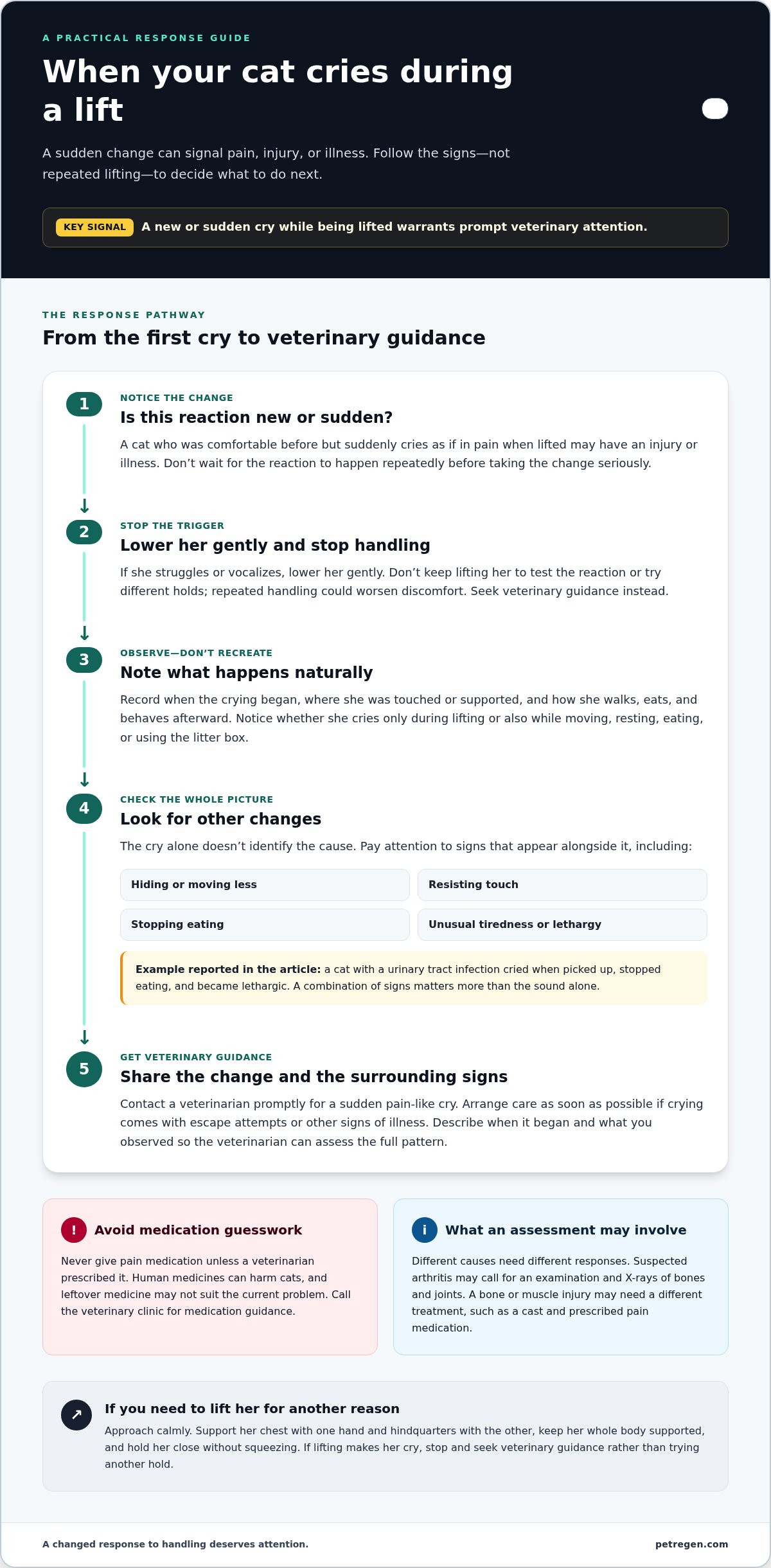
If your cat suddenly cries as if in pain when you lift her, contact a veterinarian immediately. A new reaction can signal an injury or illness, even if she seemed comfortable earlier. If she cries, tries to escape, or shows other signs of illness, arrange veterinary care as soon as possible. Don’t wait for repeated episodes before taking a sudden change seriously.
For a safer, more comfortable lift, approach calmly, support your cat’s chest with one hand and her hindquarters with the other, then hold her close without squeezing. Support her whole body rather than letting her legs dangle, and lower her gently if she struggles or vocalizes. If lifting makes her cry, stop handling her and seek veterinary guidance rather than trying different holds.
If your cat suddenly starts crying, handle her gently and contact a veterinarian promptly. Note when the crying began, where you touched or supported her, and whether she walks, eats, and behaves normally afterward. These details can help you describe the change. Don’t keep lifting her to reproduce the reaction, as repeated handling could worsen discomfort.
Watch for other signs alongside the vocalization. A cat who hides, moves less, resists touch, stops eating, or seems unusually tired needs prompt attention. For example, a cat with a urinary tract infection was reported to cry when picked up, stop eating, and become lethargic. A veterinarian can assess the full pattern of signs rather than the cry alone.
- Sudden pain: Seek veterinary care immediately when a new cry clearly signals pain during lifting.
- Other illness signs: Contact a veterinarian as soon as possible if crying comes with escape attempts, poor appetite, lethargy, or another change.
- Suspected arthritis: Ask about an examination; veterinary assessment may include X-rays to check bones and joints.
A bone or muscle injury may need a different response from arthritis. A veterinarian may recommend a cast and prescribe pain medication for an injury. Cats with suspected arthritis may also need an examination and imaging to identify affected joints. These possibilities are reasons to seek an assessment, not to diagnose the cause at home.
Never give your cat pain medication unless a veterinarian has prescribed it. Human medicines can harm cats, even if they seem to be the same type of medication. Don’t reuse leftover medicine from an earlier visit, either, as it may not be suitable for the current problem. Call your veterinary clinic for guidance about medication and next steps.
Infections can also cause pain or behavior changes, so mention symptoms such as reduced appetite or low energy during the veterinary assessment. Describe when the crying began and what happens during handling, then follow the veterinarian’s advice. A sudden cry, suspected injury, or pain paired with signs of illness warrants prompt veterinary attention.
Excessive vocalization and medical conditions
A change in your cat’s meowing can be an early clue that something feels wrong. Cats often hide illness, but serious pain can affect how they move, interact, or respond to touch. A painful cry may sound like a yowl mixed with a whine, sometimes called caterwauling. Notice whether the sound occurs only during lifting or also while walking, eating, resting, or using the litter box. A new pattern, especially alongside other behavior changes, deserves veterinary attention.
Context can help distinguish a familiar request from distress. Adult cats generally meow at people rather than other cats, using vocalizations to communicate with humans. A cat who meows often but otherwise acts normally may be expressing a need or reacting to handling. Kittens may cry because they’re hungry, cold, afraid, or sick. Note when the meow happens, what came just before it, and whether your cat’s appetite or energy has changed.
Medical conditions can also cause repeated vocalizing. For example, a cat with a urinary tract infection was reported to cry when picked up, stop eating, and become lethargic. The combination of signs matters more than the sound alone. In aging cats, an overactive thyroid or kidney disease can contribute to excessive meowing. A veterinarian should thoroughly assess increased vocalizing, as illness may cause distress even when its signs seem subtle.
Keep a brief record for the appointment: describe the sound, when it began, and any changes in eating, movement, or behavior. If your cat cries during handling, don’t repeatedly lift her to test the reaction. Instead, observe her while she rests and moves naturally. Share specific examples with the veterinarian, such as crying when turning, hiding after meals, or becoming less active. These details can help guide an examination and further testing.
- Possible arthritis: A veterinarian may use X-rays to examine bones and joints when arthritis is suspected.
- Possible cancer: Investigation may include blood work, biopsy, or MRI or CT scans. Treatment depends on the cancer and may include surgery, chemotherapy, radiation, pain management, or compassionate care.
Don’t scold or hit a cat for excessive meowing. The ASPCA advises against punishment because it may make a cat fearful while leaving the cause unresolved. Instead, note the vocalization calmly and contact a veterinarian if it is new, persistent, or paired with other symptoms. A sudden change, appetite loss, or lethargy gives the veterinarian useful information about your cat’s health and needs.
Home adjustments for cats with arthritis
Arthritis can make familiar movements, such as climbing onto a bed or reaching a windowsill, uncomfortable. After a veterinarian identifies joint pain, look at your cat’s usual routes around the home. If she has to jump from the floor to a high couch, add an intermediate step or move her resting spot lower. Aim to make daily essentials reachable without repeated leaps.
Start with the places your cat uses most. Put food, water, bedding, and a litter box on the same level where she spends her time. For example, a cat who rests in the living room shouldn’t have to cross a staircase every time she needs a drink. Keep bowls stable and easy to reach, with a clear path between them. Avoid moving familiar items abruptly, as predictable surroundings help your cat find what she needs.
Make floors and routes easier to navigate. A nonslip rug beside a favorite chair can give your cat better grip when standing or turning. Clear loose bags, cords, and small objects from walking paths, especially near doorways. If she likes a sunny window, place a sturdy, low platform nearby instead of expecting her to jump onto a tall sill. Check that any step or platform remains stable when she uses it.
A low-entry litter box can reduce the effort of stepping over a tall edge. Place it somewhere quiet and accessible, not behind furniture or up a flight of stairs. Keep the route clear and the box clean, so your cat doesn’t have to navigate obstacles to reach it. In a multi-level home, keeping essential resources on the floor she uses most can make routine trips easier.
Choose a resting place that’s easy to enter and leave. A soft bed at floor level gives your cat a comfortable alternative to a high perch. Keep it away from drafts and busy walkways, with enough room for her to turn without squeezing past furniture. Don’t pull or lift her into a cuddle if she resists. Let her approach and settle on her own terms.
Watch how your cat responds to each adjustment. If she avoids a step, slips on a rug, or stops using a favorite resting place, change the setup and observe what happens. Note which movements seem difficult, such as getting up after a nap or stepping into the litter box, and share these examples with her veterinarian. Home adjustments may support comfort, but they don’t replace veterinary care for ongoing pain.
- Lower the effort: Add stable steps to favorite furniture and offer a floor-level resting spot.
- Bring essentials close: Keep water, food, and a low-entry litter box along an accessible route.
- Improve footing: Use nonslip surfaces and clear obstacles from your cat’s regular paths.
Potential causes of pain when a cat is picked up
A cry while being lifted can reflect joint pain, an injury, or discomfort with handling. Consider when the reaction began and whether it also happens during other movements.
Possible Sources of Pain
Arthritis, a bone or muscle injury, or pressure on a tender area can make lifting uncomfortable. The cause matters because the same cry may call for different responses, from changing how you handle your cat to seeking veterinary assessment.
Cats are more likely to develop arthritis after age seven, and Maine Coons and Siamese are more prone than other cats. Hip-joint arthritis, for example, can make a lift painful when it shifts or supports the hindquarters. A recent injury may also hurt when the body moves. Notice whether your cat reacts to a particular touch or movement, but don’t press sore areas to test them. A veterinarian can assess suspected arthritis and may use X-rays to examine bones and joints.
Pain Versus Dislike of Being Held
A cat who dislikes being held may feel vulnerable, while pain may also show up during everyday movement or touch. This distinction can help you recognize when a handling preference may not explain a new reaction.
Some cats feel out of control when lifted, especially when their paws lose contact with the ground. A cat may vocalize when handling feels too intense, even without an injury. Look for a pattern: does she cry only when held, or also when walking, settling down, or being touched? Tail movements and ear position can signal stress, but staying still doesn’t prove she’s comfortable. Cats can mask pain, so a change in behavior deserves attention. Avoid picking her up until you understand the cause, particularly if the reaction is new.
Stress, Fear, and Past Experiences
Stress, fear, or an unpleasant past handling experience can make a cat vocalize when lifted, even without an obvious injury. Keep this possibility in mind, but remain alert to signs of pain and avoid forcing contact.
Being lifted can feel overwhelming: cats rely on information from their paws and may feel less able to identify danger when held. A cat may also react if she was held improperly or touched somewhere she dislikes. If she tenses, shifts her ears or tail, or tries to escape, set her down gently and let her choose whether to approach. Don’t force cuddling or scold her for crying. However, don’t assume fear is the cause if the behavior starts suddenly. A new cry or distress during other activities may point to pain and warrants veterinary attention.
How can I tell whether my cat is in pain or just dislikes being held?
Compare your cat’s response to handling with her behavior during everyday activities. A cat who objects only to being lifted may dislike restraint, but pain can also change how she walks, rests, grooms, or eats. No single signal settles the question. Look for a pattern across situations, especially a new reaction or a change from her usual behavior.
Some cats find being held distressing because it makes them feel vulnerable and less able to notice what’s around them. A cat may meow when handling or other stimulation feels too intense, even without an obvious injury. She might vocalize during a lift, then return to her usual behavior once her paws are back on the floor. If she often meows in other situations and shows no other signs of discomfort, the sound may simply be communication.
Pain can be harder to spot because cats may mask it. Watch how your cat moves before and after handling: does she hesitate to jump onto a familiar chair, settle differently, or avoid being touched in one area? A cat who stays still in your arms isn’t necessarily comfortable. Notice whether the reaction also happens while walking or during routine contact, rather than only during lifting.
- Consider a handling preference: She objects to being raised but otherwise moves and behaves as usual.
- Look for possible discomfort: The reaction is new, happens during other activities, or accompanies changes in movement or behavior.
- Notice stress signals: Tail movements and ear position can offer clues after she’s lifted.
Use observations, not repeated lifting, to understand the pattern. Record what happened just before the cry, where your hands were, and how your cat behaved afterward. For example, note whether she meowed only when lifted from the floor or also when touched while resting. Don’t press a suspected sore spot or keep picking her up to see if she reacts again. If she objects, give her space and let her choose whether to approach.
Being picked up can feel overwhelming because a cat loses contact with the ground and the information her paws provide. That response may look like discomfort, so consider body language in context. A cat who tenses or tries to escape may be stressed by the handling itself, while a sudden change or broader shift in behavior raises concern about pain. Fear and pain can also occur together, and a calm appearance doesn’t rule out a medical problem.
If your cat’s reaction is new, persistent, or paired with changes in daily behavior, arrange a veterinary assessment. Until the cause is clearer, avoid unnecessary lifting and offer affection at floor level. This can protect a cat who dislikes restraint while reducing pressure on one who may be sore.
PetREGEN: PetREGEN Stem Cell Activator Supplement
PetREGEN Stem Cell Activator Supplement supports the body’s natural regenerative function by supporting immune function. For cats, that support is intended to promote mobility, recovery, and healthy aging as part of broader wellness. Its human-grade ingredients include amino acids, omega 7, and collagen.
A supplement can’t diagnose or treat the reason your cat cries when lifted. Sudden pain, changes in movement, or signs of illness still call for veterinary care. Once you’ve addressed those concerns, a supplement may be part of your cat’s ongoing wellness routine, including support for healthy aging and mobility.
Learn more about PetREGEN Stem Cell Activator Supplement on the PetREGEN website.
Build a gentler path forward
If my cat cries when I pick her up, use that moment as a cue to understand what comfort means for her, not as a reason to force closeness. Your cat’s signals can guide a gentler relationship: offer choice, give her space, and notice which everyday interactions she seeks. Progress may mean quiet trust and voluntary connection, rather than accepting every cuddle. Small, thoughtful choices can help your companion feel more secure in your shared routines. Caring for an uncomfortable or aging pet can also be taxing for owners, making personal self-care just as important; for caregivers looking to refresh their own daily balance, St Agnes Rituals offers natural wellness detox kits.
PetREGEN offers PetREGEN Stem Cell Activator Supplement to support the body’s natural regenerative function and promote mobility and healthy aging. It can be part of a broader wellness routine, not a substitute for veterinary assessment or treatment when your cat is unwell.
For support with PetREGEN Stem Cell Activator Supplement, contact PetREGEN. Keep following your cat’s cues and make her comfort the guide. With patient, compassionate care, you can help her feel safe and supported.
Frequently Asked Questions
Cat Meows In Pain When Picked Up: What Does This Mean?
A cry during lifting can mean pain, fear, or discomfort with being held. The sound alone can’t identify the cause, so consider whether the response is new and whether it happens during other activities. For example, crying when touched at rest or moving differently may suggest more than a dislike of cuddling. Don’t repeat the lift to test her reaction; instead, share the pattern with a veterinarian.
What Does a Painful Meow Sound Like?
A painful meow may sound like a yowl mixed with a whine, sometimes called caterwauling. Cats show distress differently, so sound alone can’t confirm pain. Notice what happens around the vocalization: a cry during movement, touch, or lifting may be more concerning if it comes with a behavior change. Write down a clear example, including when the sound occurs and what your cat does afterward.
Why does my cat cry or meow when I pick her up?
If my cat cries when I pick her up, the cause may be pain, fear, or simply disliking being held. The way she’s supported or the area touched can also affect her reaction. For example, a cat who objects only to lifting but otherwise behaves normally may dislike losing contact with the ground. A new cry or change in everyday behavior deserves closer attention.
Could pain or injury make a cat cry when lifted?
Yes. Arthritis or a bone or muscle injury can make the movement and support involved in lifting painful. A veterinarian may assess suspected arthritis with X-rays, while an injury may require specific care, such as a cast or prescribed pain medication. Don’t give human medicine or leftover medication. Note whether your cat also changes how she walks, rests, or responds to everyday contact, and share those observations during an examination.
What signs suggest a cat needs urgent veterinary care after crying when picked up?
A sudden cry that sounds painful warrants immediate veterinary attention. Seek care as soon as possible if your cat also tries to escape or shows signs of illness. For example, crying alongside loss of appetite and lethargy is more concerning than an isolated meow. Handle her gently, note when the change began, and tell the veterinary team about any accompanying behavior changes.
Which health problems commonly cause cats to hurt when lifted?
Arthritis and bone or muscle injuries are possible causes of pain during lifting. Cats are more likely to develop arthritis after age seven, and Maine Coons and Siamese are more prone than other cats. Infections or other illnesses may also cause distress or behavior changes. A veterinarian’s examination can help distinguish joint or injury pain from a broader health problem.
When should I take a cat to the vet for crying when handled?
If my cat cries when I pick her up suddenly, contact a veterinarian promptly, especially if she seems painful or unwell. A sudden meow that appears to signal pain calls for immediate veterinary attention. If she seems otherwise well but objects only to handling, avoid unnecessary lifting and observe her movement and behavior. Don’t give pain medication unless a veterinarian prescribed it for her.


