

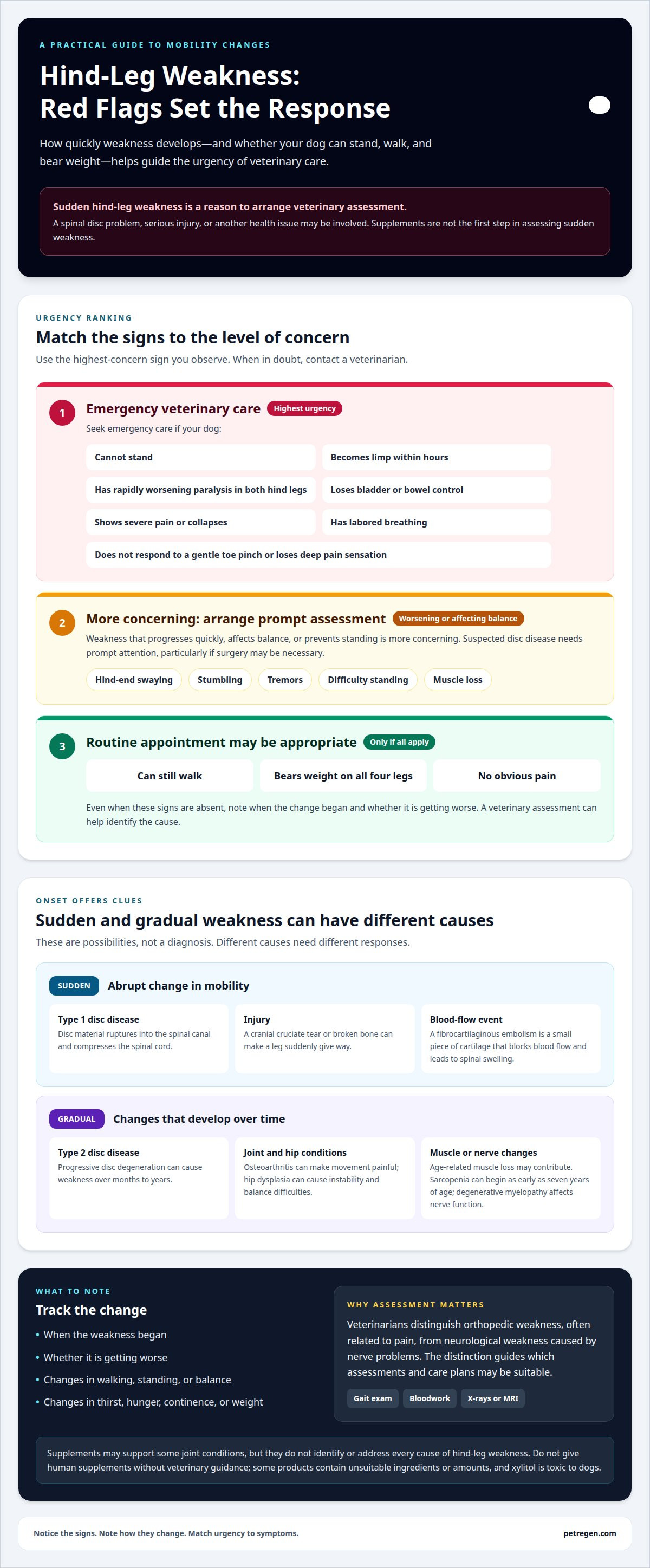
Sudden hind-leg weakness can signal a spinal disc problem, a serious injury, or another health issue, so supplements for dogs with hind leg weakness aren’t the first step. If your dog can’t stand, becomes limp within hours, or shows severe pain, seek emergency veterinary care. A leg that suddenly gives way may also indicate a serious injury.
It’s worrying to see a dog struggle to stand or walk, and the right response depends on what’s causing the change. This article explains possible causes of sudden and gradual weakness, how age-related muscle loss may contribute, and what can affect a dog’s outlook. You’ll also learn where nutritional support may fit alongside veterinary care, so you can make an informed choice for your companion.
Key Takeaways
- Watch for less obvious mobility changes, including hind-end swaying, stumbling, tremors, or muscle loss, and note how they progress.
- Sudden and gradual weakness can have different causes, so identifying whether the problem is orthopedic or neurological helps guide the next steps.
- Joint supplements containing glucosamine and chondroitin may support mobility and comfort when osteoarthritis is involved; they don’t replace finding the underlying cause.
- Age-related muscle loss may contribute to weakness. Learn how suitable activity, nutrition, and broader wellness support can help maintain mobility.
1. What Causes Sudden Hind Leg Weakness in Dogs?
Sudden hind-leg weakness can arise from spinal, orthopedic, or metabolic problems. Type 1 intervertebral disc disease can begin rapidly when disc material ruptures into the spinal canal and compresses the spinal cord. A cranial cruciate tear or broken bone can also make a leg suddenly give out. Each cause needs a different response, so weakness is a reason to arrange veterinary assessment.
Watch for hind-leg tremors, a swaying hind end, stumbling, difficulty standing, muscle loss, or collapse. Note when the change began and whether it’s worsening. If your dog can still walk and bear weight on all four legs and shows no obvious pain, a routine veterinary appointment may be appropriate. Weakness that progresses quickly, affects balance, or prevents standing is more concerning.
Seek emergency veterinary care if your dog cannot stand, becomes limp in the hindquarters within hours, or doesn’t respond to a gentle toe pinch. Other emergency signs include rapidly worsening paralysis in both hind legs, loss of bladder or bowel control, labored breathing, collapse, severe pain, or loss of deep pain sensation. Suspected disc disease also needs prompt attention, particularly if surgery may be necessary.
Gradual muscle loss may reflect sarcopenia, which can begin in dogs as early as seven years of age. Arthritis, hip dysplasia, diabetes, and other conditions can also affect strength or mobility. Changes in thirst, hunger, continence, or weight alongside weakness warrant veterinary assessment and may prompt blood testing.
Can dogs take human supplements for hind-leg weakness? Don’t give one without veterinary guidance: human products can contain unsuitable ingredients or amounts, and xylitol is toxic to dogs. The risk depends on the product’s ingredients and dose, so keep the package and ingredient list available if your dog has swallowed one. Supplements don’t replace an assessment of sudden weakness.
2. What is the outlook for dogs with weak back legs?
A dog’s outlook depends on the cause of weakness, how quickly it develops, and whether treatment can address it. For osteoarthritis, joint support may improve comfort and mobility, helping maintain daily activity and quality of life. Supplements can support care, but they don’t address every underlying problem.
Glucosamine and chondroitin are ingredients in joint supplements for dogs. They may help reduce pain and swelling associated with osteoarthritis and support mobility. Omega-3 fatty acids may help reduce inflammation, making them another nutritional option to discuss for joint support. Neither ingredient addresses every cause of weak back legs.
What does veterinary research say about arthritis, mobility, or nerve-related weakness? The available findings described here concern osteoarthritis symptoms and joint mobility: glucosamine, chondroitin, and omega-3s may offer support. They don’t establish that these ingredients treat nerve-related weakness. The underlying cause matters when weighing what nutritional support can do.
Which supplements may help, including vitamin B12? Omega-3s and glucosamine or chondroitin may support joints affected by osteoarthritis. The facts here don’t establish vitamin B12 as a treatment for hind-leg weakness, so it shouldn’t be assumed to help every dog.
What dose is safe by weight? There’s no single dose for every ingredient and dog. The appropriate amount depends on the specific product, its concentration, and your dog’s weight. Follow the product’s directions, and ask a veterinarian to review the ingredient list in light of your dog’s condition and medicines.
Risks and interactions depend on the formula and any medicines your dog takes. Review the full ingredient panel before combining products, since overlapping ingredients can change the total amount given. The NASC seal and USP verification are quality signals, not proof that a supplement treats arthritis or nerve problems. Look for clear ingredient amounts and serving directions.
What do these supplements cost in the United States? Prices vary with the ingredients, product form, container size, and serving size for the dog’s weight. Compare the cost per serving, not just the package price. For a broader nutritional approach, explore whole-body support for pets.
3. Possible causes of sudden or gradual hind leg weakness
Sudden weakness can stem from spinal injury, a blood-flow event, or trauma. Type 1 intervertebral disc disease occurs when disc material ruptures into the spinal canal and compresses the spinal cord. Fibrocartilaginous embolism is a blockage caused by a small piece of cartilage, which leads to spinal swelling. A cruciate tear or broken bone can also abruptly disrupt a dog’s mobility.
Gradual symptoms often point to conditions that develop over time. Type 2 intervertebral disc disease involves progressive disc degeneration and can cause weakness over months to years. Osteoarthritis makes movement painful when joints lack sufficient lubrication. Hip dysplasia, primarily linked to genetics, can cause instability and balance difficulties; size, weight, and overuse also contribute. Inappropriate nutrition can weaken a dog over time.
Senior dogs can experience several overlapping causes. Canine degenerative myelopathy affects nerve function as nerve coverings wear out. Researchers associate a mutation in the SOD1 gene with increased risk in certain breeds. German Shepherds, Labrador Retrievers, Saint Bernards, and Great Danes are larger breeds associated with hip dysplasia. Arthritis and declining muscle condition can further limit walking.
Veterinarians first distinguish orthopedic weakness, often related to pain, from neurological weakness caused by nerve problems. This distinction matters because treatment for one category may be unsuitable for the other. An assessment may include a gait exam, bloodwork, and imaging such as X-rays or MRI. Suspected joint disease and spinal-cord compression, for example, call for different assessments and care plans.
What causes hind-leg weakness, and when is it an emergency? Possible causes include disc disease, fibrocartilaginous embolism, hip dysplasia, osteoarthritis, degenerative myelopathy, injury, and nutrition problems. Emergency signs include rapid paralysis in both hind legs, loss of bladder or bowel control, collapse, labored breathing, severe pain, or inability to stand. Prompt veterinary care matters because the cause shapes treatment and recovery.
4. Age-related muscle loss and hind leg weakness
Sarcopenia, the age-related loss of muscle mass, may begin in dogs as early as seven years of age. As muscles weaken, a dog may struggle to rise, climb steps, or maintain a steady gait. These gradual changes can affect movement and comfort, but don’t assume sudden weakness is due to aging. A veterinarian can assess new or worsening mobility changes.
Nutrition helps maintain muscles and bones. A nutritionally balanced diet with high-quality protein, vitamins, and minerals supports healthy muscle and bone condition. Lean, protein-rich food can also help limit excess weight, which puts strain on a dog’s legs and joints. Because needs vary with health and activity, a veterinarian may recommend a specially formulated diet for developing concerns.
Regular physical activity supports muscle strength, bone health, and overall fitness. Brief, consistent daily walks give an older dog opportunities to move without relying on occasional strenuous outings. Adjust the pace to your dog’s comfort and notice whether walking becomes easier or harder. A veterinarian can help shape an activity plan if pain, weakness, or a degenerative condition affects movement.
Swimming can provide a low-impact way to work muscles and build overall strength. Choose a safe setting suited to your dog’s ability, and stop if movement looks difficult or uncomfortable. For a dog with hip dysplasia or arthritis, lower-impact activity may be easier than demanding exercise. Ask your veterinarian whether swimming suits your dog’s condition and mobility.
Age-related muscle loss can occur alongside other causes, including hip dysplasia and degenerative myelopathy, so weakness needs context. A gradual decline differs from a sudden change, and the right approach depends on the cause. For nutritional support focused on healthy aging and recovery, explore whole-body wellness support.
PetREGEN: PetREGEN Stem Cell Activator Supplement
PetREGEN Stem Cell Activator Supplement supports a dog’s natural regenerative function and immune function, mobility, recovery, and healthy aging. It may suit owners seeking broader wellness support alongside care for a dog with mobility changes. It isn’t a substitute for identifying the cause of weakness or addressing an urgent problem.
The formula uses human-grade ingredients, including amino acids, omega 7, and collagen. These ingredients are intended to support healthy aging and recovery as part of a whole-body approach, rather than targeting one symptom alone. For a dog with hind-leg weakness, keep the focus on the underlying cause and the support that fits their needs.
To learn more about PetREGEN’s supplement and whether it fits your dog’s wellness routine, contact PetREGEN.
Build a Support Plan Around Your Dog
Focus on preserving the activities that make each day rewarding, from greeting you at the door to enjoying a comfortable walk. Discuss mobility in terms of your dog’s daily routine: which movements are becoming difficult, what remains manageable, and what support could fit alongside the current care plan. The right role for supplements for dogs with hind leg weakness depends on the underlying diagnosis and your companion’s overall needs.
PetREGEN offers PetREGEN Stem Cell Activator Supplement as a nutritional option for whole-body wellness. If you’re considering it as part of your dog’s support routine, contact PetREGEN to discuss your dog. Thoughtful, informed choices can help you keep focusing on comfort, connection, and the moments you share.
Frequently Asked Questions
What Causes Sudden Hind Leg Weakness in Dogs?
Sudden hind-leg weakness can result from a spinal disc problem, a serious injury, or a blood-flow event affecting the spinal cord. The timing and accompanying signs may help distinguish causes, but they can’t reliably identify one at home. Note whether one or both legs are affected and whether your dog can urinate normally. Share those observations with your veterinarian, and seek emergency help for rapid deterioration.
What are the symptoms of weak hind legs?
Signs can include trembling, hind-end swaying, stumbling, difficulty rising, reduced muscle mass, or a leg that gives way. At home, watch your dog walk across a familiar, non-slip surface and note whether the change affects turning, standing, or climbing a step. A short video can help your veterinarian see how your dog’s movement differs from their usual gait.
How can you help a dog with weak back legs at home?
Make familiar routes safer by placing non-slip mats on slick floors and using a ramp where your dog must manage steps. A rear-lifting harness can provide support during necessary movement. Avoid starting strengthening exercises before a veterinary assessment, as they may worsen an unstable spine. If your dog struggles to stand or deteriorates quickly, home adjustments aren’t a substitute for urgent veterinary care.
How can you keep your pet’s bones & legs strong?
Support bone and leg health with a nutritionally balanced diet, regular activity suited to your dog, and a healthy body condition. Steady walks, for example, encourage movement without relying on occasional strenuous exercise. Keep routine veterinary checkups so changes in gait, weight, or comfort can be discussed early. A veterinarian may suggest a different diet if your dog has developing health concerns.
What Is Sarcopenia In Dogs?
Sarcopenia is age-related muscle loss that can reduce strength and make everyday movement harder. In dogs, it may begin as early as seven years of age. Watch for less definition in the hindquarters, difficulty rising, or a declining ability to manage familiar activities. Gradual changes deserve attention too, since muscle loss can occur alongside joint or neurological conditions that need separate evaluation.
What are the main signs and symptoms dog's back legs not working?
If your dog’s back legs seem not to work, look for inability to stand, dragging or limp hindquarters, worsening weakness, or loss of bladder or bowel control. These signs can indicate severe spinal or neurological problems. Don’t test strength by pinching toes or forcing your dog to walk. Keep movement minimal and seek emergency veterinary care, especially if symptoms progress rapidly.


