

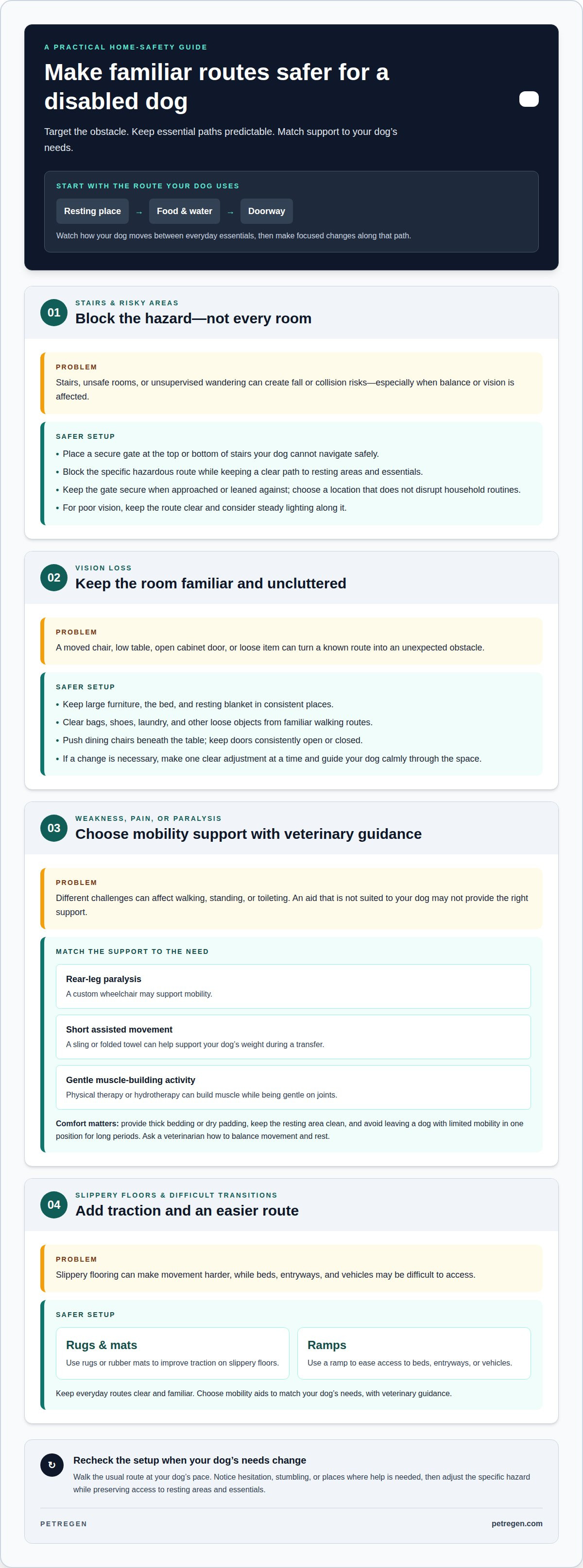
A safer home often takes a few thoughtful changes, not a complete makeover. Making your home safer for a disabled dog can start with blocking stairs or risky areas, keeping furniture in a consistent layout, and adding rugs or mats to slippery floors. Ramps can ease access to beds, entryways, or vehicles, while mobility aids should match your dog’s needs and be chosen with veterinary guidance.
It’s understandable to worry about falls, bumps, or your companion struggling to reach familiar places. Small adjustments can make everyday routes easier to navigate and help your dog feel more confident at home. The right setup depends on how your dog moves, which areas are challenging, and whether vision loss or balance issues affect them.
This guide covers practical ways to use gates, consistent furniture placement, mobility aids, ramps, and nonslip flooring. You’ll also learn how to assess each change so your home feels safer and more comfortable for your dog.
Key Takeaways
- Use gates to limit access to stairs and other areas that could be hazardous when your dog is unsupervised.
- Keep furniture in familiar places to help a dog with vision loss navigate more confidently.
- Match mobility aids to your dog’s needs with veterinary guidance, and consider what support makes movement easier.
- Improve traction with rugs or rubber mats, and use ramps to make everyday routes and transitions more accessible.
1. Baby gates to block hazards
Remove hazards or block access to stairs and rooms where your dog could wander unsupervised. A baby gate can keep your dog within familiar areas. For example, place one across a staircase if your dog has trouble balancing or seeing each step.
Choose gate locations by following your dog’s usual route through the home. Watch how they move between their bed, food and water bowls, and the door. Then identify spots where a fall, collision, or unsupervised exploration could pose a risk. Block the hazardous route rather than restricting access to every room.
- Place a gate at the top or bottom of stairs your dog can’t navigate safely.
- Block access to rooms with hazards your dog could reach without supervision.
- Keep a clear, familiar route between resting areas and everyday essentials.
- Check that the gate stays secure when your dog approaches or leans against it.
Match the barrier to your dog’s mobility and behavior. A dog who walks steadily may need a gate only at the stairs. A dog with weak legs may need barriers to prevent access to even a few steps when unsupervised. Keep the gate easy for household members to open, so it doesn’t disrupt your own routine.
Steady lighting can help a dog with poor vision move around more safely. Add light along a route your dog uses, such as the path from their bed to the doorway. Keep the arrangement consistent and the path clear. A water bowl beside a walkway, for example, could become an unexpected obstacle.
Reassess the setup if your dog’s movement or vision changes. Walk their usual route at their pace and notice where they hesitate, stumble, or need help. Adjust the gate to block the specific hazard while keeping a safe route to their resting place and essentials.
2. Consistent furniture layout for pets with vision loss
For a dog with vision loss, familiar furniture positions help make a room easier to understand. Moving a chair can turn a known route into an unexpected obstacle. Keep large items, such as sofas, tables, and beds, in their usual places. If you need to rearrange a room, guide your dog through the changed space slowly and calmly.
Map the areas your dog uses most, including routes between the doorway, resting spot, and favorite place to gather with the family. Move loose objects, bags, and laundry out of these paths. After meals, tuck chairs under the table so their legs don’t jut into a walkway. A clear layout means fewer unfamiliar objects for your dog to navigate.
- Keep the sofa, coffee table, and chairs in consistent positions.
- Clear bags, shoes, and laundry from familiar walking routes.
- Push dining chairs back beneath the table after use.
- Keep doors either open or closed, rather than changing their position.
Notice details at your dog’s height. A low table or open cabinet door may be difficult to spot, even if people can see it easily. Remove small obstacles from the floor and close drawers fully. If a narrow passage runs beside a bookshelf, keep it clear instead of placing a basket there.
When a furniture change is necessary, make one clear adjustment at a time. Let your dog explore the updated room at their own pace, and stay nearby. For example, after moving a chair, walk beside your dog along the route past it. Avoid changing several rooms at once, which can make familiar landmarks harder to find.
Keep your dog’s key destinations predictable, too. Leave their bed and resting blanket in the same location, and avoid moving them between rooms without need. A stable arrangement can reduce confusion for pets with vision loss. After cleaning or hosting guests, check for moved chairs, shoes, or boxes that might disrupt familiar routes.
3. Mobility aids and veterinary guidance
Choose an aid based on your dog’s specific movement challenges, not a general idea of what might help. Before purchasing a wheelchair, sling, or other mobility aid, consult a veterinarian. They can help identify whether weakness, pain, or paralysis affects walking, standing, or toileting. Those needs determine which support may suit your dog and how to use it safely.
To help prevent pressure sores, provide thick bedding or dry padding, and keep your dog’s resting area clean and comfortable. Avoid leaving a dog with limited mobility in one position for long periods. Safe, supported movement may also help limit muscle loss, discomfort, and weight gain.
A veterinarian can help create a care plan around your dog’s disability and daily routine. Describe specific difficulties, such as struggling to stand, dragging the rear legs, or needing help reaching the yard. Ask which movements are appropriate and how to support your dog without adding strain.
- A dog with rear-leg paralysis may benefit from a custom wheelchair.
- A sling or folded towel can support your dog’s weight during assisted movement.
- Physical therapy or hydrotherapy can build muscle while being gentle on joints.
Each aid serves a different purpose. A wheelchair can support mobility for a dog with rear-leg paralysis, while a sling or towel can help steady a dog during a short transfer. Use a sling to support your dog’s weight rather than lifting awkwardly, which may also protect your back.
Keep movement manageable and purposeful. For example, support your dog as they move from their bed toward a nearby resting spot, then give them time to settle. Long periods sitting or lying down can contribute to muscle atrophy, weight gain, depression, pain, and pressure sores. Ask the veterinarian how to balance movement and rest for your dog’s condition.
Observe your dog during everyday tasks. If standing becomes harder or a mobility aid seems uncomfortable, note when it happens and share those details during veterinary guidance. A tailored plan can adapt support to your dog’s changing needs, helping them stay comfortable while maintaining appropriate activity.
4. Ramps, non-slip flooring, and home accessibility
Making my home safer for a disabled dog often starts with improving traction on slippery laminate or hardwood. Place rugs or rubber mats where your dog stands, turns, or crosses a room. A mat near the doorway, for example, can provide better footing during a transition. Keep mats flat and dry so they don’t become obstacles.
For stairs your dog can’t manage safely, block access with a gate or provide a suitable ramp. Ramps can also help dogs reach beds, couches, entryways, or vehicles without climbing or jumping. Place one where your dog needs access, then guide them along it. Keep other unsafe areas blocked rather than relying on your dog to avoid them.
Keep food, water, and sleeping areas easy to reach along a clear route. Adjusting bowl height may help a dog with neck or shoulder pain, an injury, or poor balance. Set thick bedding or dry padding in an accessible, quiet resting spot. These practical changes can make daily routines easier to manage.
For bathroom trips, clear the path to the outdoor door and reduce slippery patches along the way. If your dog can walk with or without assistance, short outdoor walks can offer fresh air and sunshine. A sniff walk provides low-impact enrichment. Match the route and level of support to your dog’s mobility.
- Use rugs or rubber mats on slick indoor flooring.
- Block unsafe stairs or provide a suitable ramp route.
- Keep bowls and bedding reachable without crossing clutter.
- Choose an outdoor path your dog can manage with support.
A practical next step in making my home safer for a disabled dog is to walk beside them along everyday routes. Notice where they slip, hesitate, or need extra room, then adjust the mat, ramp, or placement of essentials at that spot.
PetREGEN: PetREGEN Stem Cell Activator Supplement
PetREGEN Stem Cell Activator Supplement supports your dog’s natural regenerative function and immune function. It is intended to support mobility, recovery, and healthy aging as part of your pet’s overall wellness, alongside practical home adjustments.
Its formula includes human-grade ingredients such as amino acids, omega 7, and collagen. These ingredients are included to support healthy aging and recovery. The supplement doesn’t replace ramps, non-slip surfaces, mobility aids, or veterinary guidance. Instead, it may fit into a broader approach to supporting your dog’s wellbeing as you adapt daily routines and home access to their needs.
To learn more about PetREGEN Stem Cell Activator Supplement, visit petregen.com.
Build confidence one step at a time
Making your home safer for a disabled dog is an ongoing process, not a one-time project. Your companion’s needs may change, so let their comfort and movement guide future adjustments. Observe how they manage familiar routes and daily routines, then make thoughtful changes that support their independence without losing the closeness and care they rely on.
Small, steady improvements can make home life feel more manageable for both of you. Keep observing, adapt as needed, and include your veterinarian in decisions about mobility and wellness. For additional support as you care for your dog, contact PetREGEN. Your patience and attention help create a more supportive home, one caring choice at a time.
Frequently Asked Questions
How can I make floors less slippery for a disabled dog?
Use rugs or rubber mats on slick flooring, especially where your dog turns, starts walking, or changes direction. For example, place a mat beside their bed to give them traction when standing up. Check that mats stay flat and don’t slide underfoot. Keep them clean and dry, since damp or bunched material can make the walking surface less predictable.
What ramps, steps, or lifts are safest for dogs with mobility problems?
Choose an access aid based on where your dog struggles and how they move. A ramp may help with a bed, couch, entryway, or vehicle, while stairs may remain difficult for a dog with poor balance. Introduce the aid gradually on a familiar route and stay close. Ask your veterinarian which option suits your dog’s specific mobility needs.
What home layout changes help a blind or visually impaired dog navigate safely?
Keep walkways clear and familiar routes between your dog’s bed, bowls, and doorways unobstructed. Along with keeping furniture in place, use consistent verbal cues before approaching obstacles or changes in flooring. For instance, calmly signal a doorway or step before guiding your dog through. After visitors leave, check that moved chairs, bags, or shoes aren’t blocking usual paths.
What harnesses, slings, or mobility aids are best for helping a disabled dog at home?
The right aid depends on whether your dog needs help standing, walking, or moving between rooms. A sling or towel can support your dog’s weight during assisted movement, while a custom wheelchair may benefit a dog with rear-leg paralysis. Ask a veterinarian to assess your dog before choosing equipment, so it suits their condition and daily tasks.
How much do dog ramps, non-slip flooring, gates, and other accessibility modifications cost?
Costs depend on the modification, materials, and how much of your home needs adapting. A portable mat or gate differs from a ramp built for a specific doorway or a larger flooring change. Consider the location, dimensions, surface, and installation needs as you plan. First identify the route your dog struggles with, then compare suitable ways to improve access.
What home modifications are recommended for dogs with paralysis, arthritis, or recovering from surgery?
Adapt the home to your dog’s movement limits and recovery needs, guided by a veterinarian’s care plan. A dog with rear-leg paralysis may benefit from a custom wheelchair, while rugs or rubber mats can improve traction. Keep resting areas comfortable and routes to essentials manageable. After surgery, follow the veterinarian’s activity guidance before changing how your dog moves around.


