

A supplement may be part of joint support for trailering an arthritic horse, but it is not a quick fix for travel discomfort. Talk with your horse’s veterinarian before adding a supplement, since the effects of many joint supplements are still being studied. Supplements do not replace assessing pain, inflammation, or whether your horse is fit to travel.
It is understandable to want to make travel easier for a horse that already moves stiffly or seems uncomfortable. This article explains how supplements may fit into a broader plan, why inflammation and medication need careful consideration, and what a change in stride length can tell you about your horse’s mobility.
You will also find practical ways to assess trailering comfort and understand when veterinary guidance matters most. The goal is to help you make a more informed, compassionate decision for your horse before loading.
Key Takeaways
- Think of supplements as one part of a broader joint-care plan, and consider how inflammation and daily comfort affect travel readiness.
- Before a long haul, review your horse’s condition and any medication plans with a veterinarian; pain relief isn’t a one-size-fits-all travel solution.
- Notice changes in stride length and willingness to move, since they can help you spot shifts in mobility and adapt exercise.
- Prepare the trailer with your horse’s comfort and stability in mind, including suitable leg protection, footing, and a smoother route.
2. Joint inflammation and pain
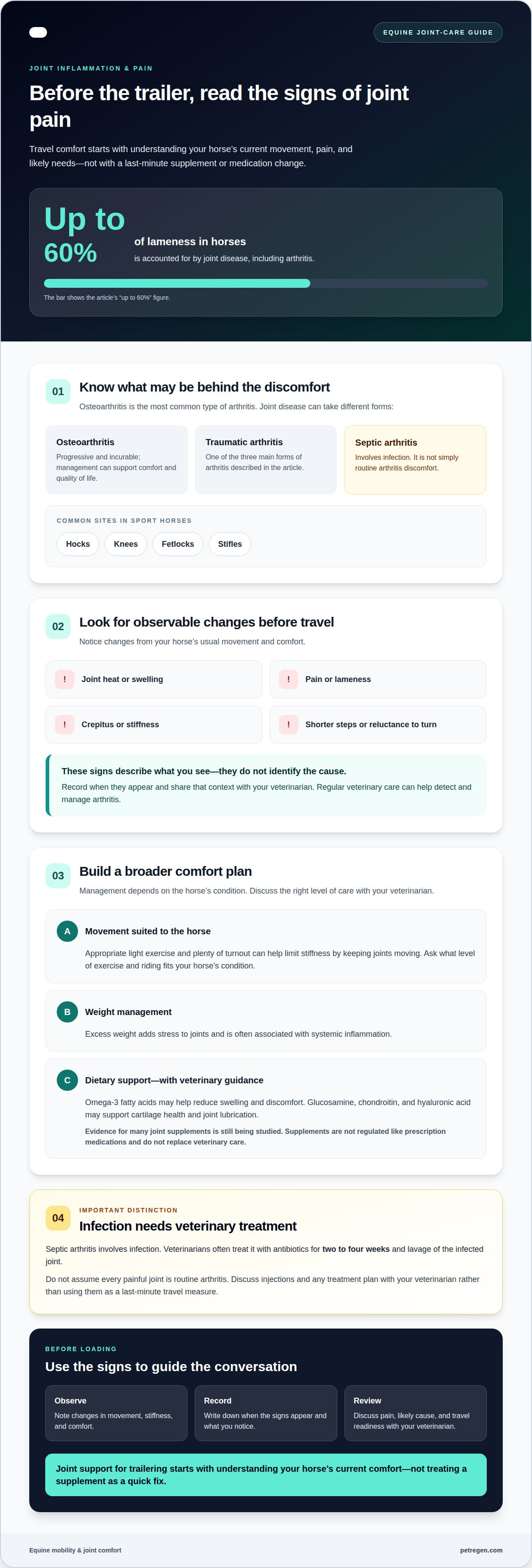
Joint disease, including arthritis, accounts for up to 60% of lameness in horses. Osteoarthritis is the most common type and can develop wherever two cartilage-covered bones meet. In sport horses, the hocks, knees, fetlocks, and stifles are common sites. The three main forms are osteoarthritis, traumatic arthritis, and septic arthritis.
Look for observable changes before travel, such as joint heat or swelling, pain, lameness, crepitus, and stiffness. A horse that takes shorter steps when leaving the stable or resists turning may be showing discomfort. These signs do not identify the cause by themselves, but recording when they appear gives your veterinarian useful context. Regular veterinary care can help detect and manage arthritis.
Osteoarthritis is progressive and incurable, but management can support comfort and quality of life. For many horses, appropriate light exercise and plenty of turnout help limit stiffness by keeping joints moving. Ask your veterinarian what level of exercise and riding suits your horse’s condition. Weight management also matters: excess weight adds stress to joints and is often associated with systemic inflammation.
Dietary support may complement that plan. Omega-3 fatty acids may help reduce swelling and discomfort because of their anti-inflammatory properties. Glucosamine, chondroitin, and hyaluronic acid may support cartilage health and joint lubrication, but evidence for many joint supplements is still being studied. Horse owners should discuss any addition with a veterinarian, since supplements aren’t regulated like prescription medications.
Do not assume every painful joint is routine arthritis. Septic arthritis involves infection, and veterinarians often treat it with antibiotics for two to four weeks and lavage of the infected joint. If you are considering injections, including joint injections, discuss their role with your veterinarian rather than using them as a last-minute travel measure. Joint support for trailering an arthritic horse starts with understanding the pain, its likely cause, and your horse’s current comfort.
3. Medication before long hauls
Before departure, discuss your arthritic horse’s condition, current medication, and travel plan with a veterinarian. For a senior horse, include its overall health and any recent changes, such as increased stiffness or reluctance to load.
Severe arthritis calls for veterinary advice before a long haul. Have this conversation early enough to review your horse’s comfort, the journey, and any medication plan, rather than making a last-minute decision at the trailer. A veterinarian can consider your horse’s symptoms and mobility alongside its health history.
Medication is not a substitute for assessing whether your horse is ready to travel. Do not start or change a medicine solely to get through a journey without veterinary guidance. For example, if bute is being considered, check whether the relevant competitive organization permits its use before giving it. Rules may differ by organization, so identify the applicable one before the trip.
Bring a clear record to your veterinary discussion. Note your horse’s prescribed medicines, when it receives them, and any changes in movement or comfort. Mention whether cartilage or joint concerns have changed, and describe the planned route and expected travel conditions. These details help the veterinarian suggest an approach suited to your horse.
Keep the plan practical at home: follow the veterinarian’s directions, pack your horse’s prescribed medication, and make its schedule clear to anyone helping with travel. Do not add supplements or other arthritis-management methods in place of prescribed care. A day when your horse looks well does not erase a pattern of pain, stiffness, or difficulty moving.
For joint support for trailering an arthritic horse, medication decisions belong within a broader veterinary plan. If new lameness, swelling, or marked discomfort appears before departure, tell the veterinarian before loading. This helps ensure your horse travels only with a plan that reflects its current condition.
4. Mobility and stride length
A change in stride length can make discomfort easier to spot than a general impression of stiffness. For a useful comparison, observe your horse walking straight on level ground, then note whether one step seems shorter, uneven, or reluctant. Record the date and conditions, such as after standing or following turnout. These observations describe movement; they do not diagnose osteoarthritis or establish the cause of a change.
Compare the same simple movement over time. Watch your horse walk away and back, then note whether turning in either direction changes its steps. A shorter stride, reluctance to turn, or difficulty maintaining a steady pace can signal a change in function. Write down what you see and share the pattern during veterinary care. A clear record across familiar routines is more informative than a single observation.
Appropriate exercise helps keep joints moving, but the workload should match your horse’s condition. Before riding, begin with at least ten minutes of walking, then watch for a shorter stride, uneven steps, or increasing stiffness. Gentle hand-walking or light riding can provide low-impact movement. A veterinarian can help determine a suitable exercise level and whether regular riding is safe for your horse.
Choose footing carefully: it can affect soundness, and flat trails with even ground are often suitable. As osteoarthritis progresses, avoid hilly or uneven routes that challenge balance and joint movement. If symptoms change during exercise, stop and note the surface and activity. Treatments may include different kinds of support, but a stride change does not prove that a supplement containing chondroitin or hyaluronic acid is working. Track movement separately and discuss ongoing changes with your veterinarian.
Gentle, low-impact exercise, such as hand-walking or light riding, can help arthritic horses maintain joint mobility. Aim for comfortable, regular movement rather than asking your horse to push through a change in stride. Use the same familiar activity when comparing movement on different occasions, and note whether the steps remain even or become shorter. If your horse seems less comfortable, pause the activity and share that observation with your veterinarian. A steady record can help guide a conversation about whether the current level of movement remains appropriate.
4. What joint support or protective gear can help an arthritic horse during trailering?
For a horse with mild or moderate arthritis, rubber trailer floor mats covered with wood shavings can provide a more cushioned surface. Secure footing matters because the horse must balance as the trailer moves. Before loading, check that the floor covering is spread evenly and does not leave slippery or unstable patches.
Leg wraps are another protective measure recommended for hauling an arthritic horse. They may help protect the legs during the trip, while mats and shavings provide footing beneath them. These measures have different purposes: wraps protect the limbs, while a stable, cushioned floor supports standing balance. Neither replaces veterinary care or makes a painful journey comfortable on its own.
Plan the route to reduce jolts and sudden shifts in balance. Choose an easy drive with fewer hard stops and turns, and haul the horse alone or beside horses that travel calmly. This lowers the chance of another horse kicking or bumping it. For a horse that travels poorly, a short test journey can help you assess the setup before a longer trip.
Pay attention to ventilation and bedding, especially for a senior horse. Offer familiar hay and water during the trip, and keep the travel environment as comfortable as possible. Older horses may face added travel challenges related to arthritis, reduced immune function, and difficulty regulating body temperature. Consider these needs together rather than focusing only on joint gear.
Supplements are a separate part of joint support, not trailer protection. The effects of many joint supplements are still being studied, so discuss a product and its ingredients with your veterinarian before adding it to the diet. For broader nutritional support, explore natural support for horses as part of an overall wellness plan. A supplement shouldn’t replace suitable footing, careful route planning, or veterinary advice about travel comfort.
Outside travel, arthritic horses grazing in pastures should have access to dry, soft resting spots, particularly during colder months. A forum participant suggested a 5 min journey in the small horsebox to assess possible setup adjustments.
PetREGEN: PetREGEN Stem Cell Activator Supplement
PetREGEN Stem Cell Activator Supplement offers nutritional support for horse owners seeking to support mobility, recovery, and healthy aging as part of broader care. It supports the body’s natural regenerative function by enhancing immune function. Its human-grade ingredients include amino acids, omega 7, and collagen, formulated to promote healthy aging and faster recovery.
A supplement is not a substitute for veterinary assessment, prescribed medication, or a travel plan suited to your horse’s arthritis. Discuss adding a supplement to your horse’s diet with your veterinarian, especially before a long haul. This keeps nutritional support aligned with your horse’s overall care and current needs.
To learn more about PetREGEN Stem Cell Activator Supplement, visit petregen.com.
Make the Next Journey More Informed
Before your next trip, start a simple travel record for your horse. Note how your horse moves before loading, any changes after travel, and which parts of the journey seem difficult. Over time, these observations can help you and your veterinarian make more informed decisions about future plans.
Thoughtful joint support for trailering an arthritic horse considers the whole routine, not just what goes into the feed bucket. Keep nutritional choices aligned with veterinary care, and treat supplements as support rather than a substitute for an individual travel plan. Your veterinarian can help determine whether a planned journey suits your horse’s current condition.
If you’re considering nutritional support alongside that care, contact PetREGEN about your horse and explore whether its supplement fits your wellness routine. Small, considered steps can help you make each journey with greater care and confidence.
Frequently Asked Questions
Should I give my arthritic horse joint supplements?
You can consider a joint supplement as part of ongoing care, but research on the effects of many products is still developing. Before choosing one, write down your horse’s current feed and supplements, then review the ingredients with your veterinarian. This can help identify overlapping ingredients and keep the overall diet in view. Do not treat a supplement as a substitute for veterinary assessment if your horse’s comfort or movement changes.
Should you give an arthritic horse pain medication or joint supplements before trailering?
Do not add pain medication or start a supplement just for travel without veterinary direction. Follow prescribed medication instructions, and discuss timing with your veterinarian before departure. For a practical review, bring the medication and supplement labels, along with your horse’s current feeding schedule. This makes it easier to consider the full plan and avoid changing several parts of your horse’s routine at once.


