

Nutrition can help protect a senior cat’s muscle, but it can’t address every cause of muscle loss. To understand how to prevent muscle atrophy in senior cats, focus on adequate protein and calories, comfortable movement, and prompt attention to changes that may signal illness. A special diet isn’t automatically necessary; the right approach depends on your cat’s health and nutritional needs.
It’s understandable to wonder whether age-specific food or a supplement could help. Muscle loss can be easy to miss, especially when your cat’s weight seems steady, so noticing changes early matters.
Learn what can contribute to muscle loss, how to assess body and muscle condition, and how nutrition, omega-3 fatty acids, and mobility can fit into a thoughtful care plan. You’ll also see why a new or worsening loss of muscle deserves veterinary attention before making major diet changes.
Key Takeaways
- Muscle loss can reflect aging, reduced activity, inadequate nutrition, or illness, so a noticeable change deserves attention rather than an automatic diet change.
- Track body weight alongside body and muscle condition; feeling the spine and hips can reveal changes that weight alone may miss.
- Make movement comfortable and watch for limping or other changes that may point to pain affecting activity.
- Explore nutrition and omega-3s as parts of a tailored plan, with fish oil providing EPA and DHA that may support inflammatory balance and muscle health.
What Causes Muscle Loss in Senior Cats?
Cats and dogs over 7 can begin age-related health changes. In cats, muscle loss may start around age 10, but it can also signal disease.
Age-Related Muscle Loss
Age-related muscle loss, or sarcopenia, is a gradual decline in lean muscle mass and strength in older cats and dogs. Changes in digestion and protein turnover, along with reduced movement, can contribute. Mild hind-leg muscle loss is common in older pets, but may also signal illness. Weight alone may not reveal declining muscle.
Muscle Loss Associated With CKD
With chronic kidney disease (CKD), impaired kidney function can interfere with processing and using nutrients needed to maintain muscle. Reduced appetite, nausea, and changes in taste can lower food intake; dehydration may add fatigue and worsen muscle loss. Chronic inflammation and oxidative stress can disrupt protein synthesis and muscle repair. Track appetite, thirst, urination, and energy alongside physical changes.
Nutrition and Supplements
A nutritional plan can limit further muscle loss by providing adequate calories and protein for lean tissue maintenance. Protein should be restricted only when medically essential; with CKD, balance any restriction against the need for enough amino acids. More frequent meals or palatable food may help maintain intake when appetite drops. Supplements, including omega-3 fatty acids, may fit the plan, but shouldn't replace complete nutrition or assessment.
Changing food abruptly can reduce intake, while restricting protein without medical need may undermine muscle maintenance. A sudden change in exercise may also be unsuitable for a cat with compromised mobility. Consider health, appetite, and movement before adjusting routines.
Feel gently along the spine and hips. Bones that become easier to feel can indicate muscle loss, even if your cat’s weight seems steady. Vomiting, lethargy, increased thirst, or urination alongside muscle changes warrant prompt veterinary attention.
Body weight, body condition, and muscle condition scoring
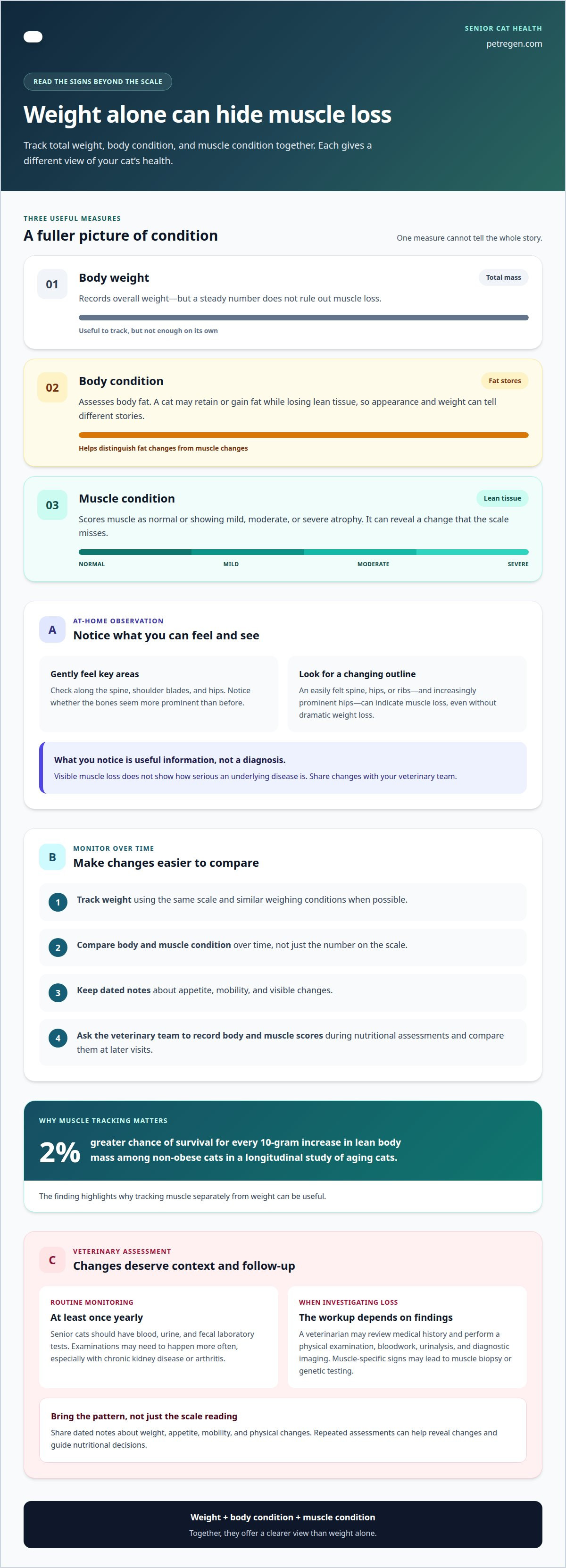
Weight, body condition, and muscle condition each reveal different aspects of an older cat’s health. Tracking all three can expose muscle loss even when the scale appears steady.
Muscle and Body Condition Scoring
Muscle condition scoring classifies muscle as normal or showing mild, moderate, or severe atrophy. Body condition scoring assesses fat stores, while weight records total mass. Together, these measures help distinguish fat changes from muscle loss. A cat may retain or gain fat while losing lean tissue, so weight alone can hide a meaningful change.
Feel gently along the spine, shoulder blades, and hips, then note whether bones seem more prominent than before. An easily felt spine, hips, or ribs can indicate muscle atrophy, but visible loss doesn’t necessarily show how serious an underlying disease is. These observations can inform a veterinary assessment, but they can’t diagnose the cause.
Monitoring Condition Changes
Monitor weight and compare body and muscle condition over time. Use the same scale and similar weighing conditions when possible, and keep dated notes about appetite, mobility, and visible changes. A more pronounced body outline or increasingly prominent hips may matter even without dramatic weight loss.
Ask the veterinary team to record body and muscle scores during nutritional assessments, then compare them at later visits. In a longitudinal study of aging cats, non-obese cats had a 2% greater chance of survival for every 10-gram increase in lean body mass. That finding highlights why tracking muscle separately from weight can be useful.
Checkups and Condition Assessments
Senior cats should have blood, urine, and fecal laboratory tests at least once yearly. Veterinary examinations may need to happen more often, especially with chronic kidney disease or arthritis. Repeated assessments can reveal changes in weight, muscle condition, or mobility and help guide nutritional decisions.
To investigate suspected muscle loss, a veterinarian may review medical history and perform a physical examination, bloodwork, urinalysis, and diagnostic imaging. Muscle-specific signs may lead to muscle biopsy or genetic testing. The evaluation depends on the pattern of loss and other findings, since a scale cannot show whether illness is affecting muscle.
Changes in mobility and possible arthritis pain
Reduced mobility can limit muscle use, while pain may make everyday movement harder. Notice what changes so you can respond without pushing your cat beyond its comfort.
Osteoarthritis and Reduced Mobility
Osteoarthritis is a joint condition that can make movement uncomfortable and reduce a cat’s willingness to stay active. Watch for changes such as hesitating before a jump, avoiding stairs, or moving less around the home. These signs don’t identify the cause, but they help describe what has changed.
A new limp lasting more than 5 days should be evaluated by a veterinarian. Lameness affecting more than one leg also warrants veterinary assessment. Describe when the change began and which movements your cat avoids; those details help a veterinarian assess mobility and possible pain.
Muscle Disuse From Reduced Mobility
Muscle disuse occurs when a cat uses its muscles less, allowing strength and muscle mass to decline. Pain, illness, or significantly compromised mobility can reduce normal activity and contribute to muscle atrophy. This can add to age-related sarcopenia, the gradual loss of lean muscle mass.
Notice whether your cat still gets up for meals, grooms, and moves between resting places. A change in one activity can provide useful context, especially alongside changes in weight or muscle condition. Kidney disease can also contribute to muscle loss, so reduced movement shouldn’t automatically be treated as the only cause.
Safe Exercise and Enrichment
Safe exercise encourages comfortable movement without forcing painful or difficult actions. Offer gentle, self-paced play with a wand toy kept low to the floor, or place a familiar resting spot within easy reach. Let your cat pause or stop, and avoid making high jumps part of the activity.
Food puzzles and brief interactive play can provide mental engagement and opportunities to move. Keep the route clear and use stable, easy-to-reach surfaces. If your cat limps, resists movement, or shows reduced mobility, pause the activity and arrange a veterinary assessment. A veterinarian can assess pain and help choose suitable activity, taking illness, protein intake, and overall strength into account.
Fish oil and omega-3 fatty acids
Fish oil can add a targeted nutritional component to a senior cat’s care plan. Its value depends on the omega-3 fatty acids it supplies, not simply the word “oil” on the label. For readers thinking about how to prevent muscle atrophy in senior cats, that distinction helps clarify what fish oil may contribute.
The relevant fish-oil omega-3s for cats are EPA and DHA. These fatty acids can decrease inflammatory cytokine production and improve food intake. That may matter when chronic inflammation or decreased appetite affects nutrition and muscle maintenance. In cats with chronic kidney disease, omega-3s may help reduce associated inflammation, indirectly supporting muscle health. They complement a nutritional plan; they don’t treat kidney disease or replace adequate calories and protein.
Source matters. Flaxseed oil and other plant-based omega-3s are ineffective sources of EPA and DHA for cats and dogs. Plant oils may contain different omega-3s, but they don’t provide the same EPA and DHA contribution as fish oil. If your goal is to include those specific fatty acids, choose an appropriate fish-oil source rather than assuming any omega-3-labelled oil is equivalent.
Fish oil is one possible part of nutrition support, not a stand-alone solution to muscle loss. A senior cat with reduced appetite still needs a complete diet with enough energy and protein. Persistent appetite decline, vomiting, weight change, or reduced activity warrants attention to the underlying cause, especially with chronic disease. A supplement cannot correct inadequate intake on its own. Understanding this role is one part of how to prevent muscle atrophy in senior cats through a broader care plan.
Before adding fish oil, review your cat’s current food and supplements with a veterinarian. Product concentrations and serving directions vary, so avoid guessing a dose or combining products without accounting for their ingredients. A veterinarian can consider kidney health, appetite, existing diet, and other supplements when assessing the plan.
For whole-body nutritional support alongside a balanced diet, explore natural support for healthy aging.
PetREGEN
PetREGEN Stem Cell Activator Supplement provides nutritional support for a cat’s natural regenerative function as part of a broader healthy-aging plan. Its whole-body approach supports immune function, mobility, and recovery, alongside appropriate nutrition, comfortable activity, and veterinary care. It isn’t a substitute for investigating muscle loss or addressing an underlying illness.
Formulated with human-grade ingredients, including amino acids, omega 7, and collagen, it’s designed to support healthy aging and recovery. Consider it as one supportive option when you’re building a thoughtful wellness routine for your senior cat, rather than as a replacement for a complete diet or a veterinary assessment.
To learn more about PetREGEN Stem Cell Activator Supplement for your cat, contact PetREGEN.
Build a Supportive Plan for the Years Ahead
A thoughtful approach to how to prevent muscle atrophy in senior cats begins with adapting care as your companion’s needs change. Rather than looking for a quick fix, choose manageable habits that fit your cat’s comfort, appetite, and daily life. Share new concerns with your veterinary team, and let their guidance shape decisions about nutrition, movement, and supplements.
Small adjustments can make ongoing care more achievable. Keep your cat’s routine comfortable, notice what supports their interest in daily activities, and revisit the plan when their health changes. The goal is to support vitality and quality of life, with veterinary care addressing medical concerns and wellness support complementing that care.
For a supportive next step, contact PetREGEN about your cat’s wellness needs. Your care and attention can help you make informed choices and give your companion thoughtful support through every stage of aging.
Frequently Asked Questions
Does my senior cat need a special diet?
Not every older cat needs the same food; the right diet depends on health, appetite, and body condition. A cat with reduced appetite may do better with smaller, more frequent meals or food with a stronger aroma. If kidney disease or another chronic condition affects eating, a veterinarian can shape nutrition choices around the diagnosis and your cat’s ability to maintain regular intake.
How can my veterinarian help?
Your veterinarian can investigate why muscle changes are happening and use the findings to guide care. Bring a concise timeline of appetite, activity, thirst, urination, and weight changes, along with a list of foods and supplements. This context helps connect examination findings with daily changes. The evaluation can guide care for an underlying illness and a nutrition plan suited to your cat.
Isn’t my cat just getting older?
Age can contribute to gradual muscle changes, but it shouldn’t explain away every new symptom. A sudden change, muscle loss concentrated on one side, or reduced use of a limb points to a different pattern from gradual whole-body decline. Record where you notice changes and how they progress. That information helps distinguish age-related changes from an injury or illness needing attention.
What are the signs my senior pet has a problem?
Changes in appetite, vomiting, lethargy, increased thirst or urination, and unexpected weight change all deserve attention in an older cat. Notice combinations, too: for example, less interest in food alongside increased drinking is more informative than either observation alone. Record when signs began and whether they persist, then share the timeline with your veterinarian rather than waiting for several changes to appear.
What can I do to help my senior cat have the best quality of life?
Make daily care easier and more comfortable: keep food, water, resting places, and litter accessible without difficult jumps. Check nails weekly, since thick nails can grow into paw pads, and brush your cat daily to help with hard-to-reach grooming. Keep opportunities for gentle play and mental engagement in the routine, adjusting the setup to your cat’s comfort and mobility.
What can be done to help my companion age gracefully?
Build a steady routine around eating, drinking, grooming, rest, and comfortable activity. For a cat with chronic kidney disease, hydration deserves particular attention; a veterinarian can recommend supportive options, including subcutaneous fluids when appropriate. Keep notes on changes in behavior or daily habits so you can share specific observations at checkups. Consistent attention helps you respond thoughtfully as your companion’s needs evolve.


