

A dog with weak back legs needs steady support, not a pull. Move them onto a non-slip surface and use a towel or lifting sling to help them rise, without forcing them to walk. Knowing how to help a dog with weak back legs get up safely also means recognizing when not to try: sudden weakness, collapse, severe pain, or inability to stand calls for prompt veterinary care.
It’s upsetting to watch your companion struggle with a movement that used to come easily, and it’s natural to want to help right away. Before starting any strengthening program, focus on safe support and a veterinary assessment to understand what may be causing the weakness. This guide covers warning signs, how to help your dog get up safely, and how suitable activity, nutrition, and joint support can fit into ongoing mobility care.
Key Takeaways
- Notice changes in your dog’s gait, paw placement, strength, or comfort; sudden weakness, collapse, or inability to stand needs urgent veterinary care.
- Gradual stiffness can have different causes, including arthritis or hip dysplasia, so identifying the pattern helps guide the next steps.
- Build strength with low-impact activity suited to your dog, and support mobility with a healthy diet and appropriate joint supplements.
- Use a non-slip surface and a towel or lifting sling to assist with standing; never force your dog to walk through weakness.
Signs of hind-leg weakness, including collapse, ataxia, paralysis, paresis, and limping
Hind-leg weakness may begin with a small change: your dog hesitates before standing, wobbles after resting, drags a back paw, or avoids stairs. Watch how each paw lands. Knuckling means a paw folds under, while limping shifts weight away from a painful leg. Ataxia describes wobbly, uncoordinated movement. Paresis is partial weakness that limits movement; paralysis means a dog can’t move one or more limbs. These signs can make rising and walking unsafe.
The pattern matters. A gradual decline can occur with degenerative myelopathy, a progressive disease affecting spinal-cord function that often begins in the hind limbs. Sudden weakness or paralysis can have different causes, including a ruptured or bulging disc pressing on the spinal cord, injury, a blood clot, tick-borne disease, or spinal inflammation. These causes need veterinary assessment; guessing may delay appropriate care.
Seek emergency veterinary care if your dog suddenly collapses, can’t walk or move their back legs, has severe pain, or loses bladder control. Rapidly worsening weakness or walking on the tops of the paws also needs urgent evaluation. A veterinarian may use a physical and neurologic examination, blood tests, or imaging to investigate the cause. In the United States, veterinary care and physical-therapy costs depend on the evaluation and treatment needed, including tests, imaging, and rehabilitation.
A towel sling, rear-lifting harness, or full-body support harness can help stabilize a dog while standing or walking. Choose support that fits the area needing help. To lift a small dog with possible spinal or nerve injury, support the chest and hindquarters together, keeping the spine aligned. For a larger dog, use a board or blanket as a stretcher with another person, and move the dog as little as possible.
Place your dog on a non-slip surface, add rugs over slippery floors, and block stairs they can’t manage safely. If weakness appears suddenly, stop activity and seek veterinary care promptly. Don’t force your dog to walk or massage the spine or a painful area.
Arthritis and hip dysplasia
Arthritis often develops gradually, so changes may show up in everyday routines before a dog struggles to stand. An older dog might pause before getting up, walk more slowly, avoid stairs, or seem stiff after resting. Osteoarthritis can affect hind-leg joints, and joint degeneration can cause pain and stiffness that reduce mobility. Pay attention to these signs even if they come and go or your dog still seems cheerful.
Hip dysplasia is a different joint problem: the hip develops abnormally, affecting how the joint moves and bears weight. Genetics is the primary cause, while size, weight, and overuse can also contribute. German Shepherds, Labrador Retrievers, Saint Bernards, and Great Danes are among the larger breeds more commonly affected. Breed or age may raise awareness, but neither establishes a diagnosis.
A veterinarian’s assessment helps distinguish arthritis, hip dysplasia, and other causes of hind-leg discomfort. Share specific observations, such as which leg seems affected, whether stiffness follows rest, and how walking changes over time. Treatment depends on the diagnosis and may involve medication, supportive care, weight management, physical therapy, or surgery. The right plan accounts for pain, mobility, overall health, and the joint problem involved.
At home, keep your dog at a healthy weight to reduce stress on the joints and spine. Non-slip rugs make routes across smooth floors safer, while supportive bedding gives an older dog a comfortable place to rest. Mobility aids may help with everyday movement. Ask the veterinarian whether low-impact activity or rehabilitation suits your dog’s condition, and avoid increasing exercise when movement appears painful.
Joint supplements may be part of a broader mobility plan. Omega-3 fatty acids may help reduce inflammation, while glucosamine and chondroitin may benefit joints. A supplement doesn’t replace diagnosis or treatment, but discussing suitable options with your veterinarian can help you make informed choices. Consistent observation, proper weight management, and a tailored care plan can support comfort and quality of life.
Gradual walks and swimming for muscle strength
Before changing your dog’s activity, discuss the plan at a veterinary appointment, especially if weakness is new or worsening. A veterinarian can assess pain, balance, mobility, and your dog’s ability to bear weight on each hind leg. Stop exercise if your dog’s gait changes suddenly, they struggle more, or they show discomfort. This helps avoid pushing through a possible injury. If your dog is recovering from surgery or illness, follow the activity limits in their care plan.
For a dog cleared to exercise, begin with short, steady walks on level, familiar ground. Two shorter walks daily may be easier to manage than one demanding outing. Keep the pace comfortable, allow pauses, and watch whether your dog’s steps remain even. Gradually increase duration only while movement stays controlled. If a hind leg starts dragging or your dog tires, end the walk and note what happened. Those observations can help tailor future activity.
Swimming allows muscle activity with low friction because water supports some body weight. Choose calm, supervised sessions, and make entering and leaving the water easy. If your dog paddles unevenly, panics, or tires, give them a break. Swimming isn’t suitable for every condition or dog, so ask the veterinarian before trying it. Simple balance work on land may be part of a recommended rehabilitation plan, but avoid unstable equipment without professional guidance.
Veterinary treatment for hind-leg weakness depends on its cause and may include medication, supportive care, weight management, physical therapy, or surgery. For progressive, age-related weakness, rehabilitation may help maintain strength and slow functional decline, but it can’t change the underlying condition’s course. The diagnosis, pain level, and ability to move guide the plan. Follow the recommended exercise limits, and don’t add strenuous walks or swimming if your dog’s mobility worsens.
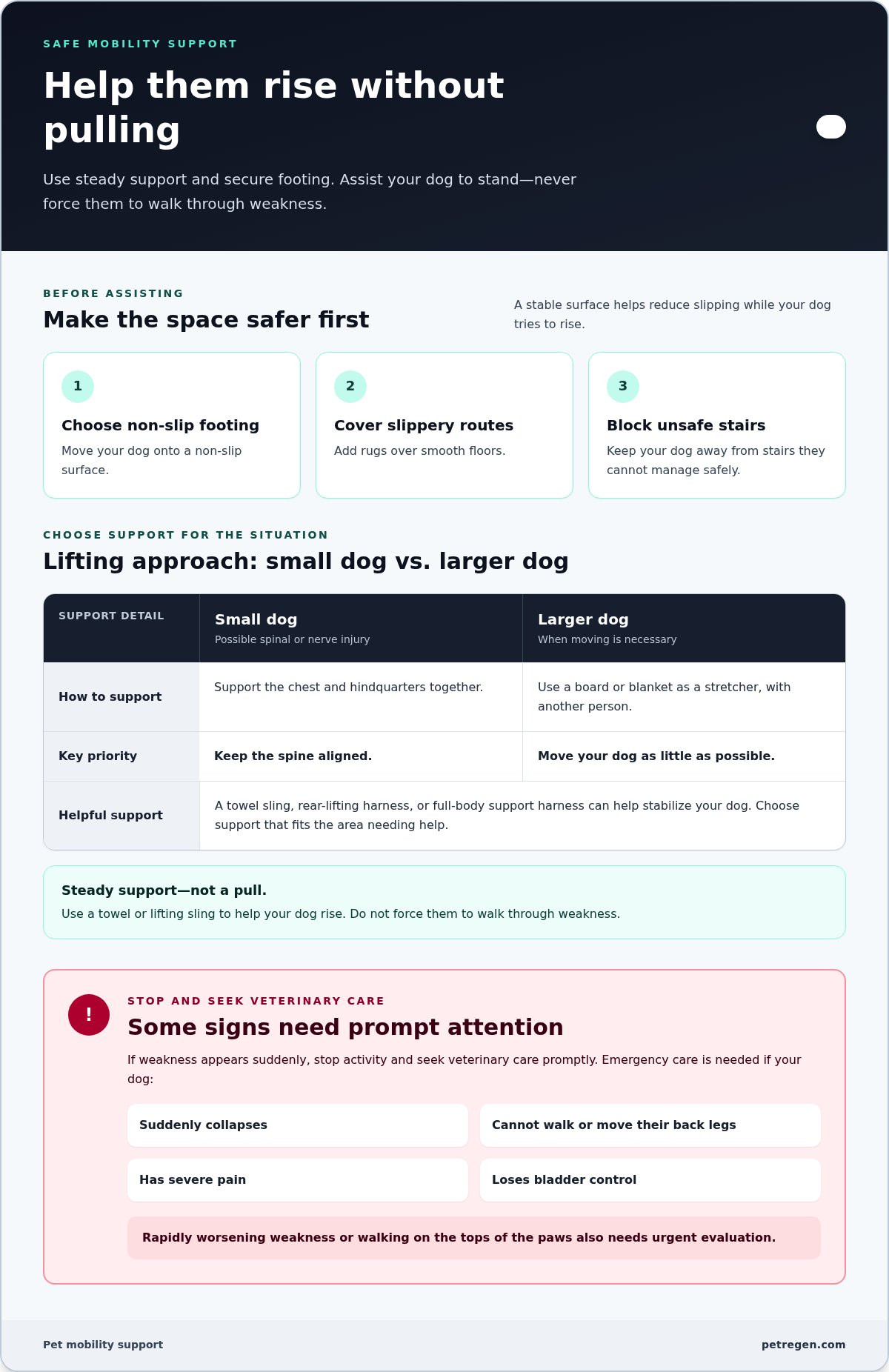
How can you safely help a dog with weak hind legs stand up?
To understand how to help a dog with weak back legs get up safely, first consider whether your dog can attempt to rise. If weakness appeared suddenly, walking is impossible, or your dog seems severely painful, don’t attempt a standing exercise. Keep activity minimal and seek urgent veterinary care. For ongoing weakness, choose a quiet moment and a level, non-slip surface. Move food, water, and bedding within easy reach so your dog doesn’t need to scramble.
If your dog can bear some weight, position a towel or rear-support sling beneath the abdomen, just ahead of the hind legs. Hold both ends evenly and lift gently as your dog pushes up with the front legs. The sling should support, not squeeze, the belly or pull the hind legs forward. Keep your dog’s body aligned, and stop if the movement causes pain, distress, or slipping. This is a practical way to help a dog with weak back legs get up without hauling on their limbs.
For a small dog with possible spinal or nerve injury, support the chest and hindquarters together while lifting. Keep the back level rather than letting the rear end hang. If a larger dog can’t rise, use a firm blanket or board as a stretcher, with another person helping. Move slowly and keep the surface flat during transport to limit sliding.
Once your dog is standing, pause before moving. Check that all four paws are placed normally, then allow only a few supported steps if your dog remains comfortable. Don’t drag them, pull them by the tail, or force them to walk. A rear-lifting harness can offer steadier support during routine mobility, while rugs improve traction along the route. Block stairs if your dog could slip or fall.
For a dog unable to reposition, soft bedding can reduce pressure on the body. Keep essentials close and watch for new weakness, pain, or difficulty breathing. These changes call for prompt veterinary attention. When everyday mobility support is part of your care plan, explore support for your dog’s mobility as a complementary wellness option, not a substitute for urgent assessment.
PetREGEN: PetREGEN Stem Cell Activator Supplement
PetREGEN Stem Cell Activator Supplement offers a nutritional option for ongoing whole-body wellness after your dog’s mobility needs have been assessed. It’s formulated to support the body’s natural regenerative function by supporting immune function, with the goal of promoting mobility, recovery, and healthy aging. Its human-grade ingredients include amino acids, omega 7, collagen, real liver, and phytonutrients.
This supplement is not a way to lift a dog or address sudden hind-leg weakness. Keep using safe mobility support and follow veterinary guidance for diagnosis, exercise, and treatment. For pet parents looking to add nutritional support to their dog’s broader wellness routine, learn more about PetREGEN Stem Cell Activator Supplement.
Visit petregen.com to learn more.
Make the next step a thoughtful one
Learning how to help a dog with weak back legs get up safely is one part of supporting their comfort. Build a care routine around what your dog can manage today, while staying alert to changes in mobility or energy. Small observations, such as how readily your companion rises or settles, can help you discuss their needs and adjust everyday support.
Nutritional support may also have a place in a broader wellness routine, alongside veterinary guidance and suitable activity. PetREGEN offers PetREGEN Stem Cell Activator Supplement for pet parents exploring that option. Consider whether it fits your dog’s needs, and keep urgent or worsening symptoms in veterinary care.
Explore PetREGEN’s support for your pet’s wellness and take the next step with care. Your steady attention can help your companion feel supported through each stage of their mobility journey.
Frequently Asked Questions
What should pet parents do and know before beginning a strengthening program?
Have a veterinarian assess new hind-leg weakness before starting exercises, and ask which movements suit the suspected cause. Before the visit, note when the problem began, whether one or both legs are affected, and what activities your dog avoids. A short video of your dog walking at home can help show changes that may not appear during an appointment. Don’t give human medication unless a veterinarian advises it.
What’s a good schedule or duration for strengthening exercises?
For a dog cleared for activity, shorter, easy walks twice daily can provide a manageable starting routine. Keep the route level and pace relaxed, then adjust duration according to how your dog moves during and after each outing. Stop if steps become less coordinated, a paw drags, or discomfort appears. Swimming or physical therapy may be considered when they suit your dog’s condition and veterinary plan.
What are the symptoms of weak hind legs?
Look for difficulty rising, a wobbly gait, reluctance to jump, or back feet that scrape the floor. Paw placement offers another clue: a paw that folds underneath instead of landing normally may point to impaired coordination. Compare both sides and note whether symptoms appear after rest, worsen during a walk, or persist throughout the day. Write down these patterns to share at a veterinary visit.
What causes a dog’s back legs to give out?
Possible causes range from joint pain and injury to spinal or neurologic disease. A bulging or ruptured disc can press on the spinal cord; degenerative myelopathy affects spinal-cord function over time. Diabetes may contribute to weakness, while a fibrocartilaginous embolism can block blood flow and cause spinal swelling. Because different causes need different care, sudden loss of leg function needs urgent veterinary attention.
What should I do if my old dog’s back legs have collapsed?
If your older dog suddenly collapses or can’t use their back legs, seek emergency veterinary care rather than attempting a walk. Keep your dog calm, prevent access to stairs, and minimize movement during transport. For a larger dog, a blanket or board can serve as a stretcher with another person helping. If your dog is thirsty, offer water within reach without making them stand.
What tests might my vet recommend?
Testing may begin with a physical examination and neurologic assessment, followed by blood tests or urinalysis. Depending on the findings, imaging such as X-rays, CT, or MRI can help investigate bones, discs, and spinal structures. Tell the veterinarian when the weakness started and whether bladder control, appetite, or comfort has changed. Those details can help interpret test results and determine which further evaluation may be useful.


