

Patience is part of your pet’s recovery plan. Knowing how to be patient with a recovering pet means creating a quiet, predictable space, following care instructions, and allowing healing to take its course. Small changes in comfort, appetite, or movement can matter, so calm observation is as important as resisting the urge to rush back to normal.
It’s hard to watch a beloved companion rest when they seem eager to move, play, or return to their usual routine. A steady approach can make recovery more manageable for both of you. You’ll learn how to create a restful space, adapt everyday care, and recognize wound changes or signs that recovery may be slipping backward. With practical ways to keep your pet comfortable and know when a change needs attention, you can offer reassurance while staying alert to their health.
Key Takeaways
- Create a quiet, cozy recovery area and keep routines predictable; introduce helpful equipment gradually so your pet can adjust.
- Adapt daily care to your pet’s needs, including rest, gentle mental stimulation, and following care instructions.
- Watch for wound changes and shifts in appetite, movement, or behavior, and recognize when they call for attention.
- Understand what can affect recovery time and where a supplement designed to support natural regenerative function may fit.
Creating a calm recovery space
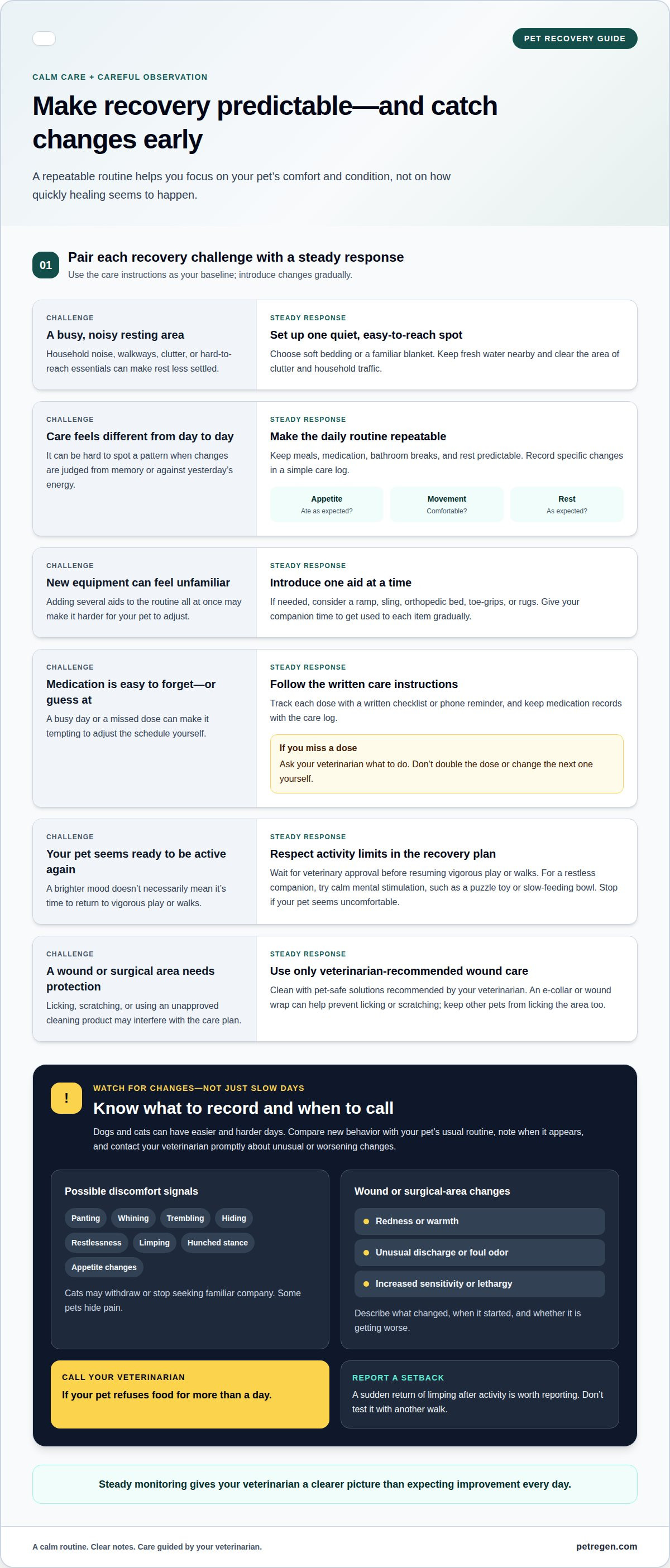
One practical way to be patient with a recovering pet is to make caregiving repeatable instead of reacting to every slow day. Set up a quiet recovery area away from household noise and busy walkways. Keep meals, medication, bathroom breaks, and rest predictable, and record changes in a simple care log. Specific observations help you focus on your pet’s condition, not how quickly healing seems to happen.
Choose a cozy spot with soft bedding or a familiar blanket, and make sure it’s easy to reach. Place fresh water nearby, and keep the resting area clear of clutter and household traffic. If your pet needs a ramp, sling, orthopedic bed, toe-grips, or rugs, introduce one aid at a time. Let your companion get used to each item gradually rather than adding unfamiliar equipment to the routine all at once.
Follow the treatment and medication schedule exactly as written in your pet’s care instructions. Use a written checklist or phone reminder to track each dose, rather than relying on memory during a busy day. If you miss a dose, ask your veterinarian what to do instead of doubling it or changing the next dose yourself. Keeping medication records with your care log makes the instructions easier to follow.
Being patient with a recovering pet also means respecting activity limits in the recovery plan. Avoid vigorous play or walks until a veterinarian approves resuming them. For a restless companion, a puzzle toy or slow-feeding bowl can provide mental stimulation without physical exertion. Keep play calm, and stop if your pet seems uncomfortable.
For wound or surgical-area care, clean only with pet-safe solutions recommended by your veterinarian. An e-collar or wound wrap can help prevent licking or scratching; keep other pets from licking the area, too. Offer fresh water often, and try warm, soft food or veterinarian-approved alternatives if eating is difficult. Call your veterinarian promptly with immediate concerns about discomfort, the wound, or following the care plan.
Pet ownership as a major life change during recovery
Bringing an animal into your home changes daily routines, responsibilities, and household spending. If you’re personally in recovery, pause before adopting: people in recovery are advised to avoid major life changes for at least a year. That guidance matters because a new pet needs steady care, even when your energy, schedule, or living situation changes. Consider whether caring for an animal would support your routine or add pressure.
Before deciding, discuss pet ownership with your therapist, treatment team, AA sponsor, and loved ones. Talk through specific duties, such as feeding, cleaning, appointments, and arranging care when you’re unavailable. A dog may need to be walked several times a day, so consider who can reliably handle those walks. A written schedule can reveal where you’ll need support before a pet arrives.
Already caring for a pet? Keep familiar routines where possible, and identify a trusted person who can step in if you need help. For example, agree on who handles meals or walks on a difficult day. You can also set reminders and keep supplies together in an accessible place. These practical supports protect your pet’s routine while making care more manageable.
Know the difference between an emotional support animal and a service animal. In the United States, emotional support animals aren’t service animals and aren’t protected by the Americans with Disabilities Act. A person seeking an emotional support animal must have a letter from a licensed healthcare provider. Psychiatric service dogs, by contrast, can be trained to perform specific tasks, such as waking someone during nightmares or bringing medication.
Choose based on your capacity to provide care, not only the comfort you hope an animal will bring. If a new pet feels like too much responsibility, waiting is a thoughtful choice. If you already share your home with a companion, a simple backup-care plan can support both your recovery and your pet’s wellbeing.
Stages and warning signs of relapse
Set realistic expectations by using your pet’s recovery plan as the baseline, not yesterday’s energy level. Dogs and cats can have easier and harder days, so note changes in appetite, movement, and behavior alongside the date. One slow morning doesn’t show the whole pattern, but a new or worsening sign deserves attention.
Some pets hide pain. Watch for panting, whining, trembling, hiding, restlessness, limping, a hunched stance, or appetite changes. For example, a dog that avoids putting weight on a recovering leg may be uncomfortable, even without crying. Cats may withdraw or stop seeking familiar company. Compare these behaviors with your pet’s usual routine, and record when they appear.
Check a wound or surgical area during routine care. Look for redness, warmth, unusual discharge, a foul odor, increased sensitivity, or lethargy. These changes may point to infection or another complication. If you notice something unusual, contact your veterinarian promptly and describe what changed, when it started, and whether it’s getting worse. Don’t clean the area with products that weren’t recommended for your pet.
Track recovery with brief, specific notes rather than judging progress by memory. Write down whether your companion ate, drank, moved comfortably, and rested as expected. If your pet refuses food for more than a day, call the veterinarian. A sudden return of limping after activity, for instance, is worth reporting rather than testing with another walk.
Think of relapse as a change in the recovery trend, not a setback you can diagnose at home. Keep activity within the prescribed limits, and don’t restart vigorous play because your pet seems brighter. Clear observations help your veterinarian assess whether the plan needs adjustment. For dogs and cats alike, steady monitoring gives you a more useful picture than expecting improvement every day.
How long does pet recovery usually take after surgery or illness?
There’s no single recovery timeline for every pet. Healing depends on the condition, the extent of the procedure, your pet’s overall health, and how their body responds. A routine procedure and a serious illness place different demands on the body, so one animal’s progress can’t reliably predict another’s. Follow the individual care plan instead of comparing your companion with another pet.
Recovery has several parts. A pet may seem brighter or regain their appetite before an incision, injured tissue, or underlying illness has fully healed. For example, a dog eager to greet visitors may still need restricted movement after surgery. Visible energy is useful to observe, but it doesn’t replace the treatment plan or follow-up checks.
Keep a simple record of meaningful changes: appetite, drinking, comfort, movement, medication, and wound appearance. If a cat begins eating again but still hides, note both observations instead of treating one improvement as complete recovery. This record helps you see the overall direction and explain changes clearly at veterinary follow-up.
Recovery can take longer when pain, infection, another complication, or an ongoing illness affects healing. Missed medication, too much activity, or difficulty eating and drinking can also interfere with care. Keep activity within the prescribed limits, give medication as instructed, and report new or worsening signs. Don’t change doses or resume vigorous play just because your pet seems more energetic.
Ask what progress should look like for your pet’s specific diagnosis, which changes need attention, and what criteria guide a gradual return to normal activity. Those details make patience practical: measure progress against comfort, function, and the care plan, not a calendar date. If healing seems to stall or symptoms return, promptly share your observations with your veterinarian.
PetREGEN: PetREGEN Stem Cell Activator Supplement
PetREGEN Stem Cell Activator Supplement supports the body’s natural regenerative function by supporting immune function. For dogs, cats, and horses, it offers a nutritional option to consider alongside a recovery routine focused on rest, monitoring, and prescribed care. Its human-grade ingredients include collagen, real liver, and phytonutrients, with amino acids and omega 7 also included in the formula.
This supplement is intended to support mobility, healthy aging, and recovery, not replace veterinary treatment or medication. If your companion’s needs have changed after illness or surgery, keep the veterinarian’s care plan central when considering any supplement. Steady support works best as part of attentive, whole-pet care.
Visit PetREGEN to learn more about the Stem Cell Activator Supplement.
Keep Moving Forward With Your Pet
Being patient with a recovering pet also means adjusting your expectations as your companion’s needs change. Let progress guide the next small step instead of pressuring them to return to the old routine all at once. Your steady presence can help your pet feel secure while you make thoughtful choices about ongoing care.
If you’re exploring nutritional support as part of your pet’s broader wellness routine, consider how it fits alongside the care plan already in place. PetREGEN offers the PetREGEN Stem Cell Activator Supplement. It’s a supplement option, not a replacement for veterinary treatment or prescribed medication. Your veterinarian’s guidance remains central when making health decisions for your companion.
For help learning more about PetREGEN, contact PetREGEN for support. Keep taking the next caring step at your pet’s pace. With patience and attentive care, you can help your beloved companion move forward with comfort and confidence.
Frequently Asked Questions
How can I keep a recovering pet comfortable and reduce stress at home?
Let your pet choose whether to approach you, and avoid unnecessary handling or repeated attempts to check on them. For example, sit quietly nearby instead of calling them over or lifting them for reassurance. Keep visitors and noisy household activities away from the recovery area. If several people share caregiving, agree on one person to coordinate updates so your pet gets calm, consistent interactions.
How can I manage setbacks or slow progress during a pet's recovery?
Stick with the existing care plan, and avoid changing medication, activity, or wound care based on one difficult day. Note what happened before a setback, such as a meal, movement, or change in the household, then share useful details with the veterinarian. If your pet’s symptoms worsen or a new concern appears, contact the veterinary team rather than waiting for the next planned check-in.
How do I help children or other pets give a recovering pet space?
Set a clear boundary around the recovery area, such as a closed door or secure gate, and explain that the resting pet must not be followed, touched, or disturbed. Give children a quiet role, like placing a familiar toy nearby only when an adult allows it. Feed other pets separately, and supervise shared time so they can’t crowd, lick, or play with the recovering animal.
When should I contact the veterinarian if my pet isn't improving?
Contact the veterinarian about new or concerning discomfort, unusual wound changes, or symptoms that worsen instead of settling. Redness, warmth, unusual discharge, foul odor, increased sensitivity, or lethargy around a wound can signal a complication. Call if your pet refuses food for more than a day. When you reach out, describe the change, when it began, and any related behavior or appetite shifts.


