

That sudden, heart-stopping hitch in your dog's gait, followed by an awkward hop or a lifted rear leg, is deeply painful to watch. If you're wrestling with anxiety over chronic cartilage wear or wondering whether an invasive procedure is immediately mandatory, you aren't alone. When facing mild to moderate knee instability, supporting a dog with a luxating patella often begins right at home with a proactive, science-backed approach rather than rushed surgical intervention.
True knee stability requires a dual strategy: mechanical support from the outside and regenerative nourishment from the inside. You can help your companion regain smooth, reliable mobility without living in fear of the next painful slip. In this complete guide, you'll discover how to craft a slip-free home setup, utilize targeted physical exercises that strengthen stabilizing quadriceps, and activate your dog's built-in repair system using cellular nutrition. Here is your practical roadmap to preventing recurring flare-ups, shielding vulnerable joint tissue, and helping your fur-baby thrive with renewed comfort.
Key Takeaways
- Understand how patellar luxation grades impact mobility, and why mild to moderate cases often respond remarkably well to non-surgical care.
- Master practical strategies for supporting a dog with a luxating patella at home, from eliminating slip hazards to preventing recurring kneecap dislocations.
- Discover targeted, low-impact conditioning exercises that strengthen the quadriceps and stabilizing tendons to keep the kneecap properly aligned.
- Learn why standard glucosamine chews are rarely enough to counter chronic friction and cellular oxidative stress within the joint capsule.
- Explore how pairing safe physical routines with PetREGEN Stem Cell Activator Supplement actively empowers your companion's built-in repair system for long-term comfort.
Understanding Luxating Patella: Symptoms, Severity Grades, and Joint Mechanics
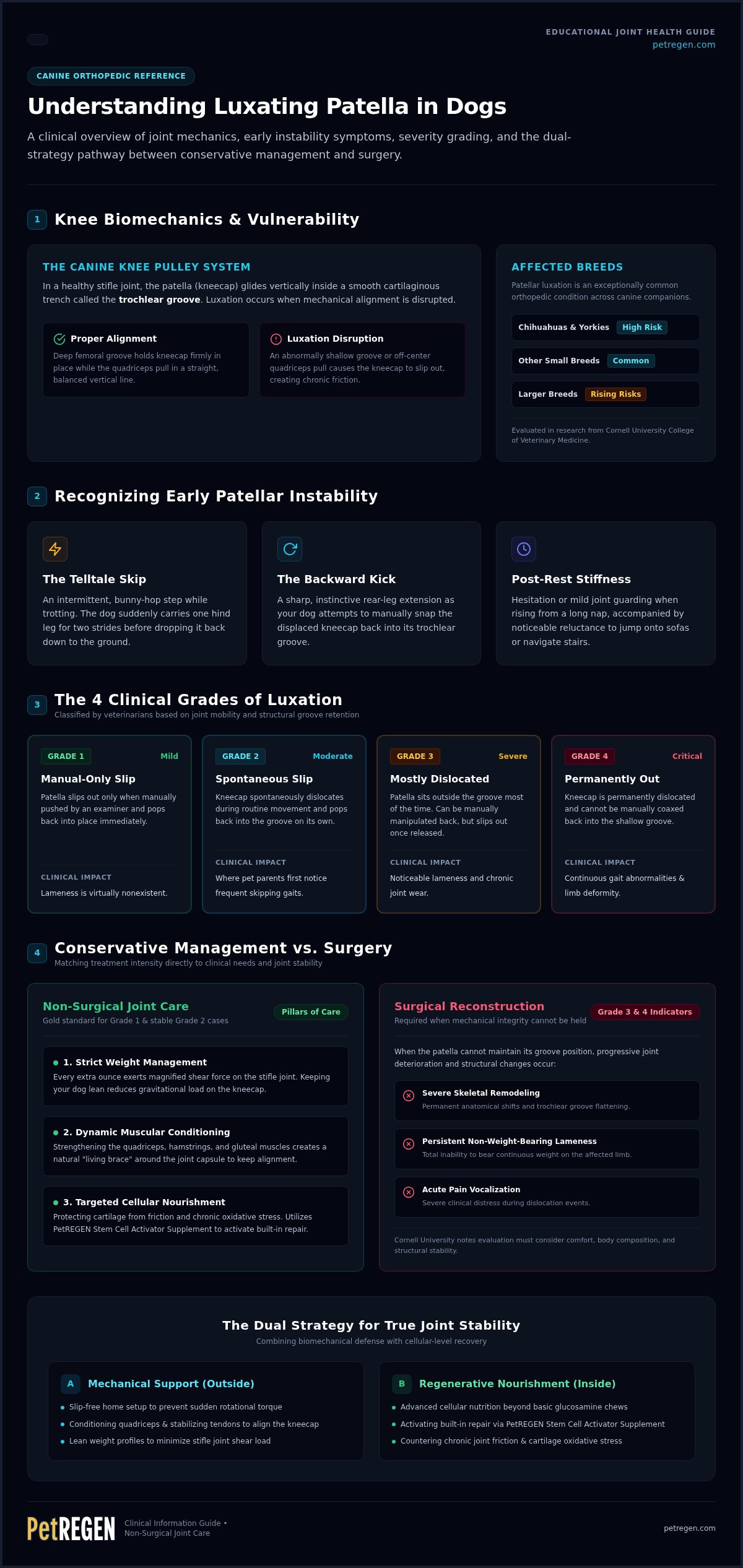
The canine knee functions like a delicate pulley system. In a healthy joint, the patella (kneecap) glides vertically inside a smooth cartilaginous trench called the trochlear groove. When supporting a dog with a luxating patella, you are dealing with a disruption in this precise biomechanical alignment. If the femoral groove is abnormally shallow or the quadriceps tendon pulls at an off-center angle, the kneecap slips out of place. This orthopedic issue is an exceptionally common condition in dogs, particularly in smaller companions like Chihuahuas and Yorkies, though larger breeds face rising risks as well.
Recognizing the Hallmarks of Patellar Instability
Early indicators of patellar instability are often subtle and easy to overlook. Watch closely for these distinctive warning signs:
- The telltale skip: An intermittent, bunny-hop step while trotting, where your companion suddenly carries one hind leg for two strides before dropping it back down.
- The backward kick: A sharp, instinctive rear-leg extension as your dog tries to manually snap the kneecap back into its groove.
- Post-rest stiffness: Hesitation or mild guarding when rising from a long nap, often accompanied by reluctance to jump onto the sofa or tackle stairs.
The 4 Clinical Grades of Luxation Explained
Veterinarians classify patellar luxation into four distinct stages based on the knee's physical mobility:
- Grade 1: The patella slips out only when manually pushed by an examiner and pops back into place immediately. Lameness is virtually nonexistent.
- Grade 2: The kneecap spontaneously dislocates during routine movement and pops back into the groove on its own. This is where most pet parents first notice frequent skipping gaits.
- Grade 3: The patella sits outside the groove most of the time. While a vet can manually manipulate it back into place, it slips out the moment pressure is released.
- Grade 4: The kneecap is permanently dislocated and cannot be manually coaxed back into the shallow groove. This severe mechanical shift causes noticeable limb deformity and continuous gait abnormalities.
Knowing your dog's exact grade is the critical first step in supporting a dog with a luxating patella through targeted home care and proactive lifestyle adjustments.
Conservative Management vs. Surgery: How to Decide for Your Dog
Pet owners facing a luxation diagnosis are often pushed toward two extremes: rush straight into costly surgery or take a wait-and-see approach. Real orthopedic care rarely operates in absolutes. Research from Cornell University College of Veterinary Medicine highlights that managing this common orthopedic condition involves evaluating multiple variables, including physical comfort, body composition, and structural stability. Successfully supporting a dog with a luxating patella means matching your treatment intensity directly to your companion's clinical needs.
When Non-Surgical Joint Care Is Viable
Conservative care is often the gold standard for Grade 1 and stable Grade 2 cases, especially when the dog remains comfortable between episodes. A proactive non-surgical protocol focuses on three foundational pillars:
- Strict weight management: Every extra ounce exerts magnified mechanical shear on the stifle joint. Keeping your dog lean reduces the gravitational load pushing the patella out of alignment.
- Dynamic muscular conditioning: Strengthening the quadriceps, hamstrings, and gluteal muscle groups creates a living brace around the joint capsule, mechanically holding the patella in place.
- Targeted cellular nourishment: Protecting delicate cartilage from the friction of intermittent slips helps prevent early inflammatory changes and slows degenerative wear.
Clear Indicators That Surgical Intervention Is Necessary
While conservative strategies excel for mild instability, some cases require surgical reconstruction. Grade 3 and Grade 4 luxations, where the patella cannot maintain its groove position, typically cause severe skeletal remodeling. If your dog exhibits persistent non-weight-bearing lameness, vocalizes in acute pain, or shows signs of a concurrent cranial cruciate ligament (CCL) tear, surgery is often essential to restore function. According to the American College of Veterinary Surgeons, patellar luxation accompanies CCL ruptures in 15% to 20% of cases, making professional orthopedic evaluation vital before choosing a path.
Always partner with your veterinarian to establish a clear diagnostic baseline. For dogs suited to conservative therapy, pairing home conditioning with advanced joint support from PetREGEN can help protect vulnerable stifle tissue and nurture long-term vitality naturally.
Home Environment Modifications and Safe Physical Exercises
Every slip on slick flooring sends a violent jarring force directly into an already unstable stifle joint. When patellar luxation (dislocation) occurs repeatedly, sudden twisting can tear micro-fibers within the stabilizing collateral ligaments. Successfully supporting a dog with a luxating patella requires reshaping your living space to eliminate sudden trauma while implementing therapeutic movements that build protective muscle tone.
Household Adjustments to Prevent Traumatic Slips
Creating a secure home environment reduces accidental knee hyperextension. Simple environmental safeguards include:
- Laying non-skid paths: Cover polished tile and hardwood floors with rubber-backed runner rugs or interlocking yoga mats along high-traffic corridors.
- Installing low-incline ramps: Place carpeted ramps alongside couches and beds. Leaping downward places tremendous concussive pressure on hind limbs, instantly popping vulnerable kneecaps out of place.
- Restricting stair access: Secure stairwells with sturdy baby gates to avoid uncontrolled sprinting or awkward slips during rapid ascents.
Low-Impact Muscle Strengthening Routines
Resting an injured knee completely leads to rapid muscle wasting. Without robust quadriceps to center the tendon, the patella slips far more easily. A structured conditioning protocol helps keep your companion active and strong:
- Controlled flat walking: Walk on short grass for 10 to 15 minutes twice daily. Slow, steady trotting engages the rear stabilizers without joint impact.
- Targeted sit-to-stands: Guide your dog from a square sit to an upright stand using healthy treats. Performing 5 to 8 slow repetitions acts like targeted canine squats, engaging the hamstrings and vastus lateralis.
- Canine hydrotherapy: Swimming or utilizing an underwater treadmill provides 360-degree joint buoyancy. Buoyant exercise circulates rich synovial fluid through the knee capsule while building lean muscle against water resistance.
Consistency is key. Combining a slip-resistant living area with daily, low-impact exercise establishes the external physical foundation necessary for supporting a dog with a luxating patella comfortably over a lifetime.
Nourishing Joint Tissue: Beyond Standard Glucosamine Supplements
Every time an unstable kneecap slips out of alignment, bone grates against bone. This mechanical friction causes microscopic tearing, persistent heat, and intense oxidative stress across the stifle joint. When supporting a dog with a luxating patella, simply offering a conventional joint chew rarely stops this cycle. Superficial lubrication cannot shield cellular cartilage from continuous physical wear.
Limitations of Traditional Chondroitin and Glucosamine Chews
Most pet parents instinctively grab standard glucosamine and chondroitin chews. While well-intentioned, these legacy supplements have notable shortfalls:
- Poor bioavailability: Large molecular weight compounds struggle to absorb efficiently through canine digestive tracts, meaning minimal active nutrients actually reach the joint capsule.
- Symptom masking: Traditional chews temporarily cushion joint fluid without addressing underlying ligament laxity or cellular degradation.
- Low-grade fillers: Cheap commercial supplements often contain synthetic preservatives, fillers, and wheat products that trigger digestive sensitivities in delicate dogs.
Activating the Canine Built-In Repair System
True orthopedic support requires working at the cellular source. Dogs possess an innate biological capacity to heal, but repeated patellar slips drain those physiological reserves. Supplying targeted phytonutrients helps neutralize damaging free radicals and quiet local inflammation, creating an optimal internal environment for connective tissue to thrive.
Simultaneously, human-grade collagen peptides deliver the exact structural amino acids needed to fortify stretched patellar tendons and cartilage matrices. By awakening your companion's built-in repair system, you help cellular renewal outpace mechanical wear and tear. You can move beyond basic symptom management and actively order the PetREGEN Stem Cell Activator Supplement to deliver advanced regenerative nourishment straight to your dog's knees.
Creating a Daily Routine with PetREGEN Stem Cell Activator Supplement
Real orthopedic transformation relies on steady, daily commitment. Pairing mechanical environmental safeguards and targeted physical conditioning with internal cellular nourishment provides the most comprehensive strategy when supporting a dog with a luxating patella. Establishing a structured daily rhythm keeps your fur-baby comfortable, confident, and eager to move.
Integrating Advanced Cellular Support into Daily Feeding
Consistency is crucial when delivering targeted nutrients to your dog's joints. Seamlessly weave restorative nutrition into your companion's daily habits with these simple steps:
- Morning nourishment: Mix PetREGEN Stem Cell Activator Supplement directly into your dog's breakfast. The USA-made, human-grade formula contains real liver and natural phytonutrients that dogs genuinely enjoy eating.
- Healthy lipid pairing: Serve meals alongside clean, fresh water and anti-inflammatory omega-3 fatty acids, which enhance nutrient absorption across cellular membranes.
- Midday reset: Follow lunch or morning rest with a gentle 10-minute flat-surface walk, stimulating synovial joint lubrication while circulating active peptides through the stifle.
Monitoring Mobility Progress and Veterinary Milestones
Tracking your companion's recovery removes guesswork and ensures your non-surgical approach remains effective. Maintain a quick weekly journal noting how often skipping gaits occur, how smoothly your dog stands after resting, and their general energy levels. Over time, decreasing hitch steps and renewed enthusiasm for play signal growing joint resilience.
Schedule semi-annual orthopedic evaluations with your veterinarian to monitor stifle stability and palpate groove depth. These check-ins confirm that surrounding muscle tissue is adequately supporting the knee capsule without unchecked cartilage erosion. Celebrate every milestone, whether it's an uninterrupted trot across the grass or a fluid rise from the living room rug. Take proactive charge of your companion's lifelong vitality by exploring the PetREGEN Stem Cell Activator Supplement today.
Restoring Your Dog's Freedom of Movement at Home
A luxating patella diagnosis doesn't mean your companion's playful days are behind them. Successfully supporting a dog with a luxating patella comes down to a balanced, daily routine: eliminating slick household hazards, maintaining gentle muscle-strengthening exercises, and nourishing the stifle joint from within. By stabilizing the knee externally and reducing cellular friction internally, you protect delicate cartilage and keep your fur-baby comfortable.
You don't have to settle for basic joint chews that merely mask symptoms. Formulated with USA-made, human-grade superfood ingredients, PetREGEN is endorsed by professional veterinarians, zoologists, and dog trainers to awaken your dog's built-in repair system. Backed by science and protected by an unconditional 100% money-back guarantee, it offers natural, whole-body vitality you can trust. Give your dog the regenerative joint support they deserve with PetREGEN and watch your companion get back to living their absolute best life with renewed, joyful mobility.
Frequently Asked Questions
Can a dog live comfortably with a luxating patella without surgery?
Yes, many dogs diagnosed with Grade 1 or mild Grade 2 patellar luxation live happy, active lives without surgical intervention. Success depends on maintaining a lean body weight, providing low-impact exercise to reinforce the quadriceps, and supplying cellular joint nutrition. Proactively supporting a dog with a luxating patella through home modifications keeps discomfort low and preserves long-term joint function.
What exercises should you avoid if your dog has a slipping kneecap?
Avoid high-impact, explosive movements that twist or jar the stifle joint. Frantic games of fetch, sharp turns, jumping off elevated furniture, and running up steep stairs can force an unstable kneecap out of alignment. Stick instead to controlled leash walks on level ground, gentle sit-to-stand drills, and buoyant hydrotherapy sessions to build muscle without stressing vulnerable cartilage.
How does a stem cell activator supplement support canine knee health?
Unlike standard joint chews that merely lubricate joint fluid, a stem cell activator works at the cellular source. PetREGEN Stem Cell Activator Supplement supplies human-grade collagen, real liver, and bioactive phytonutrients that combat oxidative stress and stimulate the body's natural regenerative processes. This cellular nourishment fortifies stretched ligaments and supports joint tissue renewal naturally.
Is a luxating patella painful for dogs when it slips out?
The mechanical slip itself is often more startling than excruciating, which is why dogs frequently shake the leg or skip a stride without crying out. However, pain develops quickly if the dislocation happens repeatedly. Continuous friction erodes the protective cartilage, inflaming the joint capsule and triggering chronic arthritic soreness over time.
Can a dog's luxating patella improve or resolve on its own?
The underlying anatomical defect, such as a shallow femoral groove, will not physically correct itself without surgery. However, clinical stability can improve dramatically through non-surgical management. Strengthening the stabilizing hindquarter muscles and maintaining cellular nourishment can significantly reduce or even eliminate active slipping episodes.
What is the difference between Grade 1 and Grade 2 luxation?
The primary difference lies in how easily the kneecap dislocates during daily activity. In Grade 1, the patella only slips out when physically pushed by an examiner during an exam and springs right back. In Grade 2, the kneecap dislocates spontaneously during regular walking or trotting, often causing that familiar, temporary skipping gait.
How quickly can pet parents expect results from joint support protocols?
Pet parents typically notice subtle mobility improvements within two to four weeks of consistent home care and cellular supplementation. Reduced skipping gaits, smoother transitions from rest, and renewed walking stamina usually follow as stabilizing muscles strengthen. Complete cellular and structural joint support builds progressively over several months of dedicated daily care.


