

What if the best support for your dog’s recovery isn’t a supplement, but a well-coordinated rehabilitation plan? If your dog is stiff, recovering from an injury, or finding movement harder, it’s natural to want every step to help. Searching for supplements for dogs in physical therapy can bring up conflicting claims, so it helps to know what to ask and how to evaluate the answers.
Rehabilitation should be guided by your dog’s veterinary care team, with exercises and therapies suited to your companion’s needs and comfort. Supplements may have a supportive nutritional role, but they don’t replace therapy or veterinary treatment. Ingredients can also matter when your dog takes medication or has other health concerns. This guide explains what canine rehabilitation can involve, what to ask about a therapist’s qualifications and care plan, and how to discuss supplement choices with your veterinarian. It also explains how PetREGEN, a supplement made with collagen, real liver, amino acids, omega 7, and phytonutrients, may fit into a broader care conversation.
Key Takeaways
- Start with your dog’s veterinarian to connect the diagnosis, rehabilitation goals, and referral guidance.
- Look for a therapist with relevant canine rehabilitation education and credentials, and compare how they tailor care to each dog.
- Ask how progress will be reassessed, what home exercises involve, and how the therapist will communicate with your veterinarian.
- Discuss supplements for dogs in physical therapy with your veterinary team, including possible interactions and whether a product fits your dog’s overall plan.
- Build the plan step by step: veterinary assessment, shared therapy goals, and follow-up to adjust support as your dog’s needs change.
Why Canine Physical Therapy May Help, and Where Supplements Fit
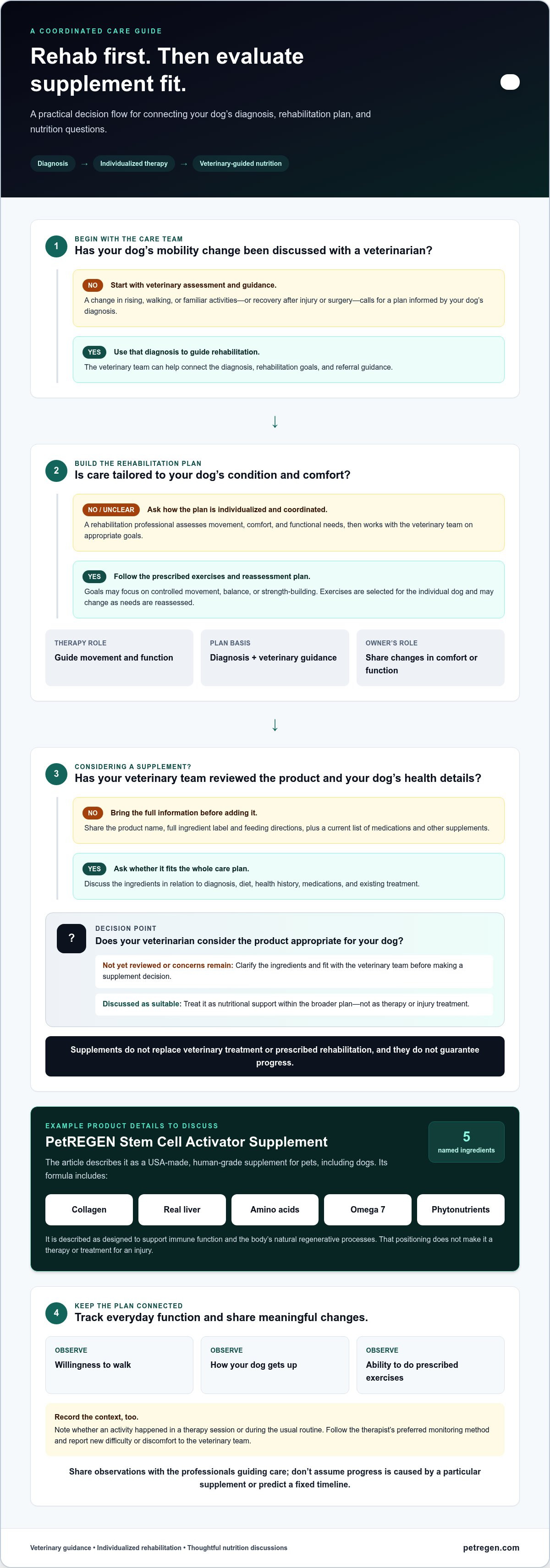
A change in how your dog rises, walks, or manages familiar activities can prompt questions about rehabilitation. The same is true after an injury or surgery. Canine rehabilitation uses individualized, veterinarian-informed exercises and supportive physical modalities to help address movement and function. The Canine physical therapy overview offers background on the practice. Your dog’s plan, however, should reflect their diagnosis and veterinary guidance.
The distinction matters: rehabilitation guides movement; nutrition may support broader wellness. Supplements don’t diagnose an injury, replace veterinary treatment or prescribed therapy, or guarantee progress. They may be one part of a wider care plan, not a shortcut around identifying what is causing a mobility change.
What happens during canine physical therapy?
A rehabilitation professional assesses your dog’s movement, comfort, and functional needs, then works with the veterinary team to set appropriate goals. Depending on the dog’s condition and stage of recovery, those goals might focus on controlled movement, balance, or strength-building. Exercises are selected and adjusted for the individual rather than applied as a one-size-fits-all routine.
The plan depends on the veterinary diagnosis and may change as your dog’s needs are reassessed. A movement that looks manageable for one dog may be unsuitable for another. Follow the therapist’s instructions and share changes in comfort or function with the care team.
Can supplements support a dog in physical therapy?
Possibly, as nutritional support rather than a rehabilitation intervention. Whether a supplement suits your dog depends on their health history, diet, medications, and veterinary guidance. Before adding one, bring your veterinarian the product name and full ingredient information, especially if your dog has other health concerns or takes medication.
PetREGEN Stem Cell Activator Supplement is a USA-made, human-grade supplement for pets, including dogs. Its formula includes collagen, real liver, amino acids, omega 7, and phytonutrients. It is designed to support immune function and the body’s natural regenerative processes. That positioning doesn’t make it a therapy or treatment for an injury. Discuss the supplement with your veterinarian as you would any nutritional product, alongside your dog’s rehabilitation plan.
Supportive nutrition may complement a dog’s broader wellness plan, but it doesn’t treat an injury or take the place of veterinary care and rehabilitation. Keeping those roles clear helps you make thoughtful choices while your dog works toward greater comfort and function.
How Rehabilitation and Supplement Questions Work Together
A coordinated plan connects the veterinarian’s diagnosis with what the rehabilitation therapist observes during movement. The diagnosis helps shape safe therapy goals, while the therapist adapts exercises to your dog’s abilities and notes practical changes, such as difficulty rising or improved tolerance for a prescribed activity. Those observations can help the veterinary team decide whether the plan needs adjustment and whether a nutrition discussion is relevant.
Each professional has a distinct role, and you help connect the dots. Share updates between appointments rather than assuming that progress in a session tells the whole story. For background on veterinary rehabilitation specialties and professional credentials, consult the American College of Veterinary Sports Medicine and Rehabilitation.
What should the veterinary team know about supplements?
Bring the supplement container or a clear photo of its full label. Include the ingredient list and feeding directions, along with a current list of medications and other supplements. Ask whether the ingredients fit your dog’s diagnosis, diet, health history, and existing treatment plan. These details give the veterinary team more to consider than a product name alone.
Don’t start, stop, or combine supplements based only on how your dog seems to be progressing in therapy. If you’re considering PetREGEN Stem Cell Activator Supplement as part of your dog’s broader wellness plan, discuss its label with your veterinarian alongside the rehabilitation plan. It is nutritional support for natural regenerative processes, not a substitute for diagnosis, treatment, or therapy.
How can owners track progress without overpromising results?
Choose simple observations that connect to daily function. Note whether your dog is willing to walk, how they manage getting up, and whether they can complete the exercises prescribed by the therapist. Record the context, such as whether the activity happened during a therapy session or as part of the usual routine. A short, consistent log can make patterns easier to discuss than memory alone.
Follow the therapist’s preferred monitoring method and report meaningful changes, including new difficulty or discomfort, to the veterinary team. Avoid assuming that a change is caused by a particular supplement or predicting a fixed timeline for improvement. Mobility can be influenced by several parts of a care plan, so observations are most useful when shared with the professionals guiding it.
Coordinated care connects the diagnosis, therapy plan, nutrition choices, and everyday observations, helping the team make decisions around your dog’s individual mobility needs.
How to Find and Compare Canine Rehabilitation Therapists
Start with your dog’s diagnosis rather than a generic list of exercises. Use these steps to find options and compare how each professional would approach your dog’s care:
- 1. Start with your dog’s veterinarian. Ask what type of rehabilitation may fit the diagnosis and request referral guidance. Your veterinarian can also share relevant records or clarify any movement restrictions.
- 2. Search recognized veterinary rehabilitation organizations. Look for current professional directories or member listings, then verify each person’s credentials directly. In the United States, DACVSMR identifies a veterinarian who is a board-certified specialist in veterinary sports medicine and rehabilitation. CCRP and CCRT are examples of rehabilitation program credentials, not the same as veterinary board certification. Training pathways differ, so consider the person’s underlying veterinary or therapy qualification as well as canine-specific education.
- 3. Compare the care process. Ask how the initial assessment shapes individualized goals and exercises, how progress is reassessed, and how the therapist communicates with your dog’s veterinarian. A clear plan should account for the diagnosis, comfort, and changes in function rather than rely on a standard routine.
- 4. Consider practical fit. Think about travel, appointment format, the setting, and whether your dog is likely to tolerate it. A manageable arrangement can make it easier to follow through consistently.
What should you learn before starting therapy?
Ask what the first assessment involves and how its findings guide goals, exercises, and follow-up. Find out how the therapist shares updates with the veterinarian, who to contact with concerns, and what to observe at home. If you’re also considering supplements for dogs in physical therapy, coordinate those questions with the veterinarian rather than treating them as a separate therapy decision.
Bring your dog’s diagnosis, medication list, and supplement labels to the veterinary discussion. The National Center for Biotechnology Information’s overview of the oversight and regulation of veterinary supplements can provide useful background. Your dog’s veterinary team can consider a product in the context of their health and treatment plan.
A strong first rehabilitation conversation covers your dog’s diagnosis, individualized goals, assessment and follow-up, home observations, and communication with the veterinarian. Clear answers make it easier to understand what the plan involves and how everyone will support your dog’s mobility.
Questions to Ask Before Your Dog Starts Physical Therapy
A clear plan can make therapy feel less uncertain for both you and your dog. Before starting, ask how the therapist will tailor care, what you’ll do between appointments, and how concerns will be handled. These questions can clarify the plan and your role in supporting it.
Questions about the therapy plan and home exercises
| Ask | Why it matters |
|---|---|
| How will you set goals for my dog? | Goals should reflect your dog’s diagnosis, comfort, and everyday needs, rather than a standard program. |
| How will you assess progress and decide when to reassess? | You’ll know what changes the therapist is monitoring and how those observations inform the plan. |
| Which exercises should we do at home, and how should I do them? | Clear instructions help you follow the plan safely between sessions. |
| What signs mean we should stop an exercise or contact you? | Knowing what to watch for can help you respond if an activity seems uncomfortable or too difficult. |
| How will you communicate with my veterinarian and adjust the plan? | Shared updates help keep therapy aligned with the veterinary assessment, especially if comfort or mobility changes. |
Ask for instructions you can refer back to, and make sure you understand how to report concerns. If your dog seems less comfortable, has worsening symptoms, or can’t manage a prescribed movement, don’t increase, replace, or alter exercises on your own. Pause the activity and contact the therapist or veterinarian for guidance.
Questions about adding a supplement
Discuss supplements for dogs in physical therapy with your veterinarian, not just the rehabilitation provider. Bring the product’s full ingredient list and label directions, plus details of your dog’s health history, diet, and current medications. Ask whether the ingredients suit your dog’s condition and treatment plan, how to follow the label, and what signs of poor tolerance to watch for. Don’t change or combine products based only on apparent therapy progress.
Marketing claims and other pet owners’ testimonials can help explain why a product interests them, but they can’t predict your dog’s individual response. If your veterinarian agrees a supplement may fit your dog’s broader wellness plan, track any changes and share them with the care team.
For a supplement option to discuss with your veterinarian, explore PetREGEN Stem Cell Activator Supplement as potential nutritional support, not a replacement for therapy or veterinary care.
Building a Thoughtful Canine Rehab Plan with Veterinary Guidance
A supportive plan works best when each part connects to your dog’s diagnosis and daily needs. Start with a veterinary assessment to understand the cause of mobility changes and any treatment or activity considerations. Then use referral guidance to find a canine rehabilitation professional, agree on realistic goals, and establish how progress will be reviewed. The plan may evolve as your dog’s comfort, function, and ability to participate change.
Coordinate therapy, home care, and nutrition
Keep the veterinary team informed about rehabilitation sessions, changes to home exercises, diet, supplements, and medications. A shared picture helps the professionals overseeing your dog’s care consider each choice in context. Follow the therapist’s prescribed exercises rather than adding movements based on online advice. If an exercise becomes difficult or your dog’s comfort or mobility changes, ask the care team how to proceed instead of adjusting the plan yourself.
Regular check-ins also give you a chance to revisit goals. Discuss whether the current exercises remain appropriate, what you’ve observed at home, and whether the referral or treatment plan needs further review. There’s no need to judge progress by a fixed timeline. Consistent observations and communication help the team make decisions based on your dog rather than assumptions.
Where PetREGEN may fit in the conversation
Supplements for dogs in physical therapy can be considered as part of a broader nutrition discussion, but they don’t direct movement or replace rehabilitation. PetREGEN Stem Cell Activator Supplement is designed to support natural regenerative processes. It is not veterinary stem cell therapy, and it shouldn’t be treated as a treatment for an injury or a substitute for veterinary care.
The product is USA-made and uses human-grade ingredients in a multi-ingredient superfood formula. Its ingredients include collagen, real liver, amino acids, omega 7, and phytonutrients. If you’re considering it for your dog, share the product label with your veterinarian so they can review it alongside your dog’s health history, diet, medications, and rehabilitation plan. Follow veterinary guidance when deciding whether it belongs in your dog’s overall care.
Rehabilitation, veterinary care, and thoughtful nutrition each have distinct roles. To learn more about PetREGEN Stem Cell Activator Supplement as a possible complement to your dog’s wellness plan, explore PetREGEN and discuss the label with your veterinary team.
Take the Next Step Toward a Coordinated Care Plan
Your dog’s rehabilitation plan should start with a veterinary assessment, then build around individualized goals, appropriate exercises, and regular communication with the care team. Track practical changes in comfort and mobility, and share them with the professionals guiding your dog’s care. That context matters when discussing supplements for dogs in physical therapy, too. A supplement may offer nutritional support, but it doesn’t replace rehabilitation or veterinary treatment.
PetREGEN Stem Cell Activator Supplement is a USA-made supplement made with human-grade ingredients, including collagen and real liver. The brand reports endorsements from veterinarians, zoologists, dog trainers, and pet parents, and offers a money-back guarantee. These details can inform your product research, while your veterinarian can review the label in light of your dog’s health, diet, and medications.
If you’re considering PetREGEN Stem Cell Activator Supplement as a complementary part of your dog’s broader wellness plan, explore the PetREGEN Stem Cell Activator Supplement and discuss it with your veterinary team. Thoughtful coordination can help you take the next step with greater confidence and care for the companion you love.
Frequently Asked Questions
Can supplements help a dog in physical therapy?
Supplements may provide nutritional support as part of a broader care plan, but they don’t replace a veterinary diagnosis, prescribed treatment, or rehabilitation exercises. Whether a product suits your dog depends on their health, diet, medications, and the ingredients. Share the full label with your veterinarian before starting it. Supplements for dogs in physical therapy should complement the plan, not be expected to treat an injury or guarantee progress.
How do I find a canine rehabilitation therapist?
Start by asking your dog’s veterinarian for referral guidance suited to the diagnosis. You can also search directories from recognized veterinary rehabilitation organizations, then review each professional’s relevant canine education and credentials. In the United States, DACVSMR indicates a board-certified veterinary specialist in sports medicine and rehabilitation; other rehabilitation credentials represent different training pathways. Compare how professionals assess your dog, set individualized goals, communicate progress, and coordinate with your veterinarian.
Does my dog need a veterinary referral for physical therapy?
Referral requirements can vary by location, provider, and your dog’s medical needs, so ask your veterinarian and the rehabilitation practice what applies. Even when a formal referral isn’t required, veterinary assessment helps identify the cause of mobility changes and informs safe therapy goals. Share relevant diagnoses, records, medications, and activity restrictions with the rehabilitation professional. This helps keep exercises aligned with your dog’s overall care.
What should I ask a canine rehabilitation therapist before treatment?
Ask how the initial assessment shapes your dog’s goals, exercises, and follow-up. Clarify how progress is measured, what exercises are appropriate at home, and which signs mean you should stop and check in. Find out how the therapist will communicate with your veterinarian and adjust the plan if comfort, mobility, or participation changes. Clear answers help you understand both the treatment approach and your role between sessions.
Can I give my dog supplements while taking medication and attending therapy?
Possibly, but have your veterinarian review the product before adding it. Bring the full ingredient list and label directions, along with an up-to-date list of medications and other supplements. Your veterinary team can consider your dog’s health history, diet, and treatment plan when discussing suitability and monitoring. Don’t start, stop, or combine products based only on apparent therapy progress, and report any changes you notice.
How long does canine physical therapy take to work?
There isn’t one timeline that applies to every dog. Progress depends on factors such as the diagnosis, comfort, therapy goals, and how your dog responds to the plan. Ask the therapist what changes they’ll monitor and when they’ll review goals, rather than expecting a guaranteed date for improvement. Note practical changes, such as willingness to walk or complete prescribed exercises, and share those observations during follow-up.
What happens if my dog seems worse during physical therapy?
If your dog seems less comfortable, has worsening symptoms, or struggles with an exercise, stop that activity and contact the rehabilitation therapist or veterinarian for guidance. Don’t add, intensify, or substitute exercises on your own. Describe what changed, when you noticed it, and which activity was involved. The care team can decide whether the plan needs reassessment or whether your dog should receive further veterinary evaluation.


