

What if your pet’s pain is showing up in small changes, not cries or limping? The signs my pet's pain medication isn't enough can be easy to miss: hesitating before stairs, sleeping differently, eating less, or becoming unusually irritable. These changes can be worrying when they appear despite following your veterinarian’s instructions, but they don’t necessarily mean the medication has stopped working. Pain may be changing, or an underlying condition may need reassessment.
You can help your veterinary team by noticing patterns rather than adjusting treatment on your own. This guide explains what to watch for in your pet’s movement, rest, appetite, and behavior, and what details to record before you call. It also covers when to seek veterinary advice promptly and why changing a dose or giving human pain medicine without veterinary direction can be dangerous. Careful observations can make the next conversation with your veterinarian clearer and help your companion get the support they need.
Key Takeaways
- Changes in movement, rest, appetite, or behavior can be signs my pet's pain medication isn't enough, but a veterinarian needs to assess what’s causing them.
- Notice when symptoms occur and whether they began or changed after treatment started. Timing can help your veterinarian assess ongoing pain, possible medication effects, or a changing condition.
- Before contacting the prescribing veterinarian, record the medication schedule, when changes began, what you’ve observed, and any shifts in your pet’s routine.
- A broader comfort plan may include veterinarian-guided activity, an easy-to-reach resting space, and regular monitoring alongside prescribed care.
Signs Your Pet’s Pain Medication May Not Be Providing Enough Relief
Seeing your companion remain uncomfortable despite treatment can feel worrying and discouraging. Changes in how they move, rest, eat, groom, or interact may be among the signs my pet's pain medication isn't enough. These observations don’t prove the medication has failed or reveal the cause on their own. They are useful clues to share with the veterinarian, who can assess the full picture and decide whether the treatment plan needs review.
Animals can’t describe discomfort in words, so changes in everyday behavior matter. This overview of how animals experience and respond to pain helps explain why it’s useful to compare your pet’s current habits with their usual routine. Look for patterns rather than relying on one isolated moment.
What changes in movement and daily function can signal ongoing pain?
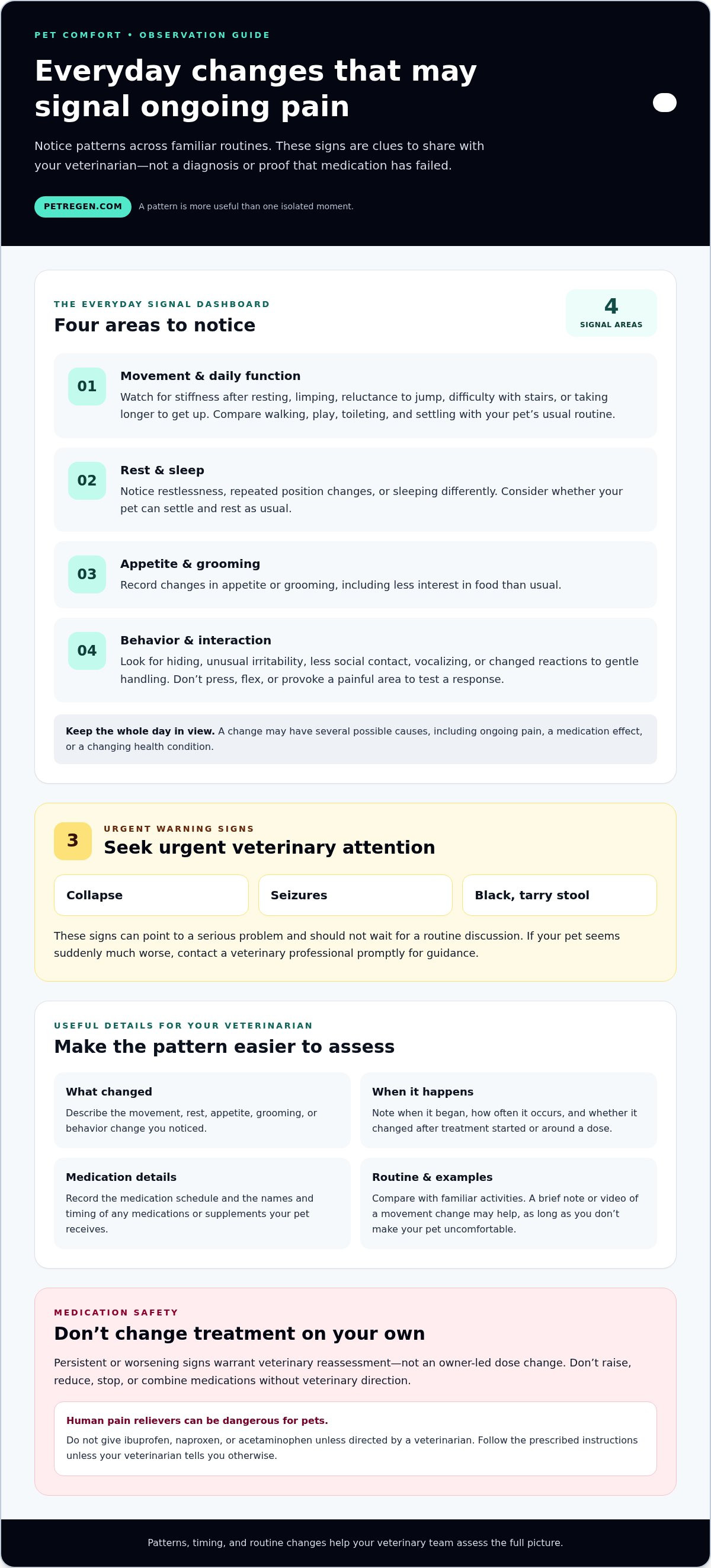
Notice stiffness after resting, limping, reluctance to jump, or difficulty with stairs. Compare your pet’s current walking, play, toileting, and ability to settle with their usual baseline. For example, pausing before climbing onto a familiar bed or taking longer to get up may be a meaningful change. Note when it happens and how often instead of trying to diagnose the cause from one behavior.
Can sleep, appetite, or behavior changes also matter?
Yes. Restlessness, repeated position changes, hiding, unusual irritability, or less interest in social contact can add important context. Record changes in appetite, grooming, vocalizing, and reactions to gentle handling. Don’t press, flex, or otherwise provoke a painful area to test your pet’s response. These signs can have several causes, including a health change or a medication effect, so timing and context help the veterinarian interpret them.
Look at the whole day, not only the time after a dose. Jot down what changed, when it occurs, and whether it affects familiar activities. A brief note or video of a movement change, recorded without making your pet uncomfortable, may also help explain what you’ve observed.
Seek urgent veterinary attention for a sudden or severe change, especially collapse, seizures, or black, tarry stool. These signs can point to a serious problem and shouldn’t wait for a routine discussion. If your pet seems suddenly much worse, contact a veterinary professional promptly for guidance.
Why Pain Signs Can Continue Despite Following the Prescription
It’s frustrating to follow the prescription and still see signs of discomfort return. In this context, inadequate relief means pain-related signs continue or come back and deserve veterinary review. It doesn’t prove that a medication has failed, that the dose is too low, or that there’s one particular cause. The signs my pet's pain medication isn't enough are a reason to reassess with the prescribing veterinarian, not a diagnosis to make at home.
Does ongoing discomfort always mean the dose is too low?
No. Pain control depends on the diagnosis, your pet’s individual response, and the overall veterinary treatment plan. The original condition may have progressed, a new problem may have developed, or the type of pain may have changed. Signs can also return at certain times in relation to a dose. That pattern is useful information for the veterinarian, but it doesn’t tell you how to change the schedule.
A pet who improves for a while and then becomes reluctant to move again needs a review of the full picture. Note what you see and when it happens, then share it with the prescribing veterinarian. Persistent or worsening signs warrant reassessment, not an owner-led dose change.
Could a medication side effect look like pain or illness?
Yes. A new symptom after treatment begins may be related to the medication, the underlying condition, or something else. The medication and your pet’s species affect which side effects are possible, so don’t assume a change is simply pain getting worse. For example, the FDA describes common side effects of NSAIDs in pets, including vomiting and decreased appetite. Report new physical or behavioral changes, including when they started, rather than trying to diagnose the cause yourself.
Contact the veterinarian promptly about concerning changes, especially if they appear after starting a medication or seem to worsen. Collapse, seizures, or black, tarry stool need urgent veterinary attention. If you’re unsure how quickly your pet needs care, call a veterinary professional for guidance.
Don’t raise, reduce, stop, or combine medications without veterinary direction. Giving human pain relievers such as ibuprofen, naproxen, or acetaminophen can be dangerous for pets. Follow the prescribed instructions unless the veterinarian tells you otherwise, and share the names and timing of any medications or supplements your pet receives.
For broader wellness, PetREGEN Stem Cell Activator Supplement is a nutritional supplement, not a pain treatment or a replacement for veterinary care. It is designed to support immune function and the body’s natural regenerative processes. If you’re considering it alongside prescribed medication, discuss it with the veterinarian managing your pet’s treatment. Learn about PetREGEN’s wellness supplement.
How to Tell Persistent Pain, Medication Effects, and a Changing Condition Apart
The same outward change can have more than one explanation. A pet who eats less, hides, or moves differently might be experiencing ongoing pain, reacting to a medication, or developing another health problem. Timing and patterns give your veterinarian useful context, but they can’t establish what caused a symptom. A log of the signs my pet's pain medication isn't enough can make that conversation clearer.
| Observed change | When it occurs | Possible context | What to report |
|---|---|---|---|
| Familiar stiffness, limping, or avoiding an activity | Continues or returns during activities that were already difficult | May reflect ongoing discomfort or a changing condition | Which movement is affected, how often, and how it compares with your pet’s usual baseline |
| A new change, such as vomiting or reduced appetite | Begins after treatment starts or changes | Could be a medication effect, pain, or another health issue | When it began, whether it repeats, and its relationship to medication and meals |
| Symptoms that fluctuate | Appear at particular times or in certain situations | The pattern may help the veterinarian review the condition or treatment plan | Time of each change, activity beforehand, and when each dose was given |
These are possibilities to discuss, not diagnoses. Familiar movement limitations may suggest that the original concern remains, while a new symptom after treatment begins deserves attention too. Hiding, restlessness, and irritability can be pain behaviors, but context matters. The American College of Veterinary Surgeons’ overview of pain behaviors can help you recognize patterns to describe. A symptom diary supports, but never replaces, a veterinary examination.
What should you track before the follow-up appointment?
Write down the medication name, prescribed schedule, doses given, and any missed or delayed dose. Log observable behavior, timing, activity, appetite, sleep, and changes from your pet’s normal routine. Short videos can help show naturally occurring changes in walking or getting up. Don’t make your pet repeat a painful movement for the camera.
How do signs vary between dogs, cats, and horses?
Species and individual temperament affect how discomfort appears. A cat may withdraw or quietly stop doing familiar activities; silence doesn’t mean they’re comfortable. For dogs, note visible changes in gait, posture, or willingness to move. For horses, record changes in movement, stance, or ordinary behavior. Share your observations with a veterinarian who can assess them in a species-specific context.
What to Do if Your Pet is Still in Pain on Medication
If discomfort persists, returns, worsens, or interferes with everyday activities, contact the veterinarian who prescribed the medication. The signs my pet's pain medication isn't enough can be worrying, but a clear plan helps you act safely: check for urgent warning signs, gather useful observations, then speak with the veterinary team.
When should you call the veterinarian, and what should you tell them?
For ongoing changes that aren’t immediately severe, call the prescribing clinic and explain what you’ve noticed. A concise timeline helps the veterinarian assess what may need follow-up. Have these details ready:
- Medication information: the name, prescribed schedule, doses given, and any missed or delayed doses.
- Observed changes: what your pet is doing differently, when it began, how often it happens, and whether it is getting worse.
- Relevant context: changes in routine, activity, appetite, sleep, or other medications and supplements.
- Helpful examples: a symptom log and short videos of changes that happen naturally, if you have them.
Ask what signs should prompt urgent reassessment and what to do about the next scheduled dose. Only the veterinarian can determine whether to adjust or replace treatment, or investigate another cause. Don’t raise, reduce, stop, or combine medications on your own while waiting for guidance.
Which changes call for urgent veterinary care?
Seek urgent veterinary help for severe distress, collapse, difficulty breathing, or a sudden inability to stand. If you suspect your pet received too much medication or accidentally ingested medication, contact an emergency veterinary service promptly. Severe, rapidly worsening, or alarming symptoms need professional assessment rather than watchful waiting. If you’re uncertain whether a change is urgent, call a veterinary professional and describe what’s happening.
Once immediate safety and prescribed care are addressed, you can discuss broader wellness support with your veterinarian. PetREGEN Stem Cell Activator Supplement is intended to support immune function and the body’s natural regenerative processes. It is a nutritional supplement, not a treatment for pain or a replacement for medication or veterinary assessment. Your veterinarian can help you consider whether it belongs in your pet’s overall care plan.
Explore PetREGEN’s wellness supplement as a complementary option to discuss with your pet’s veterinarian.
Building a Broader Comfort Plan Alongside Veterinary Pain Care
Ongoing discomfort calls for continued veterinary guidance. Prescribed pain care and follow-up remain central, while daily observations and veterinarian-approved adjustments at home can help your pet stay as comfortable as possible. A broader plan is not a substitute for treatment. It gives you and your veterinary team more information to shape care around your companion’s needs.
How can home routines support comfort without replacing treatment?
Track how your pet’s comfort seems to relate to rest, movement, and routine. Note whether they settle more easily in a particular resting spot, seem less comfortable after certain activities, or behave differently at specific times of day. These observations can help you discuss practical adjustments with the professional managing your pet’s care.
Ask the veterinarian whether changes to activity or the home setup are appropriate. Depending on your pet’s needs, you might discuss making a resting area easier to reach or adjusting activities that seem to cause difficulty. Don’t increase exercise, restrict movement, or introduce a new routine based on guesswork. Home changes may offer support, but they can’t establish the cause of discomfort or guarantee pain relief.
Where might nutritional support fit into a veterinary plan?
Supplements are not automatically suitable for every pet. They may interact with medications or be inappropriate for an individual animal, so share the product name and ingredients with your veterinarian before adding anything to your pet’s routine. Keep prescribed medication and follow-up at the center of the plan, and don’t stop or replace treatment with a supplement.
PetREGEN Stem Cell Activator Supplement is intended to support immune function and the body’s natural regenerative processes as part of whole-body wellness. It isn’t pain medication, a cure, or a replacement for veterinary assessment. If you’re considering it, discuss it with the veterinarian managing your pet’s care to determine whether it’s an appropriate complementary option.
If you’re still noticing signs my pet's pain medication isn't enough, share your observations with the veterinarian rather than changing treatment on your own. Keep monitoring your pet’s comfort and follow the veterinary team’s guidance. To learn more about nutritional wellness support, explore PetREGEN.
Take the Next Step Toward Your Pet’s Comfort
Changes in movement, sleep, appetite, or behavior can be signs my pet's pain medication isn't enough, but they can’t identify the cause by themselves. Track what you notice, when it happens, and how it differs from your pet’s usual routine. Share those details with the veterinarian managing their care, and don’t adjust, stop, or combine medications without veterinary direction.
Ongoing discomfort deserves a thoughtful review, not guesswork. Your veterinarian can assess whether the treatment plan or your pet’s condition needs attention and guide supportive steps at home. If you’re considering nutritional support, discuss it with the veterinarian first, since supplements may not suit every pet or medication plan.
PetREGEN Stem Cell Activator Supplement is formulated for dogs, cats, and horses and is intended to support immune function and natural regenerative processes. It isn’t a pain treatment or a replacement for veterinary care. Explore PetREGEN’s Stem Cell Activator Supplement as a possible complementary option to discuss with your veterinarian. With careful observation and professional guidance, you can take a steady, caring next step for your companion.
Frequently Asked Questions
How do I know if my pet’s pain medication is not working?
You may suspect signs my pet's pain medication isn't enough when discomfort-related changes persist, return, or worsen compared with your pet’s usual routine. Watch for altered movement, unsettled rest, reduced appetite, or behavior changes. These observations don’t prove the medicine has failed; a condition can change, and side effects or other health issues may look similar. Note when signs occur and contact the prescribing veterinarian. Don’t change the dose or schedule yourself.
Should I give my pet more pain medication if they still seem uncomfortable?
No. Don’t give an extra dose, change the schedule, or combine pain medicines unless the veterinarian responsible for the prescription specifically directs you to. The right response depends on the medication, your pet’s health, and what’s causing the discomfort. Call the clinic, describe what you’ve observed, and ask what to do about the next scheduled dose. Never give human pain relievers unless a veterinarian has explicitly instructed you to do so.
Can pain medication side effects look like ongoing pain?
Yes, some medication effects can resemble pain or illness, and signs may overlap with changes caused by the underlying condition or another health problem. Appearance alone can’t reliably reveal the cause. Record what changed and when it began in relation to treatment, then contact the prescribing veterinarian. Possible effects depend on the medication and the animal. Seek urgent veterinary help if symptoms are severe or worsening rapidly.
What should I track before calling the veterinarian about my pet’s pain?
Write down the medication name, prescribed schedule, when each dose was given, and any missed or delayed doses. Record changes in movement, rest, appetite, grooming, and behavior, including when they happen and how they differ from your pet’s normal routine. Short videos of movement changes that occur naturally may help the veterinarian understand what you’re seeing. Don’t make your pet perform an uncomfortable activity just to record it.
When is persistent pain in a pet an emergency?
Seek urgent veterinary help for severe distress, collapse, difficulty breathing, or a sudden inability to stand. Suspected overdose or accidental medication ingestion also calls for prompt contact with an emergency veterinary service. A rapidly worsening or alarming change deserves professional guidance, even if it isn’t on this list. If you’re unsure how urgent the situation is, call for veterinary direction. Don’t wait for a routine appointment if your pet seems severely unwell.
Can I give my pet a supplement while they are taking pain medication?
Ask the veterinarian managing your pet’s care before adding a supplement. Ingredients can vary, and a product may not suit every animal or medication plan. Share the product label and your pet’s full medication list so the veterinary team can consider them together. PetREGEN Stem Cell Activator Supplement is formulated for dogs, cats, and horses and is intended to support immune function and natural regenerative processes. It doesn’t replace prescribed pain medication or veterinary care.
Does a pet hide pain even when taking medication?
Some pets show subtle changes rather than crying or limping. Withdrawal, reduced activity, changes in rest, or reluctance to do familiar things may be worth noting, though these signs can have causes other than pain. Compare what you see with your pet’s usual behavior and share sustained changes with a veterinarian. A quiet pet isn’t necessarily comfortable or pain-free, so pay attention to patterns as well as obvious signs.


