

How do you know if a cat famous for being "floppy" is actually struggling to move? It's the ultimate Ragdoll paradox. Their signature relaxed nature is what we love most, but it's also a clever disguise for joint discomfort. As a pet parent, it's natural to feel anxious about how their large frames, often reaching a median weight of 4.46 kg, might lead to premature wear. Mastering ragdoll cat joint care starts with realizing that their "lazy" behavior might actually be a quiet plea for help.
We understand how painful it is to watch a once-energetic companion slow down. You want more than just a way to hide the symptoms; you want to restore their youthful spark. This guide promises to help you protect your Ragdoll's unique structure by enhancing their body's built-in repair system. You'll learn to identify subtle signs of pain, understand why regenerative options outshine standard supplements, and implement a long-term plan for total mobility. Let's ensure your fur-baby enjoys a life of renewed vitality and endless, comfortable cuddles.
Key Takeaways
- Learn why the Ragdoll's signature "floppy" personality and low muscle tone often mask early warning signs of joint stiffness and discomfort.
- Understand the role of oxidative stress in cartilage breakdown and how to move beyond symptom-masking toward true regenerative support.
- Discover why a "whole-body wellness" approach to ragdoll cat joint care is more effective than traditional supplements with low bioavailability.
- Identify practical environmental modifications and weight management strategies to reduce the mechanical strain on your cat's large skeletal frame.
- Explore how supporting your companion's built-in repair system through stem cell activation can lead to a lifetime of improved mobility and vitality.
The Ragdoll Paradox: Why Big Cats Need Specialized Joint Care
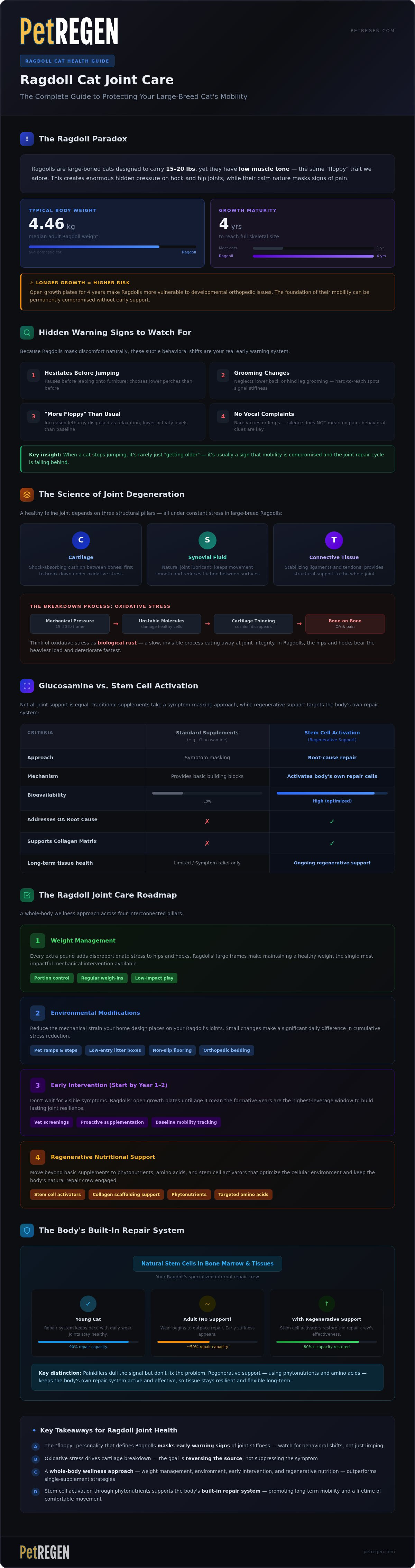
Ragdolls are famous for going limp in your arms. This "floppy" nature is a hallmark of the breed, but it creates a unique challenge for ragdoll cat joint care. While their relaxed muscle tone is charming, it creates what we call the Ragdoll Paradox. You have a heavy, large-boned cat with a skeleton designed to carry 15 to 20 pounds of weight, yet they lack the rigid muscle support seen in more athletic breeds. This puts immense pressure on their hock and hip joints. Because they're naturally low-energy, you might not notice the subtle limping or stiffness that would be obvious in a more active pet. Ragdoll joint care must begin in early adulthood to proactively support their massive frames before wear and tear becomes irreversible.
The "Floppy" Trait vs. Hidden Joint Pain
If your companion is always relaxed, how do you spot a problem? It's difficult because Ragdolls are masters of disguise. They don't always cry out or limp when they're hurting. Instead, they just become "more floppy" or less active. You might notice your fur-baby hesitating before jumping onto the couch or choosing a lower perch than usual. Changes in grooming habits, especially around the lower back or hind legs, are also major red flags. Distinguishing between breed-standard relaxation and "guarding" a sore joint requires a keen eye for these tiny shifts in behavior. When a cat stops jumping, it's rarely just "getting older"; it's usually a sign that their mobility is compromised.
Skeletal Maturity and Growth in Large Breeds
Unlike most cats that reach full size by their first birthday, Ragdolls are slow burners. They continue to grow and develop until they're four years old. This extended growth period means their growth plates remain open longer, making them more vulnerable to developmental orthopedic issues. Understanding feline health and anatomy is crucial during this window. If their skeleton isn't supported during these formative years, the foundation of their mobility is at risk for the rest of their lives. Early intervention isn't just a precaution. It's a necessity for ensuring their built-in repair system can keep up with their physical size as they transition from kittens to heavy-set adults. Supporting them now prevents the "painful to watch" moments later in life.
The Science of Feline Joint Degeneration and Regeneration
To master ragdoll cat joint care, we have to look beneath the fur at the complex biology of the feline frame. A healthy joint is a mechanical masterpiece held together by three pillars: shock-absorbing cartilage, lubricating synovial fluid, and stabilizing connective tissues. In large-breed cats like Ragdolls, these components are under constant mechanical stress. Over time, this pressure leads to "oxidative stress," a process where unstable molecules damage healthy cells. Think of it as biological rust that slowly eats away at the joint's structural integrity, making movement a chore rather than a joy.
Every cat possesses a "built-in repair system" designed to fight this decay. Natural stem cells live within the bone marrow and tissues, acting as a specialized repair crew that fixes damage as it occurs. Traditional joint care often takes a symptom-focused approach, using drugs to dull pain without addressing the underlying wear. A regenerative approach is different. It focuses on nourishing that internal repair system, helping the body maintain its own tissue health so your fur-baby can stay active and happy for years to come.
Understanding Feline Osteoarthritis (OA)
Osteoarthritis isn't just a result of getting older; it's a failure of the body's repair cycle. As cartilage thins, the protective cushion between bones vanishes, leading to painful bone-on-bone friction. While many owners focus on the resulting inflammation, that's actually a secondary symptom of the deeper tissue breakdown. According to the FDA, recognizing osteoarthritis in cats can be difficult because they are experts at hiding discomfort, especially in the lower back and hips where Ragdolls carry the bulk of their weight.
How Regenerative Support Works
Modern science allows us to support mobility without relying solely on harsh painkillers. Regenerative support uses specific phytonutrients and amino acids to optimize the cellular environment. Unlike standard joint chews that only provide basic building blocks, stem cell activators encourage the body's own repair cells to stay engaged and effective. Collagen provides the essential scaffolding that supports the structural matrix of feline joints, ensuring the tissue remains resilient and flexible. Supporting this process with a natural regenerative supplement can help your companion maintain their youthful spark well into their senior years.
Glucosamine vs. Stem Cell Activation: Which Is Better for Your Ragdoll?
Many pet parents reach for standard glucosamine chews as the first line of defense for ragdoll cat joint care. While these products are widely available, they often fall short of providing true relief. Many traditional chews rely on synthetic ingredients and cheap fillers that offer low bioavailability, meaning your cat's body can't effectively absorb or use the nutrients. Instead of just trying to "lubricate" a single rusty hinge, a more effective strategy focuses on whole-body wellness. PetREGEN takes a different path by cleaning and nourishing the cellular environment. This approach supports the "built-in repair system" by giving the body what it needs to maintain its own tissues rather than just adding a temporary coating of moisture to the joint.
For a breed as discerning as the Ragdoll, the delivery method is just as important as the science. Owners often find that forcing a large pill down a cat's throat is a recipe for stress and broken trust. Powdered supplements that use real liver flavor solve the "picky eater" problem while ensuring the ingredients are absorbed quickly. When you choose a formula designed for high absorption, you're ensuring that every scoop actually reaches the tissues that need it most.
The Problem with Symptom-Masking
Hiding pain is not the same as healing. When we use NSAIDs or heavy painkillers to manage discomfort, we mask the vital signals that tell a cat to slow down. Without those signals, a Ragdoll might jump or play in ways that cause further injury to their already fragile cartilage. This cycle of masking symptoms without supporting repair is a major roadblock in long-term mobility. It's also vital to consider the potential side effects of long-term medication, which can put unnecessary strain on a cat's kidneys and liver. Understanding feline osteoarthritis signs helps you realize that the goal shouldn't just be a quiet cat, but a truly comfortable one. We must address the root cause of mobility loss rather than just turning off the alarm bells.
The Benefits of Natural Superfoods
True vitality comes from high-grade proteins and rare nutrients like Omega-7. These natural superfoods provide the essential building blocks for tissue recovery and help reduce the oxidative stress that we discussed in the previous section. Using human-grade ingredients ensures that you aren't introducing toxins or low-quality byproducts into your companion's system. This level of purity is essential for maintaining long-term organ health while boosting overall energy. By choosing a stem cell activator over a simple lubricant, you're investing in your fur-baby's ability to heal from within, ensuring they stay "floppy" because they're relaxed, not because they're in pain.
The Ragdoll Joint Care Roadmap: Practical Steps for Owners
Proactive ragdoll cat joint care requires moving beyond basic nutrition and looking at the daily physical environment your cat inhabits. Because Ragdolls are a heavy-bodied breed, their skeletal system is under constant pressure. Small changes in their routine and surroundings can significantly reduce the mechanical load on their hips and hocks. By combining environmental support with biological nourishment, you create a comprehensive safety net for their mobility.
Weight Management for the "Big-Boned" Cat
It's easy to dismiss a few extra pounds as "fluff," but for a Ragdoll, one extra pound is a mobility crisis. Excess weight doesn't just put physical strain on the joints; adipose tissue (fat) acts as an endocrine organ that secretes pro-inflammatory cytokines. This means a heavy cat is in a constant state of systemic inflammation, which accelerates cartilage breakdown. To check your companion's weight at home, use the Body Condition Score (BCS) method. You must feel for the ribs through their thick coat. You should be able to feel them with light pressure, similar to the back of your hand. If you have to press hard, your fur-baby is likely carrying too much weight. Focus on high-protein, human-grade diets that maintain lean muscle mass rather than just cutting calories. To find premium nutrition options to support your cat's health, you can discover McPet and their selection of quality pet foods.
Your home's layout can either support or sabotage your cat's long-term health. Hardwood and tile floors are significant slip hazards for a breed with low muscle tone and heavy frames. Slipping can lead to micro-tears in connective tissue, triggering oxidative stress. Placing rugs or runners in high-traffic areas provides the traction they need to move confidently. Additionally, consider the following modifications:
- Orthopedic Bedding: High-density foam beds help distribute weight evenly, reducing pressure points during their long naps.
- Low-Entry Litter Boxes: High-walled boxes require a "climb and jump" motion that can be painful for cats with early-stage stiffness.
- Soft Landing Zones: Place footstools or pet stairs near favorite high perches like the bed or sofa to eliminate high-impact vertical jumps.
When it comes to exercise, horizontal movement is your best friend. Use wand toys to encourage your cat to stalk and pounce across the floor rather than leaping high into the air. This builds muscle without the jarring impact of landing. During your next vet visit, bring a "Check-Up Checklist" and ask specifically about regenerative options and how to support their built-in repair system. You can take the first step toward whole-body wellness by trying the PetREGEN Stem Cell Activator Supplement to support your companion's natural recovery process.
PetREGEN: Supporting Your Ragdoll’s Natural Repair System
While environmental modifications provide the necessary physical support, true ragdoll cat joint care requires a biological solution that works from the inside out. PetREGEN Stem Cell Activator Supplement is the science-backed choice for pet parents who refuse to settle for symptom-masking drugs. Unlike traditional supplements that only offer basic lubrication, our proprietary formula employs a multi-system approach. It works to clean away the "biological rust" of oxidative stress, nourish the joints with human-grade collagen, and support the body's built-in repair system. This isn't just about managing a condition; it's about restoring the vitality your fur-baby deserves.
We know that Ragdolls can be incredibly discerning about what they eat. Forcing a pill down a stressed cat's throat is painful to watch and often damages the bond you share. PetREGEN solves this objection with a delicious, real liver flavor that even the pickiest companions love. It is a simple, powdered addition to their daily meal that ensures high bioavailability. Every scoop delivers the building blocks for healing directly to the tissues that need them most. Backed by science. Trusted by pet parents. Loved by pets.
Why Vets and Zoologists Endorse PetREGEN
Our commitment to whole-body wellness is grounded in professional expertise. The PetREGEN formula is endorsed by veterinarians and our expert ambassador, Dr. Zoolittle, a Health & Welfare Zoologist dedicated to animal vitality. This scientific validation provides a foundation of trust for owners who are tired of empty promises. We believe in the power of our stem cell activator so much that we offer a full money-back guarantee. This removes the risk for skeptical owners, allowing you to focus on the results: real stories of renewed mobility and senior cats who are suddenly "living their best lives" again. Seeing a stiff, aging cat jump onto the bed for the first time in months is the ultimate proof of our mission.
A Natural Choice for Healthy Aging
You don't have to wait for a crisis to start supporting your companion. Because Ragdolls grow until they are four years old, using PetREGEN as a preventative measure is a smart strategy for younger cats. By supporting their growth plates and connective tissues early, you provide a safety net for their large skeletal frames. It supports your fur-baby through every stage of life, from the energetic years of young adulthood to the graceful golden years. Investing in their regenerative health today means more years of floppy, pain-free cuddles. Join our community of happy, active pets and give your cat the gift of effortless movement. Try PetREGEN Now!
Empower Your Ragdoll’s Future Mobility
Your Ragdoll's signature "floppiness" should always be a sign of deep relaxation, not a clever mask for hidden discomfort. By shifting from standard symptom-focused supplements to a regenerative approach, you're giving your companion the tools they need to maintain their own tissue health from the inside out. We've explored how a combination of proactive environmental modifications and strict weight management creates a foundation for long-term success. Now, it's time to support their built-in repair system for a lifetime of effortless movement.
Investing in proactive ragdoll cat joint care is the most compassionate choice you can make for your fur-baby. Our vet-endorsed formula uses human-grade ingredients and a real liver flavor that even the pickiest cats love. It's time to move past temporary lubricants and embrace whole-body wellness that truly lasts. You can start this journey today without any risk thanks to our full money-back guarantee.
Give your Ragdoll the gift of renewed mobility. Shop PetREGEN Stem Cell Activator today!
Let’s ensure your companion stays active, happy, and ready for years of pain-free cuddles. Your fur-baby's best life is just one scoop away.
Frequently Asked Questions
Can Ragdoll cats have joint problems even if they are indoor-only?
Yes, indoor status doesn't protect your cat from the mechanical stress of their large frames. Ragdolls face unique joint challenges because of their massive skeletal structure and genetic predispositions. Indoor companions often encounter "slip hazards" on tile or hardwood floors, which causes micro-stress on connective tissues. Even a short jump from a sofa involves significant impact for a fifteen-pound cat. Proactive ragdoll cat joint care is essential for indoor pets to maintain their vitality.
What is the best joint supplement for a picky Ragdoll cat?
The most effective choice for a discerning feline is a powdered supplement featuring real liver flavor, like PetREGEN. Many Ragdolls reject hard pills or synthetic-tasting chews, making it nearly impossible to maintain a consistent health routine. Our formula uses human-grade ingredients that blend seamlessly into wet food. This ensures your fur-baby receives vital nutrients like collagen and amino acids without the stress of forced pilling, supporting their recovery naturally and deliciously.
At what age should I start giving my Ragdoll joint support?
You should ideally begin joint support in early adulthood, around age two. Since Ragdolls continue growing until they are four years old, their growth plates remain vulnerable for much longer than smaller breeds. Starting a regenerative regimen early helps protect the structural matrix of their joints before oxidative stress causes permanent damage. Early intervention ensures their built-in repair system stays robust, allowing your companion to age gracefully and remain active for years.
Is it normal for my Ragdoll to stop jumping on high furniture?
While it might seem like a sign of "mellowing out" with age, a sudden reluctance to jump is never normal. It's a classic indicator of feline osteoarthritis or significant joint discomfort. Because Ragdolls are "masters of disguise," they rarely cry out; they simply change their behavior to avoid pain. If your fur-baby is hesitating at the edge of the bed, it's a clear signal that they need targeted ragdoll cat joint care support.
How does a stem cell activator differ from a standard joint chew?
Standard joint chews typically act as simple lubricants, providing basic building blocks like glucosamine that often have low bioavailability. A stem cell activator, such as PetREGEN, takes a multi-system approach by supporting the body's built-in repair system. It cleans away oxidative stress and nourishes tissues at a cellular level. Instead of just masking symptoms or temporarily coating a joint, it encourages the natural regenerative processes that maintain long-term mobility and whole-body wellness.
Can weight loss alone fix my Ragdoll’s mobility issues?
Weight management is a critical first step because it reduces mechanical pressure, but it won't repair existing cartilage damage on its own. Even a lean cat can suffer from systemic inflammation and oxidative stress. To truly restore mobility, you must combine weight loss with biological support that nourishes the joints. Combining a healthy diet with a regenerative supplement ensures that while the load is lightened, the tissues have the human-grade proteins needed for healing.
Are there side effects to using natural regenerative supplements for cats?
Natural regenerative supplements like PetREGEN are formulated with safe, human-grade ingredients and are generally free from the side effects associated with long-term medicated use. Because we focus on whole-body wellness rather than harsh synthetic chemicals, the formula is gentle on your cat's liver and kidneys. It's always wise to monitor your companion when introducing any new superfood, but our science-based approach is designed for healthy aging without the risks of traditional drugs.
How long does it take to see results with PetREGEN?
Every fur-baby is unique, but many pet parents report a noticeable difference in energy and mobility within three to six weeks of consistent use. Since the formula works by supporting the body's natural regenerative cycles, it takes time to clean and nourish the cellular environment. You might first notice subtle changes, like your cat grooming more easily or choosing a higher perch, as their built-in repair system begins to function more effectively again.


