

What if the standard joint chews you've been giving your dog are only scratching the surface of a much deeper biological need? It's painful to watch your once-energetic companion hesitate at the bottom of the stairs or lose that signature "Labrador bound" during morning walks. You aren't alone in this worry. Research indicates that Labrador Retrievers face a 2.8 times higher risk of developing arthritis compared to other breeds, leaving many owners fearful of invasive, costly surgeries. When it comes to labrador retriever joint care, the traditional method of simply "greasing the gears" with basic nutrients is no longer the gold standard in 2026.
You deserve a solution that's as scientifically advanced as it is compassionate. This guide will show you how to move beyond symptom management by supporting your dog's built-in repair systems. We'll explore a modern, regenerative approach to mobility that focuses on whole-body wellness from within. From the latest breakthroughs in stem cell activation to practical lifestyle shifts, you'll discover exactly how to help your fur-baby stay active, vibrant, and comfortable for years to come.
Key Takeaways
- Understand why the Labrador’s powerful build and genetic predisposition to dysplasia require a proactive, breed-specific strategy to maintain long-term mobility.
- Move beyond traditional "cushioning" supplements by discovering how stem cell activators support your dog's built-in repair system for whole-body wellness.
- Learn to spot the subtle "stubborn joy" markers and behavioral shifts that indicate your Lab is hiding joint discomfort.
- Follow a 2026 blueprint for labrador retriever joint care that combines strict weight management with low-impact exercises like swimming and scent work.
- Explore how human-grade, regenerative ingredients endorsed by zoologists can help your companion avoid invasive surgeries and regain their natural vitality.
Why Labradors Need a Specialized Joint Care Strategy
Labs are the ultimate athletes of the dog world. They're built with dense, muscular frames and a relentless "go-forever" attitude. However, this same physiology places an immense amount of pressure on their high-impact joints. Effective labrador retriever joint care isn't just about managing an old dog's limp; it's about understanding that their biology is often in a race against their enthusiasm. Their thick coats and friendly faces hide a skeletal system that works incredibly hard. A Labrador's weight is distributed primarily over their front assembly, meaning their elbows and hips bear the brunt of every leap into the lake or sprint across the yard. Because Labs have a 2.8 times higher risk of developing arthritis compared to other breeds, a generic approach simply isn't enough.
The "Active Lab Paradox" is something every owner sees: a dog that will chase a ball until they literally can't walk, masking their discomfort with sheer joy. This stoic nature means that by the time you see a physical limp, the internal damage is often advanced. Shifting your mindset from reactive treatment to a proactive, lifelong journey is the most compassionate choice you can make for your companion. Waiting for a diagnosis is a gamble with your pet's quality of life. A specialized strategy means looking at the whole body, supporting natural resilience with science-backed, clean-label supplements from Paws & Whiskers before the first signs of slowing down appear.
Hip Dysplasia vs. Osteoarthritis: Knowing the Difference
Many owners use these terms interchangeably, but they represent different challenges. Canine Hip Dysplasia is a structural, often inherited condition where the hip joint doesn't fit together perfectly. It's estimated that up to 25% of Labradors are affected by some degree of this condition. While dysplasia is the "faulty architecture" present from a young age, osteoarthritis is the wear and tear result. When the joint doesn't glide smoothly, the body creates bone spurs and loses lubrication. Early intervention is critical for large-breed retrievers because you can't change the genetics, but you can change how the body responds to that friction.
Since these structural issues are often hereditary, responsible breeding practices are a vital first step in reducing the prevalence of dysplasia in the breed. To find or advertise healthy breeding dogs within the UK, check out K9 Stud Hub to connect with specialized breeders and owners.
The Role of Inflammation in Canine Mobility
At the heart of every mobility struggle is a biological process called oxidative stress. This creates a cycle of inflammation that slowly degrades joint tissues and cartilage. For a Labrador, this cycle is particularly dangerous. When a dog feels stiff, they move less. Because Labradors have a 1.6 times higher risk of obesity, this inactivity leads to rapid weight gain, which then puts even more stress on the inflamed joints. Chronic inflammation is the silent thief of mobility. It doesn't just cause pain; it signals the body to stop the natural repair process. By addressing this at a cellular level, you can help break the cycle and restore your fur-baby's vitality.
By moving beyond the "wait and see" approach, you can protect your dog's ability to bound and play. Transitioning to a strategy that prioritizes cellular health and inflammation control ensures that your Lab's golden years remain truly golden.
The Science of Regeneration: How Stem Cell Activation Works
For decades, the standard approach to joint health relied on "cushioning" the joint with basic building blocks like glucosamine and chondroitin. While these nutrients provide the raw materials for cartilage, they don't address the underlying biological slowdown that happens as your Lab ages. Traditional supplements act like grease for a rusty hinge; they help for a moment, but they don't fix the hinge itself. Modern advancements in 2026 have shifted the focus toward a multi-system, regenerative approach. Instead of just adding a temporary layer of comfort, we now look at how to support the body's internal ability to renew and repair itself from the inside out.
This regenerative science focuses on the body's immune function and its direct impact on joint tissue. When a Labrador's system is bogged down by oxidative stress, the natural healing signals get drowned out. By cleaning the internal environment and providing targeted nourishment, we can help the body's natural defenses function more efficiently. This isn't about a targeted drug; it's about whole-body wellness. Citing research on Joint Supplements for Dogs from Cornell University highlights how specific interventions can support orthopedic health through a combination of lifestyle and nutrient-based support. True labrador retriever joint care now means activating the biological pathways that have been dormant due to age or inflammation.
The 'Built-in Repair System' Explained
Every dog has a "built-in repair system" powered by adult stem cells. These cells are the body's natural first responders, traveling to areas of wear and tear to facilitate healing. As Labs age, these cells can become less active. Regenerative science uses specific phytonutrients to signal these cells to wake up and get back to work. This cellular renewal is the new gold standard for 2026. It moves pet care away from merely managing decline and toward a future of renewed vitality and mobility.
Key Nutrients for Labrador Joint Repair
To support this repair system, the quality of ingredients is paramount. We don't use "pet-grade" waste products because your companion deserves better. Human-grade collagen is essential for maintaining the structural integrity of ligaments and tendons, providing a firm foundation for the joints. Additionally, Omega 7 plays a critical role in reducing the systemic inflammation that often plagues larger breeds. Unlike synthetic fillers found in many products, real liver and pure amino acids provide the bioavailable fuel your dog needs for actual recovery. If you're looking to help your dog regain their bounce, choosing a natural stem cell activator can make a profound difference in their daily comfort.
By focusing on regeneration rather than just lubrication, you're giving your Lab the tools they need to stay on the trails longer. It's a shift from surviving to thriving, ensuring that their internal repair team is always ready for the next adventure.
Recognizing the Subtle Signs of Joint Pain in Your Lab
Labradors possess a unique "stubborn joy" that often masks physical suffering. This breed-specific stoicism makes effective labrador retriever joint care a challenge for even the most attentive pet parents. Your Lab might still wag their tail and bring you a leash, but that doesn't mean they aren't hurting. They're masters at hiding discomfort to keep the pack happy. By the time a Lab actually whimpers or refuses to walk, the underlying inflammation has likely been present for months. You have to look past the enthusiasm to see the reality of their mobility.
Notice the small hesitations. A dog who once flew into the back of the SUV might now pause, looking at the bumper before making the leap. They might wait at the bottom of the stairs, calculating the effort required for each step. These aren't just quirks; they're signs of a dog trying to manage their own pain levels. You should also perform a "Morning Stiffness" test. Watch them get up after a long nap. If they take several stiff steps to "warm up" before finding their rhythm, it's a red flag. Personality shifts matter too. If your companion starts withdrawing from family activities or becomes unusually irritable when touched near their hips, it’s a clear signal that their quality of life is being impacted.
The 'Slowing Down' Myth
Many owners dismiss a lack of mobility as "just getting old." This is a dangerous misconception. While a senior dog might not have the puppy-like stamina of a two-year-old, they should still be able to move comfortably. Manageable joint discomfort is often mistaken for an inevitable natural decline. According to Cornell University's guide to canine osteoarthritis, the progression of joint disease is often slow and insidious. You must trust your intuition regarding your fur-baby's energy levels; if they seem "off," they probably are.
Physical Indicators You Can Spot at Home
Watch your dog's gait during your next walk. A "bunny hopping" motion, where both hind legs move together like a rabbit, is a classic sign of hip issues. You can also check for muscle atrophy. If your Lab’s hindquarters look thinner or more "tucked" than they used to, it means they’re shifting their weight forward to protect their hips. Finally, pay attention to excessive licking or chewing at specific joints. This is often an attempt to soothe deep, throbbing pain that we can't see on the surface. Identifying these markers early is the first step in a successful labrador retriever joint care strategy.
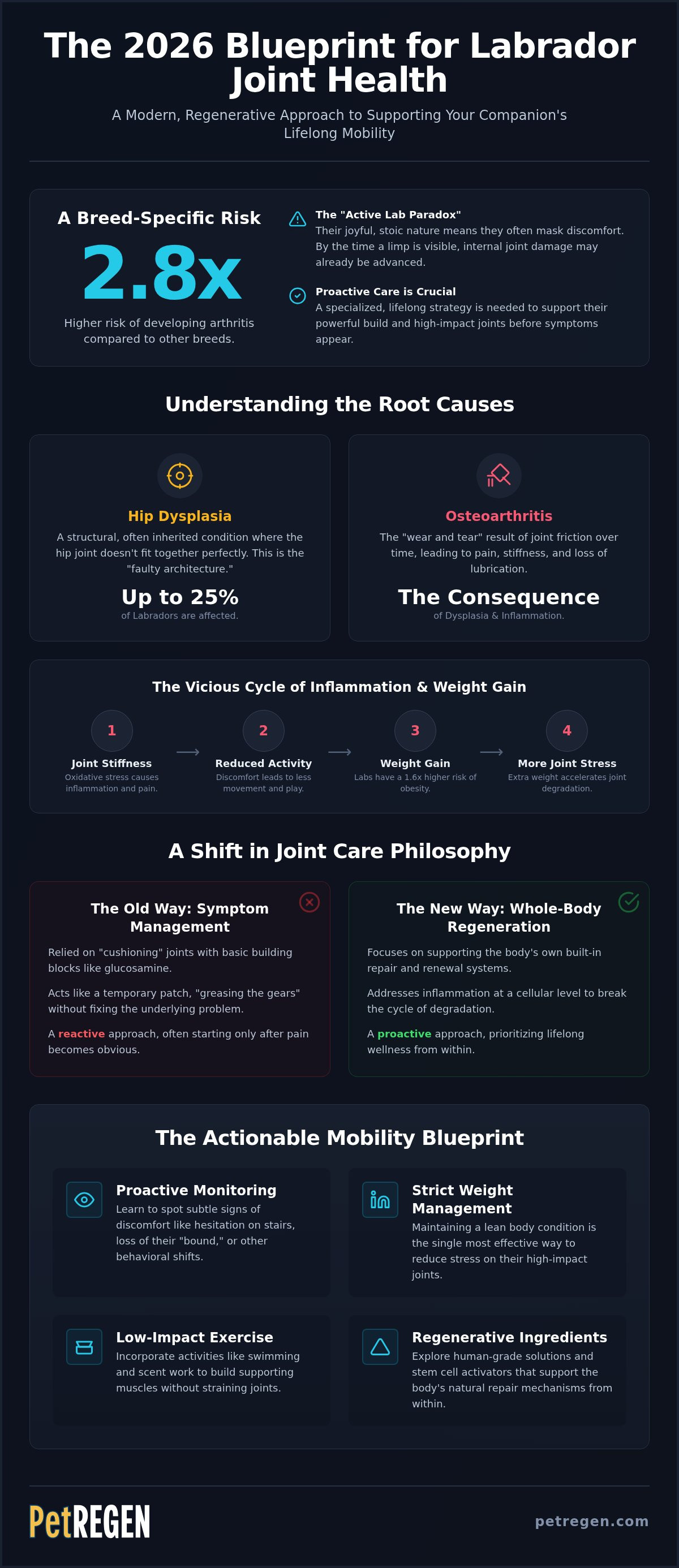
The 2026 Labrador Mobility Blueprint: Actionable Care
Creating a sustainable strategy for labrador retriever joint care requires a shift from occasional treats to a structured daily blueprint. Because Labradors are genetically predisposed to hip and elbow issues, your home environment and daily habits act as the primary defense against physical decline. This isn't about restricting your dog's life; it's about optimizing their environment so they can remain active without the high-impact wear and tear that leads to injury. By implementing a few strategic changes today, you can significantly alter the trajectory of your companion's mobility as they age.
The Food-Joint Connection
Keeping a Labrador lean is perhaps the kindest thing an owner can do for their long-term health. Labradors are famously food-motivated, but that extra "love" in the form of table scraps carries a heavy biological cost. Research indicates that obesity in this breed increases the risk of joint problems by 1.6 times. To put this in perspective, carrying just 5 extra pounds of body weight can feel like an additional 20 to 25 pounds of pressure on a dog's joints during movement. This constant stress accelerates the degradation of cartilage and fuels systemic inflammation.
- Replace high-calorie biscuits with crunchy, low-calorie alternatives like fresh green beans or carrot slices.
- Use a slow-feeder bowl to extend mealtime and increase satiety without adding extra calories.
- Consult your vet to find your dog's ideal "body condition score" rather than relying solely on the number on the scale.
Exercise Without Impact
High-energy Labs often live for games of fetch that involve high jumps and sudden "stop-and-turn" maneuvers. While these activities are mentally stimulating, they're incredibly taxing on the hips and elbows. Hydrotherapy or simple pond swimming is the ultimate exercise for a Labrador. It provides a full-body workout that builds muscle mass to support the skeleton while the water's buoyancy removes 90% of the weight from their joints. If swimming isn't an option, structure your "senior walks" on soft surfaces like grass or sand, which provide better shock absorption than asphalt.
Mental stimulation is just as vital as physical movement. Scent work and "find it" games allow your dog to use their natural instincts without putting physical strain on their frame. These activities keep the mind sharp and the spirit high, even if their "bounding" days are behind them. Beyond exercise, simple home modifications like non-slip rugs on hardwood floors and ramps for the car or couch can prevent the sudden slips that cause acute ligament tears.
Finally, a proactive approach must include cellular support. Integrating a high-quality supplement early in life helps maintain the body's natural resilience. If you want to support your dog’s built-in repair system and promote quicker recovery after a day of play, consider starting them on a natural stem cell activator designed for whole-body wellness.
Why PetREGEN is the Trusted Choice for Labrador Parents
Choosing the right support for your companion shouldn't feel like a guessing game. While the market is flooded with options, many rely on lower-grade ingredients that don't meet the standards your fur-baby deserves. PetREGEN stands apart by focusing on regenerative health rather than just symptom management. Our approach is deeply rooted in scientific authority. We're proud to be endorsed by Health & Welfare Zoologists, including our expert ambassador Dr. Zoolittle, who understands the complex needs of large breeds. Backed by science. Trusted by pet parents. Loved by pets.
We believe that effective labrador retriever joint care should be as advanced as human medicine. This is why we never use "pet-grade" waste products or synthetic fillers. Instead, we utilize human-grade integrity, incorporating ingredients like collagen and omega 7 to ensure your dog receives the highest quality nutrition available. The PetREGEN promise is simple: we want to see your dog happy and active again. We're so confident in our proprietary formula that we offer a full money-back guarantee. If you don't see a change in your dog's vitality, we'll refund your purchase. This transparency is why thousands of pet parents share stories of their Labradors reclaiming their "best life" and returning to the activities they love.
A Science-Based Superfood Approach
PetREGEN isn't just a targeted fix; it's a whole-body wellness solution. Our formula works as a natural stem cell activator, supporting the body's built-in repair system to combat oxidative stress. Because it's natural and non-toxic, it offers a safe alternative to traditional medicated options that can sometimes have harsh side effects. Pet parents often choose this science-based superfood approach because it addresses the root causes of mobility issues while promoting overall energy and recovery. It’s about healing from the inside out.
Getting Started with PetREGEN
Integrating this support into your Lab's life is effortless. The supplement is easy to administer and blends seamlessly into their daily feeding routine. Most owners begin to notice subtle shifts in energy and comfort within the first 30 days of stem cell support. You might see a little more "bounce" in their step or a renewed interest in their favorite toys. It’s about giving your companion the tools they need to thrive. Give your Labrador the gift of renewed mobility with PetREGEN.
Empower Your Lab to Bound Again
Protecting your dog's mobility is a lifelong commitment that starts with understanding their unique biological needs. Effective labrador retriever joint care requires moving beyond basic "cushioning" supplements toward a regenerative approach that supports the body's built-in repair system. By combining proactive weight management with low-impact enrichment like swimming, you're building a foundation for years of vitality and joy. You don't have to wait for a limp to start making a difference in your fur-baby's quality of life.
PetREGEN offers a science-based solution designed to help your companion thrive. Our formula features human-grade, USA-made ingredients and is backed by science and trusted by pet parents everywhere. We stand by our results with a full money-back guarantee, ensuring you can choose the best for your pet without any risk. It's about more than just movement; it's about recovery, healing, and happiness. Help your Labrador live their best life—Try PetREGEN today!
Your companion has spent their life looking after you. Now, you have the tools to help them enjoy every sunset walk and lake day to the absolute fullest. We're here to partner with you in their journey toward renewed vitality.
Frequently Asked Questions
Is it ever too early to start joint supplements for my Labrador?
No, it is never too early to prioritize labrador retriever joint care for your companion. Because this breed has a high genetic predisposition to structural issues, starting support as early as two years old can help maintain healthy cartilage before visible wear occurs. Proactive care ensures that your dog's built-in repair system stays active throughout their life. It's much easier to protect existing joint health than to try and regain it later.
Can a stem cell activator supplement replace my dog's current medication?
No, you should not replace prescription medications with a supplement without first consulting your veterinarian. PetREGEN is a nutritional supplement designed to support whole-body wellness and natural recovery; it is not a drug. It works beautifully alongside many traditional treatments to enhance vitality and energy. We always recommend showing our ingredient list to your vet. This ensures it fits perfectly into your companion's specific health plan while they continue their medical care.
What makes PetREGEN different from standard glucosamine chews?
PetREGEN targets the body's stem cell activity to support the built-in repair system, which is fundamentally different from standard chews that only provide cushioning. We use human-grade ingredients like collagen and omega 7, avoiding the pet-grade waste products found in many common supplements. It is a comprehensive approach to mobility that goes beyond simple lubrication to promote genuine healing and recovery. This whole-body wellness strategy ensures your companion stays active longer.
How long does it take to see results in my dog's mobility?
You can typically expect to see visible results in your dog's mobility within the first 30 days of consistent use. While every fur-baby is unique, the regenerative process takes time to support cellular renewal and reduce oxidative stress. You might first notice your Lab getting up more easily after a nap or showing renewed interest in their favorite toys. Consistency is key to seeing your companion bound with joy once again.
Are there any side effects to natural regenerative supplements?
There are no known negative side effects associated with our natural regenerative formula when used as directed. PetREGEN is crafted with non-toxic, human-grade ingredients that have an excellent safety profile for long-term use. It's a safe way to support labrador retriever joint care without the harsh side effects often associated with pharmaceutical options. We always recommend monitoring your fur-baby when introducing any new addition to their daily feeding routine to ensure they thrive.
How do I know if my Lab's stiffness is arthritis or just old age?
Stiffness is almost always a sign of joint discomfort or inflammation rather than a natural part of old age. If your companion hesitates at the stairs, bunny hops while running, or takes several minutes to warm up after resting, they are likely experiencing manageable pain. Recognizing these subtle signs early allows you to implement a mobility blueprint. This keeps them active and happy for many years to come.
Is PetREGEN safe for Labradors with sensitive stomachs?
Yes, our formula is designed with clean, bioavailable ingredients that are gentle on the digestive system. We avoid the synthetic fillers and low-quality binders that often trigger sensitivities in food-motivated breeds. If your Lab has a particularly delicate stomach, we suggest starting with a half-serving for the first few days. This allows their system to adjust to the nutrient-dense superfoods and collagen without any digestive upset.


