

What if the years of neglect your rescue dog endured didn't have to define their golden years? It's often painful to watch a "soul dog" struggle to get up, especially when you're uncertain about prior injuries or the side effects of long-term pain medications. You want to provide the best joint support for senior rescue dogs, but the mystery of their life before they met you can make finding the right solution feel impossible. We agree that every senior dog deserves to spend their retirement feeling vibrant and comfortable, regardless of their history.
In this guide, you'll discover how to support your senior rescue dog's unique needs using science-backed regenerative nutrition and holistic care. We'll explore how to activate your pet's built-in repair system to help them find their stride again without relying on invasive procedures. By focusing on whole-body wellness from within, you can find a safe, long-term mobility solution that helps your companion act like a puppy again. This is your roadmap to turning back the clock and giving your fur-baby the quality of life they've always deserved.
Key Takeaways
- Understand how a rescue's "mystery history" and past neglect accelerate joint degeneration, requiring a more comprehensive approach than standard care.
- Explore why traditional building blocks like glucosamine often aren't enough and how regenerative nutrition targets the root of mobility issues.
- Learn to implement a "Rescue Recovery Plan" featuring environmental safe zones and low-impact mental stimulation for your aging companion.
- Navigate the choice between natural options and medications to find the safest long-term joint support for senior rescue dogs.
- Discover how supporting your dog's built-in repair system can help them regain their vitality and transition from surviving to thriving.
Why Joint Support for Senior Rescue Dogs Requires a Unique Approach
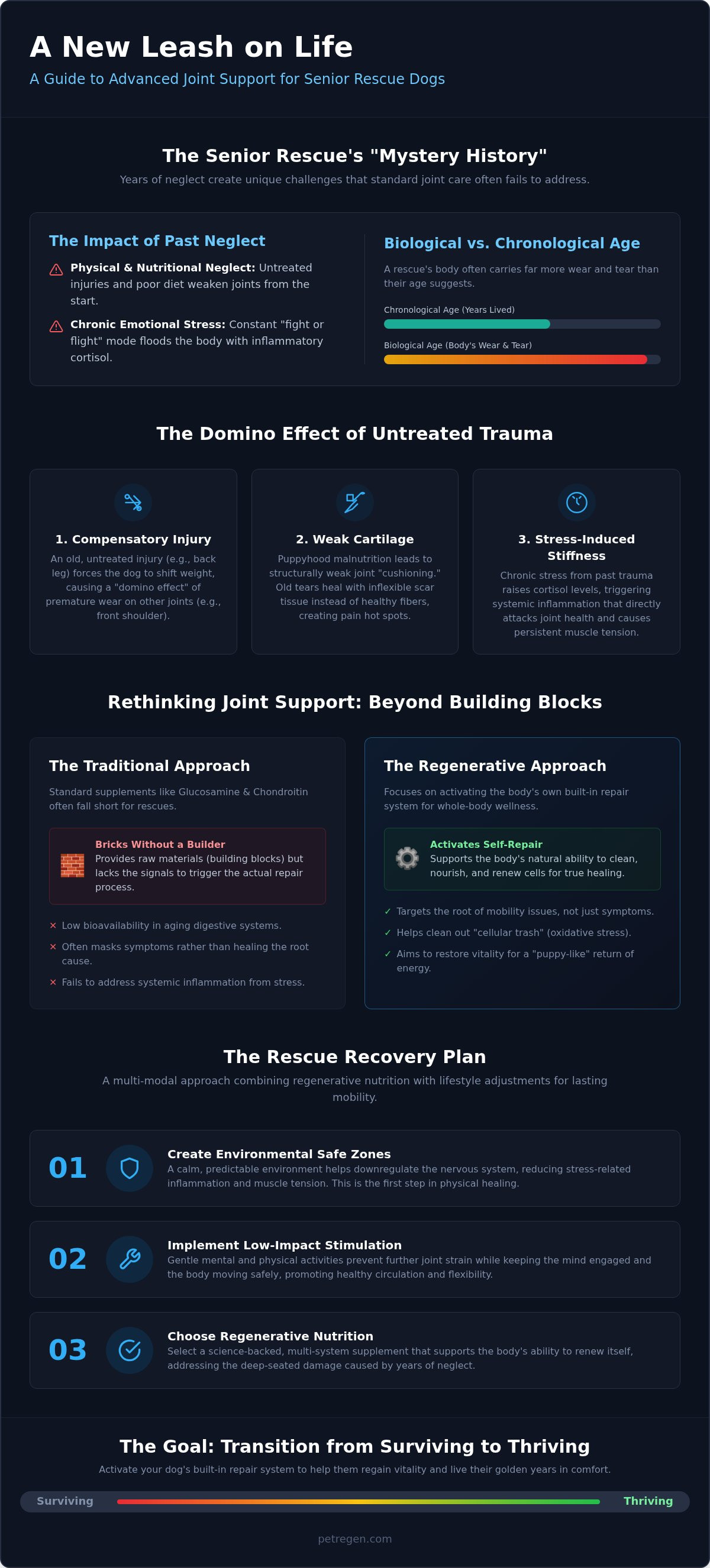
Senior rescue dogs carry more than just their leashes; they carry a "mystery history" that often includes years of physical and nutritional neglect. Unlike dogs raised in stable homes, rescues frequently arrive with a biological age that far exceeds their chronological age. This discrepancy means their bodies have endured more oxidative stress and cellular wear than a typical senior. When an injury goes untreated, a dog shifts their weight to other limbs. This creates a domino effect of compensatory injuries. A rescue might have a "hidden" old fracture in the back left leg that has caused the front right shoulder to wear down prematurely. Standard joint support for senior rescue dogs often fails because it treats the symptom rather than the systemic breakdown caused by these layered traumas. Many of these dogs suffer from developmental issues like Canine Hip Dysplasia and Osteoarthritis, which are exacerbated by a lack of early intervention.
The Impact of Prior Neglect on Cartilage
Cartilage development relies heavily on specific amino acids and minerals during the first year of life. If a rescue spent their puppyhood in a state of malnutrition, their joint "cushioning" may be structurally weaker from the start. Untreated ligament tears are another common hurdle. When a tear heals without professional care, the body often uses thick scar tissue rather than healthy, flexible fibers. These areas become "hot spots" of chronic pain that flare up as the dog ages. Biological age in rescue dogs reflects the cumulative impact of stress and neglect, often making a six-year-old rescue feel like a ten-year-old senior. This is why a simple glucosamine chew isn't enough; their bodies need a more robust, regenerative approach to repair what was lost during those early, difficult years.
Emotional Stress and Physical Stiffness
The connection between a rescue's mind and body is profound. Many rescues live in a state of hyper-vigilance or exhibit a "freeze" response due to past trauma. This chronic stress keeps the nervous system in a "fight or flight" loop, flooding the body with cortisol. High cortisol levels are known to trigger systemic inflammation, which directly attacks joint health. Physical stiffness isn't always just about bone-on-bone friction. It's often the result of muscle tension held for years. Creating a calm, predictable environment is the first step in physical rehabilitation, as it allows the nervous system to downregulate and the muscles to finally release their grip on the joints. When the mind feels safe, the body can finally begin the process of recovery and healing.
Evaluating Joint Support Options: Beyond Glucosamine and Chondroitin
Walking down the supplement aisle, most pet parents reach for the same two ingredients: glucosamine and chondroitin. While these are the traditional "gold standards," they often act as mere building blocks. Think of them as the bricks for a house. For joint support for senior rescue dogs, having a pile of bricks isn't enough if there's no one to lay them. These ingredients support the structural integrity of cartilage, but they don't necessarily trigger the healing process. Many owners find that while their dog might experience slight relief, they don't see that "puppy-like" energy return. This is because pain relief isn't the same thing as systemic healing.
According to Cornell University on Canine Osteoarthritis, managing this condition involves a multi-modal approach. Finding effective joint support for senior rescue dogs requires looking at the cellular level. Instead of just masking symptoms, regenerative care focuses on supporting the body's built-in repair system. This involves a multi-system strategy: cleaning out the "cellular trash" known as oxidative stress, nourishing the joints with high-quality nutrients, and supporting the body’s natural ability to renew itself.
Why Glucosamine Isn't Always Enough
Bioavailability is a major hurdle for senior rescues. Many standard chews use low-grade ingredients that aren't easily absorbed by an aging digestive tract. Without specific "activators," the body doesn't know how to utilize the glucosamine it does manage to take in. Standard joint chews often focus on a single symptom, whereas whole-body regenerative supplements aim to restore vitality from the inside out. If your dog didn't respond to basic supplements, it's likely because their body lacked the signals needed to put those building blocks to work.
The Science of Stem Cell Activation
Stem cell activators are natural superfoods that signal the body's internal repair crew to get to work. These nutrients don't just sit in the stomach; they communicate with the immune system to help manage inflammation and support tissue recovery. PetREGEN supports natural regenerative function by providing the specific superfoods required to activate these dormant repair signals. By focusing on whole-body wellness rather than just a single joint, you can help your companion move with more comfort. If you're ready to move beyond basic chews, you might want to explore regenerative stem cell support for your fur-baby.
The Rescue Recovery Plan: Lifestyle Adjustments for Mobility
Developing a comprehensive recovery plan for your senior rescue is about more than just a daily pill. It requires a 360-degree look at how they interact with their world. For a dog that may have spent years on hard concrete or in cramped quarters, the right joint support for senior rescue dogs involves environmental and lifestyle shifts that reduce daily wear and tear. These changes help your companion feel secure while their body begins the healing process.
Start by establishing "Safe Zones" with high-quality orthopedic bedding that supports their spine and pressure points. Weight management is equally critical. Even one extra pound can significantly increase the load on a rescue's already compromised joints. Keeping your companion lean is one of the kindest ways to preserve their mobility. You should also integrate targeted nutrition. While standard chews provide building blocks, a stem cell activator like PetREGEN helps support the body's natural repair system from the inside out. Finally, maintain a consistent routine. Predictability lowers cortisol levels, which helps reduce the chronic muscle bracing and physical tension that often leads to stiffness in former shelter dogs.
Gentle Exercise for the Senior Rescue
Forget the high-impact power walks of the past. For a senior rescue, a "sniffari" is far more beneficial. This is a slow, self-paced walk where the dog leads with their nose. It provides intense mental stimulation and energy without the physical strain of a brisk pace. It respects their physical threshold, which is the point where exercise stops being helpful and starts causing inflammation. If your companion has prior structural injuries, hydrotherapy is an excellent option. The buoyancy of the water allows them to build muscle and improve recovery without putting weight on their joints.
Optimizing the Indoor Environment
Your home should be a sanctuary, not an obstacle course. Hardwood and tile floors often feel like ice rinks to a dog with limited mobility. Strategic placement of yoga mats or non-slip runners provides the grip they need to move confidently through the house. You should also consider using raised feeders. These reduce the strain on the neck and spine, which is vital for dogs already dealing with compensatory injuries. For morning stiffness, pet-specific warming pads provide gentle heat therapy. This increases blood flow to the joints, helping your fur-baby start their day feeling happy and ready to move.
Natural vs. Medicated: Navigating the Choice for Your Dog
When your senior rescue starts to slow down, you're often faced with a difficult decision: do you reach for a prescription bottle or a natural supplement? Many veterinarians initially recommend Non-Steroidal Anti-Inflammatory Drugs (NSAIDs) for quick pain relief. While these medications are effective at masking acute discomfort, they come with a metabolic cost. For a dog that spent years in a shelter or on the street, their internal systems might already be under strain. Choosing the right joint support for senior rescue dogs involves balancing immediate comfort with long-term organ health. A "natural first" philosophy builds a foundation of health, helping the body manage inflammation before resorting to heavy pharmaceuticals.
Regenerative supplements don't have to work in isolation. They can be a vital part of a multimodal approach to pain management. By supporting the body's built-in repair system, you may find that your companion requires lower doses of traditional medications over time. This approach prioritizes the liver and kidneys, which are the primary filtration systems for any drug. Protecting these organs is paramount for senior rescues, as they are often the first systems to fail after years of nutritional neglect or exposure to environmental toxins.
Managing Side Effects in Senior Dogs
Senior rescues often arrive with compromised organ function due to a lifetime of low-quality "feed grade" diets. When these dogs are placed on long-term NSAIDs, the risk of gastrointestinal ulcers or kidney distress increases significantly. Natural alternatives that support a healthy inflammatory response offer a gentler path. These nutrients work with the immune system rather than just shutting down pain signals. If you're concerned about side effects, talk to your vet about integrating high-quality joint support for senior rescue dogs alongside a reduced medication schedule. This strategy aims for the "lowest effective dose" of drugs while maximizing natural healing.
Human-Grade Ingredients Matter
The quality of what goes into your dog's bowl determines the quality of their recovery. Many pet store supplements use "feed grade" ingredients, which can include by-products and synthetic fillers that actually increase oxidative stress. Human-grade ingredients are held to much stricter safety and purity standards. Real liver and collagen provide bioavailable amino acids that a senior body can actually use to rebuild tissue. PetREGEN uses USA-made, human-grade ingredients like real liver and collagen to ensure your senior rescue receives the safest, most effective nourishment possible. If you want to give your fur-baby the best chance at a pain-free retirement, try PetREGEN Stem Cell Activator today and see the difference that human-grade quality makes.
PetREGEN: Activating Hope for Your Senior Rescue
PetREGEN isn't just another supplement; it's a specialized tool designed for the complex needs of the rescue dog. As we discussed earlier, these dogs often suffer from a combination of prior neglect and compensatory injuries that a simple joint chew cannot address. PetREGEN targets the whole-body wellness of your companion by focusing on the cellular level. It acts as a stem cell activator, signaling the body's built-in repair system to address years of wear and tear. This is the hope for dogs that didn't respond to basic glucosamine.
The transformation is more than just physical; it's emotional. Watching a "soul dog" who used to struggle to get up suddenly start to act like a puppy again is a life-changing experience for any pet parent. We've seen countless senior rescues move from merely surviving their golden years to truly thriving in them. This journey toward renewed vitality is what we strive for every day. Seeing your fur-baby rediscover the joy of a morning walk is what it means to see them living her best life.
Backed by science and trusted by pet parents, PetREGEN is endorsed by Health & Welfare Zoologists. We believe so strongly in the power of regenerative nutrition that we offer a 100% money-back guarantee. We want every rescue dog to have a chance at a comfortable, active retirement without the fear of a wasted investment. It's a safe, proven path to helping your companion find their stride again.
A Multi-System Approach to Vitality
PetREGEN utilizes a unique multi-system approach: it cleans, nourishes, and supports. First, it helps clean out the oxidative stress that accumulates after years of poor nutrition and environmental toxins. Then, it nourishes the body with human-grade ingredients like Collagen and Omega 7. This is essential joint support for senior rescue dogs because it provides the specific nutrients required for tissue recovery. These nutrients don't just restore mobility; they also support coat health, which is often a visible indicator of a rescue's internal recovery. We've heard many stories of senior rescues finding their "second puppyhood" after just a few weeks of consistent support.
Join the PetREGEN Family
Starting your dog on the path to better mobility today gives them the gift of a pain-free future. You can have the peace of mind that comes with using a science-backed, natural formula made right here in the USA. By choosing PetREGEN, you're not just buying a supplement; you're becoming a partner in your pet's health journey. This is the comprehensive joint support for senior rescue dogs you've been searching for. Help your senior rescue live their best life with PetREGEN and watch them rediscover the joy of movement.
Empowering Your Rescue’s Golden Years
Your rescue dog's past doesn't have to dictate their future comfort. We've explored how early neglect and hidden traumas create a unique need for regenerative care. By shifting from simple symptom masking to supporting the body's natural repair system, you're offering more than just a supplement; you're providing a path to renewed vitality. The right joint support for senior rescue dogs looks at the whole animal, combining environmental changes with high-quality, science-backed nutrition.
PetREGEN stands as a caring innovator in this journey. Our formula is endorsed by Health & Welfare Zoologists and crafted with USA-made, human-grade ingredients to ensure safety and effectiveness. We're so confident in the transformation your companion will experience that we offer a 100% money-back guarantee. It's time to help your fur-baby rediscover the joy of movement and the energy of their youth.
Give your senior rescue the gift of mobility; Shop PetREGEN now
Every dog deserves to thrive in their retirement. With the right support and a little extra care, your soul dog can start living their best life today.
Frequently Asked Questions
Is it ever too late to start joint support for a senior rescue dog?
It is never too late to provide joint support for senior rescue dogs. Even if your companion is in their very late teens, supporting their built-in repair system can significantly improve their daily comfort. While we cannot reverse all structural damage, we can help reduce oxidative stress and nourish remaining tissue. Every small improvement in mobility translates to a massive gain in your pet's happiness, energy levels, and overall quality of life.
Can PetREGEN be used alongside my dog's current pain medication?
Yes, PetREGEN is designed to work as part of a multimodal approach alongside traditional veterinary care. Many pet parents find that supporting the body's natural regenerative functions allows them to eventually discuss lower medication doses with their vet. Because it uses natural, human-grade ingredients, it doesn't typically interfere with NSAIDs. You should always share your full supplement list with your veterinarian to ensure the best care for your fur-baby.
How long does it take to see results with a stem cell activator supplement?
Most pet parents notice a difference within 30 days, though some see a spark of energy in as little as two weeks. Unlike drugs that mask pain instantly, a stem cell activator works at the cellular level to support long-term healing. Consistency is key during this initial phase. Giving the body time to clean out cellular waste and begin the repair process ensures that the recovery you see is sustainable and deep-rooted.
What are the first signs that my rescue dog's joints are improving?
You will likely notice subtle behavioral shifts before you see them running like a puppy. Look for "brighter eyes," an easier time rising from their bed, or a renewed interest in toys they haven't touched in months. Some owners report their senior rescue starts waiting by the door for walks again. These small victories are signs that the joint support for senior rescue dogs is working to restore their natural vitality.
Are there any side effects to natural regenerative supplements for dogs?
Natural regenerative supplements are generally very safe and lack the harsh systemic side effects associated with long-term pharmaceutical use. Because PetREGEN uses human-grade superfoods, it is gentle on the liver and kidneys. Some dogs may experience a brief adjustment period as their system begins to detoxify. If you notice any unusual changes, simply pause and consult your vet, but most companions transition to these nutrients with no issues at all.
Why is my rescue dog stiffer in the morning than in the evening?
Morning stiffness is often caused by the gelling of joint fluid after a long night of inactivity. When a dog is still, inflammatory by-products can settle in the joints, making those first few steps difficult. As they move throughout the day, circulation increases and the lubrication begins to flow. Providing a warming pad and consistent cellular support helps reduce this morning inflammation, allowing your fur-baby to wake up feeling flexible and ready.
How do I know if my dog needs a supplement or a vet visit?
If your dog experiences sudden lameness, inability to stand, or vocalizes in pain, you need an immediate veterinary visit. These can be signs of acute injury or neurological issues that require professional diagnosis. Supplements are ideal for managing chronic slowing down and supporting long-term mobility. A good rule is to use supplements as a foundation of health while maintaining regular senior wellness checkups to monitor their overall structural integrity.
Can I give joint support to a senior dog with a sensitive stomach?
Yes, many senior rescues have sensitive systems due to past nutritional neglect, which is why we use real liver and avoid synthetic fillers. PetREGEN is formulated to be highly bioavailable and easy on the digestive tract. We recommend starting with a half-dose for the first few days to allow their gut flora to adjust. This cautious approach ensures your companion gets the mobility support they need without any tummy upset or digestive distress.


