

What if the key to your horse's 2030 competition season isn't found in a needle, but within their own bone marrow? For many riders, the cycle of expensive hock injections and daily anti-inflammatories feels like an inevitable part of ownership. However, investing in my horse's long-term soundness shouldn't just mean managing existing wear and tear with reactive treatments; it means looking deeper at the biological systems that allow a horse to heal itself from the inside out.
You likely feel that pit in your stomach every time you see a slight unevenness in the trot, fearing the high costs and heartbreak of a career-ending soft tissue injury. We understand that your horse is more than an athlete; they're a partner you want to keep comfortable for a lifetime. In this guide, you'll discover how to move beyond basic maintenance by supporting your horse's built-in repair system for years of peak performance. We'll explore a proactive roadmap that prioritizes internal regeneration, helping you avoid the 'maintenance' trap while improving recovery times after every hard ride.
Key Takeaways
- Redefine soundness as proactive biological health rather than just the absence of lameness to ensure your horse thrives well into their senior years.
- Identify the critical role that precision farriery and arena surface quality play in protecting your horse's joints and soft tissues from daily concussion.
- Unlock the science behind your horse's internal "repair team" and how regenerative capacity naturally changes with age and performance stress.
- Discover why investing in my horse's long-term soundness means choosing human-grade phytonutrients over standard, outdated joint supplements.
- Learn how a whole-body wellness approach supports the immune system and activates natural stem cell function for faster recovery and renewed vitality.
Defining Soundness: Why Maintenance Isn't Enough Anymore
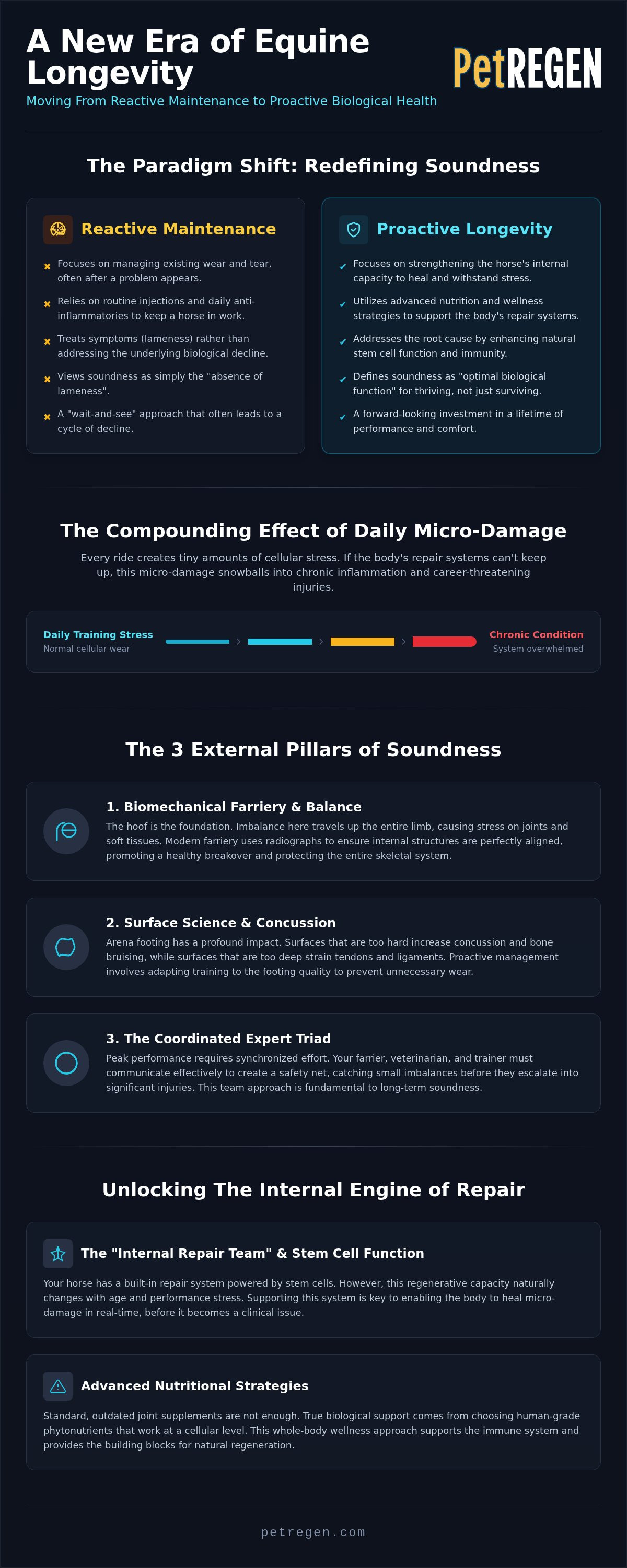
For decades, we've viewed soundness through a binary lens: either the horse is lame or they aren't. But as we look toward 2026, that definition is shifting. True soundness is actually optimal biological function. It's the difference between a horse that isn't limping today and a horse whose body is actively thriving and repairing itself. Investing in my horse's long-term soundness requires moving past the standard "maintenance" cycle. While regular farrier visits and routine injections keep a horse in work, they often just manage a slow decline. Longevity strategies, conversely, focus on the horse's internal capacity to withstand the rigors of performance over decades.
The biggest threat to your horse's career isn't a single traumatic event. It's the micro-wear of daily training. Every trot set and jumping round creates tiny amounts of cellular stress. If the horse's body can't keep up with the repair, these tiny issues snowball into chronic conditions. To protect your partner, you must set a baseline for their unique movement and recovery patterns. Don't wait for a problem to appear. Learn their "normal" so you can spot the slightest deviation before it becomes a diagnosis.
The 'Invisible' Wear and Tear
Every time your horse works, micro-damage occurs. It's a natural part of training. However, repetitive strain often affects tendons and ligaments long before you see heat or swelling. Inflammation is a double-edged sword; it's necessary for healing, but chronic, low-grade inflammation destroys healthy tissue over time. For the modern equestrian, understanding equine lameness starts with recognizing these subtle changes in the cellular environment. Biological soundness is the horse's ability to repair micro-damage in real-time. By the time a horse fails a flexion test, the biological repair systems have already been overwhelmed for months.
The Shift to Proactive Equine Management
The "wait and see" approach to veterinary care is becoming obsolete. In 2026, the standard for elite and amateur riders alike is prioritizing longevity over short-term blue ribbons. This shift is about the emotional and financial ROI of a sound horse. Replacing a performance partner is devastating and expensive. By investing in my horse's long-term soundness now, you're securing more years of those sunset trail rides and successful show seasons. It's about giving them the vitality they deserve to live their best life.
- Establish a movement baseline: Record your horse's gait on video when they're feeling their best.
- Track recovery: Note how long it takes for their breathing to return to normal after a gallop.
- Monitor behavior: Subtle changes in willingness often precede physical lameness.
The Three External Pillars of Equine Soundness
While internal biological repair systems are the engine of longevity, the external environment provides the track. Achieving peak performance requires a coordinated effort between your farrier, veterinarian, and trainer. This triad must work in sync to ensure every step your horse takes is balanced and supported. When these professionals communicate effectively, they create a safety net that catches small imbalances before they escalate into significant injuries. By aligning these experts, you're truly investing in my horse's long-term soundness from the ground up.
Biomechanical Farriery and Balance
The hoof is the foundation of the entire skeletal system. If the hoof is out of balance, the stress travels up the limb, often manifesting as issues in the hocks, stifles, or even the back. Modern farriery in 2026 emphasizes biomechanical alignment rather than just applying a standard shoe. Regular radiographs are no longer just for diagnostic purposes; they're an essential tool to guide the shoeing process by showing exactly where internal structures sit within the hoof capsule. Whether you choose composite shoes or a barefoot transition, the goal remains the same: a healthy breakover and proper medial-lateral balance.
Surface Science: Footing and Concussion
Arena surfaces have a profound impact on joint health. Surfaces that are too hard increase concussion, leading to bone bruising and joint degradation. Conversely, surfaces that are too deep or shifty put immense strain on tendons and ligaments. Adapting your training to the available footing is a hallmark of a proactive owner. On days when the arena isn't perfect, shifting your focus to light work or walking can prevent unnecessary wear. Beyond the arena, hill work remains the gold standard for building hind-end strength and structural fitness. It develops the muscles that support the joints without the repetitive impact of circling on flat ground.
Maintaining optimal footing and a safe environment is a priority for any horse owner; for those who also need to protect their stable gardens or surrounding turf from damage caused by pests, Revira offers expert guidance on humane deterrence.
True conditioning involves more than just cardiovascular fitness; it requires building the density of bones and the resilience of connective tissues. Studies on Nutritional Strategies for Long-Term Joint and Soft Tissue Health suggest that physical training must be paired with the right fuel to be effective. As you manage these external pillars, remember that external care and internal support must work together. To give your horse the ultimate edge, consider how you can activate their built-in repair systems alongside your conditioning program.
Understanding the Biological Edge: Stem Cells and Regeneration
While shoes and footing are vital, the real work of longevity happens at the cellular level. Every horse is born with an internal "search and repair" team: stem cells. These remarkable cells circulate through the bloodstream, responding to distress signals from damaged tissues. They're the biological foundation of equine soundness and health. However, as horses age or face the chronic stress of a heavy show season, their regenerative capacity begins to dip. This decline makes investing in my horse's long-term soundness more than a choice; it's a biological necessity for maintaining peak performance into their senior years.
The immune system and stem cell activation work in a delicate dance. When the immune system identifies a site of inflammation, it sends out chemical messengers to recruit repair cells. In a vibrant, healthy horse, this process is seamless. But as the "repair team" ages or becomes overwhelmed by oxidative stress, the response slows down. This is where we see the difference between a horse that bounces back after a hard weekend and one that starts to feel "stale" or stiff.
How Horses Naturally Repair Tissue
When micro-damage occurs in cartilage or collagen, the body releases signaling molecules to call for help. In a young horse, stem cells arrive quickly to regenerate the area. Over time, constant training can lead to "repair fatigue." This happens when the demand for healing outpaces the available supply of active repair cells. Instead of clean regeneration, the body might lay down scar tissue, which is less elastic and more prone to re-injury. Every horse has a built-in repair system that can be optimized through nutrition. By supporting the body's ability to signal these repair cells, we help the horse fix tissue properly rather than just patching the holes.
The Science of Stem Cell Activation
Most traditional approaches rely on symptom suppression. Non-steroidal anti-inflammatory drugs (NSAIDs) might make a horse look sound by masking pain, but they don't address the underlying cellular damage. Stem cell activation is different. It's about providing the body with specific phytonutrients needed to wake up dormant repair cells. Oxidative stress is a major roadblock here; it's like biological "smog" that prevents repair signals from getting through. Activators differ from traditional joint supplements like glucosamine because they don't just provide building blocks; they trigger the "start" button on the body's natural healing pathways. This systemic support reaches every joint and ligament, offering a non-invasive way to maintain whole-body vitality.
Nutritional Strategies for Long-Term Joint and Soft Tissue Health
Nutrition is the fuel for the internal repair systems we've discussed. Investing in my horse's long-term soundness means looking past flashy labels to the actual quality of the molecules entering their system. Human-grade ingredients are vital because they ensure the absence of contaminants that can trigger systemic inflammation. While the animal supplement market is projected to reach $3.6 billion in 2026, many products still rely on feed-grade fillers that offer little biological value. High-quality proteins and collagen are the essential building blocks for ligament elasticity and joint resilience. Without these pure sources, the body struggles to maintain the structural integrity required for peak performance.
Standard joint supplements like glucosamine and chondroitin were once the gold standard, but they are often insufficient for the modern performance horse. These substances provide raw materials, but they don't address the signaling required to use those materials effectively. True soundness also relies on gut health and immune function. If the digestive system is compromised, the horse cannot absorb the nutrients needed for soft tissue repair. This holistic approach ensures that the "investment" you make in their bucket actually reaches the tissues that need it most.
Beyond Glucosamine: Modern Ingredients to Watch
Omega-7 fatty acids and specialized amino acids are changing how we manage equine recovery. Omega-7 supports tissue lubrication and healthy mucous membranes, while specific amino acids assist in collagen synthesis. Phytonutrients act as nature's way of managing oxidative stress, clearing the path for the body's built-in repair system to function without interference. Using real liver and high-quality proteins provides a dense source of nutrients that feed-grade synthetics simply cannot match. These ingredients don't just sit in the system; they actively support the healing of micro-damage.
The Dangers of Masking Symptoms
Masking pain is not the same as healing. Long-term use of anti-inflammatories can actually inhibit the natural regenerative process by shutting down the inflammatory signals the body needs to initiate repair. A "clean" supplement profile, free from sugars and fillers, ensures that every milligram is working toward vitality rather than adding to the horse's metabolic load. You can tell a supplement is working when you see improved recovery times and a brighter expression, rather than just the temporary disappearance of a symptom. If a product only hides a limp without improving the quality of the tissue, it's a temporary patch, not a long-term strategy.
To provide your companion with the most advanced support available, choose the PetREGEN Stem Cell Activator Supplement for a science-based approach to whole-body wellness.
The PetREGEN Approach: Investing in the Built-In Repair System
While farriery and footing provide the essential framework, the final piece of the puzzle is the biological engine itself. The PetREGEN Stem Cell Activator Supplement represents the pinnacle of proactive care in 2026. It isn't just another joint powder; it's a multi-system approach to equine vitality. By focusing on immune enhancement and natural regenerative function, we help the horse maintain its own tissues from the inside out. This is the heart of investing in my horse's long-term soundness, moving from reactive maintenance to true biological investment.
Our "Clean, Nourish, Support" philosophy is simple but powerful. First, we clean the system by addressing the oxidative stress that clogs cellular communication. Next, we nourish the body with human-grade phytonutrients and proteins. Finally, we support the built-in repair system, allowing stem cells to navigate to where they're needed most. This science-based natural superfood strategy ensures that your partner isn't just getting by; they're thriving. It's a source of renewed vitality for horses that have given their all in the arena.
A Science-Based Proprietary Formula
Developed with guidance from experts like our Health and Welfare Zoologist, Dr. Zoolittle, the PetREGEN formula targets the cellular environment directly. Collagen and specific amino acids are essential for maintaining the elasticity of tendons and ligaments, which are often the first tissues to fail under performance pressure. In light of the 2026 FDA guidance regarding donor eligibility for human cellular products, many owners are looking for safer, non-invasive alternatives. We prioritize natural activation over donor-derived therapies. This approach is safe, effective, and backed by a full money-back guarantee, providing you with total peace of mind as you support your companion's mobility.
Real Results for Equine Athletes
Owners across the country report seeing a renewed sense of vitality in their horses. From senior trail companions showing increased energy to high-level competitors displaying quicker recovery times after hard work, the results are life-changing. PetREGEN fits seamlessly into a daily wellness routine, providing a consistent biological edge regardless of the horse's age or discipline. It's about ensuring your horse can live their best life for as long as possible, avoiding the painful cycle of injections and anti-inflammatories. You've worked hard to build a bond with your horse; now, give them the internal support they deserve.
Give your horse the biological edge with PetREGEN Stem Cell Activator
Securing Your Partner's Future in the Arena
Choosing a proactive path means moving beyond the standard maintenance cycle to embrace the full potential of your horse's biological resilience. We've explored how the intersection of biomechanical farriery, quality surfaces, and cellular support creates a foundation that lasts decades. By prioritizing the body's built-in repair system, you're doing more than just preventing injury; you're actively investing in my horse's long-term soundness for a lifetime of shared success. This shift in perspective ensures that your companion remains a vibrant athlete rather than just a patient in waiting.
Our formula is backed by science and endorsed by vets and zoologists. Every jar contains human-grade, USA-made ingredients designed to nourish and protect your horse's internal systems. We're so confident in the vitality PetREGEN provides that we offer a 100% money-back satisfaction guarantee. It's time to stop waiting for a limp to appear and start supporting the healing process from the inside out. Your horse has given you their best years; now, you can give them the biological edge they deserve to keep living their best life.
Invest in your horse's longevity with PetREGEN Stem Cell Activator
Frequently Asked Questions
Is it worth doing a pre-purchase exam if I'm not planning to compete at a high level?
Yes, a pre-purchase exam is essential regardless of your competition goals. It establishes a vital baseline for the horse's physical health and can reveal hidden issues like early degenerative joint disease or old soft tissue scars. This knowledge helps you avoid unexpected veterinary costs and ensures the horse is physically capable of the lifestyle you've planned. It's about protecting your emotional and financial investment from day one.
Can a stem cell activator supplement replace hock injections?
A stem cell activator supplement can significantly reduce the need for hock injections by supporting the body's natural repair mechanisms. While injections provide immediate, localized anti-inflammatory effects, an activator works systemically to improve overall joint health. Many owners find that investing in my horse's long-term soundness through daily supplementation helps them extend the time between veterinary procedures while keeping their partner more comfortable.
At what age should I start giving my horse joint support supplements?
You should ideally begin joint support when a horse enters regular training, often between ages four and six. Starting early helps maintain the integrity of the cartilage and connective tissues before significant wear occurs. Proactive care is far more effective than trying to reverse damage once a horse shows clinical signs of stiffness. It's much easier to protect a healthy joint than to manage a damaged one.
How does footing quality specifically impact my horse's long-term soundness?
Footing quality dictates the amount of concussion and torque placed on your horse's limbs during every stride. Hard surfaces increase the shock sent through the bones and joints, while deep, uneven footing overstretches the tendons and ligaments. Consistent work on poor surfaces leads to cumulative micro-damage that eventually compromises the horse's career. Choosing the right surface is a primary external pillar of any longevity strategy.
What is the difference between stem cell therapy and a stem cell activator?
How long does it take to see results from a regenerative equine supplement?
Most owners notice visible improvements in mobility and attitude within four to six weeks of consistent use. Because regenerative supplements work at the cellular level, the body needs time to clear oxidative stress and begin repairing micro-damage. You'll likely see a brighter expression and better recovery times after hard work as the horse's internal systems stabilize and the healing process gains momentum.
Can I use PetREGEN alongside my horse's current medications?
Yes, PetREGEN is formulated with safe, natural ingredients that generally don't interfere with standard veterinary medications. It is a powerful tool for investing in my horse's long-term soundness by providing systemic support that complements targeted medical treatments. Always consult with your veterinarian if your horse is on a specific prescription protocol to ensure the best results for your companion's unique health needs.
What are the early warning signs that my horse's soundness is at risk?
Early warning signs include subtle changes in temperament, a sudden reluctance to take a specific lead, or stiffness that disappears after warming up. You might also notice slight heat in a limb or a change in how the hoof wears down. Catching these "invisible" signals early allows you to adjust your management and supplementation before a minor strain becomes a career-ending injury.


