

Could a slower rise from bed be more than a sign of getting older? Stiffness after rest, hesitation on stairs, or less interest in walks can signal discomfort, and it’s understandable to wonder whether a supplement or a change in routine is enough. Integrative joint support for senior dogs starts with understanding what’s behind those changes, not relying on one product to do everything.
This guide will help you recognize when mobility changes deserve veterinary assessment and how to build a practical, comfort-focused plan with your veterinarian. You’ll learn how weight management, appropriate daily movement, rehabilitation when recommended, and carefully chosen supplements can fit together. We’ll also look at PetREGEN as one possible supplement within a broader approach to whole-body wellness, not as a treatment for joint disease or a replacement for veterinary care. With thoughtful guidance and manageable daily habits, you can make choices that support your dog’s mobility and quality of life as they age.
Key Takeaways
- Mobility changes can have different causes, so use your dog’s specific symptoms as a starting point for veterinary assessment, not as a diagnosis.
- Integrative joint support for senior dogs works best as a coordinated plan, with each care option serving a different purpose and having its own limits.
- Compare supplements by checking ingredient transparency, intended use, and feeding directions before adding one to your dog’s routine.
- Track simple signs such as ease of rising, walk participation, and comfort at home to help review whether the routine suits your dog.
- Learn how PetREGEN’s stated focus on immune function and natural regenerative processes may fit into broader whole-body support.
When Does a Senior Dog Need Integrative Joint Support?
It can be worrying to see a once-eager companion pause before climbing stairs, take longer to stand, or lose interest in a familiar walk. These gradual changes deserve attention, but they don’t point to one cause on their own. Joint discomfort is one possibility; injuries, muscle loss, nerve problems, and other health changes can also affect how a dog moves. Osteoarthritis is one condition that can affect joints, but signs alone can’t confirm it.
Think of integrative joint support for senior dogs as a plan built around your dog’s needs, beginning with understanding what has changed. Supportive care may help maintain comfort, but it can’t identify the cause of a mobility problem.
Which mobility changes should you notice and record?
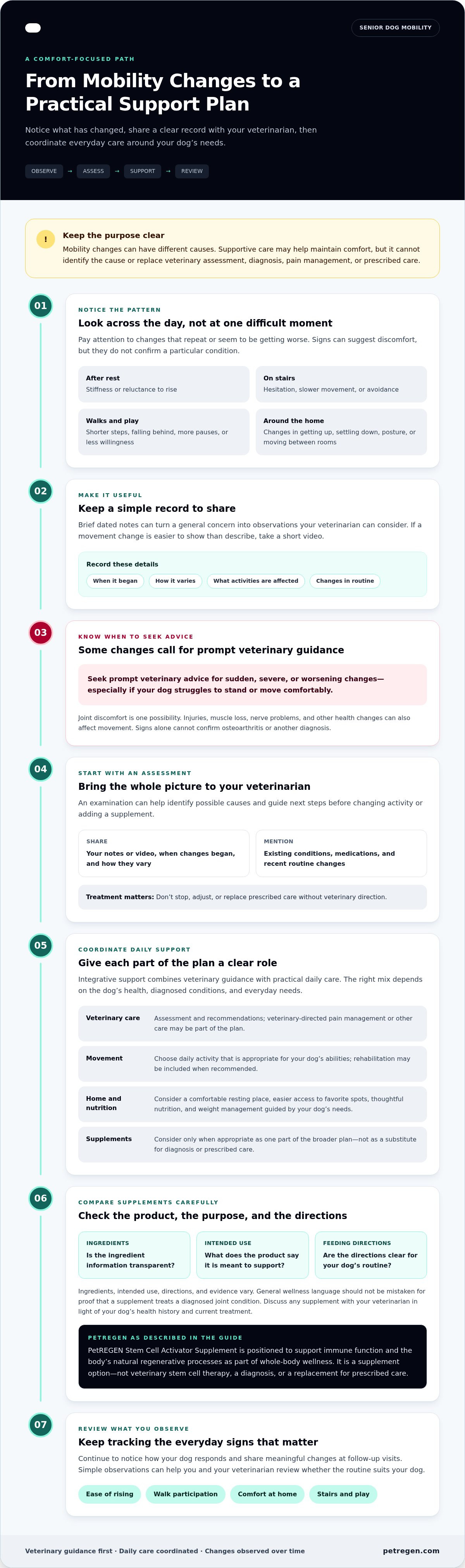
Look for patterns rather than relying on one difficult moment. Notice whether your dog is stiffer after resting, takes shorter or slower steps, shifts posture, hesitates at stairs, or needs more effort to get up. During walks, record whether your dog falls behind, stops more often, or seems less willing to move or play.
Keep brief dated notes, and take a short video if a change is easier to show than describe. These details can help your veterinarian understand what you’re seeing. Seek prompt veterinary advice for sudden, severe, or worsening changes, especially if your dog struggles to stand or move comfortably.
When is a veterinary assessment important?
An examination can help identify possible causes and guide the next steps before you change your dog’s activity or add a supplement. Share when the changes began, how they vary, and whether your dog has existing conditions, takes medication, or has had a recent change in routine. Mentioning these details helps your veterinarian consider the whole picture.
Supportive care may support comfort; only a veterinary assessment can help diagnose the cause. Supplements don’t replace diagnosis, pain management, or prescribed care. If you’re considering a supplement, include it in the conversation so your veterinarian can consider it alongside your dog’s health history and current treatment.
- After rest: Note stiffness or reluctance to rise.
- On stairs: Record hesitation, slower movement, or avoidance.
- During walks and play: Track pace, pauses, posture, and willingness to participate.
- At home: Notice changes in getting up, settling down, or moving between rooms.
A clear record can turn a general concern into useful observations, making it easier to discuss what your dog needs next.
How Integrative Joint Support Brings Different Care Approaches Together
Integrative joint support for senior dogs is a coordinated plan, not a single treatment or a substitute for conventional veterinary care. It brings together a veterinarian’s assessment and recommendations with suitable movement, a comfortable home setup, thoughtful nutrition, and supplements when appropriate. Each part has a different role, and the right mix depends on the dog’s health, diagnosed conditions, and everyday needs.
In short, integrative joint support combines veterinary guidance with practical daily care and carefully chosen supplements to support a dog’s comfort and overall wellness, without promising a particular result.
What can veterinary care contribute to a joint-support plan?
A veterinary assessment is the foundation for choosing support. Your veterinarian can consider possible causes of mobility changes, existing diagnoses, medications, and other health factors before discussing suitable options. Depending on the individual dog, the plan may include veterinary-directed pain management or other care alongside changes at home. Don’t stop, adjust, or replace prescribed treatment without veterinary direction.
For an overview of veterinary approaches to managing mobility and minimizing pain, Cornell University College of Veterinary Medicine explains options for dogs with osteoarthritis. The diagnosis matters: general wellness support and care for a diagnosed joint condition aren’t interchangeable.
Where can everyday routines and supplements fit?
Daily choices can complement a veterinary plan. A comfortable resting place, easy access to favorite spots, and movement suited to your dog’s abilities may make routines more manageable. Keep observing how your dog responds and share meaningful changes at follow-up visits. Nutrition also belongs in the bigger picture, since a dog’s overall health and needs should guide decisions about feeding and weight.
Supplements aren’t interchangeable. Ingredients, intended use, directions, and evidence vary, so a product’s general wellness language shouldn’t be mistaken for proof that it treats a diagnosed joint condition. PetREGEN Stem Cell Activator Supplement is positioned to support immune function and the body’s natural regenerative processes as part of whole-body wellness. It’s a supplement option, not veterinary stem cell therapy, a diagnosis, or a replacement for prescribed care.
If you’re considering a supplement as one part of your dog’s broader routine, explore PetREGEN’s whole-body support approach and discuss how it fits with your veterinarian’s recommendations.
How to Compare Joint-Support Options for Your Senior Dog
Each support option has a different job. A veterinary assessment helps clarify what may be causing mobility changes and which care approaches suit your dog. Daily adjustments can make movement and rest more manageable, while a supplement may provide additional support according to its intended use. None is a stand-alone answer for every dog. The American Veterinary Medical Association’s overview of managing osteoarthritis in pets also describes care as involving multiple considerations, including pain management, weight, diet, and exercise.
| Option | Purpose | Limits to keep in mind |
|---|---|---|
| Veterinary assessment | Investigates possible causes and helps guide an individualized care plan. | It’s a starting point for decisions, not a daily routine or a supplement. |
| Daily routine changes | Suitable movement and home adjustments can support comfortable activity and rest. | They don’t diagnose a condition or replace veterinary-directed care. |
| Supplements | May offer support consistent with a product’s stated intended use. | They don’t replace evaluation or prescribed treatment, and effects depend on the specific product and evidence. |
What should owners look for when assessing a supplement?
Start with the label. Look for clearly identified ingredients, feeding directions, and an intended role that matches the conversation with your veterinarian. Check whether evidence relates to the finished product or only to an ingredient studied separately. Research on an ingredient doesn’t automatically establish that a particular formula produces the same effects. Be cautious of guaranteed results or claims that a supplement repairs damaged joints.
How can you compare supplements with other forms of support?
Compare options by purpose, fit with your dog’s care plan, and limitations. An adjusted walk routine, an easier-to-navigate home, and a supplement each address different aspects of daily support; one doesn’t perform the role of another. Share the product label with your veterinarian to discuss suitability and possible interactions, especially if your dog has existing conditions or takes medication.
For integrative joint support for senior dogs, the goal isn’t to choose one “best” option in isolation. It’s to understand what each approach can reasonably contribute, then combine suitable supports without delaying evaluation or changing prescribed care on your own.
How to Build and Monitor a Practical Senior-Dog Joint-Support Routine
A useful routine should fit your dog’s health, preferences, and veterinary guidance. Keep it manageable: a few steady habits and clear observations are easier to maintain than a long list of changes. This four-step process helps turn integrative joint support for senior dogs into a plan you can review and adjust with your veterinary care team.
- Discuss the changes you’ve noticed. Share your notes or videos, describe when movement seems harder, and mention your dog’s health conditions, medications, and usual routine. Ask which changes need assessment and what kinds of support are appropriate.
- Set practical priorities. Focus first on the needs identified with your veterinarian. That might mean making a route through the house easier to navigate, choosing movement suited to your dog, or following a recommended care plan. Don’t assume a routine that suits one dog will suit another.
- Choose complementary supports. Add one change at a time where practical, so it’s easier to notice how your dog responds. Discuss supplements with your veterinarian, follow the product’s feeding directions, and avoid introducing several new supplements at once.
- Track and review. Keep brief, consistent notes and bring them to veterinary follow-ups. If comfort or movement changes, review the routine with your veterinarian rather than making changes to prescribed care on your own.
What should you track at home?
Choose a few observations you can repeat, such as ease of rising, willingness to join a walk, and comfort settling or moving around the home. Note what you see and when, rather than relying on memory or one unusually good or difficult day. These observations can help describe patterns, but they aren’t a diagnosis. Share meaningful changes or concerns with your dog’s veterinary care team.
How can you introduce supportive changes thoughtfully?
Before changing activity or adding a supplement, consider how the change fits your dog’s current care and health. Ask your veterinarian about suitability and possible interactions, particularly if your dog takes medication. Follow product directions, and give the routine a consistent review rather than changing multiple elements at once. If your dog’s needs or comfort change, revisit the plan with your veterinarian.
A supplement can be one piece of a broader wellness routine, not a substitute for veterinary evaluation or treatment. To learn more about PetREGEN’s approach to whole-body support, explore the PetREGEN supplement.
How PetREGEN Can Fit into Whole-Body Support for Senior Dogs
A supplement may be one considered part of a senior dog’s wider wellness plan, alongside veterinary guidance and daily care. PetREGEN Stem Cell Activator Supplement is a superfood supplement for pets, including dogs. Its stated approach is to support immune function and the body’s natural regenerative processes as part of whole-body wellness.
What is PetREGEN’s stated approach to supporting healthy aging?
The formula includes human-grade ingredients such as collagen, real liver, amino acids, omega 7, and phytonutrients, and is described as USA-made. These ingredient details help explain what the supplement contains, but their presence alone doesn’t prove a particular clinical outcome. In particular, they don’t establish that the product treats joint disease or will improve an individual dog’s mobility.
That distinction matters. “Whole-body support” describes the product’s intended wellness approach; it isn’t the same as evidence that a supplement can diagnose, treat, or cure a condition. For integrative joint support for senior dogs, keep product claims in perspective and consider any supplement alongside the dog’s individual veterinary care plan.
How can owners consider PetREGEN as part of a wider plan?
Start by discussing the product with your veterinarian, especially if your dog has a diagnosed condition, takes medication, or already uses other supplements. Your veterinarian can help consider whether it suits your dog’s health and how it fits with other recommendations. Follow the product’s feeding directions, and share the label information as part of that conversation.
PetREGEN is a dietary supplement, not veterinary stem cell therapy or prescribed medicine. It doesn’t replace an examination, diagnosis, pain management, or other care recommended by your veterinarian. Those boundaries don’t diminish the value of a thoughtful wellness routine; they help keep each support in its appropriate role.
If you’d like to learn more about the product’s stated approach and ingredients, explore the PetREGEN Stem Cell Activator Supplement. Use what you learn as a starting point for a conversation with your veterinarian, so any added support complements your dog’s broader plan for comfort and quality of life.
Build a Support Plan That Fits Your Dog
Changes in rising, walking, or play are worth paying attention to, but they can have more than one cause. A veterinary assessment helps clarify what may be happening and which options make sense for your dog. From there, suitable movement, home adjustments, consistent observation, and thoughtfully chosen supplements can each play a different role.
That’s the practical heart of integrative joint support for senior dogs: a coordinated routine shaped by your dog’s health and reviewed with your veterinarian. Supplements can contribute to a broader wellness plan, but they don’t diagnose or treat joint disease. PetREGEN describes its supplement as made with USA-made, human-grade ingredients, and reports endorsements from veterinarians, zoologists, dog trainers, and pet parents.
To learn more about its whole-body support approach, explore the PetREGEN Stem Cell Activator Supplement, and discuss whether it fits your dog’s care plan with your veterinarian. Small, thoughtful steps can help you make informed choices and support your companion’s comfort as they age.
Frequently Asked Questions
What is integrative joint support for senior dogs?
Integrative joint support for senior dogs combines veterinary guidance with suitable daily habits and, when appropriate, supplements. The goal is to create a coordinated plan tailored to the dog, rather than relying on one product or approach. A veterinarian can help assess mobility changes and discuss options, while home routines and carefully selected supplements may contribute to broader wellness. Supportive care doesn’t diagnose or cure joint disease.
Can supplements replace veterinary care for an older dog’s joints?
No. Supplements can’t diagnose the cause of mobility changes or replace veterinary assessment, pain management, or prescribed care. Stiffness or reluctance to move may have different causes, so an examination can help guide appropriate next steps. If your dog already has a diagnosis or takes medication, discuss any supplement with your veterinarian before adding it. Don’t stop or change prescribed treatment without veterinary direction.
How can I support my senior dog’s mobility at home?
Follow your veterinarian’s advice on activity, and make everyday movement comfortable and manageable. Depending on your dog’s needs, you might keep walk routes appropriate to their ability, provide a supportive resting spot, and reduce obstacles on paths they use often. Track ease of rising, willingness to join walks, and comfort around the home. These observations can help you discuss changes with your veterinary care team.
Are natural joint supplements safe for senior dogs?
“Natural” doesn’t automatically mean suitable or risk-free for every dog. A supplement’s ingredients, directions, and intended use matter, as do your dog’s health conditions and other products or medications. Read the label and share it with your veterinarian before starting, especially if your dog has an ongoing condition or takes prescribed medicine. Stop and seek veterinary advice if you notice a concerning change after introducing a product.
How do I choose joint support for an older dog?
Start with a veterinary assessment, then compare options by purpose, fit with your dog’s care plan, and limitations. For supplements, look for clearly identified ingredients, feeding directions, and a stated intended use. Consider whether evidence applies to the finished product or only to an ingredient. Avoid promises of guaranteed results or claims that a supplement repairs damaged joints. A product should complement, not replace, veterinary care.
Can my senior dog take a joint supplement with medication?
Ask your veterinarian before combining a supplement with medication. Suitability can depend on the specific ingredients, your dog’s health, and the medicines they take. Bring the supplement label and an up-to-date list of medications to the discussion, including other supplements. Don’t reduce, stop, or replace prescribed treatment on your own. Your veterinarian can help consider whether the product fits safely into your dog’s existing care plan.
How long does it take to notice a change after starting a joint supplement?
There isn’t one reliable timeframe for every dog or supplement, and a noticeable change isn’t guaranteed. Response can depend on the individual dog, the product, and the underlying reason for mobility changes. Follow the label directions and your veterinarian’s advice. Keep consistent notes on movement and daily comfort, rather than judging by one good day. If concerns persist or worsen, consult your veterinarian instead of waiting for a supplement to work.


