

You just spent a glorious afternoon conquering the trails together, but as your companion finally wakes from their post-trail nap, you notice a telltale stiffness in their step. It's painful to watch your adventurous fur-baby struggle to get comfortable after what should have been a joyful day. You aren't alone in wondering how to help dog recover after long hike without causing more stress to their joints. It's natural to worry if that slight limp is a passing fatigue or something more serious that requires a vet's attention.
We understand that your dog’s vitality is your top priority and seeing them move slowly is heartbreaking. You'll learn how to accurately assess post-hike fatigue, identify potential injuries before they become chronic, and support your pet’s natural regenerative healing for a faster bounce-back. This guide provides a clear recovery routine that moves beyond simple rest to support their built-in repair system. By the end, you'll have the confidence to plan your next adventure knowing your best friend has the tools to reclaim the leap in their step and maintain long-term mobility.
Key Takeaways
- Learn how to perform a visual gait analysis and a hands-on exam to distinguish between normal post-trail tiredness and potential soft tissue injuries.
- Discover the "Rest Test" and 2026 mobility guidelines on how to help dog recover after long hike to ensure a safe return to your next adventure.
- Understand the difference between acute "Weekend Warrior" strains and the warm-up stiffness associated with early-stage canine arthritis.
- Master the modern "ICE" method for cold therapy and learn how to manage high-energy companions during necessary periods of restricted activity.
- Explore how supporting your dog's built-in repair system through stem cell activation can address the root cause of stiffness and promote long-term vitality.
Why Is Your Dog Limping After a Long Walk? Common Causes & Triggers
Seeing your companion favor a leg after a day in the woods is a stressful experience for any pet parent. You need to know if it's a passing soreness or a serious injury that needs immediate care. Understanding how to help dog recover after long hike starts with identifying the source of the limp. While some dogs show sudden lameness during the walk, others develop a gradual stiffness that only appears once they've rested and their muscles have cooled down.
Many dogs fall into the "Weekend Warrior" trap. They spend the work week resting on the sofa and then face miles of steep elevation on Saturday. This sudden spike in activity creates micro-tears in muscles and tendons that aren't conditioned for the heavy load. Environmental triggers play a massive role too. Uneven terrain, like loose shale or slippery river rocks, forces their joints to stabilize in ways they aren't used to. These repetitive, small adjustments can lead to acute strains or aggravate an underlying condition that was previously hidden.
Minor Strains vs. Acute Injuries
High-energy play on the trail often masks pain until the adrenaline wears off. Soft tissue stretches occur when a dog lunges for a squirrel or jumps over a fallen log. Sometimes, a simple hike triggers a dormant joint issue that was previously managed by the body's built-in repair system. You should watch for signs of overexertion such as heavy panting that doesn't stop with rest, slow movement when rising, or a new reluctance to jump into the car. These are clear signals that the "leap" in their step has been compromised by the day's effort.
Paw and Claw Problems
Before assuming the issue is a deep joint injury, check the "tires." Rough trails can lead to torn nails or cracked pads that cause a significant limp. Small stones, thorns, or grass seeds often wedge between the toes, creating irritation that looks like a leg injury. Don't forget the trailhead; hot pavement can cause silent pad burns before you even reach the dirt. Checking these hidden irritants is a crucial first step in knowing how to help dog recover after long hike effectively and ensures you aren't overlooking a simple fix for their discomfort.
Soft Tissue Strains vs. Chronic Joint Issues: Knowing the Difference
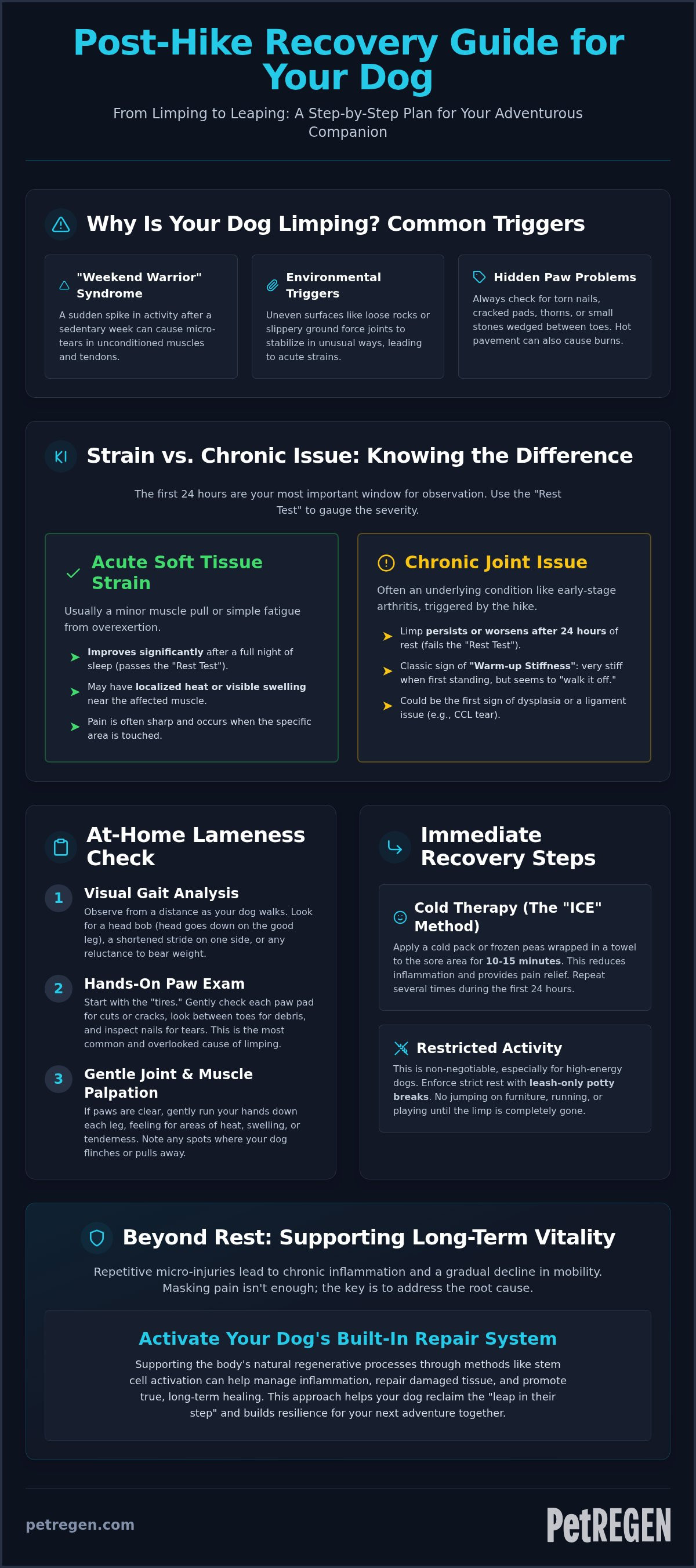
If you're wondering how to help dog recover after long hike, the first 24 hours are your most important window for observation. Use the "Rest Test" to gauge the severity of their discomfort. A minor muscle pull or simple fatigue usually improves significantly after a full night of sleep. If the limp persists past the 24-hour mark or seems to worsen with rest, it's often a sign of something deeper than a temporary strain.
One of the most confusing signs for pet parents is "warm-up stiffness." You might notice your fur-baby looks incredibly stiff when they first stand up, but they seem to "walk it off" after a few minutes of movement. This is a classic indicator of early-stage arthritis or chronic joint changes rather than an acute injury. In contrast, sudden trauma usually involves localized heat, visible swelling, or your companion vocalizing when the joint is touched. Understanding these Common Causes of Lameness is essential for deciding whether to continue home recovery or seek a professional diagnosis.
Understanding Chronic Inflammation
Repetitive micro-injuries from steep trails can lead to a gradual decline in mobility that isn't always obvious at first. This process is driven by oxidative stress, which slowly degrades canine cartilage over time. While it's tempting to use prescription NSAIDs to mask the pain, this can sometimes be counterproductive. When the pain is masked, a dog may overexert themselves because they feel "too good," leading to even more tissue damage. Supporting the body's built-in repair system naturally can help manage this cycle without the risks of overactivity. It's about helping them reclaim the leap in their step by addressing the root cause of the stiffness.
When the Limp is "Something More"
For certain breeds, a post-hike limp might be the first warning sign of hip or elbow dysplasia. It isn't always just about the joints, either. A persistent limp could signal a CCL (cruciate ligament) tear or even a neurological issue if you notice "knuckling" of the paws or general weakness. Systemic immune health is closely linked to joint resilience; a balanced immune system allows the body to effectively manage the inflammation that naturally follows a strenuous day. This holistic view is a vital part of learning how to help dog recover after long hike while ensuring their long-term energy and happiness remain intact.
Assessing Your Dog’s Lameness: A Step-by-Step Home Check
Watching your companion move from a distance provides the most objective data before you ever lay a hand on them. Start by performing a visual gait analysis in a quiet area where they can walk naturally. If your fur-baby is favoring a front leg, you'll likely see a distinct head bob; the head goes up when the painful limb touches the ground to shift weight away. For rear leg issues, watch for a hip sway or a "hiking" motion where the pelvis rises higher on the sensitive side. Learning how to help dog recover after long hike starts with a methodical assessment that captures these subtle cues.
Once you've observed the movement, transition to a physical exam. You should follow a Step-by-Step Home Check to ensure no area is overlooked. Feel for localized heat or joint swelling, which are clear indicators of active inflammation. Gently move each joint through its natural range of motion to see where they resist or flinch. Always record a quick video of the limp on your phone. Dogs often hide their pain at the clinic due to adrenaline, so this footage is vital for your veterinarian to see the true extent of the mobility issue.
The Four-Point Paw and Joint Check
Begin with the paws, inspecting the pads for cracks and the webbing for hidden thorns or trail debris. Check each nail for splits that could be causing sharp pain with every step. Move up to the joints, feeling the hock and elbow for any unusual instability or "clicking" sensations. Palpation is the act of using hands to check for internal abnormalities. By systematically checking these four points, you can rule out surface-level trauma before worrying about deeper structural concerns that might impact your dog's built-in repair system.
Identifying the Source of Pain
Isolating the pain requires patience and a gentle touch. If you suspect a front leg injury, slowly apply pressure to the muscles around the shoulder and then the elbow to see which area triggers a reaction. Distinguishing between bone-deep pain and surface-level muscle soreness is key; muscle pain often feels like a tight knot, while joint pain causes a sharp withdrawal. Stop the home exam immediately and seek emergency care if your dog is completely non-weight bearing, shows extreme swelling, or seems disoriented. Knowing when to step back is just as important as knowing how to help dog recover after long hike through home care.
The Recovery Roadmap: Supporting Natural Healing and Mobility
Once you've identified the source of your companion's stiffness, it's time to move beyond simple rest. Modern 2026 guidelines for cold therapy suggest using the "ICE" method with a focus on controlled temperature. Apply a cold pack wrapped in a thin towel to the affected area for 10 to 15 minutes, three times daily during the first 48 hours. This reduces acute inflammation without shocking the tissue. It's a foundational step in learning how to help dog recover after long hike because it manages the initial heat that follows a day of heavy exertion.
Managing a high-energy fur-baby during a period of restricted activity is often the hardest part of recovery. If your vet recommends "crate rest," you must prioritize mental stimulation to keep them calm. Pair this with environmental adjustments to reduce daily strain. Lay down non-slip rugs on hardwood floors and use ramps for furniture or car access. An orthopedic bed is also essential; it provides the even support needed for whole-body wellness during the post-hike healing phase, ensuring they don't wake up even stiffer than before.
Nourishing the Built-in Repair System
Traditional glucosamine chews often fail to deliver results because they only provide the building blocks of cartilage without addressing true cellular healing. To reclaim the leap in your dog's step, you need a multi-system approach. High-quality collagen and specific amino acids are vital for rebuilding the connective tissue that stretches and pulls during a steep climb. Additionally, immune support plays a surprising role in recovery by accelerating the removal of damaged inflammatory cells. Supporting the PetREGEN Stem Cell Activator Supplement helps activate their natural internal repair mechanisms, targeting recovery from the inside out.
Managing Long-Term Mobility
Weight management remains the most critical factor for lifelong joint longevity; even a few extra pounds put immense pressure on healing ligaments. During the recovery week, swap high-impact running for low-impact alternatives like swimming or short, slow "sniffari" walks. These activities maintain muscle tone without the jarring impact of trail running. Oxidative stress acts as a biological brake, creating cellular debris that slows down the natural healing process in aging dogs. By managing these stressors and keeping your dog lean, you ensure they stay ready for the next adventure while knowing exactly how to help dog recover after long hike for years to come.
Beyond Rest: Activating Your Dog’s Stem Cells with PetREGEN
While rest and ice are essential first steps, they often only manage symptoms rather than addressing the biological toll of a mountain trek. If you want to know how to help dog recover after long hike at a cellular level, you have to look at the body's natural regenerative capabilities. The PetREGEN Stem Cell Activator Supplement is designed specifically for active companions whose adventures outpace their recovery time. Unlike standard joint chews that rely on synthetic fillers, this formula uses human-grade ingredients like real liver and potent phytonutrients. These high-quality components ensure your fur-baby gets the concentrated nourishment they need to repair micro-trauma and reclaim the leap in their step.
Stem cell activation targets the root cause of post-hike stiffness by facilitating the body's internal maintenance process. When your dog exerts themselves on steep terrain, their tissues experience significant stress. A standard approach might mask this discomfort, but a regenerative approach provides the biological building blocks for actual repair. This ensures that your companion isn't just resting, but actively rebuilding their strength for the next outing.
The Science of Regenerative Support
PetREGEN works by supporting the natural production and migration of the body’s own repair cells. It's a multi-system approach that cleanses the internal environment, nourishes the tissues, and supports the built-in repair system. This is why leading vets and zoologists endorse this natural superfood formula; it isn't a temporary fix. It targets oxidative stress and gives the body the tools to heal from within. By focusing on whole-body wellness, you aren't just treating a single limp. You're investing in your dog's long-term vitality and energy.
A Hopeful Future for Active Pets
Every dog deserves to live their best life, regardless of their age or previous injuries. We've seen life-changing stories of companions returning to their favorite trails with renewed vitality after incorporating this supplement. Integrating the PetREGEN Stem Cell Activator Supplement into a daily routine is a simple, effective way to support healthy, active aging. You can move forward with peace of mind, backed by a 100% money-back guarantee. It's a trustworthy path toward ensuring your best friend stays by your side for every summit. Knowing how to help dog recover after long hike means more than just a weekend of crate rest; it's about giving them the regenerative power to bounce back faster every time.
Reclaim the Leap in Your Dog’s Step
Watching your companion struggle after a day on the trails is difficult, but you now have the tools to change that narrative. You've learned to distinguish between simple "Weekend Warrior" stiffness and chronic joint issues, and you've mastered a step-by-step home check to identify the source of pain. By implementing a recovery roadmap that includes modern cold therapy and environmental support, you're doing more than just letting them rest. You're actively participating in their healing process. Understanding how to help dog recover after long hike isn't just about the first 24 hours; it's about supporting their internal repair system for a lifetime of mobility.
To give your fur-baby the ultimate edge, consider the PetREGEN Stem Cell Activator Supplement. It's USA-made with human-grade ingredients and backed by science. Trusted by pet parents and loved by pets, this formula targets oxidative stress to help your companion bounce back faster. Help your dog recover and thrive with PetREGEN Stem Cell Activator Supplement today, risk-free with our full money-back guarantee. We can't wait to see you both back on the summit soon, enjoying every mile of a long and happy life together.
Frequently Asked Questions
Is it normal for a dog to limp after a long hike?
While slight tiredness is expected, a distinct limp isn't normal and usually signals a soft tissue strain or joint irritation. This often happens because of the "Weekend Warrior" effect, where a sudden spike in activity causes micro-trauma to unconditioned muscles. If your companion is favoring a limb, it's a clear message from their body that they need targeted recovery support to prevent a minor issue from becoming a chronic problem.
How long should I let my dog rest if they are limping after exercise?
You should implement a strict "Rest Test" for at least 24 hours. During this period, restrict your fur-baby to short, controlled leash walks only for bathroom breaks. If the limp persists or worsens after a full day of quiet rest, it's essential to seek professional guidance. Jumping or running too soon can turn a simple muscle pull into a long-term mobility challenge that’s much harder to resolve.
Can I give my dog human pain relievers for a post-hike limp?
You should never give your dog human pain relievers like ibuprofen, aspirin, or acetaminophen. These medications are highly toxic to pets and can lead to severe gastrointestinal ulcers, kidney failure, or even death. Instead of masking pain with dangerous human drugs, focus on natural regenerative support and vet-approved treatments that safely address inflammation while supporting your companion's natural healing processes.
How do I tell if my dog’s limp is a medical emergency?
A limp becomes a medical emergency if your dog is completely non-weight bearing or shows signs of extreme distress. Watch for localized heat, significant swelling, or vocalizing when the area is touched. If you notice "knuckling" of the paws or a sudden loss of coordination, these could be neurological signs. In these cases, immediate veterinary care is necessary to assess for fractures or serious ligament tears.
What is a stem cell activator and how does it help with recovery?
A stem cell activator is a natural superfood supplement that supports your pet's built-in repair system. It works by encouraging the release of the body's own repair cells to target areas of oxidative stress and inflammation. This is a vital part of how to help dog recover after long hike because it promotes whole-body wellness and cellular healing rather than just providing temporary relief from surface-level stiffness.
Will a joint supplement help my dog recover faster from a strain?
A high-quality joint supplement can definitely speed up recovery if it focuses on regenerative healing. Traditional chews often lack the potency to rebuild connective tissue effectively. Look for formulas that include collagen and phytonutrients to nourish the joints at a cellular level. This ensures your active companion is rebuilding their strength from the inside out, allowing them to reclaim the leap in their step much faster.
Should I use ice or heat on my dog’s sore leg after a walk?
Use ice for the first 48 hours to manage acute inflammation and reduce heat in the joints. After the initial swelling has subsided, you can transition to gentle heat to soothe stiff muscles and improve circulation. This strategic use of temperature is a proven method for how to help dog recover after long hike because it addresses different stages of the body's natural inflammatory response.
Can a single long hike cause permanent joint damage in an older dog?
A single hike is unlikely to cause permanent damage, but it can certainly aggravate underlying, dormant joint issues. In older dogs, the combination of steep terrain and oxidative stress can trigger an arthritis flare-up. To protect your aging companion, it's best to maintain a daily routine of mobility support. This keeps their joints resilient and ready for the trail, ensuring one big day doesn't lead to long-term discomfort.


