

What if the reason your cat hesitates before jumping onto the sofa isn't just excess weight, but a stalled cellular repair system? Watching your companion struggle to reach their favorite sunny windowsill is painful to watch, and sorting through conflicting feeding advice often leaves pet parents feeling guilty and overwhelmed. When it comes to helping an obese cat with mobility, simply restricting calories isn't enough; feline adipose tissue actively pumps out inflammatory signals that degrade joint cartilage every single day.
You shouldn't have to watch your fur-baby endure daily stiffness while waiting months for the scale to drop. In this guide, you will discover how to break the cycle of feline inactivity and support your cat's joints through biological repair and practical home modifications. We'll explore safe veterinary weight goals, immediate environmental adjustments, and targeted cellular nutrition that supports your pet's built-in repair system to restore visible ease of movement and lasting vitality.
Key Takeaways
- Understand how excess weight creates a biological trap, where inflammatory fat tissue actively accelerates joint breakdown rather than just adding physical stress.
- Discover practical environmental modifications for helping an obese cat with mobility, giving your companion immediate physical relief and restored independence.
- Learn the vital veterinary guidelines for gradual weight loss to protect your cat from dangerous complications like hepatic lipidosis.
- Explore how targeted nutritional support with the PetREGEN Stem Cell Activator Supplement can activate your cat's built-in repair system to maintain joint vitality throughout their weight loss journey.
The Mobility Trap: Why Obesity is More Than Just Extra Weight
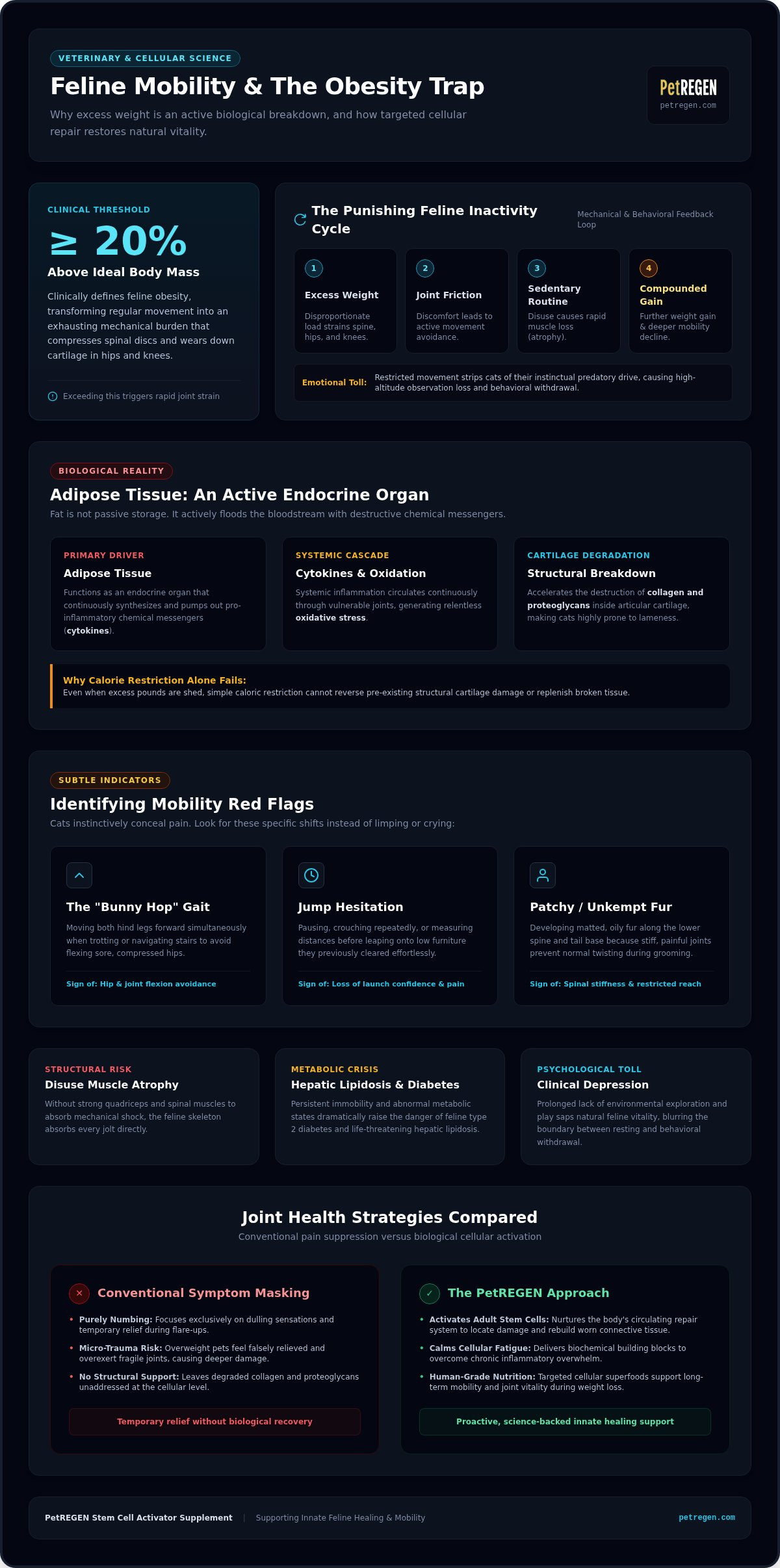
Feline obesity occurs when a cat exceeds their ideal body mass by 20% or more, transforming everyday movement into an exhausting mechanical challenge. Every extra pound adds disproportionate strain onto delicate feline joints, compressing spinal discs and wearing down cartilage in the hips and knees. This triggers a punishing inactivity cycle: carrying extra weight causes friction and discomfort, the cat avoids moving to prevent pain, and the resulting sedentary routine causes additional weight gain. Truly understanding mobility means recognizing it as the vital intersection of physical ability and the intrinsic feline desire to explore their world.
Beyond joint strain, this cycle takes a heartbreaking toll on your cat's spirit. Cats are instinctual stalkers, hunters, and high-altitude observers. When physical limits prevent them from climbing or chasing, they lose their natural predatory drive, leading to deep behavioral withdrawal. Pet parents attempting body condition scoring for cats often notice this emotional shift long before the physical weight becomes visually striking, making a holistic strategy for helping an obese cat with mobility urgent for both body and mind.
Identifying Mobility Red Flags in Your Cat
Cats instinctively conceal weakness, meaning pain rarely presents as obvious limping or vocal crying. Instead, watch for subtle behavioral shifts around the house:
- The "bunny hop" gait: Moving both hind legs forward simultaneously when trotting or navigating stairs to avoid flexing sore hips.
- Jump hesitation: Pausing, crouching repeatedly, or measuring distances before leaping onto low furniture they once cleared without a second thought.
- Patchy or unkempt grooming: Developing matted, oily fur along the lower spine and tail base because stiff joints prevent normal twisting.
The Hidden Risks of Feline Inactivity
When an overweight cat rests continuously, the body rapidly loses muscle mass through disuse atrophy. Without strong quadriceps and spinal muscles to absorb mechanical shock, the skeleton absorbs every jolt directly. Prolonged immobility also blurs the line between lazy resting and clinical depression, as a lack of environmental stimulation saps their natural vitality. Left unaddressed, persistent inactivity dramatically raises the likelihood of secondary metabolic crises, particularly feline type 2 diabetes and hepatic lipidosis, turning practical steps for helping an obese cat with mobility into a lifesaving priority.
The Biological Connection: Inflammation and Joint Health
Adipose tissue is far more than passive fat storage. In reality, fat acts as an active endocrine organ that continuously releases pro-inflammatory chemical messengers, known as cytokines, into the bloodstream. In an overweight feline, this constant flood of systemic inflammation circulates through vulnerable joints, accelerating the degradation of collagen and proteoglycans within the articular cartilage. Combined with mounting oxidative stress, cellular breakdown rapidly outpaces cellular recovery. Research on feline obesity and orthopedic health reveals that this biochemical onslaught leaves cats remarkably prone to lameness. Even when a cat sheds excess pounds, caloric restriction alone cannot reverse existing structural cartilage damage.
The Body’s Built-in Repair System
Healthy bodies rely on circulating adult stem cells to locate damage, modulate inflammation, and rebuild worn connective tissues. In an obese or senior cat, however, the relentless barrage of inflammatory signals creates chronic cellular fatigue. This built-in repair system becomes sluggish and overwhelmed, struggling to respond to daily physical wear. Effectively helping an obese cat with mobility requires targeted cellular nutrition. By providing specific natural superfoods, pet parents can help awaken these regenerative processes, delivering the biochemical building blocks needed to support natural tissue repair.
Regenerative Support vs. Symptom Masking
Conventional approaches to feline stiffness often focus purely on numbing discomfort. While temporary relief can help during acute flare-ups, merely masking pain allows an overweight pet to overexert fragile joints, risking greater micro-trauma. A truly sustainable recovery demands a multi-system approach focused on cellular health and whole-body wellness.
Supporting your cat with the PetREGEN Stem Cell Activator Supplement provides a proactive, science-backed way to nurture their innate healing capacity during weight loss. Rather than dulling sensations, this human-grade, liver-flavored powder delivers vital nutrients that combat oxidative stress and reinforce joint structure, helping your feline companion rediscover effortless movement.
Environmental Tweaks to Restore Immediate Independence
Safe weight loss takes months, but your companion needs comfort today. While dietary adjustments work behind the scenes, strategic household modifications provide immediate physical relief by removing high-impact collisions that punish vulnerable joints. Cats with extra weight and secondary degenerative joint disease in cats often retreat from family life simply because navigating the house has become physically daunting. Prioritizing practical indoor wins bridges this gap, keeping your cat engaged with their environment and preventing the cognitive decline that stems from forced isolation.
Modifying the 'Cat Highway'
Vertical territory is central to feline confidence. Rather than letting an overweight pet risk heavy impacts when jumping down from furniture, reconfigure their vertical pathways with low-angle ramps or wide, carpeted pet stairs leading to sofas and favorite windowsills. Lower the entry threshold of the litter box to two or three inches by cutting a wide dip into a plastic tote, ensuring stiff hips don't deter good hygiene. Finally, elevate food and water dishes four to six inches off the ground to relieve chronic strain on the cervical spine and shoulders during mealtime.
Creating a Mobility-Friendly Environment
Slick surfaces turn ordinary walking into an orthopedic hazard for heavy cats. Placing non-slip runner rugs across laminate, hardwood, or tile floors prevents painful limb splaying and builds traction confidence throughout the home. Consider these layout essentials when helping an obese cat with mobility:
- Consistent warmth: Place self-warming thermal pads or orthopedic pet beds away from floor drafts to loosen tight connective tissue.
- Single-level living: Duplicate core resources so litter boxes, fresh water, and resting spots exist on one floor, eliminating forced stair navigation.
- Low-impact ground play: Introduce wand toys moved smoothly along the rug to encourage horizontal prowling without vertical concussive stress.
Every small adjustment removes a barrier to movement. By adapting your living space to your companion's current physical abilities, you transform daily routine from an obstacle course into an encouraging environment that actively supports long-term recovery.
A Safe Path to Weight Loss and Improved Movement
Feline metabolism handles calorie deficits very differently from dogs or humans. Slashing meals too abruptly triggers a life-threatening hepatic crisis known as feline hepatic lipidosis, where peripheral fat rapidly overloads liver cells. Safe feline slimming follows the strict veterinary standard: aiming for a gradual 0.5% to 2% loss of total body weight per week. During this steady restriction, preserving lean muscle mass is essential. Restricting dietary volume without providing adequate high-protein nutrition forces the body to consume its own muscular support structures. Regular veterinary assessments using the standardized 9-point Body Condition Score (BCS) ensure your companion sheds pure adipose mass while retaining the muscle required for stable locomotion.
Low-Impact Play Strategies
Expectations of intense running or acrobatics are unrealistic and unsafe for a heavily weighted skeleton. When helping an obese cat with mobility, structure low-impact sessions that engage natural predatory drives without concussive landings:
- Horizontal stalk-and-pounce: Drag feather wands or ribbon lures underneath area rugs or around cardboard barriers to encourage low-profile stalking.
- Two-minute micro-play: Keep play bursts intentionally short (two to three minutes, three times daily) to prevent joint exhaustion while spiking daily energy expenditure.
- Foraging puzzles: Ditch stationary feeding dishes for rolling treat balls or flat puzzle mats that make your companion walk, reach, and think to earn their kibble.
Measuring Progress Beyond the Scale
Bathroom scales fluctuate, but functional daily behavior provides unmistakable proof of healing. Keep a simple physical journal tracking daily energy levels, sociability, and subtle mobility milestones. Note when your cat begins grooming their hindquarters again, stretches fully after a nap, or walks into the living room simply to greet you.
Pair these behavioral markers with weekly tactile checks. Using the rib check method, slide your hands gently along their thoracic cage. As body composition improves, you should easily feel their ribs beneath a thin fat cushion without pressing firmly. Protecting their joints throughout this multi-month dietary journey is critical. Try PetREGEN Now! to provide targeted cellular support for your companion's joints while the extra weight steadily comes off.
Supporting Natural Recovery: The PetREGEN Approach
Caring innovators understand that helping an obese cat with mobility requires far more than cutting back on kibble. Caloric management addresses the scale, but genuine feline recovery hinges on cellular vitality. The PetREGEN Stem Cell Activator Supplement provides proactive, science-backed support designed to ignite natural cellular renewal. By supplying targeted nutrients that optimize immune function and reinforce connective tissue, this proprietary formula empowers your companion's system to repair daily micro-wear. It is the missing link that helps your cat live their best life, even through the physical demands of weight loss and advancing age.
Why Regenerative Health Matters for Obese Pets
Carrying extra pounds triggers a whole-body inflammatory storm that exhausts muscles, cartilage, and vital organs simultaneously. Rather than relying on synthetic chemicals that risk burdening feline organs, nutritional stem cell activation provides a safe, natural pathway to recovery. Adult stem cells represent the body's primary renewal engine. Nourishing this built-in repair system shortens recovery periods following gentle exercise, ensuring that minor physical exertion leads to muscle strengthening rather than chronic soreness.
The PetREGEN Promise
PetREGEN combines cutting-edge cellular biology with wholesome nutrition. Crafted with human-grade ingredients, including structural collagen, targeted phytonutrients, and real liver, the savory powder integrates easily into your cat's existing meal routine. Pet parents never have to struggle with difficult pills or artificial additives; the natural aroma appeals directly to obligate carnivores.
Backed by science, endorsed by health and welfare zoologists, and trusted by pet parents everywhere, this whole-body approach restores playful confidence from the inside out. Every purchase is protected by a full money-back guarantee, giving you complete peace of mind. Shop PetREGEN Stem Cell Activator Supplement for your cat to break the cycle of inactivity and help your fur-baby rediscover effortless grace.
Restore Your Cat's Joy and Freedom of Movement
Helping an obese cat with mobility isn't a quick overnight fix; it's a compassionate journey blending patience with targeted cellular care. By combining simple household modifications, gradual veterinary-guided weight management, and proactive internal nourishment, you remove the physical and biological roadblocks holding your companion back. Every thoughtful adjustment you make today directly spares your fur-baby from chronic strain tomorrow.
True vitality returns when you address the root cause of stiffness rather than simply watching the scale. Made in the USA with human-grade ingredients and endorsed by health and welfare zoologists, the PetREGEN Stem Cell Activator Supplement provides the regenerative foundation your pet needs during weight loss, all backed by a 100% money-back guarantee. Help your cat rediscover their vitality with PetREGEN, and look forward to seeing your companion leap, play, and explore with renewed confidence.
Frequently Asked Questions
How can I tell if my cat is obese or just 'fluffy'?
Run your hands gently along your cat's sides; you should easily feel their ribcage beneath a light fat layer without pressing hard. Viewed from above, a healthy feline displays a visible waist tuck behind the ribs, alongside an upward abdominal curve from the side. Heavy fur frequently hides growing fat pads, making hands-on tactile evaluation far more accurate than visual inspection alone.
Is it safe to exercise my obese cat if they seem to be in pain?
No, you shouldn't force high-impact exercise on a cat showing signs of pain or active distress. Forcing a stiff cat to run risks aggravating inflamed joints. Schedule a veterinary exam first to assess joint damage. Once cleared, focus on low-impact floor stimulation for two to three minutes at a time. Helping an obese cat with mobility requires balancing gentle physical movement with proper joint protection.
Can supplements really help an overweight cat move better?
Yes, targeted nutritional supplements provide vital biological assistance that calorie restriction alone cannot deliver. Excess adipose tissue continuously releases systemic inflammatory chemicals that break down articular cartilage. High-grade supplements supply essential amino acids, antioxidants, and regenerative support to nourish connective tissues. This cellular support relieves everyday stiffness, encouraging your companion to engage in natural, comfortable physical activity.
What is the best type of exercise for a cat that won't jump?
Ground-based horizontal play is the safest and most effective workout for cats that avoid vertical jumps. Drag ribbon lures, feather toys, or wand attachments slowly across carpeted surfaces, ducking behind boxes to trigger their hunting instincts. Rolling treat balls and scent puzzle mats also encourage purposeful walking. These low-intensity games burn energy while keeping fragile joints protected from concussive impacts.
How fast should an obese cat lose weight safely?
Veterinary guidelines recommend a steady weight loss rate of 0.5% to 2% of total body weight per week. Losing weight faster than this threshold is dangerous because rapid calorie deprivation triggers feline hepatic lipidosis, a potentially fatal accumulation of fat within liver cells. For a 15-pound feline, a safe, sustainable pace translates to dropping roughly one to four ounces weekly.
What happens if I don't help my obese cat lose weight?
Unchecked feline obesity significantly increases the risk of debilitating conditions like type 2 diabetes, chronic urinary blockages, and hepatic disease. Mechanically, constant excess weight accelerates joint cartilage degradation, transforming mild reluctance into severe degenerative joint disease. Taking action and helping an obese cat with mobility preserves vital organ health, reduces daily pain, and directly expands your companion's lifespan.
Does PetREGEN work for older cats with mobility issues?
Yes, the PetREGEN Stem Cell Activator Supplement is specially designed to support aging pets experiencing chronic stiffness and restricted movement. Older cats naturally suffer from slower cellular renewal and accumulated oxidative stress. By delivering human-grade collagen, targeted phytonutrients, and real liver, the formula nourishes your cat's built-in repair system, promoting joint renewal and helping senior pets reclaim their daily vitality.
Can I use PetREGEN alongside a weight-loss diet?
Absolutely, and it serves as a powerful ally alongside your veterinarian's recommended feeding plan. Restricted-calorie diets cut energy intake, but joints still require dense nutritional support to recover from chronic strain. The PetREGEN Stem Cell Activator Supplement delivers targeted cellular nourishment without adding problematic carbohydrates. Simply sprinkle the savory liver powder onto their daily meal to support whole-body recovery.


