

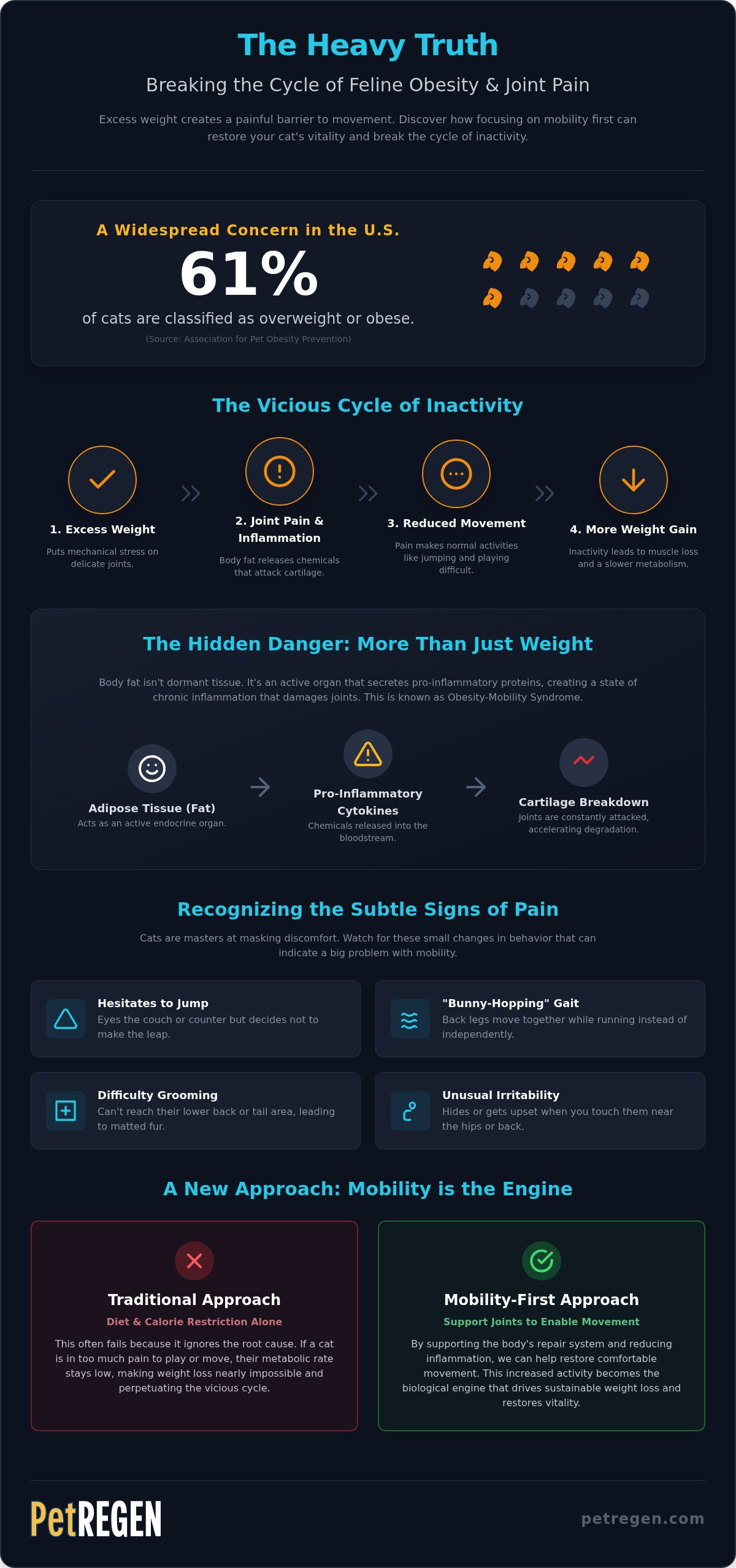
It's painful to watch your fur-baby hesitate at the foot of the couch, eyeing a jump they once made with ease. You aren't alone in this worry. According to the Association for Pet Obesity Prevention, 61% of cats in the U.S. are now classified as overweight or obese. This extra weight puts a massive strain on delicate frames, making preventative joint care for cats a vital part of modern pet parenting. You likely feel a heavy sense of guilt or fear about their future health, but this cycle of inactivity doesn't have to be permanent.
We believe that mobility isn't just a result of weight loss; it's the biological engine that makes weight loss possible. By supporting your cat's built-in repair system, you can jumpstart their natural ability to move, play, and heal. This guide explores how science-backed regenerative support can restore your companion's vitality and energy. We will provide a clear, manageable plan to help your cat reduce joint pain and finally make that leap back onto the sofa with confidence. Discover how to break the cycle of weight-induced stiffness and help your pet live their very best life.
Key Takeaways
- Understand how excess weight creates a cycle of joint stress and inactivity that calorie restriction alone often fails to resolve.
- Learn why jumpstarting physical movement is the biological engine required to make sustainable weight loss possible for your companion.
- Discover safe, low-impact exercise strategies and environmental changes that turn your home into a gentle gym for a heavy cat.
- Explore the science of preventative joint care for cats using regenerative nutrients that support the body's whole-body wellness.
- Find out how supporting your cat's built-in repair system can restore their natural ability to jump, play, and live a vibrant life.
The Heavy Truth: How Obesity Impacts Your Cat’s Mobility
A cat's body is a masterpiece of biological engineering, designed for explosive speed and silent grace. However, when a cat carries excess weight, this delicate system begins to fail. It isn't just about the physical burden of moving extra mass. While mechanical stress on the joints is a major factor, the biological reality is more complex. Adipose tissue, or body fat, is an active endocrine organ. It secretes pro-inflammatory cytokines that circulate throughout the body, constantly attacking joint tissues and accelerating the breakdown of cartilage. This makes preventative joint care for cats a critical necessity rather than a luxury.
The prevalence of Obesity in pets has led veterinarians to define a specific condition known as Obesity-Mobility Syndrome. This isn't just a cat being "lazy" or "slowing down" with age. It is a systemic failure where chronic inflammation and mechanical strain create a painful barrier to movement. When your companion loses their "spark," the emotional toll is heavy. Watching the zoomies disappear or seeing a once-bold explorer become a sedentary observer is heartbreaking for any pet parent. It feels as though their personality is being weighed down along with their body.
Recognizing the Signs of Mobility Struggle
Cats are masters at masking discomfort, so the signs of struggle are often subtle. You might notice your fur-baby eyeing the kitchen counter but deciding not to jump, or using a "step-up" stool they previously ignored. Other signs include:
- A "bunny-hopping" gait where the back legs move together while running.
- Difficulty grooming the lower back or tail area, leading to matted fur.
- Uncharacteristic irritability or hiding when you touch them near the hips.
- Stiffness that seems to improve slightly after they've been moving for a few minutes.
The Long-Term Risks of Inactivity
When a cat stops moving, a dangerous biological decline begins. Lack of weight-bearing exercise leads to sarcopenia, which is the progressive loss of skeletal muscle mass. Without strong muscles to support the skeletal frame, the joints take even more of a beating. This sedentary lifestyle also triggers a metabolic decline, making it nearly impossible for the cat to lose weight through diet alone. By 2026, veterinary standards have shifted to prioritize early mobility intervention. We now know that waiting for clinical lameness is waiting too long. Effective preventative joint care for cats must start by addressing the cellular environment, helping to jumpstart the body's built-in repair system before muscle atrophy becomes permanent.
Breaking the Vicious Cycle: Why Mobility is the Engine of Weight Loss
Many pet parents begin their journey by simply cutting back on the kibble. While managing calories is part of the equation, a diet alone rarely solves the problem if the cat is already in pain. This creates what we call the Vicious Cycle of Inactivity. When a cat's joints hurt, they choose to rest. This lack of movement leads to further weight gain, which then increases the mechanical load on those same aching joints. To break this loop, we have to look at preventative joint care for cats as a way to enable movement first, rather than waiting for weight loss to happen on its own.
Standard weight loss plans often fail because they ignore the biological reality of the obese cat. If your companion is too stiff to engage in even five minutes of play, their metabolic rate stays low. By focusing on mobility first, we turn movement into the engine that drives weight loss. This shift in perspective is what allows a sedentary cat to rediscover their natural vitality. It moves the focus away from "burning calories" and toward restoring the biological capacity to be active.
The Science of Inflammation in Obese Cats
Research from Cornell University on feline obesity highlights that excess fat is far from being dormant tissue. Instead, fat acts as an active endocrine organ. It pumps out pro-inflammatory proteins called cytokines that travel through the bloodstream. These chemicals specifically target and degrade the cartilage and connective tissues in your cat's joints, making every step a challenge.
This chronic state of inflammation leads to high levels of oxidative stress. In pets, oxidative stress is a cellular imbalance where free radicals overwhelm the body's natural defenses, damaging healthy cells and accelerating the aging process of joint tissues. Reducing this internal "rusting" is essential to help your fur-baby feel comfortable enough to start moving again. Without addressing this cellular environment, the cat remains stuck in a state of constant physical repair that never quite catches up.
Why Just Feed Less Isn’t Enough
Simply slashing a cat's food intake can be dangerous. Cats are unique in how they process fat; if they lose weight too rapidly, they are at risk for hepatic lipidosis, a life-threatening liver condition. Effective weight management requires high nutrient density, not just low calories. You want to provide the building blocks for healing while the body sheds the extra pounds. Supporting preventative joint care for cats through regenerative nutrients helps protect the joints while the cat is at their heaviest. This approach supports the body's built-in repair system, providing the structural integrity needed for safe activity. When you provide the right cellular support, you can jumpstart your cat’s recovery and help them move toward a healthier weight without the struggle of chronic pain.
Low-Impact Movement: Safe Exercise Strategies for Heavy Cats
The Golden Rule for helping an obese cat move is simple: high engagement, low impact. While many guides suggest using laser pointers or feather wands to encourage sprinting, these activities often lead to dangerous jarring movements. For a cat carrying significant extra weight, a sudden twist or a hard landing can be catastrophic for joints already weakened by feline osteoarthritis. Instead of high-speed chases, we focus on steady, purposeful movement that builds muscle without risking injury. This approach is the cornerstone of effective preventative joint care for cats, ensuring that exercise helps rather than hurts.
Before any activity, a gentle warm-up is essential. You can encourage a few minutes of slow walking through the house or gentle stretching by placing a treat just out of reach. Similarly, a cool-down period of quiet petting helps the heart rate return to normal. Always monitor your companion's body language. If you notice heavy panting, flattened ears, or a sudden refusal to move, it's time to stop. Pushing too hard can lead to setbacks that keep your fur-baby sedentary for days.
Step-by-Step Mobility Exercises
Movement should feel like a game, not a chore. Scent-based hunting is a fantastic way to encourage walking without the need for jumping. Hide small amounts of high-protein treats or catnip-scented toys around the room at floor level. This engages their natural predatory instincts and keeps them moving at a safe, steady pace. You can also use food puzzles to make movement a requirement for mealtime. Instead of a bowl, place kibble in a rolling dispenser that forces the cat to walk and nudge the toy to eat.
For cats that are ready for a bit more challenge, try gentle stair-stepping. Use sturdy, wide platforms or a single low step. Encourage your cat to step up with their front paws only, then back down. This builds core and hind-limb strength, which is vital for supporting the body's built-in repair system. Keep these sessions short, starting with just two or three minutes at a time.
Creating a Mobility-Friendly Environment
Your home can act as a passive gym that supports preventative joint care for cats. By making small adjustments, you reduce the daily wear and tear on your companion's frame. Consider these modifications:
- Ramps and Steps: Install pet ramps next to the couch or bed. This eliminates the high-impact landing on front carpal joints that occurs when a heavy cat jumps down.
- Non-Slip Flooring: Hardwood or tile can be terrifying for an unstable cat. Adding yoga mats or area rugs provides the traction they need to feel confident while moving.
- Low-Entry Litter Boxes: Many standard boxes have high sides. Switching to a box with a low entry point prevents the painful climbing motion that often leads to "accidents" outside the box.
When your cat feels safe and stable in their environment, they are more likely to explore. This increased daily activity, combined with targeted cellular support, helps restore the energy and vitality your fur-baby deserves.
Cellular Support: Regenerative Nutrients for Feline Joint Health
Traditional veterinary approaches often focus on symptom management through non-steroidal anti-inflammatory drugs (NSAIDs). While these can provide temporary relief, they essentially mask pain without addressing the underlying structural decline. A more compassionate and effective strategy involves shifting from joint masking to joint nourishing. By providing regenerative support, we address the root causes of discomfort. This proactive approach to preventative joint care for cats focuses on providing the biological building blocks necessary for long-term health and mobility.
For an obese cat, the nutritional requirements are even more specific. While the body works to shed excess fat, it's vital to provide nutrients that support muscle retention. Amino acids play a crucial role here, preventing the muscle atrophy that often accompanies weight loss. Using human-grade ingredients ensures maximum bioavailability. When nutrients are easily absorbed, your fur-baby gets the full benefit of every dose, leading to faster recovery and renewed vitality. High-quality antioxidants also help neutralize the free radicals produced by fat cells, protecting healthy tissue from further damage.
The Role of Collagen and Omega-7
Collagen serves as the essential scaffolding for healthy joints, providing the tensile strength needed to support a heavy frame. Without adequate collagen, cartilage becomes brittle and prone to wear. Complementing this is Omega-7, a unique fatty acid found in sea buckthorn that supports metabolic health and mucosal integrity. Unlike standard fish oils, Omega-7 helps manage the systemic inflammation common in overweight companions. To ensure your pet actually enjoys their supplement, formulas that use real liver and natural flavors are best. These ingredients ensure high compliance, even with the pickiest cats, turning a daily health routine into a treat they look forward to.
Regenerative Health: A New Frontier in 2026
The latest science in 2026 has moved toward supporting the body’s natural stem cell function. This isn't about invasive procedures; it's about using specific phytonutrients to activate the "built-in repair system" that every cat possesses. By clearing away oxidative stress, we allow cells to communicate and function with the efficiency they had in their youth. This is the core difference between synthetic vitamins and whole-food superfoods. Whole-food ingredients like reishi mushrooms and AFA algae provide a complex spectrum of nutrients that synthetics simply don't replicate.
When you nourish your companion at a cellular level, you aren't just helping them move better today; you're investing in their future quality of life. Backed by science and trusted by pet parents, these nutrients offer a path to lasting wellness. You can explore PetREGEN Stem Cell Activator to see how science-based regenerative nutrients can jumpstart your cat's journey back to a playful, active life.
The PetREGEN Solution: Jumpstarting Your Cat’s Natural Repair System
We've explored the mechanical strain of obesity and the cellular damage caused by chronic inflammation. Now, it's time to provide the definitive solution to break the cycle. PetREGEN Stem Cell Activator Supplement is designed to target the root of mobility issues by supporting the body's built-in repair system. This isn't just about masking a limp; it's about providing the regenerative tools your fur-baby needs to heal from within. By focusing on whole-body wellness, we help obese cats regain the strength and comfort required to start moving again. This movement is the essential first step toward sustainable weight loss and a longer, happier life.
Our philosophy centers on the idea that every cat deserves to feel their best, regardless of their current weight or age. When you address the cellular environment, you unlock a level of vitality that standard diets simply can't reach. The journey from a lethargic, stiff companion to a cat that is truly "Living Her Best Life" begins with the right biological support. It's a science-backed path toward renewed energy and a restored quality of life.
Why PetREGEN is Different
Most standard joint supplements on the market rely solely on glucosamine and chondroitin. While these ingredients have their place, they often fail to address the systemic inflammation and oxidative stress that plague an overweight companion. PetREGEN is different because it moves beyond symptom-focused ingredients to provide systemic support. Our proprietary formula uses human-grade superfoods like reishi mushroom and AFA algae to support immune function and joint health simultaneously.
Our approach is that of a caring innovator. We combine cutting-edge science with a deep understanding of the emotional bond you share with your pet. This formula is endorsed by zoologists and veterinarians who recognize the power of regenerative nutrition. We're so confident in the transformation you'll see that we offer a full money-back guarantee. It's a risk-free way to invest in preventative joint care for cats that actually produces visible, life-changing results.
Starting Your Cat on the Path to Recovery
Integrating PetREGEN into your fur-baby's life is simple and stress-free. The supplement is designed for easy absorption and features natural flavors that even picky eaters enjoy. Just a daily serving can begin the process of clearing oxidative stress and activating those dormant repair cells. You aren't just giving them a supplement; you're giving them a chance to rediscover their spark. There's no need for invasive procedures or stressful vet visits to begin this part of their health journey.
We hear stories of transformation every day. Pet parents describe the shift from watching their cat struggle with the litter box to seeing them jump back onto the bed for morning cuddles. It's about moving from a state that is painful to watch to one of pure, active joy. Effective preventative joint care for cats is the bridge between a sedentary present and a vibrant, active future. Your companion has the built-in ability to heal; they just need the right fuel to get started.
Help your cat rediscover their vitality with PetREGEN.
Empower Your Cat's Journey to Vitality
Restoring your companion's mobility is the most compassionate step you can take toward their long-term health. We've seen how movement acts as the biological engine for weight loss and how targeted cellular support can finally break the cycle of inflammation. This proactive approach to preventative joint care for cats ensures that your fur-baby doesn't just lose weight; they gain a renewed quality of life. By focusing on the body's built-in repair system, you're providing the foundation for a future filled with play and exploration.
PetREGEN provides a science-based path to this transformation. Our formula is endorsed by Health & Welfare Zoologists and crafted with human-grade, USA-made ingredients to ensure maximum safety. We're so confident in your pet's recovery that we offer a 100% Money-Back Guarantee. It's time to help your companion rediscover their spark and move past the frustration of stiffness. Every leap starts with the right biological fuel. You have the power to help them feel like a kitten again.
Give your cat the gift of movement. Shop PetREGEN Stem Cell Activator
Frequently Asked Questions
Can an obese cat ever regain full mobility?
Yes, many obese cats can regain their mobility by addressing inflammation and supporting the body's built-in repair system. While the timeline varies based on the individual's age and weight, restoring cellular health allows them to move with less discomfort. Once movement is restored, it acts as the biological engine for weight loss. This dual approach helps your fur-baby rediscover their natural energy and return to jumping and playing with confidence.
How do I know if my cat is lazy or in pain?
Pain in cats is often behavioral rather than overt. If your companion hesitates before jumping, "bunny hops" when running, or hides when touched, they're likely experiencing joint discomfort. True laziness is rare in a healthy cat; usually, what looks like lethargy is a protective response to pain. Monitoring these subtle shifts is a vital part of preventative joint care for cats, as it allows you to intervene before muscle atrophy begins.
Are stem cell activator supplements safe for cats with diabetes?
PetREGEN is formulated with natural superfood ingredients that are generally safe for cats with metabolic conditions like diabetes. Our proprietary formula focuses on whole-body wellness by reducing oxidative stress without the use of synthetic fillers or high-glycemic sugars. However, because every companion's health journey is unique, we always recommend showing our human-grade ingredient list to your veterinarian. This ensures the supplement fits perfectly into your cat's specific management plan for long-term health.
What is the best low-impact exercise for a very heavy cat?
Scent-based hunting games are the gold standard for very heavy cats because they encourage steady walking without the jarring impact of jumping. Hide high-protein treats or catnip-scented toys at floor level to engage their predatory instincts safely. Food puzzles are another excellent option, as they turn mealtime into a gentle physical activity. These strategies are far safer than laser pointers, which can cause sudden, painful twists on stressed joints and connective tissues.
How long does it take to see results with PetREGEN?
While every fur-baby's biological response is unique, many pet parents report visible improvements in energy and mobility within 3 to 4 weeks of consistent use. You might first notice your cat grooming more easily or showing a renewed interest in their favorite toys. Because PetREGEN targets the built-in repair system at a cellular level, the benefits often build over time as the body clears away oxidative stress and restores joint integrity.
Can I use PetREGEN alongside a prescription weight-loss diet?
Absolutely, PetREGEN is an excellent companion to a prescription weight-loss diet. While the diet manages caloric intake, our supplement provides the regenerative nutrients needed to protect joints and retain muscle mass during weight loss. This combination addresses both the mechanical load and the internal inflammation. Using PetREGEN as part of your preventative joint care for cats ensures that as the pounds come off, your cat has the vitality to keep moving safely.
Is it too late to help a senior obese cat with mobility issues?
It's never too late to support your senior companion's quality of life. Even if your cat has been sedentary for years, supporting their natural regenerative functions can lead to significant improvements in comfort. Senior cats especially benefit from the reduction in oxidative stress that our formula provides. By helping their cells function more like they did in their youth, you can help your senior fur-baby rediscover their spark and enjoy their golden years.
What human-grade ingredients should I look for in a mobility supplement?
Look for high-quality, bioavailable ingredients like collagen for structural support and Omega-7 for metabolic health. Phytonutrients from whole-food sources like reishi mushrooms and sea buckthorn are also essential for managing systemic inflammation. Avoid synthetic fillers or "joint masking" chemicals that don't support long-term healing. Choosing human-grade, USA-made ingredients ensures that the supplement is safe, potent, and free from the contaminants often found in lower-quality pet products.


