

Imagine calling your best friend's name for breakfast, but instead of the usual joyful gallop, you hear a heavy sigh and the sound of stiff limbs struggling against the hardwood floor. If your dog is slow to get up in the morning, you aren't just seeing a "lazy" sleeper; you're witnessing a biological signal that their body's repair system is being outpaced by oxidative stress. It's truly painful to watch your companion hesitate before every step, especially when recent 2026 data shows that over 40% of dogs deal with joint issues that make these early hours a daily struggle.
We understand the heartbreak of seeing your fur-baby lose their spark and the uncertainty that follows. You might worry if a vet visit is urgent or if your only options are medications with long-term side effects. You're right to want a safer, more regenerative path for your pet. This article will help you discover the science behind morning stiffness and show you how to revitalize your pet’s natural repair system for easier, more energetic mornings. We'll explore the root causes of mobility loss and provide actionable steps to support your dog's long-term vitality and whole-body wellness.
Key Takeaways
- Understand why morning stiffness isn't just "laziness" but a biological phenomenon called the "morning gel" effect that impacts joint lubrication.
- Learn why a dog slow to get up in the morning is signaling that their natural repair system is being overwhelmed by daily oxidative stress.
- Identify the subtle "red flags" stoic dogs use to hide discomfort and how to distinguish between normal warming up and persistent joint distress.
- Discover practical ways to improve your companion's mobility through consistent wake-up routines and environmental adjustments like better floor traction.
- Explore how to support your pet's built-in repair system using regenerative, human-grade ingredients that promote whole-body wellness and vitality.
Understanding Why Your Dog Is Slow to Get Up in the Morning
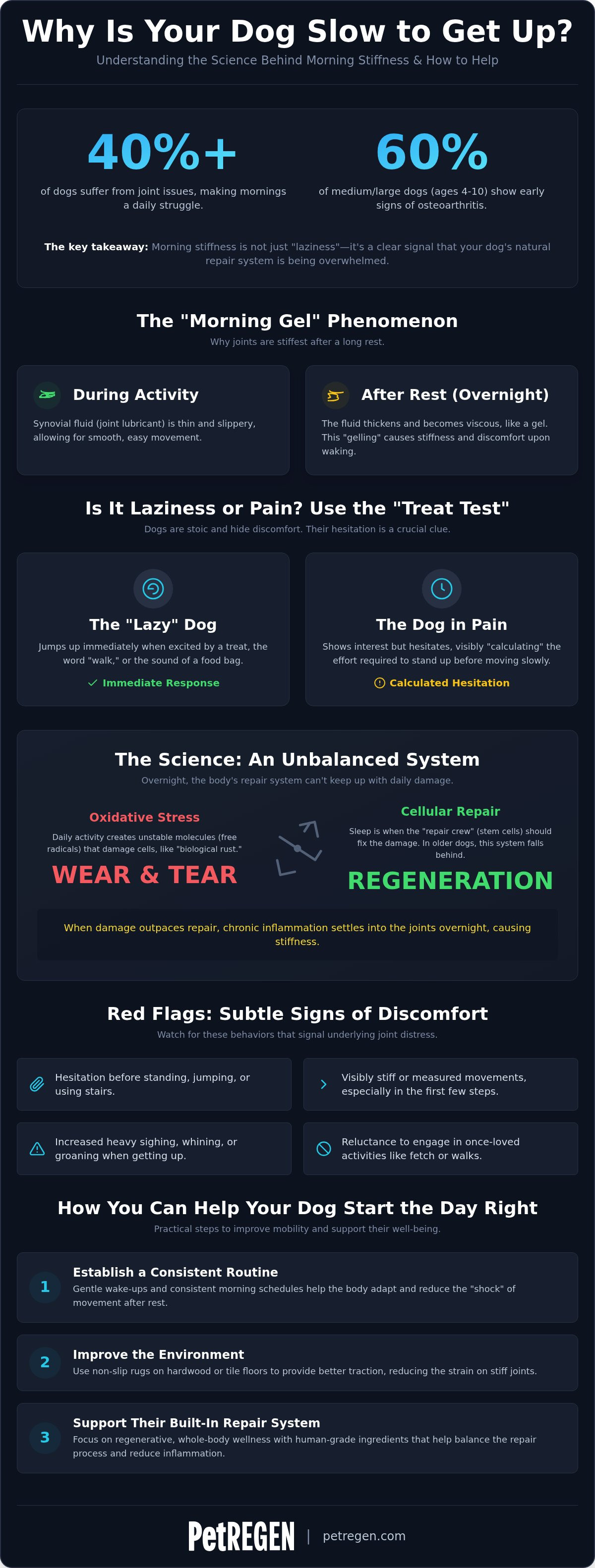
It starts with a soft whine or a series of heavy sighs. You watch your companion try to rise, but their movements are stiff, measured, and clearly difficult. It's painful to watch a dog you love struggle with the simple act of standing. While you might hope they're just being a "sleepyhead," a dog slow to get up in the morning is often communicating a physical reality rather than a personality trait. Recent 2026 data indicates that mobility issues are appearing much earlier than previously thought; a study found that 60% of medium and large dogs between 4 and 10 years old already show radiographic evidence of osteoarthritis.
This early onset means that even "active" dogs in their prime may be silently managing joint discomfort. For many pets, the morning represents the peak of their daily struggle because their body has been stationary for hours. Understanding the biological mechanics behind this stiffness is the first step toward restoring their vitality.
The "Morning Gel" Phenomenon
Joints are lubricated by synovial fluid, which acts much like motor oil for the body. During periods of activity, this fluid stays thin and slippery. However, when a dog rests for several hours, the fluid can thicken and become viscous. Veterinarians often call this the "gelling" effect. For a dog with healthy joints, a quick stretch thins the fluid back out. For a dog dealing with underlying issues like Canine Hip Dysplasia, this process takes much longer and causes significant discomfort.
Movement is the only way to "re-lubricate" these stiff joints. If your dog sleeps in a curled position, they might experience more localized stiffness in the neck or hips compared to a dog that stretches out. The longer they stay still, the more the oxidative stress accumulates, making those first few steps of the day the hardest ones to take.
Is My Dog Just Lazy?
It's true that some breeds are more prone to lounging. Bulldogs, Basset Hounds, and even some Greyhounds are famous for their love of sleep. However, there is a distinct difference between a dog that wants to stay in bed and a dog that can't get out of it easily. A "lazy" dog will usually jump up immediately if they hear the word "walk" or the sound of a kibble bag. A dog in pain will show hesitation even when they are mentally excited.
You can use the "treat test" to help distinguish between the two. Offer your dog their favorite high-value snack from across the room. A truly sleepy dog will perk up and trot over without a second thought. A dog experiencing joint distress will show interest, but you'll see them "calculate" the effort before slowly pushing themselves up. Dogs are naturally stoic; they often hide pain to avoid showing weakness to their pack, so these subtle hesitations are your most important clues.
The Science of Overnight Inflammation and Cellular Repair
While we've discussed the physical "gelling" of joints, the reason a dog slow to get up in the morning struggles is rooted deeper in their cellular biology. Every dog possesses a "built-in repair system" designed to fix daily wear and tear. However, as our companions age, this system often falls behind. Instead of waking up refreshed, they wake up with the accumulated "debt" of yesterday's activity. When the body can't keep up with the demand for repair, inflammation becomes the default state.
Oxidative Stress and the Aging Pet
Think of oxidative stress as biological "rust." It happens when unstable molecules called free radicals outnumber the antioxidants in your dog's body. During a day of chasing balls or patrolling the yard, these molecules damage the cells of dogs, leading to localized inflammation. By morning, after hours of stillness, this inflammation has settled into the joints, causing that heartbreaking stiffness you see. According to Cornell University on Osteoarthritis, this chronic inflammatory cycle is a primary driver of tissue degradation. Masking the pain with traditional methods often ignores this underlying "rust," allowing the damage to continue while the dog simply feels it less.
The Role of Natural Regeneration
Sleep is supposed to be the prime time for the body's "repair crew" to get to work. This crew consists largely of stem cells that migrate to areas of damage to regenerate tissue and soothe inflammation. In a young puppy, these cells are abundant and fast. In an older or compromised dog, the repair crew is smaller and moves much slower. When the rate of damage from oxidative stress exceeds the rate of natural repair, mobility inevitably declines. Stem cell activation is a way to support natural healing by encouraging the body's own internal resources to stay active and effective.
Many common approaches fail because they only target the symptoms rather than the source of the breakdown. While temporary relief is helpful, it doesn't address why the repair system is failing in the first place. A whole-body wellness approach focuses on giving the body the specific building blocks it needs to maintain its own health. Supporting your pet's built-in repair system helps them transition from just "getting by" to truly thriving again. When we focus on regenerative support rather than just symptom management, we give our companions a better chance at a vibrant, active life without the morning struggle.
Red Flags: When Morning Slowness Requires Action
Many pet parents wait for a loud cry of pain or a visible yelp before they take action. However, dogs are masters of disguise. In the wild, showing vulnerability meant being left behind by the pack, and this stoicism remains deeply ingrained in our domestic companions today. If your dog is slow to get up in the morning, they might be masking a significant level of discomfort long before they ever make a sound. Recognizing the "limbo" period, where a dog isn't in acute crisis but is clearly losing their spark, is vital for long-term recovery.
It's common to see a dog "walk it off" after a few minutes of movement, but if that stiffness persists or turns into a visible limp, the underlying damage is likely advancing. According to the Cornell University College of Veterinary Medicine on Osteoarthritis, difficulty rising from a lying position is one of the most reliable clinical signs of joint degeneration. When you notice behavioral shifts, such as irritability when touched or a tendency to "hide" in another room during the busy morning hours, it's time to look closer at their physical health.
Subtle Signs of Joint Discomfort
Look for "micro-signs" that occur right after waking. Does your companion immediately start licking or chewing at a specific wrist or hip? This behavior is often an attempt to soothe localized inflammation. You might also notice they've stopped performing their signature morning "play bow" or that they hesitate for several seconds before tackling the stairs or jumping into the car. These aren't just quirks of aging. They are clear signals that the body's built-in repair system is struggling to keep pace with daily wear.
Emergency Indicators
While most morning stiffness is chronic, some signs require immediate veterinary attention. Sudden weakness or a complete collapse in the hind legs is a major red flag that should never be ignored. If your fur-baby is panting heavily or shaking while still lying in their bed, they are likely experiencing acute distress. A refusal to move even for water or food until late in the afternoon suggests that the discomfort has become overwhelming and requires professional intervention.
Use this 2026 checklist to determine if it's time for a consultation:
- Stiffness that lasts longer than 15 minutes after rising.
- Visible trembling in the limbs during the first walk of the day.
- Avoiding activities they once loved, like jumping onto the sofa.
- Snapping or withdrawal when you pet them near the hips or spine.
- A noticeable "bunny hop" gait where the back legs move together.
Identifying these signs early allows you to move away from reactive care. By focusing on regenerative support before a crisis occurs, you help your companion return to living their best life with less struggle and more joy.
How to Help Your Dog Start the Day Right
Watching your fur-baby struggle to find their footing is heartbreaking, but you aren't powerless. While the biological gelling effect we discussed earlier is a natural part of joint distress, the environment you provide can either worsen the stiffness or help soothe it. A consistent, low-stress morning routine allows your companion to "wake up" their joints at a pace that respects their physical limits. If your dog is slow to get up in the morning, small adjustments to their surroundings can make a world of difference in their daily comfort.
Optimizing the Sleeping Environment
Cold temperatures are the enemy of arthritic joints. When the air is chilly, the body restricts blood flow to the extremities, which can make synovial fluid even thicker and harder to move. Keeping your pet's sleeping area warm and draft-free is a simple way to reduce morning sluggishness. An orthopedic bed is also essential. Look for high-density support layers rather than just soft fluff; memory foam helps distribute weight evenly, reducing pressure points on the hips and spine. Additionally, place non-slip rugs or runners on hardwood or tile floors. Providing traction eliminates the fear of slipping, which often causes dogs to hesitate before standing up.
A Holistic Approach to Mobility
Consistency is the secret to maintaining vitality. Many owners fall into the "weekend warrior" trap, taking their dogs on long hikes on Saturday only to find them unable to move on Sunday. Instead, aim for shorter, more frequent walks throughout the week to keep the built-in repair system engaged without causing excessive oxidative stress. Weight management is another critical factor. Even a few extra pounds can significantly increase the load on a dog's joints, making every morning rise a heavy lift. By keeping your companion lean, you directly reduce the mechanical stress on their skeletal system.
Nutrition also plays a pivotal role in cellular health. While a balanced diet provides basic fuel, targeted supplementation can help bridge the gap by providing the specific building blocks needed for tissue recovery. Supporting your pet's natural regenerative processes ensures that their body has the resources to fight inflammation from the inside out. To give your companion the edge they need for easier mornings, you can try PetREGEN Stem Cell Activator to support their whole-body wellness and mobility.
Activating Vitality: A Regenerative Solution for Your Dog
For years, pet parents were told that slowing down was simply an inevitable part of aging. But seeing your dog slow to get up in the morning isn't a life sentence. In 2026, the focus has shifted from merely masking symptoms to supporting the body's internal biology. We now understand that true vitality comes from nourishing the system at a cellular level. PetREGEN Stem Cell Activator Supplement represents this modern shift toward regenerative wellness, offering a science-based path to help your companion reclaim their energy and joy.
Unlike traditional options that only offer temporary relief, PetREGEN works by cleaning, nourishing, and supporting your pet from within. By utilizing human-grade ingredients like collagen and real liver, it provides the essential building blocks for tissue repair and whole-body wellness. This approach doesn't just target a single joint; it supports the entire biological framework. When your dog is slow to get up in the morning, it's a call for support that goes beyond a softer bed. It's an opportunity to transition them from a state of stiffness to one of renewed mobility.
Why Stem Cell Activation Matters
Most joint products rely on basic lubrication to provide comfort. While this can help, it doesn't address the underlying reason why the "repair crew" has slowed down. Stem cell activation moves beyond simple lubrication to provide actual cellular support. By enhancing immune function and reducing the impact of oxidative stress, the body can recover faster from daily activity. PetREGEN supports the natural regenerative function by providing the specific biological signals and nutrients required to activate the body's internal repair crew. This leads to a more resilient companion who is ready to face the day with vitality rather than hesitation.
Trusted by Vets, Loved by Pets
Quality is non-negotiable when it comes to your best friend's health. PetREGEN is made in the USA using human-grade ingredients, ensuring a level of safety and purity that meets the highest standards. Endorsed by health and welfare zoologists, our formula is backed by science and trusted by pet parents who want to see their fur-babies "LIVING THEIR BEST LIVES!" again. We believe so strongly in this regenerative approach that we offer a full money-back guarantee, providing you with peace of mind as you start this journey.
- Human-Grade Ingredients: Only the best for your companion, including real liver for natural palatability.
- USA-Made: Produced in facilities that prioritize safety and quality control.
- Scientific Authority: Formulated based on the latest research in regenerative biology.
- Compassionate Results: Designed to move your pet from "painful to watch" to "happy to move."
Your dog's golden years should be filled with walks and tail wags, not morning struggles. By supporting their built-in repair system, you're giving them the gift of easier mornings and a more active future.
Give Your Companion a Brighter, More Active Morning
Seeing your dog slow to get up in the morning is a clear signal that their built-in repair system needs targeted support to overcome daily oxidative stress. We've seen that this stiffness is a biological reality, but it doesn't have to be a permanent part of your pet's life. By optimizing their sleeping environment and focusing on regenerative health, you can help your fur-baby transition from struggling to thriving.
PetREGEN provides a science-based solution for whole-body wellness using human-grade ingredients made in the USA. Endorsed by Dr. Zoolittle and leading veterinarians, our activator supports the natural healing processes that keep joints moving freely. We are so confident in the results that we offer a 100% money-back guarantee. It's time to help your best friend reclaim their spark and wake up ready for every new adventure.
Help your dog wake up with vitality—Try PetREGEN Stem Cell Activator today!
Frequently Asked Questions
Is it normal for an older dog to be stiff in the morning?
While morning stiffness is common in senior pets, it isn't a healthy state. It's usually a sign that the body's built-in repair system is being outpaced by oxidative stress. Over 40% of dogs are estimated to manage some level of joint distress, which often manifests as being slow to rise. Addressing this early with regenerative support can help prevent further mobility loss and improve your companion's daily quality of life.
Can cold weather make my dog slower to get up?
Yes, colder temperatures cause blood vessels to constrict, which reduces circulation to the limbs and joints. This can cause the synovial fluid to thicken more than usual overnight, exacerbating the gelling effect. If your dog slow to get up in the morning during winter, providing a warm, orthopedic bed or keeping your home at a consistent temperature can help maintain joint lubrication and ease those first difficult steps of the day.
What is the best natural joint supplement for dogs in 2026?
In 2026, the gold standard has moved from simple symptom-masking to regenerative support. PetREGEN Stem Cell Activator Supplement is a leading choice because it uses human-grade ingredients like collagen and real liver to support whole-body wellness. Unlike traditional glucosamine products, it focuses on activating the body's natural repair crew. This science-based approach helps nourish the cells of dogs, promoting long-term vitality rather than just temporary relief for your fur-baby.
How can I tell if my dog is lazy or in pain?
The most reliable way to tell is the motivation test. A lazy dog will usually jump up quickly for a high-value treat or the sound of a leash, whereas a dog in pain will show mental interest but physical hesitation. Look for subtle signs like trembling, bunny hopping, or licking at specific joints. If your companion calculates the effort before moving, they are likely managing discomfort rather than just enjoying a long sleep-in.
Do stem cell supplements for dogs actually work for mobility?
Yes, stem cell activator supplements work by supporting the body's innate ability to repair damaged tissue. While they aren't a medicine, they provide the specific biological building blocks needed to reduce oxidative stress and encourage cellular regeneration. By supporting the immune system and the built-in repair system, these supplements help many dogs regain the energy and mobility they need to live their best lives without the constant struggle of morning stiffness.
Should I exercise my dog if they are stiff in the morning?
Yes, but the movement must be gentle and consistent. Low-impact activities like slow walking help un-gel the joints by thinning out the synovial fluid. Avoid the weekend warrior syndrome of intense activity followed by days of rest. Instead, aim for several short, gentle walks daily. This keeps the joints lubricated and the repair system active without causing the excessive inflammation that leads to a dog slow to get up in the morning.
How long does it take to see results from a joint supplement?
Most pet parents notice a difference in mobility and energy within three to six weeks of consistent use. Regenerative supplements work from the inside out, so the body needs time to clean the cells and begin the repair process. The first signs of success are often subtle, such as a fur-baby being more willing to stretch or showing increased interest in play. For the best outcomes, maintain a steady daily routine.
Are there side effects to natural regenerative supplements for pets?
High-quality, natural regenerative supplements like PetREGEN are generally very safe because they use human-grade, whole-food ingredients like real liver. Because they support the body's natural functions rather than introducing synthetic chemicals, the risk of side effects is minimal. However, it's always a good idea to consult your veterinarian before starting any new supplement, especially if your dog has existing health conditions or is taking prescription medications for joint issues.


