

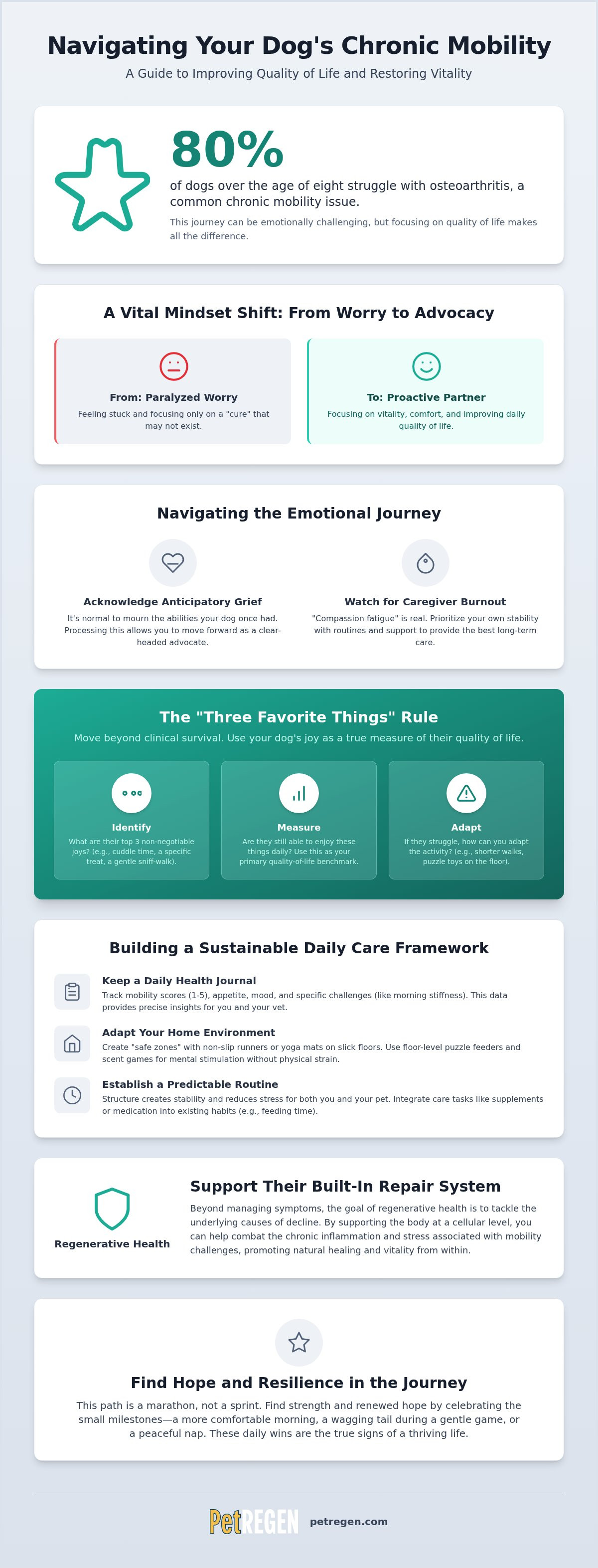
You notice the slight hesitation before the stairs and the stiff rise from the rug. When the vet finally confirms a chronic mobility diagnosis, your heart sinks. It's a heavy moment filled with questions about the future and the fear of watching your best friend's world get smaller. You aren't alone in this journey. Research shows that 80% of dogs over eight years old struggle with osteoarthritis. It's painful to watch, and the confusion over competing treatments or guilt over financial constraints only adds to the weight.
We understand that you want nothing more than to see your fur-baby living their best life again. This guide is designed to help you move past the "what-ifs" by focusing on improving quality of life for dog with chronic mobility issues through science-backed strategies. We'll show you how to activate your dog's built-in repair system and create a clear, manageable daily care plan. You'll learn how to navigate the emotional hurdles of a diagnosis while discovering practical ways to restore your companion's vitality and comfort. Let's look at how we can turn this challenge into an opportunity for renewed healing and hope.
Key Takeaways
- Process the reality of anticipatory grief and clear the emotional fog to become the confident advocate your companion needs.
- Use the "Three Favorite Things" rule to move beyond clinical survival and focus on truly improving quality of life for dog with chronic mobility issues.
- Build a predictable daily care framework and health journal to reduce stress and track your fur-baby’s progress with precision.
- Explore how supporting your pet’s built-in repair system can tackle the underlying cellular stress and inflammation caused by chronic mobility challenges.
- Gain the psychological tools to find hope and resilience by celebrating small milestones in your dog’s vitality and daily comfort.
The Emotional Impact of a Chronic Mobility Diagnosis
The moment a veterinarian delivers a diagnosis of a long-term condition, a heavy emotional fog often settles over the room. Whether you are facing the slow, predictable progression of Canine Hip Dysplasia or a more sudden decline in joint health, the news is a shock to the system. It's not just a medical report. It's a fundamental shift in the shared life you've built with your companion. You might find yourself mourning the dog who used to sprint for the ball while the dog you love is still right beside you. This experience is known as anticipatory grief, and it's a completely normal part of the journey for dedicated pet parents.
This emotional weight often stems from the deep human-animal bond. When your fur-baby hurts, you feel it too. However, staying stuck in the "fog" can make it difficult to see the path forward. The most important step you can take right now is shifting your mental milestone. Instead of focusing on a "cure" that might not exist, focus on improving quality of life for dog with chronic mobility issues. This transition moves you from a state of paralyzed worry into a proactive mindset. You become a partner in your dog's care, focusing on vitality and comfort rather than just the clinical management of a disease.
Recognizing Pet Caregiver Burden
Caring for a mobility-challenged pet is a marathon, not a sprint. You may experience "compassion fatigue," a form of emotional exhaustion that occurs when the constant worry about symptoms begins to drain your own mental health. It's common to feel guilty about the time or financial constraints of treatment. Watch for signs of burnout, such as feeling overwhelmed by daily care tasks or losing interest in the activities you once enjoyed with your pet. To maintain a high level of care, you must prioritize your own stability. Establishing a predictable routine and leaning on a support network can help you stay energized for the long road of recovery and healing.
Communicating with Your Veterinary Team
Your veterinarian provides the scientific authority, but you provide the daily observations that matter most. During follow-up appointments, don't be afraid to ask the hard questions. Ask about specific ways of improving quality of life for dog with chronic mobility issues and what markers indicate your dog is truly thriving. Creating a "care team" that includes family, friends, and your vet ensures you aren't carrying the burden alone. By advocating for your pet while respecting professional expertise, you create a balanced plan that supports your dog's built-in repair system and overall wellness.
Building a Sustainable Daily Care Framework for Mobility
Structure creates stability in a world that suddenly feels uncertain. When you establish a predictable routine, you lower stress levels for both yourself and your fur-baby. This predictability is a cornerstone of improving quality of life for dog with chronic mobility issues. A daily health journal is your most powerful tool here. Instead of relying on vague memories during vet visits, track mobility scores, appetite, and mood daily. This data helps you identify subtle patterns, such as morning stiffness or late-night restlessness, which are common when managing Arthritis in Dogs.
Beyond the schedule, look at your home through your dog's eyes. Slippery hardwood floors can feel like ice rinks to a dog with weakened joints. Adding non-slip runners or yoga mats creates "safe zones" that encourage movement and prevent painful slips. Environmental enrichment is equally vital. Scent games or puzzle feeders placed at floor level keep their mind sharp even when their body is moving slower. These small, thoughtful adjustments transform your living space into a sanctuary of recovery and healing.
Managing the Logistics of Chronic Care
Consistency is the heartbeat of cellular support. To ensure you never miss a dose of vitality, integrate your PetREGEN regimen into an existing habit, like your own morning coffee or their dinner time. Since PetREGEN uses human-grade ingredients like real liver, it's designed to be a treat rather than a chore. For dogs with low appetites, crumbling the supplement into a small amount of warm water can help. Balancing your career and family with a new medical schedule is easier when the support system is simple and highly palatable.
Financial Planning for Long-Term Mobility Support
The financial aspect of chronic care can trigger deep guilt, but compassionate planning is about maximizing "value per quality day." Focus your resources on evidence-based solutions that support the body's built-in repair system. Therapeutic nutrition and high-quality supplements often provide a significant return on investment by reducing the need for more invasive interventions later. If you're looking for a proactive partner in this journey, you can explore natural stem cell support to see how it fits your dog's needs. Providing a high standard of care is about the love and consistency you provide, not just the size of your budget.
Assessing Quality of Life: Knowing How Your Dog Feels
The "Three Favorite Things" rule is a simple yet profound way to evaluate daily joy. Think of the activities that define your dog's personality. It might be waiting for the mailman, the frantic tail wag at dinner time, or a specific belly rub ritual. When a dog can no longer enjoy at least two of these things, it's a clear signal that their world is shrinking. While the health journal discussed in the previous section provides the data, this rule provides the heart. It helps you distinguish between clinical survival, where a dog's heart is beating but their spirit is dampened, and truly thriving. Improving quality of life for dog with chronic mobility issues requires us to look past our own desire to keep them with us and see the world through their eyes.
Objective data is your best defense against the emotional pain that clouds judgment. When you feel overwhelmed by a "bad day," look back at your visual calendar. You might find that while today was difficult, the previous six days were full of vitality and comfort. This perspective allows you to adjust the care plan based on physical feedback rather than fear. If the data shows a downward trend, it's time to consult your care team about pivoting your strategy to better support their built-in repair system.
The 2026 Quality of Life Scale for Dogs
Modern veterinary medicine uses a balanced approach to measure well-being. Quality of life is the intersection of physical comfort and mental engagement. Use the 2026 scale to grade these six pillars on a scale of 1 to 10:
- Hurt: Is pain well-managed?
- Hunger: Are they eating enough high-quality nutrients?
- Hydration: Are they staying properly hydrated?
- Hygiene: Can they stay clean and groomed?
- Happiness: Do they seek out interaction and play?
- Mobility: Can they move enough to satisfy their curiosity?
Recognizing Subtle Signs of Pain and Discomfort
Regenerative Health: Supporting the Built-In Repair System
When we talk about chronic mobility, we often focus on what is being lost. However, the science of regenerative health focuses on what can be activated. Your dog possesses a remarkable, built-in repair system designed to maintain tissue health and combat daily wear. In aging or ill pets, this system often slows down, leading to a cycle of chronic inflammation and oxidative stress. This isn't just about stiff joints; it's a cellular environment where the body struggles to keep up with repair needs. Shifting your focus toward supporting these natural processes is a key pillar in improving quality of life for dog with chronic mobility issues.
Stem cell activators work by nourishing the body's own repair tools rather than just masking symptoms. Instead of a single-system approach that only targets a specific joint, regenerative support promotes whole-body wellness. It addresses the underlying cellular tension that saps your companion's energy. When you provide the right bio-active signals, you help your fur-baby's body return to a state of recovery. This proactive strategy moves the needle from simply "getting by" to helping your pet feel like the best version of themselves again.
The Role of Nutrition in Chronic Mobility Management
Recovery starts with what goes into the bowl. High-quality, human-grade ingredients like collagen and real liver aren't just for flavor; they provide the essential building blocks for tissue repair. To maintain these high standards, professional natural pet food creators often use tools like CozinhaPet to ensure every batch is nutritionally optimized. A multi-system approach involves two critical steps: cleansing the body of oxidative stress and nourishing the cells with targeted nutrients. This dual action supports immune function, which is often taxed in dogs fighting long-term mobility loss. When the body's internal environment is clean and well-nourished, the natural healing process can finally take the lead.
Integrating Supplements with Traditional Veterinary Medicine
In 2026, the gap between "natural" and "science-based" has closed. You don't have to choose between your vet's prescription plan and regenerative support. In fact, they work best when used together. Stem cell activators promote healthy aging by enhancing the natural immune response, which can complement traditional treatments. Always work with your veterinary team to integrate these tools into your care plan. By combining clinical expertise with a focus on the body's repair system, you create a comprehensive strategy for vitality. To start activating your pet's internal resilience today, you can order the PetREGEN Stem Cell Activator and see the difference that science-backed nourishment makes.
Finding Hope and Resilience in the Journey
Action is the ultimate antidote to the emotional paralysis that follows a mobility diagnosis. When you transition from a passive observer of decline to an active participant in your dog's recovery, your psychological outlook shifts. This proactive stance is essential for improving quality of life for dog with chronic mobility issues. By focusing on what your companion can do rather than what they've lost, you reclaim a sense of agency. Hope isn't found in a distant miracle; it's found in the small, daily victories that confirm your efforts are making a difference. Backed by science. Trusted by pet parents.
A wagging tail at the sound of the leash, a slightly longer walk to the corner, or a bowl licked clean are not just routine events. They are milestones of resilience. Celebrating these moments helps you stay grounded in the present and reduces the weight of anticipatory grief. It's also incredibly helpful to connect with a community of pet parents who understand the unique challenges of mobility care. Sharing stories of transformation reminds you that even with a chronic diagnosis, a life of vitality is still possible. Every "good day" you create is a testament to the deep bond you share with your fur-baby.
The PetREGEN Promise: Backed by Science, Trusted by Parents
Our proprietary formula was designed to support the specific needs of senior dogs facing mobility loss. By nourishing the body's built-in repair system, PetREGEN helps restore the energy and energy levels needed for a happy, active life. We've seen companions go from being "painful to watch" to "living their best lives" through consistent cellular support. Because we believe in the regenerative power of our stem cell activator, we offer a 100% money-back satisfaction guarantee. This ensures you can focus on your pet's healing without the added stress of financial uncertainty.
Your Next Steps for a Healthier Companion
Starting the PetREGEN regimen is a commitment to your dog's long-term wellness. In the first 30 days, many owners report seeing a subtle but steady increase in their dog's willingness to move and engage with the family. This is the period where the multi-system approach begins to cleanse oxidative stress and nourish vital tissues. If you're still identifying the early indicators of discomfort, read about 5 Signs Your Elderly Dog Has Joint Pain to stay ahead of the progression. Your journey toward more "good days" starts with a single, science-backed choice. Give your pet the gift of regeneration—Shop PetREGEN now.
Reclaiming Vitality and Joy Together
A mobility diagnosis doesn't mean the end of your fur-baby's happiness. It marks the start of a new, proactive partnership. By shifting your mindset from curing a disease to improving quality of life for dog with chronic mobility issues, you unlock the potential for many more vibrant days. Use the tools we've discussed, like the "Three Favorite Things" rule and daily health journaling, to stay objective and responsive to your companion's needs. These strategies help you move past the emotional fog and into a place of confident advocacy.
You have the power to support your pet's built-in repair system from the inside out. PetREGEN is endorsed by Health & Welfare Zoologists and crafted with human-grade, USA-made ingredients to activate natural resilience. We're so confident in our proprietary formula that we offer a full money-back satisfaction guarantee. It's time to move from watching the struggle to celebrating every wag and comfortable step. Backed by science. Trusted by pet parents. Loved by pets.
Support your dog's natural healing; Try PetREGEN today
Your journey with your companion is far from over. With the right care plan and regenerative support, your best friend can continue to live a life full of comfort and connection.
Frequently Asked Questions
How do I know if my dog is in pain from their chronic mobility illness?
Dogs express pain through subtle behavioral shifts rather than vocalization. You might notice heavy panting when it isn't hot, licking at specific joints, or a new reluctance to climb stairs. Some dogs become unusually clingy or withdraw from social interaction. By monitoring these small changes daily, you can better understand their comfort levels and adjust their care plan to ensure they remain happy and mobile.
Can natural stem cell activators really help a dog with a serious diagnosis?
Natural stem cell activators support the body's internal repair mechanisms by nourishing the cells responsible for tissue maintenance. While they aren't a cure for a serious diagnosis, they help combat the oxidative stress and inflammation that often accompany mobility loss. This science-backed approach focuses on whole-body wellness. It provides your companion with the building blocks needed to maintain vitality and improve their daily comfort levels.
What is the most important thing to do immediately after a mobility diagnosis?
The most important step is establishing a predictable routine and a daily health journal. This structure reduces anxiety for your fur-baby and helps you track their physical feedback with precision. Focusing on improving quality of life for dog with chronic mobility issues through consistent care allows you to move from a state of shock into proactive advocacy. This early data is vital for your veterinary team to make informed treatment adjustments.
How do I manage the cost of my dog's chronic mobility care?
Focus on high-value, proactive treatments that support the body's built-in repair system to manage long-term costs. Investing in quality nutrition and supplements can often reduce the need for more invasive or emergency interventions later. Many pet parents find that a multi-system approach is more cost-effective than targeting single symptoms. Remember that providing a high standard of care is about consistency and love, not just the size of your budget.
Is it normal to feel guilty about my dog's mobility diagnosis?
It is completely normal to feel guilt or anticipatory grief after a mobility diagnosis. Many pet parents struggle with the "what-ifs" or worry they missed early signs of decline. Reaching out to a community of others in similar situations can help normalize these feelings. Remember that your dog doesn't blame you; they simply value your presence and the comfort you provide. Focusing on the present helps build resilience for both of you.
How can I tell if my dog's quality of life is declining?
You can tell if quality of life is declining by using the "Three Favorite Things" rule or a formal quality of life scale. If your dog can no longer enjoy at least two of the activities that define their personality, it may be time to pivot your care strategy. Look for signs of persistent hygiene issues or a lack of mental engagement. Improving quality of life for dog with chronic mobility issues means prioritizing their joy and comfort over clinical survival.
Can PetREGEN be used alongside my dog's current pain medications?
PetREGEN is designed to be used as a proactive partner alongside traditional veterinary treatments. Its proprietary formula uses human-grade ingredients that support the body's natural healing processes without interfering with most pain medications. Always consult your vet when adding regenerative support to a prescription plan. This multi-system approach ensures your dog receives both immediate relief and long-term cellular nourishment for better energy and recovery.
What are the first signs that a chronic mobility care plan is working?
The first signs of a successful care plan often include increased mental engagement and a brighter appetite. You may notice your companion getting up more easily in the morning or showing a renewed interest in their favorite toys. These small victories indicate that the inflammation cycle is breaking and their vitality is returning. Consistent improvement in these areas shows that your efforts to support their natural repair system are working.


