


A joint supplement isn’t a guaranteed shield against arthritis. The answer to whether there are supplements to prevent arthritis in dogs is that evidence for prevention remains limited; some ingredients may support joint health and mobility, but they can’t promise to stop arthritis from developing.
It’s understandable to want to protect your dog’s comfort before stiffness or changes in movement appear. Supplements may play a supporting role, but their effects vary, and joint health also depends on factors such as weight, activity, and your dog’s individual needs.
This guide explains what research says about common joint supplements, omega-3s, and mobility-focused diets, including what they may help with and where the evidence has limits. You’ll come away with a clearer picture of how to think about prevention and what to discuss with your veterinarian before making changes for your companion.
Key Takeaways
- Joint supplements vary in evidence and may not prevent arthritis; ingredient choice matters when weighing potential benefits.
- Glucosamine and chondroitin are common, but research does not consistently show they improve outcomes.
- Mobility support also involves diet and maintaining a lean body condition, not supplements alone.
- Omega-3s may support joint health; learn why the source, dose, and your dog’s overall needs matter.
Joint Supplements for Dogs: Do They Work and Which Are Best?
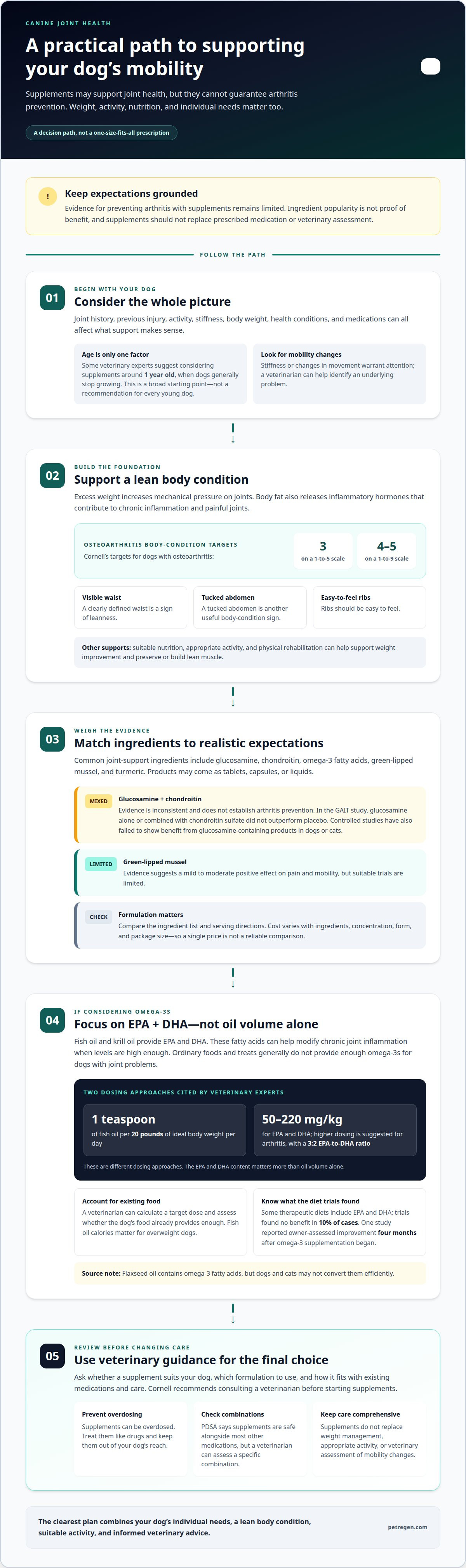
Dog joint supplements often contain cartilage-support ingredients such as glucosamine and chondroitin, but evidence of benefit is mixed. In the United States, cost varies with ingredients, concentration, form, and package size, so compare the formulation and serving amount rather than relying on a single price.
Glucosamine, Chondroitin, and Cartilage Support
Glucosamine and chondroitin are dietary ingredients used in cartilage-support supplements, sometimes called chondroprotectants. These products are intended to support cartilage, the tissue that cushions joints, and may come as tablets, capsules, or liquids. An ingredient’s common use does not prove that it prevents cartilage damage or arthritis. Check the product’s ingredient list and serving directions, and discuss it with your veterinarian if your dog has a health condition or takes medication.
Effectiveness and Evidence
Evidence for glucosamine and chondroitin in canine joint health is inconsistent, and it does not establish that they prevent arthritis. In the GAIT study, glucosamine alone or combined with chondroitin sulfate did not outperform placebo. Controlled studies have also failed to show a beneficial effect from glucosamine-containing products in dogs or cats; these ingredients are described as ineffective for treating osteoarthritis. Their popularity should not be mistaken for proof of benefit. Supplements should not replace prescribed medication or veterinary assessment of mobility changes.
When Dogs Might Start Supplements
Some veterinary experts advise considering joint supplements at around 1 year old, when dogs generally stop growing. That is a broad starting point, not a reason to give every young dog the same product. Joint history, previous injury, activity, and signs such as stiffness affect the decision. Cornell recommends consulting a veterinarian before starting supplements, so an underlying problem can be identified and the dog’s needs considered.
Risks and Side Effects
PDSA states that dog joint supplements have no major associated side effects and can be used safely over a long period. However, supplements can be overdosed, so Cornell advises treating them like drugs and keeping them out of a dog’s reach. PDSA says they are safe alongside most other medications, but a veterinarian can assess a specific product and medication combination. Ask your veterinary practice whether a supplement suits your dog and which formulation to use.
Mobility diets and joint-support ingredients
Joint support combines nutraceuticals, suitable nutrition, and weight management. Each addresses a different part of canine joint health.
What Supplements May Do for Arthritis
Joint supplements are products with ingredients intended to support joint function, comfort, or mobility. PDSA states they are often prescribed for dogs with arthritis or a high chance of developing it, and are thought to slow progression and reduce pain. Common ingredients include glucosamine, chondroitin, omega-3 fatty acids, green-lipped mussel, and turmeric. Green-lipped mussel evidence suggests a mild to moderate positive effect on pain and mobility, though suitable trials are limited.
Joint supplements don’t replace weight management or appropriate activity; these approaches address different needs. Joint problems and injuries increase arthritis risk, and working dogs face higher risk because of their exercise demands. Veterinary advice helps identify relevant ingredients and whether a supplement fits alongside a dog’s other care.
Body Weight and Joint Inflammation
Body weight affects the mechanical pressure on joints, while body fat releases inflammatory hormones that contribute to chronic inflammation and painful joints. Cornell advises keeping dogs lean throughout life because excess weight contributes to joint disease onset and progression. For dogs with osteoarthritis, the target body condition score is 3 on a 1-to-5 scale, or 4 or 5 on a 1-to-9 scale.
A clearly defined waist, tucked abdomen, and ribs that are easy to feel are signs of leanness. Veterinary therapeutic weight-loss diets typically provide more protein and dietary fiber, restrict fat, and balance other micronutrients; clinical trials show these diets can work. Physical rehabilitation can help preserve or build lean muscle while supporting weight improvement. For an overweight dog, weight management can reduce pressure on its joints and may ease discomfort. A veterinarian can tailor nutrition and activity to your dog’s condition.
Omega-3 diets and supplements for osteoarthritis
Omega-3 fatty acids can support joint health by modifying inflammation. For dogs with osteoarthritis, the amount and source matter.
Fish Oil and Omega-3 Fatty Acids
Fish oil and krill oil provide EPA and DHA, omega-3 fatty acids used for canine joint support. EPA and DHA can help modify chronic joint inflammation when levels are high enough. Ordinary foods and treats generally don’t provide enough omega-3s for dogs with joint problems. Flaxseed oil is also a source of omega-3 fatty acids, but dogs and cats may not convert it efficiently.
Omega-3 Dosing and Enriched Diet Evidence
Omega-3 dosing depends on a dog’s weight and existing food. Cornell veterinary experts cite 1 teaspoon of fish oil per 20 pounds of a dog’s ideal weight per day. Another guideline gives 50-220 mg/kg for EPA and DHA, with higher dosing suggested for arthritis and a 3:2 EPA-to-DHA ratio. These figures describe different dosing approaches, so the EPA and DHA content matters more than oil volume alone.
Veterinarians can calculate a dog’s target EPA and DHA dose and assess whether its food provides enough. Fish oil is often given separately to reach an appropriate amount, but its calories matter for overweight dogs. Some therapeutic diets include EPA and DHA; trials found no benefit in 10 percent of cases. A study reported owner-assessed improvement four months after dogs began omega-3 supplementation.
Omega-3s and Arthritis Risk
Omega-3s may support inflammation management, but current evidence described here does not establish that fish oil prevents arthritis. The findings focus on joint support and osteoarthritis, not a proven reduction in future arthritis risk. EPA and DHA are also included in some veterinary therapeutic diets, which meet adult-dog nutritional guidelines and can be fed long term. Exercise and a suitable overall diet remain part of joint-health care.
Evidence for supplements to prevent arthritis in dogs
Evidence that supplements prevent arthritis is limited. Supporting joints or managing symptoms is not the same as preventing disease, so findings about pain relief or mobility do not show that a supplement stops arthritis from developing.
A systematic review examined 72 clinical studies of joint supplements in dogs and cats. That review’s scope shows researchers have studied many products, but the number of studies alone doesn’t establish that supplements prevent arthritis. Studies can differ in ingredients, animals, outcomes, and duration, making it important to distinguish prevention from changes in existing joint pain.
One study involved 16 dogs with experimentally created anterior cruciate injuries. This is a specific injury model, not evidence that a supplement prevents naturally occurring arthritis in every dog. Joint injuries are relevant because they increase arthritis risk, but findings in a small, controlled group don’t necessarily establish prevention across animals with different ages, weights, and health histories.
Evidence about whether joint supplements can prevent arthritis or slow its progression remains limited. An ingredient associated with pain relief in dogs already affected by osteoarthritis may not have demonstrated preventive benefit in healthy dogs. Fish oil research also addresses inflammation and joint support, rather than proving that future disease is prevented.
Use the evidence to set realistic goals. A supplement may be considered as one part of joint-health support, while weight management and attention to previous injuries address other risk factors. If your dog has a joint injury or changes in movement, a veterinary assessment can help identify the issue before choosing a supplement. To explore a broader approach to supporting your companion’s wellbeing, learn about whole-body support.
PetREGEN: PetREGEN Stem Cell Activator Supplement
PetREGEN Stem Cell Activator Supplement supports dogs’ natural regenerative processes and whole-body wellness. Its natural stem cell support formula is designed to support healthy joints, mobility, comfort, and recovery, as well as a healthy inflammatory response. It is a wellness supplement, not a proven way to prevent arthritis or a replacement for veterinary care.
Its formula includes human-grade ingredients such as amino acids, omega 7, collagen, real liver, and phytonutrients. These ingredients are intended to support whole-body wellness, including healthy aging and recovery. If you’re exploring a supplement for your dog, discuss its role with your veterinarian, especially if your dog has arthritis, takes medication, or has a recent injury.
For questions about whether PetREGEN Stem Cell Activator Supplement fits your dog’s wellness routine, contact PetREGEN.
Make Your Dog’s Joint Health Plan Personal
When considering whether there are supplements to prevent arthritis in dogs, keep the goal realistic: supporting comfortable movement and overall wellbeing. No supplement can promise prevention, so consider any product as one part of a care plan shaped around your dog’s health and everyday life.
A useful next step is to note the changes you want to support, such as easier movement during familiar routines. Discuss those observations as part of your dog’s care, and consider whether a wellness supplement fits the plan. A clear goal makes it easier to weigh options without expecting one ingredient to do everything.
If PetREGEN Stem Cell Activator Supplement is part of what you’re considering, contact PetREGEN with your questions. Your care and attention can help your dog move toward a happier, more active routine.
Frequently Asked Questions
Final Thoughts: What Should Pet Parents Do?
Focus on your dog’s movement and daily comfort, not a promise of prevention. Note changes such as reluctance to climb stairs or difficulty rising, then share them during a veterinary appointment. A clear history can help distinguish joint discomfort from other causes and guide decisions about nutrition, activity, weight, or supplements. Choose a plan around your dog’s actual needs.
How Is Arthritis in Dogs Treated?
Arthritis care aims to manage pain and preserve mobility, since the disease cannot be cured. A veterinary plan may combine weight management, physical rehabilitation, suitable exercise, and pain-relief medications. For example, a veterinarian may use an anti-inflammatory medicine and consider additional pain medication when appropriate. The right combination depends on the dog’s symptoms, health, and response to care, so treatment plans can differ.
Once My Dog Is Leaner, How Can I Use Nutrition to Help Manage My Dog’s Osteoarthritis?
After weight loss, maintain a lean body condition with a balanced diet that meets your dog’s ongoing needs. Some veterinary therapeutic diets include EPA and DHA, which can support management of joint inflammation. A veterinarian can assess whether your dog’s current food provides enough and whether a diet change fits its health. Keep portions and treats in view as activity or weight changes.
Can Supplements Prevent Arthritis in Dogs?
Current evidence does not establish that supplements prevent arthritis in dogs. Some ingredients may support mobility or help manage inflammation, but findings about existing osteoarthritis do not prove prevention in dogs without symptoms. Treat supplements as one possible part of joint-health support, not a substitute for veterinary assessment of an injury, stiffness, or changes in movement.
Which Supplements Have Evidence for Preventing Arthritis in Dogs?
No supplement in the evidence discussed has established a reliable preventive effect. Omega-3 fatty acids are studied for joint inflammation, while green-lipped mussel extract has shown a mild to moderate positive effect on pain and mobility in dogs with osteoarthritis; suitable trials remain limited. Those findings concern support or existing disease, not proof of prevention in a healthy dog.
Does Glucosamine and Chondroitin Prevent Arthritis in Dogs?
Current evidence does not show that glucosamine and chondroitin prevent arthritis in dogs. In the GAIT study, glucosamine alone or combined with chondroitin did not perform better than placebo. This also cautions against assuming that two familiar ingredients work better together. If you’re considering a supplement, discuss your dog’s health history, current medications, and reason for use with a veterinarian.