

You remember when your Labrador would leap off the porch just to chase a leaf, but now, it’s painful to watch them struggle just to stand up for dinner. It’s a common heartache for Lab parents to see that famous puppy-like energy replaced by stiff joints and hesitant steps. Whether you are already researching supplements for labrador hip dysplasia or just starting to notice a slow-down, you probably feel overwhelmed by the confusing world of labels and the terrifying prospect of a $6,000 surgery. We agree that your loyal companion deserves more than just getting by on basic treats.
This guide offers you a different path. You’ll discover how to protect your Lab’s joints and restore their vitality using the latest in regenerative science and holistic care. We’ll show you how to support your dog's built-in repair system through a science-backed plan designed to help them avoid future surgery. By using safe, human-grade ingredients, you can give your fur-baby the mobility they need to live their best life. Your Lab’s best days aren’t behind them; they are just waiting to be unlocked through compassionate, innovative care.
Key Takeaways
- Learn why your Lab’s high pain threshold often masks the early stages of joint issues, making proactive monitoring essential for their comfort.
- Discover how regenerative care moves beyond simple symptom masking to support your dog’s built-in repair system at a cellular level.
- Identify the most effective human-grade supplements for labrador hip dysplasia that focus on long-term vitality and joint longevity.
- Master the "Lean Lab" protocol to reduce joint pressure and explore low-impact exercise alternatives that keep your companion active without causing further wear.
- Understand how a science-backed, multi-system approach to wellness can help your pet avoid invasive surgeries and regain their youthful energy.
Why Labrador Retrievers Face Unique Joint Challenges
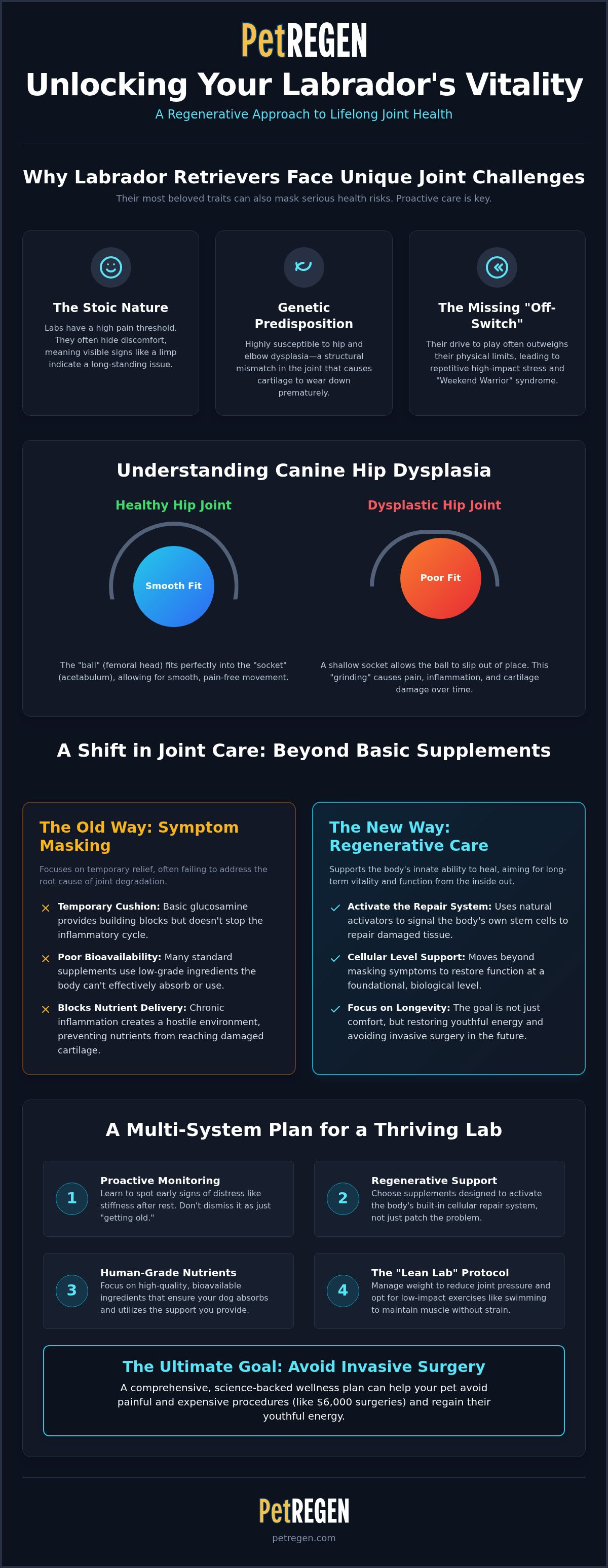
Labs are famous for their "go-until-they-drop" attitude. This stoic nature is a double-edged sword. While it makes them incredible companions, it often hides the early warning signs of joint distress. By the time a Lab shows a visible limp, the underlying inflammation has usually been present for months. Their high pain threshold means they’ll keep chasing the ball long after their joints have signaled for a break. This masking of pain is why many pet parents feel blindsided when a vet mentions the need for supplements for labrador hip dysplasia later in the dog's life.
The Genetic Factor: Hip and Elbow Dysplasia
Canine hip dysplasia is the most common inherited musculoskeletal disorder in dogs, and Labradors are particularly susceptible. It’s essentially a structural mismatch where the ball and socket of the joint don't fit together perfectly. Instead of a smooth, fluid glide, the joint grinds. This hereditary trait often causes significant cartilage wear before a dog even reaches five years old. While many owners look for supplements for labrador hip dysplasia after a diagnosis, the best approach starts with understanding the cellular impact of this structural mismatch. Early screening is a vital tool for pet parents, but it only identifies the physical structure. It doesn't stop the daily cellular breakdown that occurs as your dog ages.
The Labrador 'Off-Switch' (Or Lack Thereof)
A Lab’s psychological drive to retrieve is often stronger than their physical ability to cope with the impact. They don't have an internal "off-switch" when it comes to play. Repetitive high-impact activities, like jumping for a frisbee or sprinting on hard sand, cause micro-damage to the joints over time. This leads to what many vets call the "Weekend Warrior" syndrome. This happens when a dog spends the week resting and then undergoes high-intensity bursts of activity on Saturday. This cycle creates a constant state of oxidative stress and inflammation.
When you're evaluating options for your dog's health, it's crucial to look for solutions that support the body's built-in repair system rather than just masking the pain. If you notice your companion is slightly slower to get up after a long walk, don't dismiss it as just "getting old." It’s a clear signal that their recovery needs are outstripping their natural healing capacity. Supporting their mobility early can be the difference between a lifetime of play and a future of restricted movement.
Beyond Glucosamine: The Science of Regenerative Joint Care
For decades, the standard response to a limping Labrador was a scoop of glucosamine and a hope for the best. While these traditional supplements for labrador hip dysplasia provide the basic building blocks for cartilage, they often act as a temporary cushion rather than a long-term solution. Regenerative care represents a fundamental shift in how we approach canine mobility. Instead of simply masking symptoms with anti-inflammatories, this method focuses on supporting the body's natural healing mechanisms to restore function from the inside out. Every dog possesses a built-in repair system, but as they age or face genetic challenges, that system needs a specific signal to stay active.
Stem cell activation is the process of signaling the body to deploy its own repair cells to damaged tissue. This isn't about adding foreign substances to the body. It's about cellular activation for long-term vitality. Medical management of joint issues often involves a multi-modal approach, but true vitality requires more than just managing the "mismatch" in the joint; it requires a focus on the body's ability to heal itself.
Why Traditional Joint Supplements Often Fall Short
Many off-the-shelf chews use low-grade glucosamine and chondroitin with poor bioavailability. This means the Labrador's body can't actually absorb or use the nutrients effectively. For a high-performance, large-breed dog, a one-size-fits-all supplement usually lacks the potency required to make a visible difference. Additionally, chronic inflammation creates a hostile environment in the joint. This inflammation acts like a physical barrier, effectively blocking standard nutritional support from reaching the damaged cartilage where it's needed most.
Activating the Built-In Repair System
Every Labrador is born with a built-in repair system designed to maintain joint tissue and immune health. At the heart of this system are stem cells, which act as the body's internal maintenance crew. When these cells are dormant, the joints begin to degrade faster than they can recover. Natural activators provide the biological "blueprints" your dog needs for cellular repair, helping to restart the maintenance process. This regenerative approach utilizes powerful superfoods to reduce oxidative stress at the cellular source, clearing the way for healing. To see how this science translates into real-world energy, you can explore the benefits of a Stem Cell Activator Supplement for your companion.
Essential Nutrients for Labrador Joint Longevity
High-performance breeds like Labradors are essentially canine athletes. Their powerful bodies and relentless work ethic require a level of nutritional purity that standard "feed-grade" ingredients simply can't provide. When you're searching for supplements for labrador hip dysplasia, the quality of the raw materials is just as important as the formula itself. Many generic products use fillers or low-quality byproducts that the body treats as waste. In contrast, human-grade ingredients ensure that every milligram is bioavailable and ready to be used by your dog’s built-in repair system. High-quality supplements for labrador hip dysplasia must prioritize this purity to be truly effective for a large, active breed.
PetREGEN utilizes a distinct multi-system approach to joint health: Clean, Nourish, and Support. First, we clear the biological "noise" caused by inflammation. Then, we nourish the tissues with high-potency superfoods and real liver. Finally, we support the body's natural ability to heal through stem cell activation. Amino acids act as the building blocks for Labrador mobility, providing the necessary structural components for muscle and connective tissue repair.
The Power of Human-Grade Collagen
Collagen is the primary protein found in the body's connective tissues. It provides the essential structural integrity for the ligaments and tendons that hold a Lab's heavy joints together. Unlike standard joint chews that only target cartilage, human-grade collagen supports the entire joint capsule. This creates a powerful synergy with the immune system, allowing for a more comprehensive regenerative response. Sourcing matters deeply. We prioritize USA-made ingredients to avoid the contaminants and generic fillers often found in imported alternatives, ensuring your fur-baby receives only the safest support. For pet parents who value this holistic approach, exploring natural dog grooming products australia is another way to ensure every product in your dog’s life meets a high standard of purity.
Oxidative stress is a silent thief of mobility. It occurs when unstable molecules called free radicals damage healthy cells, a process that accelerates in aging joints or those stressed by dysplasia. Specific phytonutrients found in superfoods act as natural shields, neutralizing these free radicals to create an environment where healing can actually happen. Real liver plays a critical role in this recovery process. It provides a dense source of bioavailable vitamins and minerals that are far easier for a Lab’s digestive system to process than synthetic, lab-made vitamins. By combining these nutrients, we help restore the vitality your companion needs to stay active and happy.
Holistic Management: Weight, Exercise, and Environment
To further support your pet's dietary needs with high-quality options, you can check out Liken for a wide selection of premium animal health and wellness products.
Managing a Labrador’s mobility is a multi-front effort. While choosing the right supplements for labrador hip dysplasia provides the internal blueprints for repair, your dog's daily environment and physical weight dictate how much stress those joints must endure. Every pound counts. Even a slight increase in body mass can significantly accelerate the wear and tear on a dysplasia-prone hip socket. By creating a lifestyle that prioritizes low-impact movement and joint safety, you give the regenerative process the best possible chance to succeed.
The Critical Link Between Weight and Inflammation
Fat isn't just storage. It's an active metabolic organ that produces pro-inflammatory cytokines. These chemicals circulate through the bloodstream and specifically target joint tissue, causing a cycle of pain and degradation. This means an overweight Lab isn't just carrying extra physical weight; they are living in a constant state of chemical inflammation. The "Lean Lab" protocol is essential: you should be able to feel their ribs easily and see a defined waistline. Research has shown that lean-fed dogs can live nearly 2 years longer than their overweight counterparts. To manage a Lab's famous "bottomless pit" appetite, try adding unsalted green beans to their bowl to provide bulk without the calories.
Smart Movement: From Fetch to Swimming
The high-intensity bursts of a standard game of fetch are often too much for a Lab with joint issues. Sudden stops and pivots create massive shearing forces on the hips. Hydrotherapy or controlled swimming is the gold standard for heavy-set breeds because it builds muscle without the impact of gravity. If your companion can't sprint anymore, transition to "scent work" or slow "sniffari" walks. These activities provide the mental stimulation Labs crave without the physical toll. Mental engagement prevents the depression that often accompanies limited mobility, keeping their spirit high even when they need to rest. For senior companions, a consistent schedule of short, steady walks is far better than one long weekend excursion.
Small changes at home also make a huge difference. Orthopedic beds provide the pressure-point relief needed for restorative sleep. Ramps for the car and non-slip rugs over hardwood floors prevent the "splay" injuries that happen when a dog struggles to stand. By combining these environmental tweaks with a Stem Cell Activator Supplement, you create a comprehensive ecosystem for healing. This holistic approach ensures your companion remains active and comfortable. You can maximize the effectiveness of supplements for labrador hip dysplasia by ensuring the rest of their world is designed for their safety and vitality.
The PetREGEN Approach to Labrador Vitality
Every dog owner knows that look of pure joy when a Labrador sees their favorite leash. To keep that spark alive, we've moved beyond the limitations of traditional joint care to create the PetREGEN Stem Cell Activator Supplement. When navigating the sea of supplements for labrador hip dysplasia, it's easy to get lost in marketing jargon. Our approach is fundamentally different. Instead of focusing on a single symptom, we embrace a philosophy of whole-body wellness that supports your pet from the inside out. Backed by science. Trusted by pet parents. Loved by pets.
The credibility of our formula is grounded in the expertise of professionals like Health & Welfare Zoologist Dr. Zoolittle. We understand that your Lab is more than just a pet; they are a family member whose quality of life is paramount. By focusing on cellular activation rather than just cushioning the joint, we provide a modern alternative for owners who want to avoid the high costs and risks of invasive surgeries. This is the future of canine mobility, designed specifically for the unique needs of the Labrador breed.
Scientific Authority Meets Heartfelt Care
Quality control is our top priority. Every batch of our supplement is made in the USA using human-grade ingredients like real liver and collagen to ensure maximum bioavailability. Our proprietary formula is designed to target mobility, energy, and recovery simultaneously. This multi-system support helps clear oxidative stress and provides the raw materials needed for the body's built-in repair system. We are so confident in the transformation you'll see that we offer a full money-back guarantee; it's our way of showing that we stand behind every scoop.
Real Stories: Restoring the Labrador Smile
There is nothing more rewarding than seeing a dog regain their puppy-like energy. We often hear from pet parents who describe the heartbreak of watching their energetic Lab struggle to get off the bed. They tell us it was painful to watch their best friend lose their drive. After starting regenerative support, those same owners share stories of their companions living their best lives again. These transformations happen because we help Labs act their age while feeling much younger at a cellular level. You can help your Lab regain their vitality with PetREGEN and start their journey toward renewed mobility today. By choosing the right supplements for labrador hip dysplasia, you are investing in years of more tail wags, long walks, and happy memories.
Give Your Labrador the Gift of Renewed Vitality
Your Lab’s journey doesn’t have to be defined by stiffness or slowing down. By combining the "Lean Lab" protocol with cutting-edge regenerative science, you can support your companion’s built-in repair system and help them regain their puppy-like energy. We’ve explored how human-grade ingredients and stem cell activation offer a modern alternative to traditional supplements for labrador hip dysplasia, focusing on whole-body wellness rather than just masking symptoms.
PetREGEN is proud to be a source of hope for pet parents who want the very best for their fur-babies. Our formula is USA-made, uses only human-grade ingredients, and is endorsed by both vets and Health & Welfare Zoologist Dr. Zoolittle. We stand behind our proprietary formula with a 100% money-back guarantee because we believe every Lab deserves to live their best life. It’s time to move past the frustration of ineffective chews and embrace a science-backed plan for longevity.
Ready to see that famous Labrador smile again? Shop the PetREGEN Stem Cell Activator Supplement for your Labrador today and start their transformation. Your loyal friend is waiting to chase that next ball with the energy they once had. Let’s help them get back on their paws together.
Frequently Asked Questions
When should I start joint care for my Labrador Retriever?
You should start joint care as early as possible, ideally during young adulthood. Since Labradors are genetically predisposed to structural issues, providing proactive support helps maintain their built-in repair system before visible damage occurs. Early intervention with human-grade nutrients ensures that their joints remain resilient as they grow, helping them maintain that famous puppy-like energy well into their senior years.
Is stem cell activation the same as stem cell injections for dogs?
No, these are two different approaches to regenerative health. Stem cell injections are a veterinary procedure involving the harvesting and reintroduction of cells. A stem cell activator supplement is a natural, non-invasive superfood that uses specific nutrients to signal your dog’s existing internal repair cells to deploy to damaged tissue. It’s a safe way to support whole-body wellness without clinical surgery.
Can I give my Lab joint supplements even if they don’t show pain yet?
Yes, proactive care is highly recommended for this breed. Because Labradors have a high pain threshold, they often hide discomfort until a condition is advanced. Starting supplements for labrador hip dysplasia early provides the necessary amino acids and collagen to strengthen ligaments and tendons. This helps support the joint structure before the aging process makes movement "painful to watch."
How long does it take to see results with a stem cell activator supplement?
Most pet parents notice improvements in energy and mobility within 30 to 60 days of consistent use. Regenerative care works at a cellular level, so while some dogs show a spark of vitality sooner, it takes time for the body to clear oxidative stress and rebuild tissue. Consistency is key to unlocking long-term results and ensuring the repair system stays active.
What are the first signs of joint issues in a Labrador?
Look for subtle changes like "bunny hopping" when running, stiffness after a nap, or a slight hesitation before climbing stairs. You might also notice your companion licking their joints or a change in their sitting posture. Because Labs are so stoic, these minor shifts are often the only early warnings that their joints need extra support to maintain their quality of life.
Are there side effects to natural regenerative supplements for dogs?
Natural regenerative supplements made with human-grade ingredients are generally safe and well-tolerated by most dogs. Because PetREGEN uses real liver and clean superfoods, digestive upset is rare. It’s always smart to introduce any new supplement gradually to your fur-baby’s diet. If your companion has specific protein allergies, check the ingredient list for items like real liver before you begin.
Why is my Labrador suddenly reluctant to jump into the car?
This reluctance is a classic sign of "loading" pain in the hips or elbows. Jumping requires a powerful push-off from the rear legs, which puts intense pressure on the hip socket. If your Lab is hesitating, it’s a clear signal of inflammation or structural discomfort. This is often the moment pet owners begin researching supplements for labrador hip dysplasia to restore their dog's confidence.
How does weight management affect my Lab’s joint supplement effectiveness?
Maintaining a lean weight is the most important factor in supplement success. Extra pounds create physical stress and chemical inflammation that can overwhelm even the best nutritional support. When a Lab is at their ideal weight, the active ingredients can focus on repairing tissue rather than just fighting the constant fire of obesity-related inflammation. A lean Lab is a much more mobile Lab.


