


Watch for more than stiffness or difficulty jumping. For joint care for a cat with kidney disease, track appetite, weight, water intake, urination, energy, and movement. If your cat suddenly stops eating, repeatedly vomits, becomes much more lethargic, or has difficulty walking, contact a veterinarian promptly.
It can be difficult to tell whether a change relates to joint discomfort, kidney disease, or both. A simple daily journal can help you spot gradual shifts and give your veterinarian a clearer picture of your cat’s health.
This guide covers what to monitor at home, which changes need prompt attention, and how hydration, comfort, and veterinary follow-up fit into long-term care. It also explains why mobility support may need extra consideration when kidney disease is part of the picture.
Key Takeaways
- Track your cat’s appetite, weight, drinking, urination, energy, and mobility to spot gradual changes at home.
- Know which sudden changes, including repeated vomiting or difficulty walking, call for prompt veterinary assessment.
- Long-term care may involve hydration support, a kidney-focused diet, and follow-up as your cat’s needs change.
- Learn how PetREGEN Stem Cell Activator Supplement may fit as additional support for mobility and healthy aging, not as a replacement for kidney care.
Prognosis and long-term management
Chronic kidney disease (CKD) has no cure because damaged kidney tissue does not regenerate. Long-term care focuses on slowing progression, protecting quality of life, and adapting joint support as your cat’s needs change.
Prognosis and Quality of Life
CKD prognosis depends partly on its stage, while appetite, hydration, and mobility help show how a cat is coping day to day. In many studies, cats diagnosed with IRIS Stage 2 have a mean survival time of two to three years; cats diagnosed with IRIS Stage 4 survive less than 6 months on average. These are group averages, not an individual timeline.
Appropriate treatment can slow progression and help maintain quality of life. Kidney care commonly includes a therapeutic diet and other treatments, with veterinary follow-up to adjust the plan as your cat’s condition changes.
Pain Medication Safety
No single pain medication is safe for every cat with kidney disease and joint pain. CKD is an important consideration when a veterinarian evaluates degenerative joint disease and possible NSAID therapy. Medication choices depend on your cat’s kidney status and overall condition.
The cost of diagnosing and managing arthritis varies with the evaluation and ongoing care recommended. Your veterinarian’s assessment, kidney monitoring, and pain-management plan all affect the cost, so one price cannot represent every cat’s needs.
Non-Drug Pain Treatments
Non-drug support can make everyday movement easier without adding medication. A low-entry litter box, for example, reduces the effort of stepping over a tall edge, while nonslip surfaces can help your cat keep its footing on smooth floors.
Keep food, water, resting places, and the litter box easy to reach, especially if stiffness makes jumping uncomfortable. These adjustments can improve access and comfort, but they do not replace an assessment of new or worsening pain.
Joint Supplements
Glucosamine and omega-3 products are supplements, not treatments for CKD or arthritis. Their suitability depends on the specific ingredients and the cat’s existing diet and care plan, so a veterinarian should review a product before it is added.
Kidney management may involve a therapeutic diet and other treatments. Share the full label of any supplement with your veterinarian, and do not change prescribed food or care without discussing how the change could affect the overall plan.
At-home monitoring and care
For a cat with chronic kidney disease and arthritis, balance kidney nutrition with easy access to food and water. Your veterinarian may recommend a therapeutic kidney diet with appropriate protein, phosphorus, and sodium levels. Introduce diet changes gradually, offering a small amount alongside familiar food before increasing it. Wet therapeutic food can support hydration; place meals within easy reach on a low, stable surface.
Hydration needs attention because affected kidneys may produce more urine, increasing water loss. Keep fresh water in several clean bowls around the home; wide bowls or a fountain may encourage drinking. If your cat refuses the prescribed diet, seek veterinary advice about a suitable alternative rather than letting it go without food. Keep the litter box clean and easy to reach, especially if joint pain makes climbing difficult. Making essentials accessible is one practical part of joint care for a cat with kidney disease.
Veterinary monitoring tracks kidney function while the care plan addresses joint pain. Follow-up may include bloodwork, urine testing, blood-pressure measurements, and weight checks. These assessments help identify changes in kidney function, hydration, or blood pressure and guide adjustments to medication or diet. Because the kidneys remove waste from the bloodstream, changes in their function can affect the overall care plan. Keep appointments and report new symptoms, including nausea or reduced appetite.
At home, note appetite, water intake, litter-box habits, weight, and energy in a simple journal. A dated entry such as “ate half the meal” is more useful than a general impression of eating less. If a veterinarian prescribes medication, give it as directed and record missed doses or difficulties. Some cats with later-stage disease receive fluids under the skin at home every 1-3 days, but owners should learn this from their veterinary team. Calm rest areas and easy routes between beds, food, water, and litter can also reduce effort for a stiff cat. Together, these daily adjustments support joint care for a cat with kidney disease.
Changes to watch for
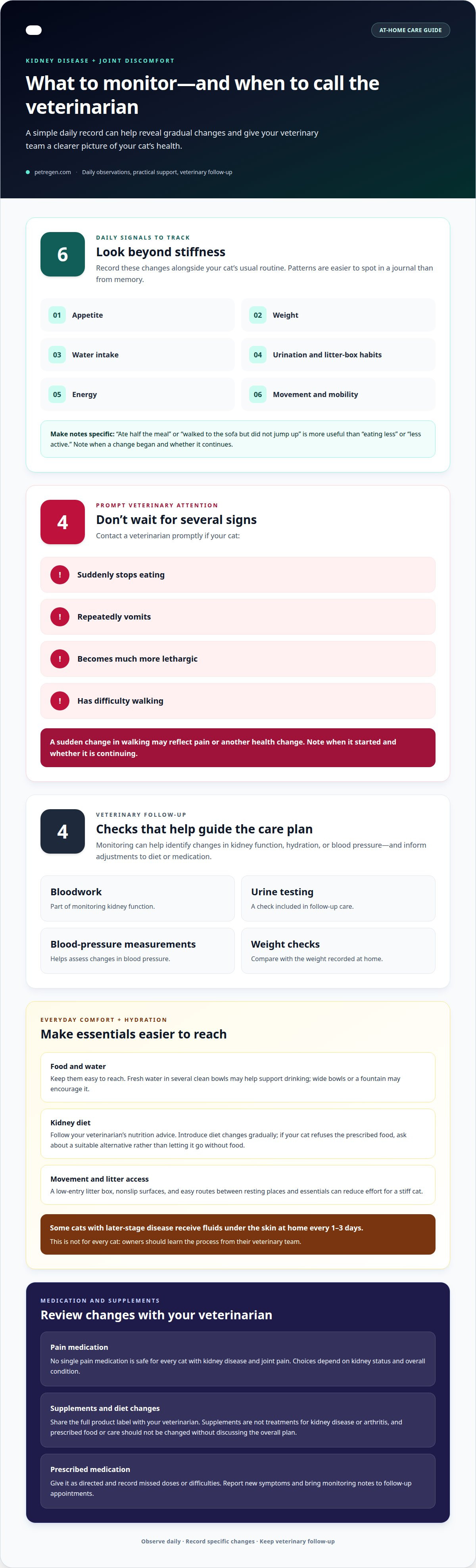
After a chronic kidney disease diagnosis, compare your cat’s daily behavior with its usual routine. Record appetite, weight, water intake, and energy in a journal. Note, for example, whether your cat leaves food uneaten or visits the water bowl more often. These entries can reveal gradual changes that are easy to miss from memory and give your veterinarian specific examples rather than a general impression that something seems different.
Some changes need prompt attention. If your cat with kidney disease suddenly stops eating, repeatedly vomits, becomes much more lethargic, or has difficulty walking, contact a veterinarian. Don’t wait for several signs to appear together. A sudden change in walking may reflect pain or another health change, while vomiting and appetite loss can affect daily well-being. Note when the change began and whether it is continuing.
Record mobility changes separately from kidney-related symptoms. Note whether your cat hesitates before jumping, avoids stairs, struggles to enter the litter box, or takes longer to stand. Describe the activity and how your cat moved afterward. For example, “walked to the sofa but did not jump up” is more useful than “less active.” A pattern can help your veterinarian assess function and distinguish a new limitation from familiar behavior.
Changes in drinking, urination, appetite, weight, and energy can signal that kidney function needs reassessment. Increased urination, weight loss, loss of appetite, or lethargy warrant a veterinary visit as soon as possible. Bring your monitoring notes and mention movement changes at the same appointment. Your veterinarian can consider the full picture, including whether a diagnosed joint problem or kidney disease needs attention. If walking becomes difficult or your cat’s condition changes suddenly, report it clearly rather than waiting for the next routine update.
Veterinarians may prescribe medication to manage nausea, decreased appetite, high blood pressure, or changes in mineral balance in cats with kidney disease. If medication is part of your cat’s care, keep track of the symptoms it is meant to manage and report changes to your veterinarian. This context helps them review appetite, energy, and other shifts and decide whether the care plan needs reassessment.
Clinical signs and complications
Kidney disease and joint pain can affect overlapping parts of a cat’s daily routine. Changes in appetite, movement, or weight deserve attention.
Common Joint Problems
Degenerative joint disease can occur alongside chronic kidney disease, so both conditions matter when assessing pain. Research involving cats with degenerative joint disease identified concurrent kidney disease as an important consideration when evaluating possible NSAID therapy.
A veterinarian assesses arthritis by considering your cat’s movement and health history. Share specific examples, such as hesitation when walking or difficulty reaching the litter box, along with known kidney test results. This helps the veterinarian assess joint problems alongside kidney function, blood pressure, hydration, and the overall care plan.
Signs of Joint Pain
Joint pain may show up as difficulty walking or changes in familiar movements. Notice whether your cat avoids a usual route, moves less willingly, or struggles to reach food and water. Record specific examples rather than dismissing the change as normal aging.
If a cat with kidney disease suddenly has difficulty walking, contact a veterinarian. Sudden loss of appetite, repeated vomiting, or marked lethargy also needs prompt assessment. These changes can affect feeding and hydration and may require attention beyond joint comfort.
Meloxicam and robenacoxib are NSAIDs, but neither should be assumed safe for every cat with kidney disease. Concurrent kidney disease is an important factor when evaluating possible NSAID therapy. The veterinarian weighs kidney status and your cat’s overall condition.
Phosphorus levels, appetite, weight, and hydration can also affect care decisions. Kidney disease may require dietary or fluid support, while joint pain can make it harder to reach bowls or the litter box. Describe changes in movement and daily routines during veterinary follow-up so the care plan accounts for both conditions and how they change over time.
For additional mobility support alongside veterinary care, explore whole-body wellness support.
In cats with chronic kidney disease, signs of severe disease may begin after approximately two-thirds of kidney tissue has failed. Damaged kidneys may cause increased thirst and more frequent, heavier urination; approximately 60% of cats with chronic kidney disease also develop hypertension.
PetREGEN
PetREGEN offers a broader wellness option for owners supporting a cat’s mobility and healthy aging alongside kidney care. The PetREGEN Stem Cell Activator Supplement is formulated to support the body’s natural regenerative function by enhancing immune function. Its multi-system approach uses ingredients such as amino acids, omega 7, and collagen to support healthy aging and recovery.
This supplement is not a treatment for kidney disease or a replacement for veterinary care, prescribed medication, or a kidney diet. If your cat’s veterinarian is managing joint discomfort and chronic kidney disease, consider any supplement as an additional part of the overall wellness conversation, not a substitute for that plan.
For a closer look at whether this kind of wellness support fits your cat, contact PetREGEN.
Make the next step about your cat
Your cat’s care can take account of familiar routines: settling beside you, reaching a favorite resting place, or greeting you at mealtime. Use these moments to guide a practical conversation about comfort and mobility. For joint care for a cat with kidney disease, discuss how any added wellness support fits alongside the care already in place.
PetREGEN Natural Stem Cell Support Supplement for Pets is a daily powder that supports whole-body wellness, including healthy aging and mobility. It is not a substitute for kidney treatment or veterinary guidance. If you are considering it, discuss how it fits your cat’s needs with your veterinarian.
For information about this wellness support, contact PetREGEN about your cat. Keep noticing the little things your cat still enjoys, and let those moments guide a caring, considered path forward.
Frequently Asked Questions
What changes should I watch for at home?
Watch for changes in eating, drinking, urination, body weight, energy, and movement. Record what changed and when, such as leaving breakfast untouched or pausing before climbing onto a favorite chair. A brief video of unusual walking can help your veterinarian assess mobility during an appointment. Contact a veterinarian promptly if your cat suddenly stops eating, repeatedly vomits, becomes much more lethargic, or struggles to walk.
What are typical costs for diagnosing and treating arthritis in a cat?
Costs vary with the evaluation and ongoing care recommended. Your veterinarian’s assessment, kidney monitoring, and pain-management approach all shape the plan.