

Did you know your Great Dane puppy will experience a 100-fold increase in weight before their second birthday? This staggering pace is exactly why finding the right great dane joint support for growth is a high-stakes race between bone and soft tissue. It's often painful to watch your companion struggle with "growing pains" like Panosteitis, and the fear of early-onset hip dysplasia can keep any pet parent up at night. You want to ensure their foundation is strong enough to support the "skyscraper" they are quickly becoming.
We understand that the confusion over "puppy" versus "large breed" nutrition is real. You're looking for more than just a temporary fix; you want a source of renewed vitality for your fur-baby. This guide provides a clear roadmap for that critical 24-month growth window. You'll learn how to protect your dog's joints using advanced regenerative science that supports the body's built-in repair system. We will dive into which specific ingredients actually support growth plates and how you can prevent lifelong mobility issues before they even start.
Key Takeaways
- Understand the "Skyscraper Effect" and why the first 24 months are the most critical window for your Great Dane's skeletal development.
- Discover how regenerative science offers superior great dane joint support for growth by activating the body's natural repair systems instead of just masking symptoms.
- Learn to identify the early warning signs of common giant-breed issues like OCD and why genetics are only one piece of the mobility puzzle.
- Master the "Lean Growth" protocol to balance calorie intake and low-impact movement, ensuring bones and ligaments develop in perfect harmony.
- Find out why a proactive approach using human-grade ingredients acts as a lifelong insurance policy for your companion's vitality and happiness.
The 'Giant Breed' Growth Curve: Why Great Danes Are Unique
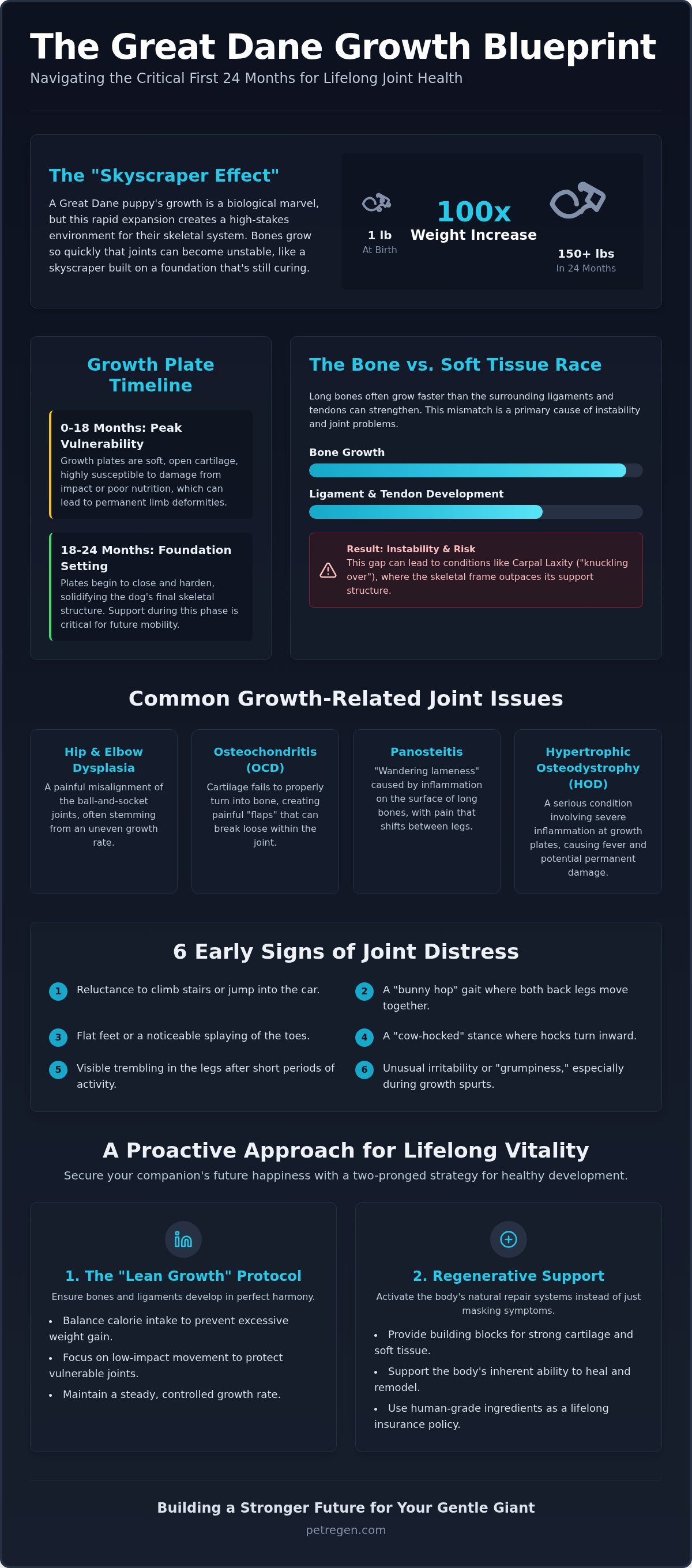
Your Great Dane puppy is a biological miracle in motion. At birth, these tiny companions often weigh as little as one pound, yet they are destined to reach 150 pounds or more in just 24 months. This represents a 100-fold increase in weight, a pace of development that is virtually unmatched in the animal kingdom. While watching your fur-baby grow is a joy, this rapid expansion creates a high-stakes environment for their skeletal system. It's helpful to review a Great Dane breed overview to truly grasp the sheer scale of the journey your puppy is on.
This rapid development often leads to what experts call the "Skyscraper Effect." Imagine trying to build a massive tower while the foundation is still curing. Because the bones grow so quickly, the joints can become inherently unstable. This instability isn't just a phase; it's a period of intense metabolic demand. The body's natural repair resources are pushed to their limit as they try to keep up with the constant remodeling of bone and cartilage. Without specific great dane joint support for growth, the "built-in repair system" can become overwhelmed, leaving your puppy vulnerable to developmental issues.
Great Dane Growth Plate Timeline
Understanding growth plates is vital for every giant breed owner. These areas of developing cartilage at the ends of long bones are responsible for determining the final length and shape of the skeleton. In smaller dogs, these plates typically close by 12 months. However, in Great Danes, these plates can remain "open" and vulnerable for up to 18 or even 24 months. During this time, the plates are soft and easily damaged by excessive impact or poor nutrition. If a plate closes prematurely or unevenly, it can lead to angular limb deformities, which are both painful to watch and difficult to correct. Protecting these plates during the first two years is the most effective way to ensure a lifetime of happy, pain-free mobility.
The Bone vs. Soft Tissue Race
In the world of giant breeds, there is a constant race between bone and soft tissue. Quite often, the long bones grow at a speed that the surrounding tendons and ligaments simply can't match. This mismatch is a primary cause of Carpal Laxity Syndrome, or "knuckling over," where a puppy's front legs appear to bow or buckle under their own weight. It's a clear sign that the skeletal frame has outpaced its support structure. Providing targeted nutrition that includes regenerative building blocks helps bridge this gap. By supporting the body's ability to produce collagen and maintain elastic soft tissues, you ensure that the "cables" of the skyscraper are just as strong as the beams. High-quality great dane joint support for growth acts as an insurance policy, helping the muscles and ligaments keep pace with the bones to prevent lifelong instability.
Common Growth-Related Joint Issues in Great Danes
Seeing your companion struggle during their most active months is heartbreaking. While many owners focus solely on genetics, the environment and the sheer pace of growth are equally influential in a puppy's development. Hip and elbow dysplasia often stem from a mismatch in how the joint structures develop during those first six months. As noted by Tufts on large breed puppy growth, keeping the growth rate steady is the best defense against these skeletal misalignments.
Osteochondritis Dissecans (OCD) occurs when cartilage fails to turn into bone correctly, creating painful "cartilage flaps" that can break loose within the joint. This is especially common in giants where the growth pace is relentless. Meanwhile, Panosteitis, or "wandering lameness," involves inflammation of the outer surface of the long bones. It can be confusing because the pain seems to move from one leg to another, making it difficult to pinpoint the source. Hypertrophic Osteodystrophy (HOD) is perhaps the most serious threat, involving severe inflammation at the growth plates that can cause high fever, loss of appetite, and even permanent skeletal damage. Proactive great dane joint support for growth is essential to mitigate these risks before they become life-altering hurdles.
Identifying the 8 Early Signs of Joint Distress
- Reluctance to climb stairs or jump into the car.
- A "bunny hop" gait where both back legs move together rather than independently.
- Flat feet or a noticeable splaying of the toes.
- A "cow-hocked" stance where the hocks turn inward toward each other.
- Visible trembling in the legs after short periods of standing or walking.
- Unusual irritability or "grumpiness" during known growth spurts.
- Rising slowly or with visible effort from a resting position.
- Shifting weight frequently or holding one limb slightly off the ground.
The Role of Inflammation in Growth Pathologies
Rapid growth creates significant oxidative stress, which can damage the delicate cartilage of a developing giant. While many traditional treatments focus only on suppressing pain, this doesn't address the underlying cellular needs. Rapid weight gain increases joint capsule pressure, which triggers a cascade of inflammatory markers that can degrade healthy tissue. To truly protect your puppy, you must support their built-in repair system from the inside out, rather than just masking the symptoms of their rapid expansion. Providing comprehensive great dane joint support for growth helps manage this inflammation while giving the body the tools it needs to build a lasting foundation.
Beyond Glucosamine: The Case for Regenerative Support
Many pet parents reach for standard glucosamine chews at the first sign of a growth spurt, but these traditional options are often designed for senior dogs with age-related wear. A growing Great Dane isn't just maintaining old joints; they're actively constructing a massive skeletal frame from scratch. While glucosamine acts as a lubricant, it doesn't address the fundamental need for tissue regeneration. For a companion experiencing a 100-fold weight increase, you need more than just "oil for the hinges." You need a strategy that empowers the body to build and repair in real-time.
Because giant breeds have such an extended development phase, monitoring puppy development is essential to ensure they don't grow too fast or miss critical nutritional windows. During this period, the body’s "built-in repair system" is under immense pressure. Regenerative support through stem cell activators represents a shift from passive supplementation to active cellular signaling. This approach ensures your dog's great dane joint support for growth is actually keeping pace with their physical expansion. It’s the difference between merely surviving the growth window and thriving within it.
How Stem Cell Activation Works in Developing Dogs
The science is simple yet powerful. Stem cell activators don't "add" foreign cells; they signal your puppy's own repair cells to migrate to areas of high stress, like the growth plates and ligaments. This process helps the immune system manage the "inflammation of growth" mentioned in previous sections. Unlike single-ingredient supplements that only target one symptom, a multi-system approach like PetREGEN provides comprehensive wellness from within. It’s about giving your fur-baby the tools to heal and grow simultaneously, ensuring their energy levels and mobility remain high during their most vulnerable years.
The Ingredient Checklist for Growing Giants
When choosing great dane joint support for growth, look for specific, high-grade components that serve as the building blocks for a massive frame. Human-grade collagen is the "glue" that keeps the skeletal skyscraper stable. It provides the tensile strength needed for tendons to support those rapidly lengthening bones. Phytonutrients are equally vital, as they neutralize the oxidative stress that can damage developing cartilage. Finally, real liver and essential amino acids provide the nourishment your puppy’s muscular system requires to stay strong. These ingredients work together to create a foundation of vitality that lasts a lifetime, making the growth process a source of joy rather than a source of pain.
The Great Dane Growth Protocol: Diet, Movement, and Timing
Managing the development of a giant breed requires a disciplined, four-step approach. It's a delicate balancing act where you must provide enough nutrition for growth without fueling a dangerous "growth spurt." Implementing a consistent protocol for great dane joint support for growth is about more than just food; it's about controlling every aspect of their physical environment to protect those vulnerable growth plates. By following a structured roadmap, you can ensure your companion's skeletal system develops in perfect harmony with their muscle mass.
The Calcium-Phosphorus Balance
While older advice often focused on low protein, modern research shows that the calcium-to-phosphorus ratio is actually the most critical factor. Large breed puppy food is non-negotiable because it's specifically formulated to keep calcium levels within a tight range, usually between 1.1% and 1.5% on a dry matter basis. Adding extra calcium through toppers or generic supplements can lead to serious skeletal deformities. When reading a bag label, look for the AAFCO statement that specifically mentions "growth of large size dogs (70 lbs. or more as an adult)."
Step two involves managing movement. It's tempting to take your energetic puppy for long hikes, but "forced exercise" on hard surfaces is a major risk factor for OCD and dysplasia. Low-impact activities allow the muscles to strengthen without crushing the soft cartilage at the ends of the bones. Environmental modifications are also vital. Non-slip flooring and rugs prevent "splaying," which can cause micro-tears in the ligaments. An orthopedic bed is also a must-have to support their heavy frame during the 16 hours a day they spend sleeping and growing.
Exercise Do's and Don'ts for Puppies
Follow the "5-minute rule" to keep your puppy safe: five minutes of formal walking per month of age, up to twice a day. This means a four-month-old puppy only needs 20 minutes of walking at a time. High-impact activities like jumping off the couch, running up and down stairs, or chasing frisbees should be strictly off-limits until they are at least two years old. Instead, focus on safe muscle-building activities like swimming or "nose work" games that tire them out mentally without straining their limbs.
Strategic supplementation is the final piece of the puzzle. Adding PetREGEN to this daily routine provides the specific great dane joint support for growth needed to activate their internal repair systems. It acts as a proactive insurance policy, ensuring that even during rapid growth, your companion has the regenerative building blocks they need to stay mobile and happy. Start your puppy's PetREGEN protocol today to build a foundation that lasts a lifetime.
PetREGEN: Building a Stronger Future for Your Gentle Giant
PetREGEN stands out for proactive owners in 2026 because it shifts the focus from reactive treatment to internal resilience. As a caring innovator, we provide a science-backed path for your companion to reach their full potential. We prioritize quality. Our formula is crafted in the USA with human-grade ingredients, ensuring the highest standards for your fur-baby. We stand behind every bottle with a 100% money-back guarantee, allowing you to invest in their vitality with total confidence.
Why Vets and Breeders Recommend PetREGEN
Veterinary experts and breeders value how PetREGEN supports the immune system and the body's built-in repair system. Instead of just masking the discomfort of rapid growth, this stem cell activator helps the body manage the oxidative stress mentioned earlier. It is a simple choice. It is endorsed by Health & Welfare Zoologists who prioritize whole-body wellness over single-symptom fixes. We don't use fillers or synthetic additives. This ensures a safe, potent great dane joint support for growth that owners can trust for the long haul.
Getting Started with PetREGEN for Your Puppy
Dosing for a giant breed requires flexibility as they quickly gain size. You'll scale the amount as your Dane grows, providing the necessary great dane joint support for growth to match their increasing frame. Many owners report seeing a source of renewed vitality, with their companions rising more comfortably and showing more interest in safe play. These stories of recovery and healing are why we remain dedicated to helping every gentle giant live their best life.
Give your Great Dane the foundation they deserve. Shop PetREGEN today.
Secure Your Companion’s Future Today
The first 24 months of your companion's life are a high-stakes race where every choice counts toward their lifelong mobility. By understanding the unique "Skyscraper Effect" and shifting from passive lubrication to active regenerative science, you give your fur-baby a distinct advantage. Remember that balanced nutrition and low-impact movement are your best tools to protect those vulnerable growth plates. Choosing the right great dane joint support for growth isn't just about today; it's an insurance policy for a future filled with vitality and happy, pain-free adventures.
PetREGEN offers a science-based path to support your companion's built-in repair system using USA-made, human-grade ingredients. Endorsed by Health & Welfare Zoologists, our formula focuses on whole-body wellness during this intense developmental window. We stand by our promise of renewed quality of life with a 100% money-back guarantee, ensuring you can feel confident in your puppy's health journey.
Build a Stronger Foundation for Your Great Dane Puppy with PetREGEN
Your gentle giant has a bright, active future ahead of them. With the right roadmap and proactive care, you can watch them grow into the strong, happy companion they were always meant to be. It's time to enjoy every moment of their transformation together.
To ensure your companion stays safe during all your future adventures together, consider upgrading their identification; for durable, personalized tags from Pet ID Tags Australia, click here.
Frequently Asked Questions
When should I start giving my Great Dane puppy joint supplements?
You should start providing great dane joint support for growth as soon as your puppy transitions to solid food, typically around eight weeks of age. Since Great Danes experience a 100-fold weight increase in their first two years, early support is vital. Starting early ensures the built-in repair system is active during the most intense periods of skeletal remodeling and growth plate development.
Can too much protein cause joint problems in my growing Great Dane?
Modern research suggests that excess calories and improper calcium to phosphorus ratios are far more dangerous than protein levels. While some old-school advice warns against high protein, the real threat is rapid weight gain that puts too much pressure on soft growth plates. Keep your puppy lean and follow the specific nutrient guidelines found in large-breed puppy formulas to ensure steady, healthy development.
How do I know if my Great Dane puppy has 'growing pains' or something more serious?
You can distinguish "growing pains," like Panosteitis, by their tendency to shift from one leg to another over several weeks. However, if your puppy shows persistent lameness in one limb, heat around the joints, or a fever, it's likely something more serious like HOD or OCD. Always consult your veterinarian if you notice a bunny hop gait or if your companion seems unusually lethargic during a growth spurt.
Is PetREGEN safe to use with my puppy's large-breed specific dog food?
PetREGEN is completely safe and highly recommended to use alongside high-quality large-breed specific dog food. While your puppy's food provides the basic nutritional foundation, this supplement offers targeted great dane joint support for growth by activating cellular repair. It doesn't interfere with the calcium-phosphorus balance in the food; instead, it helps the body use those nutrients to build stronger, more resilient connective tissues.
What is the difference between PetREGEN and standard glucosamine chews?
Standard glucosamine chews act primarily as a lubricant for existing joints, which is helpful for senior wear and tear. PetREGEN is a regenerative stem cell activator that signals the body to send repair cells to high-stress growth areas. It focuses on whole-body wellness and supporting the immune system, providing a more comprehensive solution for a puppy that is actively building a massive new skeleton.
How long does it take to see results with regenerative joint support?
Most pet parents notice a source of renewed vitality and improved mobility within three to six weeks of consistent use. However, regenerative support is a long-term strategy rather than a quick fix. Think of it as an insurance policy for your companion's future. The most significant benefits occur over the full 24-month growth window as the skeletal foundation stabilizes and the growth plates finally close.
Can joint supplements prevent hip dysplasia in Great Danes?
While no supplement can change a dog's genetic predisposition, they can certainly help mitigate environmental factors that lead to hip dysplasia. By supporting the tendons and ligaments that keep the joint tight, you reduce the laxity that often leads to malformation. Providing proper support during the first two years gives your puppy the best chance at maintaining healthy, functional hips and avoiding painful mobility issues later.
Does PetREGEN help with 'knuckling over' in puppies?
PetREGEN helps with knuckling over by providing the collagen and amino acids needed to strengthen tendons and ligaments. This condition happens when bones grow faster than the soft tissues can support them. Activating the body's natural repair system helps the "cables" of the skyscraper catch up to the "beams," restoring proper alignment and structural comfort for your growing fur-baby.


