

What if resolving a sudden limp requires far more than just keeping your companion confined to the living room rug? Seeing your dog limping after a long walk is deeply unsettling, and it's completely natural to feel torn between resting at home and rushing to an emergency clinic. Whether you're stressed over an acute muscle strain, expensive procedures, or the looming fear of chronic arthritis, watching your fur-baby struggle with basic movement is always painful for a devoted pet parent.
True recovery isn't just about forcing rest; it's about providing the nourishment your dog's body needs to bounce back from within. In this guide, you'll discover why your dog is limping after exercise, how to identify the root cause, and how supporting their natural regenerative healing promotes resilient, long-term mobility. We will walk you through critical red-flag symptoms, immediate home-care steps, and proven daily habits that strengthen your companion's built-in repair system for a happy, active future.
Key Takeaways
- Pinpoint whether sudden onset or gradual stiffness explains your companion's discomfort, along with environmental triggers like rough trails or slippery floors.
- Understand why your dog limping after long walk sessions might point to a mild muscle strain rather than an advancing joint condition.
- Master a gentle, step-by-step home assessment to evaluate subtle gait changes, localized heat, and joint range of motion safely.
- Discover updated recovery protocols and practical rest strategies designed to keep energetic dogs calm and comfortable while tissues heal.
- Explore how nourishing your companion's built-in repair system supports cellular vitality and sustained, long-term mobility.
Why Is Your Dog Limping After a Long Walk? Common Causes & Triggers
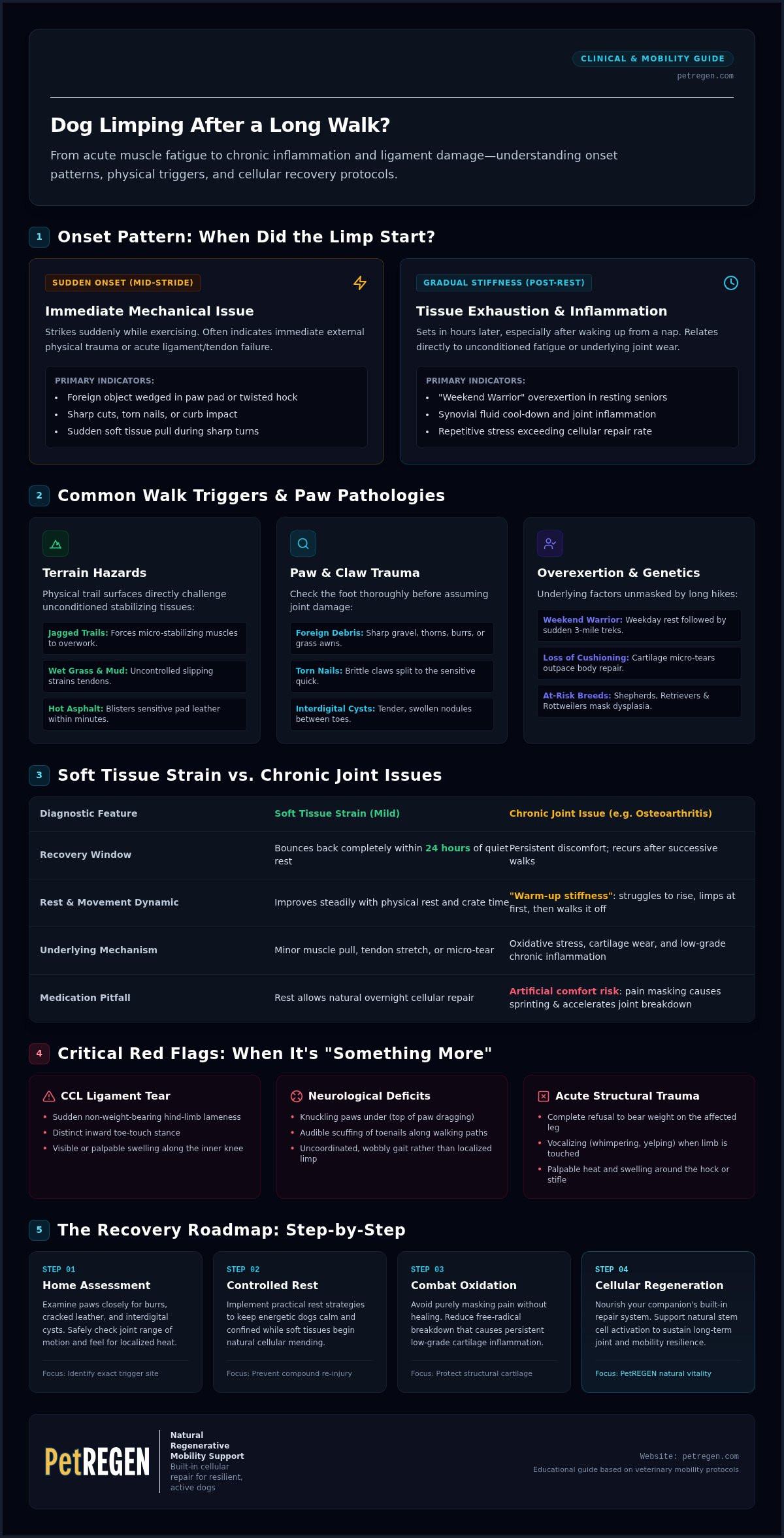
A long hike or a brisk park stroll should leave your fur-baby happily tired, not struggling to bear weight. When you notice your dog limping after long walk sessions, the underlying trigger usually comes down to timing, terrain, and conditioning. Sudden lameness that strikes mid-stride often signals an immediate mechanical issue like a stone in the paw or a twisted hock. In contrast, gradual stiffness that sets in hours later, right after your dog wakes up from a rug nap, typically points toward soft tissue exhaustion or joint inflammation.
External terrain plays a major part in unexpected limps. Jagged forest trails force delicate stabilizing muscles to overwork, wet grass causes slips, and sizzling summer asphalt can blister sensitive pads in minutes. Older companions are especially vulnerable to "weekend warrior" syndrome. If a senior dog lounges all week and suddenly tackles a vigorous three-mile trek, unconditioned tissues take the brunt of the impact. Overexertion strips away natural joint cushioning and easily unmasks underlying canine orthopedic diseases that were previously flying under your radar.
Minor Strains vs. Acute Injuries
Soft tissue injuries are among the most frequent explanations for sudden lameness after exercise. A minor muscle pull, tendon stretch, or ligament sprain happens quickly when a dog corners hard to chase a ball, scrambles over fallen logs, or misjudges a leap off a curb. While young dogs often bounce back quickly, an ambitious walk can awaken quiet, chronic weaknesses. When repetitive mechanical stress outpaces your companion's natural cellular repair rate, minor micro-tears escalate into noticeable swelling and persistent discomfort.
Paw and Claw Problems
Before assuming the worst about hips or knees, examine your dog's paws. These delicate pads bear all the physical friction of the trail, making paw trauma an incredibly common cause of sudden post-exercise limping. Examine the foot closely for several hidden irritants:
- Foreign debris: Sharp gravel, thorns, burrs, or barbed grass awns wedged tightly between paw pads.
- Torn nails and cracked pads: Brittle claws that split back to the sensitive quick, or rough surfaces that tear dry paw leather.
- Interdigital cysts: Swollen, tender nodules or localized infections hidden in the webbed skin between toes.
Soft Tissue Strains vs. Chronic Joint Issues: Knowing the Difference
Telling the difference between a temporary muscle pull and chronic joint degeneration comes down to observing how your companion rests and recovers. If your dog limping after long walk adventures bounces back completely within 24 hours of quiet crate time, a mild soft tissue strain was likely the culprit. In contrast, dogs with chronic conditions like osteoarthritis often display the classic "warm-up stiffness" pattern. They struggle to stand after resting, limp through their initial steps, and seem to "walk it off" as synovial fluid warms up the joint.
Acute structural trauma looks very different from general fatigue. If your fur-baby refuses to bear weight, vocalizes upon touching the limb, or shows palpable heat and visible swelling around a hock or stifle, review common causes of acute or sudden lameness to gauge immediate severity. Breed genetics also play a massive role. German Shepherds, Golden Retrievers, and Rottweilers often mask early elbow or hip dysplasia until an extended trek pushes compromised joints past their threshold.
Understanding Chronic Inflammation
Every strenuous outing causes microscopic wear and tear on canine cartilage and soft tissue. In a young, resilient dog, cellular repair happens smoothly overnight. However, unmanaged oxidative stress disrupts this natural balance. Free radicals break down cellular structures faster than the body can rebuild them, creating low-grade, persistent joint inflammation. Simply masking this discomfort with pain relief medications can backfire; dogs feel artificial comfort and sprint ahead, accelerating joint breakdown without genuine cellular repair.
When the Limp is "Something More"
Sometimes post-walk lameness points toward severe structural or systemic breakdown rather than a tired muscle. Watch for these distinct indicators:
- Cranial Cruciate Ligament (CCL) tears: Sudden non-weight-bearing hind-limb lameness, often accompanied by an inward toe-touch stance and swelling along the inner knee.
- Neurological deficits: Knuckling paws under, scuffing toenails along the ground, or an uncoordinated, wobbly gait rather than localized joint favoring.
- Immune-mediated polyarthritis: Systemic inflammation causing fever, reluctance to stand, and shifting lameness that jumps from one limb to another.
Protecting your companion's mobility requires looking past surface symptoms to support their built-in repair system with whole-body nutrition. When you want to proactively nurture joint resilience from the inside out, consider adding PetREGEN Stem Cell Activator Supplement to your daily wellness routine.
Assessing Your Dog’s Lameness: A Step-by-Step Home Check
Before rushing off to an emergency clinic, a structured home assessment helps determine how serious the problem actually is. Begin with a visual gait analysis in a calm hallway or driveway. Have someone walk your pet slowly away from you and back again while you observe body mechanics. A classic diagnostic rule of thumb: with front leg pain, your dog's head bobs upward when the sore foot strikes the ground. With hind-leg lameness, watch the pelvis; the hip on the painful side hikes higher as weight shifts quickly off that leg.
Next comes the physical check. Palpation refers to the act of using hands to check for internal abnormalities like heat, swelling, or localized sensitivity. Gently cup your palms over matching joints on both legs simultaneously to feel for subtle temperature differences. Watch your companion's micro-expressions closely. Dogs rarely cry out from mild discomfort. Instead, they signal distress by abruptly turning to look at your hand, licking their lips, stiffening their abdomen, or pulling the limb away.
Always record a ten-second video of your dog's gait on your smartphone. Adrenaline often causes pets to mask their limp at the clinic, so clear footage gives your veterinarian invaluable real-world evidence.
The Four-Point Paw Check
Start your physical exam from the bottom up, examining every inch of the affected foot:
- Pad inspection: Part the fur between each toe to inspect pads for cuts, blisters, or embedded pebbles.
- Webbing and skin: Check the thin skin folds for redness, moisture, or puncture marks.
- Nails and quicks: Gently squeeze the base of each claw to see if a hairline split provokes a flinch.
- Joint stability: Stabilize the lower leg and apply light, forward pressure on the tibia; leave clinical "drawer sign" tests for torn ligaments to a trained professional, as forceful pulling can worsen tissue damage.
Identifying the Source of Pain
Work your way upward slowly, testing the range of motion in the hock, stifle, hip, wrist, and elbow. Flex and extend each joint smoothly without forcing movement. Muscle soreness feels diffuse and tender across broad muscle bellies, whereas bone or joint pain produces sharp, localized resistance. Stop your home assessment immediately and seek veterinary care if you encounter obvious bone deformities, complete refusal to bear any weight, extreme swelling, or visible pain that causes snapping.
Understanding these subtle physical clues helps you distinguish a minor sprain from deeper trouble. If you notice your dog limping after long walk outings consistently, documenting these physical findings ensures you and your vet build a precise, targeted recovery plan.
The Recovery Roadmap: Supporting Natural Healing and Mobility
The old reflex of aggressive icing has evolved significantly in modern veterinary care. While a cool pack applied for ten to fifteen minutes can soothe acute heat immediately following a walk, prolonged cold therapy constricts blood vessels and can actually stall the inflammatory signaling needed for tissue repair. True recovery focuses on controlled blood flow, reduced mechanical impact, and biological support. For high-energy dogs, prescribed rest doesn't mean miserable confinement; it means setting up a cozy, gated "recovery suite" where your companion stays close to family life without jumping on couches or racing to the front door.
Your home environment plays an enormous role in whether a sprain heals or recurs. Lay non-slip runner rugs across slippery hardwood floors, place sturdy ramps by high furniture, and upgrade to orthopedic memory foam bedding that distributes body weight evenly across tender joints.
Nourishing the Built-in Repair System
Traditional joint chews formulated solely with glucosamine or chondroitin often fall short because they only supply basic joint lubrication rather than stimulating actual tissue renewal. Tendons, ligaments, and cartilage need targeted nourishment to bounce back from mechanical strain. Bioavailable collagen and specialized amino acids provide the structural building blocks necessary to rebuild damaged fibers. Paired with robust immune support, these nutrients empower the body's natural cleanup cells to clear away cellular waste and restore comfortable movement faster.
Managing Long-Term Mobility
Weight control remains the single most impactful factor for lifelong joint preservation. Excess pounds create compounding stress across inflamed joint surfaces, multiplying wear and tear with every stride. While your dog heals, substitute high-impact fetch games with controlled five-minute sniff walks or gentle hydrotherapy. Oxidative stress damages vital cellular structures over time, significantly slowing down the natural healing process in aging dogs.
If you find your dog limping after long walk routines regularly, don't wait for chronic joint fatigue to steal their spark. Try PetREGEN Stem Cell Activator Supplement today to support their built-in repair system, enhance cellular vitality, and help your fur-baby get back to exploring by your side.
Beyond Rest: Activating Your Dog’s Stem Cells with PetREGEN
Watching your dog limping after long walk adventures breaks your heart, but true recovery requires looking deeper than passive rest. Moving past temporary pain masking means supporting the body at the cellular level. PetREGEN Stem Cell Activator Supplement is a science-based superfood designed to awaken your companion's built-in repair system. Formulated in the USA with human-grade ingredients, including bioavailable collagen, real liver, and active botanical phytonutrients, it delivers whole-body wellness from within. This targeted cellular nourishment helps reclaim that joyful, effortless leap in your dog's step so you can both enjoy outdoor adventures without worry.
The Science of Regenerative Support
Every mammal possesses an innate capacity to renew damaged tissues through specialized repair cells. PetREGEN supports the body's natural release and circulation of adult stem cells, which naturally migrate to fatigued joints, tendons, and muscles. Utilizing a comprehensive approach, the formula works systematically to clean out metabolic waste, nourish tissues with essential structural proteins, and support active cellular repair. Backed by science, trusted by pet parents, and endorsed by veterinary professionals and zoologists like Dr. Zoolittle, this daily supplement targets oxidative stress directly at the biological source.
A Hopeful Future for Active Pets
Countless pet parents celebrate seeing their beloved companions running trails again and living their best lives after months of quiet struggle. Adding PetREGEN into your fur-baby's daily routine is seamless; the flavorful real-liver powder stirs easily into breakfast, transforming an ordinary meal into targeted mobility care. Supported by a 100% money-back guarantee, you can invest in your dog's vitality with absolute peace of mind. Noticing your dog limping after long walk routines doesn't mean the trail ends here; giving their body the right regenerative fuel creates a bright, active future together.
Restoring Vitality and Joy to Your Dog's Daily Walks
Dealing with a dog limping after long walk outings can feel stressful, but you don't have to navigate their recovery in the dark. Recognizing the subtle differences between a temporary soft tissue strain and deeper joint wear gives you immediate clarity. While thoughtful rest and gentle home checks protect tender limbs right now, sustained mobility relies on nourishing your companion's natural cellular healing processes for the years ahead.
Your companion deserves to explore trails without lingering stiffness holding them back. Help your dog recover and thrive with PetREGEN Stem Cell Activator Supplement, an advanced formula that fuels the body's built-in repair system. Made with human-grade ingredients crafted in the USA and protected by a full money-back guarantee, it delivers whole-body wellness you can trust. Backed by science. Trusted by pet parents. Loved by pets. With the right daily nourishment, you can look forward to many more vibrant, tail-wagging adventures together.
Frequently Asked Questions
Is it normal for a dog to limp after a long walk?
No, limping is never considered a normal reaction to routine exercise. While occasional fatigue or mild muscle tightness can happen after an unusually intense hike, an altered gait always signals pain or mechanical irritation. A dog limping after long walk outings indicates that their joints, muscles, or paw pads experienced stress exceeding their current physical conditioning or cellular repair capacity.
How long should I let my dog rest if they are limping?
You should enforce 24 to 48 hours of quiet, restricted rest for a mild limp. Keep your dog on a leash for brief bathroom breaks and prevent jumping on furniture or stairs. If the lameness does not improve after 48 hours of low activity, or if it noticeably worsens, contact your veterinarian for a thorough physical evaluation.
Can I give my dog human pain relievers for a limp?
No, you should never administer human medications like ibuprofen, acetaminophen, or aspirin to your dog. Human pain relievers are highly toxic to canines, frequently causing life-threatening stomach ulcers, intestinal perforations, and acute kidney or liver failure. Always consult your veterinarian for pet-safe prescription therapies or focus on natural dietary support rather than opening your medicine cabinet.
How do I tell if my dog’s limp is an emergency?
A limp becomes an immediate emergency if your companion refuses to bear any weight on the leg, cries out in distress, or displays visible limb deformities. Rapidly expanding heat, severe joint swelling, dangling limbs, or sudden lethargy accompanied by pale gums also demand immediate evaluation at the nearest veterinary emergency clinic.
What is a stem cell activator, and how does it help with limping?
A stem cell activator is a specialized nutritional supplement that supports your pet's natural release and circulation of adult repair cells. Rather than delivering live cells through clinical injections, PetREGEN Stem Cell Activator Supplement provides human-grade superfoods, collagen, and antioxidants. This nourishes the body's built-in repair system, accelerating connective tissue recovery and improving joint mobility from within.
Will a joint supplement help my dog recover faster from a strain?
Yes, targeted supplements can significantly shorten recovery timelines by providing structural building blocks directly to irritated tissues. While standard joint chews focus primarily on surface lubrication, a formula that combines bioavailable proteins and immune-supporting nutrients helps clear cellular debris faster. This multi-system approach aids tendon and ligament rebuilding so your dog limping after long walk exercise recovers strength and resilience.
Should I use ice or heat on my dog’s sore leg?
Use a wrapped cold pack for 10 to 15 minutes during the first 24 hours to soothe acute heat and swelling. After the initial day, switch to gentle, moist warmth. Heat increases local blood circulation, relaxes stiff muscles, and promotes oxygen delivery to healing tissues. Always place a towel between the pack and your pet's skin.
Can a long walk cause a permanent injury in an older dog?
An overly demanding walk rarely causes permanent damage on its own, but it can trigger irreversible progression in fragile joints. Strenuous mileage easily destabilizes arthritic hips or ruptures weakened cranial cruciate ligaments in senior dogs. Tailoring walk duration to your older pet's physical conditioning and supporting their joints daily prevents acute exercise from turning into lasting mobility loss.


