

What if the secret to your cat's mobility isn't just found at the bottom of a calorie-restricted food bowl? It's incredibly painful to watch your beloved fur-baby hesitate before a jump they used to make with ease. You might feel a heavy sense of guilt seeing them carry extra weight, especially when traditional diet foods fail to bring back that youthful spark. Effective cat weight management and joint support requires more than just cutting back on kibble; it requires addressing the silent inflammation happening at a cellular level.
We understand the frustration of seeing your companion struggle. That's why we're showing you how to break the vicious cycle of feline obesity and joint pain by supporting your cat's natural regenerative systems. This article provides a clear plan to reduce systemic inflammation and nourish your cat's body from the inside out. You'll learn how a cellular approach can help your cat find their vitality again, so you can finally see them leap onto the sofa with confidence. It's time to move beyond simple calorie counting and start supporting your pet's built-in repair system for a happier, more active life.
Key Takeaways
- Identify the "vicious cycle" where weight gain and joint stress feed into each other, and learn how to break it for good.
- Explore the science of inflammation, revealing how excess body fat actively damages your fur-baby's joints by releasing harmful chemicals.
- Discover a comprehensive approach to cat weight management and joint support that prioritizes cellular health over simple calorie restriction.
- Implement a practical 4-step plan to improve your home environment and nourish your cat's built-in repair system.
- Learn how regenerative support can help your companion regain their vitality, allowing them to jump back onto the sofa with ease.
Why Your Cat’s Weight and Joint Health Are Inseparable
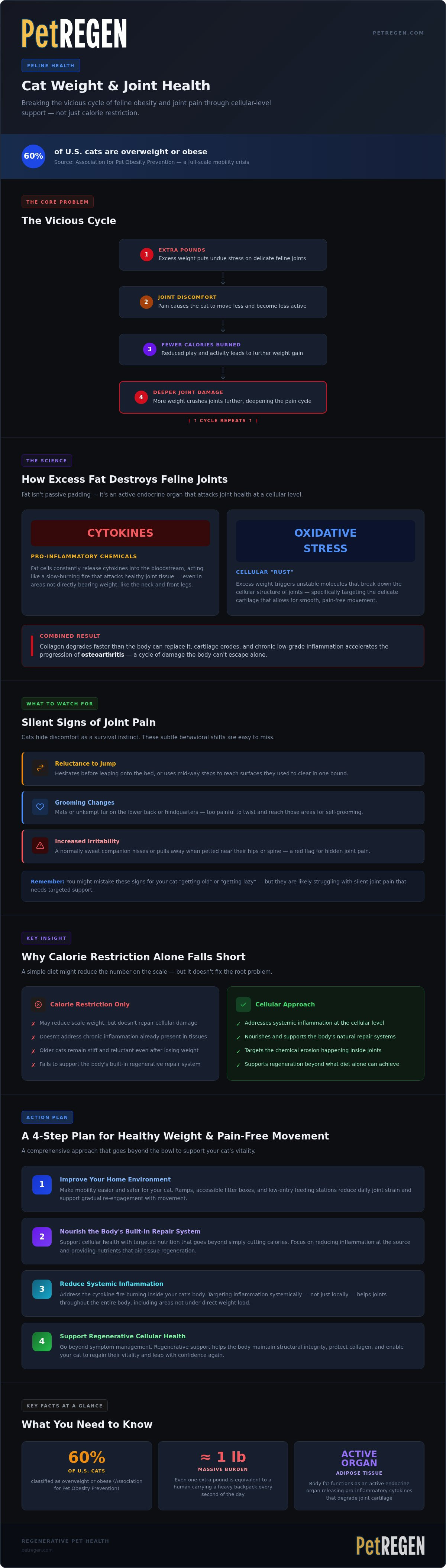
Understanding the link between your cat's weight and their ability to move is the first step toward true recovery. These two factors don't just coexist; they feed into each other in what we call the "Vicious Cycle." It starts when a few extra pounds put undue stress on delicate feline joints. This pressure causes discomfort, leading your cat to move less. Because they aren't burning calories through play, they gain more weight, which further crushes the joints and deepens the pain. Breaking this loop is the core challenge of effective cat weight management and joint support.
The biological connection is deeper than just physical weight. Excess adipose tissue functions as an active endocrine organ that releases pro-inflammatory cytokines, directly contributing to the degradation of joint cartilage and the progression of osteoarthritis in cats. This means that body fat is actively attacking your companion's joints from the inside out. While many pet parents turn to "just a diet" to fix the problem, calorie restriction alone often fails. A simple diet might reduce the number on the scale, but it doesn't repair the cellular damage or the chronic inflammation that has already taken hold. Without addressing the underlying regenerative needs of the body, an older cat will likely remain stiff and reluctant to play, even if they lose a pound or two.
The Silent Signs of Joint Pain in Overweight Cats
Cats are masters of disguise when it's painful to move. Unlike dogs, who often limp or whine, cats hide their discomfort as a survival instinct. You might think your fur-baby is just "getting old" or "getting lazy," but they are likely struggling with silent joint pain. Watch for these subtle shifts in behavior:
- Reluctance to jump: They might hesitate before leaping onto the bed or use "mid-way" steps to reach a countertop they used to clear in one bound.
- Grooming changes: If you notice mats or unkempt fur on their lower back or hindquarters, it's often because it hurts to twist and reach those areas.
- Irritability: A normally sweet companion might hiss or pull away when petted near their hips or spine.
The Stats: Why Feline Obesity is a Mobility Crisis
The scale of this issue is staggering. According to the Association for Pet Obesity Prevention, roughly 60% of cats in the United States are classified as overweight or obese. This isn't just a cosmetic issue; it's a mobility crisis. For a creature as small as a cat, even one extra pound is a massive burden. It's the equivalent of a human carrying a heavy backpack every second of the day. This constant load wears down their natural vitality and exhausts their built-in repair system, making recovery much harder without targeted cellular support.
The Science of Inflammation: How Excess Weight Damages Feline Joints
To truly help your companion, we have to look past the physical weight and into the microscopic world of feline biology. Fat isn't just a passive layer of padding; it's a complex, active endocrine organ. This means it doesn't just sit there. It constantly pumps out pro-inflammatory chemicals called cytokines into your cat's bloodstream. These chemicals act like a slow-burning fire, traveling throughout the body and attacking healthy tissues. This systemic inflammation explains why an overweight cat might develop joint issues even in their front legs or neck, areas that don't carry the bulk of their weight. Effective cat weight management and joint support must address this chemical onslaught to be successful.
Beyond the direct attack of cytokines, excess weight triggers oxidative stress. This process creates unstable molecules that break down the cellular structure of feline joints, specifically targeting the delicate cartilage that allows for smooth movement. When this cellular "rust" accumulates, it doesn't just cause pain; it actively prevents the body from maintaining its own structural integrity. If we want to see our pets jump and play again, we have to stop the chemical erosion happening inside their bodies.
Adipose Tissue: The Hidden Driver of Arthritis
When fat cells release cytokines, they create a state of low-grade chronic inflammation. This persistent irritation accelerates the degeneration of collagen, the essential protein that keeps joints bouncy and resilient. It's a chemical erosion that wears down cartilage faster than the body can replace it. According to cat obesity and weight management guidance from Cornell, this inflammatory state is a primary reason why obesity is linked to so many other health conditions. If you only focus on the scale and ignore this internal fire, you're only fighting half the battle. This is why many cats remain stiff and uncomfortable even after they've lost weight; the inflammatory chemicals are still circulating, preventing true healing.
The Importance of Cellular Repair Systems
Every cat has a built-in repair system powered by their own stem cells. In a healthy body, these cells rush to areas of wear and tear to rebuild tissue. However, chronic inflammation and oxidative stress act like a biological roadblock. High levels of oxidative stress damage the cellular structure of feline joints, making it impossible for the body to keep up with repairs. To restore your fur-baby's vitality, you need to clear this oxidative stress and reactivate those natural healing pathways. By providing regenerative cellular support, you give your companion the tools they need to finally move past the pain and rediscover their energy.
Beyond the Bowl: Comparing Weight Loss Diets and Regenerative Support
When most pet parents realize their companion is struggling, the first instinct is to reach for a "light" kibble. While reducing caloric intake is a necessary part of the journey, standard dieting has a hidden trap. Aggressive calorie restriction often leads to muscle loss alongside fat loss. For a cat already dealing with joint stress, losing muscle mass is dangerous because those muscles are the primary shock absorbers for their limbs. If you focus only on the scale, you might inadvertently leave your fur-baby weaker and less mobile than before. True cat weight management and joint support requires a balance between portion control and cellular nourishment.
Traditional veterinary approaches often rely on prescription medications to manage discomfort. While these can offer temporary relief, they frequently act as a "mask" for the pain. They don't address the underlying cellular damage or the oxidative stress that's actively breaking down the joints. Regenerative support offers a different path by nourishing the immune function and clearing away the biological debris that blocks healing. By combining a whole-body approach with targeted nutrients, you aren't just making your cat smaller; you're making them stronger from the inside out.
The Pros and Cons of Traditional Joint Supplements
You've likely seen glucosamine and chondroitin on almost every pet store shelf. It's helpful to think of these as "building blocks." They provide the raw materials for cartilage, but they aren't "activators." In an overweight cat, the high levels of systemic inflammation we've discussed can prevent the body from even using these building blocks effectively. This is why many pet parents feel frustrated when standard supplements don't seem to improve their cat's mobility. Additionally, bioavailability is a major hurdle. Many mass-market options use low-grade fillers that a cat's digestive system can't process. Choosing human-grade ingredients ensures that the nutrients actually reach the joints where they're needed most.
Why Stem Cell Activation is the New Frontier
In the past, accessing stem cell benefits required invasive veterinary procedures involving surgery and expensive injections. Today, natural stem cell activators are changing the landscape of feline wellness. Instead of "adding" external substances, these natural superfoods support your cat's existing built-in repair system. This method is particularly beneficial for senior cats who might be too fragile for traditional medical interventions. By encouraging the body's own healing cells to migrate to areas of wear and tear, you're promoting recovery that feels natural and sustainable. It's a hopeful, science-backed way to restore the vitality your companion has lost to the weight-pain cycle.
A 4-Step Plan for Healthy Weight and Pain-Free Movement
Helping your cat reach a healthy weight while managing joint pain requires a proactive, multi-pronged strategy. It isn't just about what's in the bowl; it's about how they live and move every day. By following this 4-step plan, you can provide the comprehensive cat weight management and joint support your companion deserves.
First, start with Calorie Calibration. You must stop "free feeding" immediately. Leaving a bowl of kibble out all day makes it impossible to track actual intake. Use a digital scale to weigh their meals in grams for absolute precision. Second, implement Low-Impact Environmental Enrichment. Instead of high-intensity chasing, create opportunities for slow, deliberate movement. Third, introduce Targeted Nutritional Support. This is the stage where you introduce regenerative superfoods to clear oxidative stress and nourish the immune system. Finally, commit to Consistent Monitoring. Learn the Body Condition Score (BCS). Feeling for their ribs and checking their waistline is a much better indicator of health than a number on the scale, especially since muscle mass weighs more than fat.
Safe Exercise for the Stiff Cat
Traditional play like chasing laser pointers can be counterproductive for a cat in pain. The sharp turns and sudden stops put immense strain on already inflamed joints. Instead, focus on "step-up" exercises. Use a favorite toy to encourage your cat to step up onto a low footstool and back down again. You can also create a "Scent Trail" by hiding tiny pieces of high-protein treats around the room. This encourages them to walk and sniff, providing mental stimulation without a physical crash. Puzzle feeders are another excellent tool. They turn eating into a slow, mobile activity rather than a stationary event.
Environmental Tweaks for Mobility
Small changes in your home can make a massive difference in your cat's comfort level. If your fur-baby loves sleeping on the sofa but hesitates to jump, provide pet stairs or a sturdy ramp. This removes the high-impact phase of their day. Consider switching to a low-entry litter box. High-sided boxes require a painful climb that many stiff cats eventually avoid, which can lead to accidents. Finally, don't underestimate the power of warmth. Orthopedic bedding helps maintain circulation and reduces morning stiffness. To truly kickstart this recovery process, you can try PetREGEN Stem Cell Activator to support their built-in repair system.
Revitalizing Your Cat with PetREGEN Stem Cell Support
Many pet owners reach a plateau where diets and environmental changes aren't enough to restore their companion's spark. This is where PetREGEN Stem Cell Activator Supplement steps in as the missing piece of your plan. Unlike products that only address symptoms, this proprietary formula works at the cellular level to break the cycle of stiffness and fatigue. It's designed to clean out oxidative stress, nourish the immune system, and support the body's natural healing processes. By using human-grade ingredients like collagen and specific amino acids, we provide the essential nutrients needed for true feline vitality. This isn't just about weight; it's about giving an overweight or senior cat the biological tools they need to feel young again. Integrating this supplement into your cat weight management and joint support strategy ensures you are addressing the problem from the inside out.
The transition from a lethargic, stiff cat to an active companion requires more than just fewer calories. When you provide the body with the right regenerative triggers, you unlock a level of recovery that traditional methods often miss. Our formula focuses on whole-body wellness, ensuring that the heart, immune system, and joints all receive the support they need to function at their peak. It's a hopeful approach that prioritizes quality of life and long-term health over quick, temporary fixes.
Backed by Science, Trusted by Pet Parents
The development of our supplement wasn't left to chance. It's backed by science and was formulated with the expertise of a Health & Welfare Zoologist to ensure every ingredient serves a specific purpose in feline biology. While traditional joint chews often focus on masking a single symptom, our approach addresses the systemic inflammation that drives joint decay. We've seen incredible transformations where pet parents report their cats are finally "LIVING THEIR BEST LIFE!" after months of struggle. These stories prove that when you support the built-in repair system, the results go far beyond what a simple calorie-restricted diet can achieve.
The PetREGEN Guarantee
We know how much you care for your fur-baby, and we want you to feel completely confident in your choice. That's why every bottle comes with a full money-back guarantee. If you don't see a visible improvement in your companion's mobility and energy, we'll make it right. Incorporating the supplement into your routine is simple; just add the recommended dose to their daily meal. It's a small step that leads to a massive shift in their daily comfort. Take the final step in your cat weight management and joint support journey today.
Help your cat regain their mobility with PetREGEN.
Ready to See Your Companion Leap Again?
Breaking the cycle of pain starts with the realization that your fur-baby's weight and mobility are chemically intertwined. By clearing oxidative stress and nourishing the immune system, you're doing more than just managing a diet. You're restoring a lost quality of life. Comprehensive cat weight management and joint support requires a commitment to whole-body wellness that addresses the biological fire of inflammation at its source.
Your companion deserves to move with the same energy they had years ago. Our formula is made in the USA with human-grade ingredients and is proudly endorsed by vets and zoologists. We believe so strongly in the power of regenerative support that we offer a 100% money-back guarantee for your peace of mind. It's time to stop masking the symptoms and start supporting your pet's built-in repair system. You can finally move past the frustration of "diet foods" and give your cat the vitality they've been missing.
Shop PetREGEN Stem Cell Activator for Cats
Take the first step toward a happier, more active future for your companion today. We're here to help them find their spark again so they can enjoy every jump, stretch, and play session.
Frequently Asked Questions
How can I tell if my cat is overweight or just "fluffy"?
You can determine your cat's status by using the Body Condition Score (BCS). When you pet your fur-baby, you should be able to feel their ribs with only a slight layer of fat over them. Looking from above, your companion should have a visible hourglass waist. If the ribs are difficult to find or their belly hangs significantly, they are likely carrying excess weight that could impact their mobility.
Is weight loss really enough to stop my cat’s joint pain?
No, weight loss alone often fails to address underlying cellular damage. While reducing the physical load on joints is critical, you must also clear the silent inflammation caused by active fat cells. Effective cat weight management and joint support involves nourishing the body's built-in repair system to heal cartilage already damaged by years of carrying extra weight. This multi-system approach ensures your companion regains their natural vitality and energy.
What are the best ingredients for cat joint support?
What are the best ingredients for cat joint support?
Look for human-grade ingredients that support cellular regeneration. Key components include collagen for structural integrity, amino acids for tissue repair, and phytonutrients to combat oxidative stress. For those interested in the broader scientific context, you can learn more about how research-grade materials are vetted for quality in laboratory settings. Unlike standard glucosamine, which acts only as a building block, these regenerative ingredients help activate natural healing pathways. PetREGEN uses a proprietary formula specifically designed to clean, nourish, and support at this deep level, providing a science-backed alternative to traditional symptom-masking chews.
Yes, and it is highly recommended. Supplements provide necessary nutrients that might be limited during calorie restriction. High-quality regenerative support acts as the missing piece in a weight management plan, ensuring your companion maintains muscle mass and energy while losing fat. This dual approach helps your fur-baby stay active enough to burn calories, making the weight loss process more efficient and much less painful for them.
How much weight should a cat safely lose per week?
A safe rate of weight loss is roughly 0.5% to 2% of their total body weight per week. Losing weight too rapidly can lead to a dangerous liver condition called hepatic lipidosis. For a 15-pound cat, this means a loss of about one to three ounces weekly. Consistent monitoring and slow, steady progress are the keys to a safe transformation into a healthier, more mobile life for your pet.
What is a stem cell activator, and is it safe for my senior cat?
A stem cell activator is a natural superfood supplement that supports the body's own internal repair system. It is not an invasive injection; it's a way to enhance immune function and natural healing. Because PetREGEN uses safe, human-grade ingredients, it is an excellent option for senior cats who may be too fragile for traditional medical interventions but still need help regaining their energy and moving without discomfort.
Are there any side effects to natural joint supplements for cats?
Most natural, human-grade supplements have an excellent safety profile. Because these formulas use biological building blocks like collagen and phytonutrients, they are generally well-tolerated by the feline digestive system. It is always wise to monitor your fur-baby for any minor changes when introducing something new. Our formula is backed by science and endorsed by zoologists to ensure it remains a safe source of renewed vitality for your companion.
How long does it take to see results in my cat’s mobility?
Every recovery journey is unique. Many pet parents report seeing a visible difference in energy and "spark" within the first few weeks of consistent use. For deeper cellular repair and significant improvements in cat weight management and joint support, we recommend a consistent routine for at least 30 to 60 days. This timeframe allows the natural regenerative processes to clear oxidative stress and begin rebuilding the tissue needed for your cat to jump again.


