

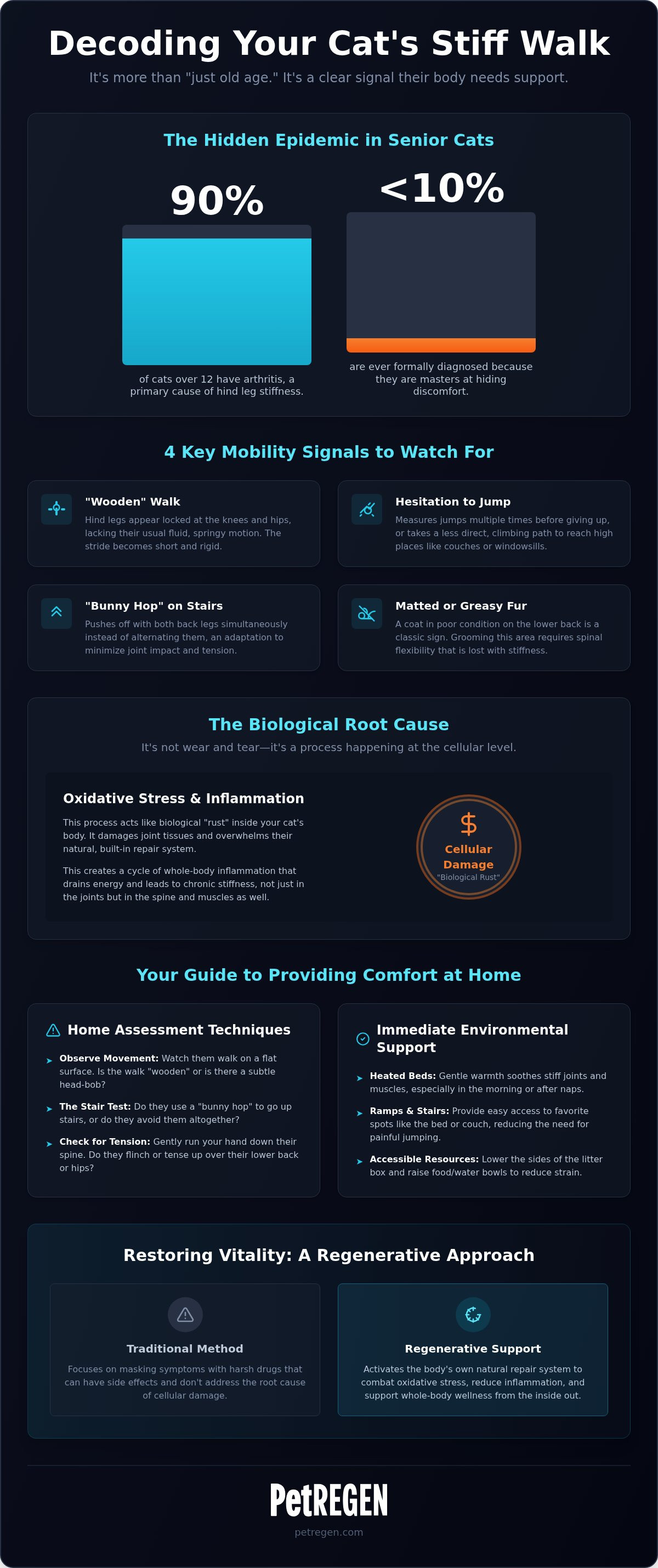
Did you know that over 90% of cats older than 12 years are living with arthritis, yet less than 10% are ever actually diagnosed? If you've noticed your cat walking stiffly back legs, it's easy to dismiss it as just slowing down with age. It's painful to watch your once-agile companion struggle to reach their favorite windowsill or leave behind mats and dandruff because they can no longer groom properly. You want them to feel like themselves again, but the anxiety of using harsh prescription drugs with potential side effects feels just as worrying as the stiffness itself.
We understand that watching your fur-baby lose their mobility is heartbreaking, but there is a hopeful way forward. You can help restore your cat's vitality by understanding the why behind their movement and supporting their body's built-in repair system. In this guide, we'll explore the real causes of this mobility shift and how a regenerative approach to whole-body wellness can get your companion jumping and playing again without the need for heavy sedation.
Key Takeaways
- Learn to distinguish between "normal slowing down" and the specific mobility signals that indicate your companion is in discomfort.
- Understand the link between a cat walking stiffly back legs and common issues like matted fur or "greasy" skin they can no longer reach.
- Master the "Stair Test" and other gentle home assessment techniques to identify tension along your cat's spine and hips.
- Discover how environmental modifications like heated beds and ramps can provide immediate support for your pet's daily routine.
- Explore how activating the body's natural regenerative repair system offers a science-based alternative to traditional symptom-masking options.
Understanding the "Stiff-Legged Walk" in Cats: More Than Just Old Age
When you notice your cat walking stiffly back legs, it's easy to assume they're simply slowing down. But a stiff-legged gait is rarely just a byproduct of "getting old." It's actually a clear "Mobility Signal" from their body. Their hind legs lose that fluid, springy motion because something is interfering with their natural range of motion. This isn't just a physical change; it's a communication of discomfort. Unlike a sudden limp from a thorn in a paw, this stiffness often develops gradually, making it harder to spot until it starts affecting their daily joy.
Visual Markers of Hind Leg Stiffness
Watch how your companion moves across a flat floor. A "wooden" walk occurs when the knees and hips seem locked, preventing the normal bend and extension that makes a cat's stride so elegant. You might notice them hesitating before leaping onto the couch, measuring the distance several times before giving up. Some cats develop a "bunny hop" when climbing stairs, where they use both back legs together to push off rather than alternating them. These aren't just cute quirks. They're physical adaptations designed to manage tension and avoid the sharp impact of a normal stride.
A unique marker often missed by pet parents is the state of the coat. If your fur-baby has a "greasy" appearance or matted fur on their lower back, it's frequently linked to hind leg stiffness. To groom that specific area, a cat must twist their spine and put significant weight on their hips. When it hurts to move, they stop reaching back. According to a broad Cat Health Overview, maintaining hygiene is a core indicator of feline wellness. When grooming stops, it's a sign that the physical cost of movement has become too high for them to bear.
The Emotional Impact of Limited Mobility
The loss of movement hits cats hard emotionally. They are predators by nature, and being unable to move freely or climb to a high "safe" perch makes them feel vulnerable. This often leads to feline depression or withdrawal. They might hide more frequently or stop greeting you at the door. Restoring their physical comfort does more than help them walk; it restores their confidence. When they can groom themselves and play again, their entire personality often brightens, showing just how much that stiffness was weighing on their spirit.
It's vital to distinguish between occasional morning stiffness and chronic mobility loss. Occasional stiffness might resolve after a few steps as they "warm up." Chronic stiffness is persistent. It doesn't go away with movement. Instead, it stays, slowly eroding their quality of life. Recognizing these signals early is the first step toward supporting their body's built-in repair system and helping them return to the active life they love.
The Biological Root Causes: Inflammation and Oxidative Stress
While the visual signs of aging are easy to spot, the real reason for a cat walking stiffly back legs happens at a cellular level. Feline osteoarthritis is a hidden epidemic. Research shows that over 90% of cats older than 12 years have arthritis, yet most go undiagnosed because cats are masters at masking their discomfort. This stiffness isn't just mechanical wear and tear. It's the result of oxidative stress, a biological process that damages joint tissues and acts like "rust" inside your companion's body. When oxidative stress overwhelms their built-in repair system, the natural recovery cycle slows down, making it harder for them to bounce back after a long nap or a short play session.
According to the Cornell Feline Health Center, these mobility shifts are often misidentified as simple lethargy. In reality, systemic inflammation is likely draining their energy. When inflammation starts in the hips or knees, it doesn't stay there. It spreads, creating a whole-body environment that leaves your fur-baby feeling tired and stiff. By focusing on whole-body wellness rather than just masking a single symptom, you can help support their natural regenerative repair system and restore their inner vitality.
Spinal Flexion and the "Reach" Problem
For a cat to move with their signature grace, their lumbar spine must be incredibly supple. If the lower back is tight, the hind legs cannot swing forward with a full range of motion. Micro-inflammation in the vertebrae prevents fluid leg extension by creating a physical "stop" in the spine's natural curve. This issue is often compounded in specific breeds prone to hip dysplasia, where the cat compensates for hip pain by tensing their lower back muscles, leading to a cycle of chronic stiffness that limits their ability to reach and stretch.
The Impact of Feline Obesity on Mobility
Extra weight does more than just put physical pressure on sensitive joints. It acts as an "Inflammation Factory." Fat tissue produces active inflammatory chemicals that circulate through the blood, making existing joint issues feel significantly worse. This creates a double hurdle for your pet: they have more weight to carry and more chemical inflammation to fight. Reducing the load on their joints is essential, as it allows their body's natural repair mechanisms to finally catch up and start the healing process. When the internal environment is clear of this toxic stress, your companion can finally find the flexibility they've been missing.
Home Assessment: Is it Arthritis, Injury, or Something Else?
While clinical diagnostics provide the data, you are the world's leading expert on your own cat's behavior. To understand why you're seeing your cat walking stiffly back legs, start with the "Stair Test." Watch how they approach elevation. Do they pause at the bottom, or do they take the steps one at a time with a hesitant, "wooden" motion? According to the FDA on Feline Osteoarthritis, these subtle changes in daily routine are often the first signs that a cat's mobility is compromised. A cat that used to flow up the stairs like water but now moves with a calculated, jerky rhythm is telling you their joints need support.
You can also perform a gentle sensitivity check at home. Run your hand slowly along your companion's spine toward the hips. You aren't necessarily looking for a lump; instead, feel for localized heat or a slight "rolling" twitch of the skin. These are indicators of underlying tension and micro-inflammation. If your fur-baby becomes irritable or tries to nip when you touch the base of their tail, they're communicating that their built-in repair system is struggling to keep up with the daily wear on their frame. This irritability is a common behavioral red flag that pet parents often mistake for a "grumpy" personality shift.
The "Bunny Hop" and Gait Analysis
A stiff walk often leads to a narrower stance in the back legs as the cat tries to stabilize their core. You might also notice muscle wasting, known as atrophy, where the thighs feel thinner or less "meaty" than they did in their younger years. This happens because the cat is offloading their weight onto their front legs to avoid discomfort. Recording a short "gait video" of your companion walking toward and away from you is incredibly helpful. It allows your veterinarian to see their natural movement in a relaxed environment, rather than the "frozen" or fearful posture many cats adopt during a stressful clinic visit.
Distinguishing Pain from General Weakness
It's vital to separate acute injury from the slow onset of degenerative issues. A sudden limp or a "red flag" symptom like dragging the back legs is a medical emergency that requires immediate professional care. However, the gradual development of a stiff-legged gait is usually a sign of chronic oxidative stress. Interestingly, other health issues like dental pain or kidney trouble can mimic mobility-related lethargy by making a cat unwilling to move. Taking a whole-body approach to their wellness ensures that you aren't just treating a symptom, but are instead providing the cellular nourishment they need to feel strong and capable again.
Practical Steps to Improve Your Cat’s Mobility Today
If you've noticed your cat walking stiffly back legs, you don't have to wait for a medical breakthrough to start improving their quality of life. Small, thoughtful adjustments to their environment can provide immediate relief from the daily physical strain they face. By making their world more accessible, you're not just helping them move; you're reducing the oxidative stress that comes from overexertion and helping them feel safe in their own home.
Creating a Senior-Friendly Home
A cat's home should be their sanctuary, not an obstacle course. When a companion is struggling with hind leg mobility, their usual territory can suddenly feel daunting. Consider these simple modifications to restore their confidence:
- Lower litter box entries: Replace high-sided boxes with low-entry models or even a modified plastic storage bin. This prevents the painful "high-stepping" motion that puts unnecessary pressure on the hips and lumbar spine.
- Elevated feeding stations: Placing food and water bowls at chest height reduces the need for the spine to flex downward. This makes mealtime much more comfortable and prevents the "wooden" posture often seen when they try to reach the floor.
- Non-slip traction: Hardwood and tile floors can be terrifying for a cat with limited flexibility. Adding non-slip mats or rug runners in high-traffic areas gives them the traction they need to move without the fear of a painful slip.
Beyond these physical changes, managing their weight is perhaps the most impactful thing you can do. Every extra pound acts as a physical barrier to movement and increases the load on sensitive joints. Focusing on high-quality protein helps maintain the muscle mass required to support their frame, while proper hydration ensures their tissues remain resilient and capable of recovery.
Safe Grooming for Stiff Cats
As we discussed earlier, a "greasy" or matted lower back is a clear signal that your cat can no longer reach their tail base. When stepping in to help, choose a soft silicone brush rather than a metal one. Silicone is much gentler on the sensitive skin and bony protrusions of a senior cat. If you find mats, don't pull on the skin. Instead, gently tease them apart with your fingers or use a safety-guarded tool to remove them without causing distress.
Regular assisted grooming reduces the stress of mobility loss by maintaining the feline sense of dignity and cleanliness when they can no longer reach those difficult spots themselves. This simple act of care also provides a wonderful opportunity for bonding, reassuring your companion that they are still loved and supported despite their physical changes.
While these external supports are vital for daily comfort, true vitality comes from within. To give your pet the best chance at a playful, active life, you can shop PetREGEN Stem Cell Activator to directly support their body's natural regenerative repair system and help them regain the spring in their step.
Restoring Vitality: The Science of Feline Regenerative Support
Many pet parents reach for standard glucosamine or chondroitin when they first notice their cat walking stiffly back legs. While these traditional supplements are common, they often only address the surface level of joint wear. Regenerative support takes a much more comprehensive approach. Instead of just masking symptoms, a stem cell activator supplement works to nourish the body's built-in repair system. This isn't a temporary fix; it's about providing the cellular building blocks your companion needs to maintain their own structural health and vitality from the inside out.
PetREGEN is formulated with 100% human-grade ingredients like real liver and collagen to support this natural recovery process. These superfoods aren't just for flavor. They provide essential nutrients that help manage the oxidative stress we've discussed throughout this guide. By addressing the "rust" that accumulates in the joints, you can help your fur-baby regain the fluid, springy motion that defines a healthy feline stride. It's a science-based way to ensure your pet isn't just surviving their senior years, but truly thriving.
Nourishing the Body from Within
Supporting immune function is the secret to managing the micro-inflammation that causes spinal and hip tension. PetREGEN utilizes a multi-system approach to aid in flexibility, ensuring that the lumbar spine and hindquarters receive the nourishment they need to stay supple. This whole-body wellness strategy is why so many pet owners see a return to normal grooming habits. When the physical cost of twisting and reaching is reduced, cats naturally return to their self-care routines. Our formula is endorsed by Health & Welfare Zoologists, providing you with the peace of mind that comes from a science-backed, professional-grade solution.
Living Their Best Life: A Hopeful Future
Renewed mobility does more than just change how a cat walks; it changes who they are. We've seen life-changing stories where cats that were once withdrawn and depressed become playful and social again. When your companion can jump onto their favorite perch or greet you at the door without hesitation, their entire energy level shifts. They become the "old" version of themselves, full of the curiosity and confidence that makes them such a beloved part of the family.
We stand behind our natural regenerative support with a full money-back guarantee because we believe every cat deserves the chance to feel their best. You don't have to settle for watching your companion struggle with a stiff walk or matted fur. By activating their natural repair mechanisms, you can help them find the comfort and recovery they've been missing. Take the first step toward a more active, happy future for your fur-baby today.
Empower Your Companion’s Path to Renewed Vitality
Watching your cat walking stiffly back legs is a clear signal that their internal repair system needs focused support to combat oxidative stress and inflammation. While environmental changes like ramps and heated beds offer immediate relief, true recovery happens when you nourish the body from within. By shifting from masking symptoms to activating natural regenerative processes, you give your fur-baby the best chance at a fluid and active life.
Our proprietary formula is endorsed by Health & Welfare Zoologists and veterinarians, featuring 100% human-grade, USA-made ingredients like real liver and collagen. We are so confident in this science-backed approach that we provide a full money-back guarantee. It's time to help your companion return to the jumping, playing, and grooming routines that define their happy personality. Your pet’s best years don't have to be behind them, and we are here to support every step of their recovery.
Give your cat the gift of mobility-Shop PetREGEN Stem Cell Activator
Frequently Asked Questions
Is it normal for a senior cat to walk with stiff back legs?
While a stiff walk is frequently seen in older cats, it shouldn't be dismissed as an inevitable part of aging. It's actually a signal that their natural regenerative systems are struggling. When a cat's built-in repair system becomes less efficient, they lose the fluid motion they once had. Addressing this through cellular nourishment can help restore their vitality, ensuring they stay active and comfortable throughout their senior years rather than just slowing down.
How can I tell if my cat is in pain when they walk?
Cats are experts at hiding discomfort, so you must look for subtle shifts in their personality. A cat walking stiffly back legs might become more irritable when handled or start spending more time hiding in quiet areas. You may also notice a hunched posture or a change in their facial expression, such as squinting or flattened ears. These behavioral cues are their way of communicating that their mobility is causing them distress.
What are the first signs of arthritis in a cat’s hind legs?
The earliest signs often involve a change in how they interact with their environment. You might see them measuring a jump several times before attempting it or choosing a lower chair instead of the high bookshelf. They may also develop a calculated, jerky rhythm when moving across flat surfaces. These shifts indicate that the hips and spine are no longer providing the springy, effortless power required for their signature feline grace and exploration.
Can a supplement really help my cat groom their lower back again?
Absolutely, because grooming requires a high degree of spinal flexibility and hip stability. When you support your pet's natural repair mechanisms and manage oxidative stress, you reduce the physical tension that makes twisting painful. As their range of motion improves, the natural instinct to stay clean returns. Many pet parents find that their companions start reaching those difficult spots on their lower back again once their internal balance is restored.
Should I use a heated bed for my cat’s stiff joints?
Thermal support is an excellent way to provide immediate comfort for a companion with mobility issues. Heated beds help dilate blood vessels, which improves circulation to stiff tissues and soothes chronic tension in the hindquarters. This environmental modification works beautifully alongside regenerative supplements. By keeping the joints warm, you help maintain the flexibility gained through nutritional support, making it much easier for your fur-baby to get moving after a long nap.
What is the difference between a stem cell activator and a joint supplement?
Traditional joint supplements usually focus on providing external building blocks like glucosamine to replace worn tissue. In contrast, a stem cell activator like PetREGEN works to support the body's own internal repair system. It uses human-grade superfoods to help the body maintain its own structural integrity at a cellular level. This regenerative approach focuses on whole-body wellness and recovery rather than just masking a single symptom or providing a temporary fix.
How long does it take to see results from mobility support?
Feline biology takes time to respond to nutritional changes, but most owners observe a positive shift in vitality within four to eight weeks. Initial signs of improvement often include a brighter gaze, increased interest in play, or a more relaxed grooming routine. Because regenerative support works at a deep cellular level to manage oxidative stress, consistency is key. Providing daily support allows the body's built-in repair system to gradually restore the cat's natural mobility.
Is my cat’s stiff walk caused by obesity or age?
It is usually a mix of both factors working together. Age naturally increases oxidative stress, but obesity acts as an inflammation factory that puts excessive physical load on the back legs. Extra weight makes every movement more difficult and slows down the body's natural recovery process. By managing their weight and providing regenerative support, you reduce the burden on their frame and allow their natural repair mechanisms to finally catch up and restore flexibility.


