

You watch your fur-baby pause at the edge of the sofa, wiggling her hips for a jump that never happens. Instead, she turns away with a heavy sigh, choosing the floor over her favorite sun-drenched spot. It's painful to watch, especially when you know those extra pounds are making every step a struggle. Recognizing the subtle signs of joint pain in older cats, like hesitating at stairs or withdrawing from play, is the first step in reclaiming their quality of life. You aren't alone in feeling frustrated when traditional diets don't seem to restore their spark or agility.
We understand that you want your companion to feel like a kitten again; it's possible to break the vicious cycle of weight gain and inflammation by looking deeper than the scale. You'll discover how to support your cat's built-in repair system through a cellular approach to mobility that goes beyond basic supplements. This article provides a clear plan to combine effective weight control with natural stem cell activation to reduce systemic stress. By targeting health at the source, you can help your pet move with ease, reduce oxidative stress, and finally see them leap back onto the furniture with their old confidence.
Key Takeaways
- Break the cycle of obesity and restricted movement by understanding how excess weight and joint stress reinforce each other in a damaging biological loop.
- Learn to spot the hidden signs of joint pain in older cats, such as hesitating before jumps or changes in grooming habits, before they lead to permanent mobility loss.
- Discover why fat acts as an active endocrine organ that triggers systemic inflammation, and how to neutralize these biological triggers at a cellular level.
- Follow a practical 4-step plan to recalibrate your cat’s daily calorie intake and create a joint-friendly home environment that encourages safe, low-impact activity.
- Explore how supporting your cat’s built-in repair system can provide the missing piece in a weight management strategy for renewed energy and vitality.
Why Your Cat’s Weight and Joint Health Are Inseparable
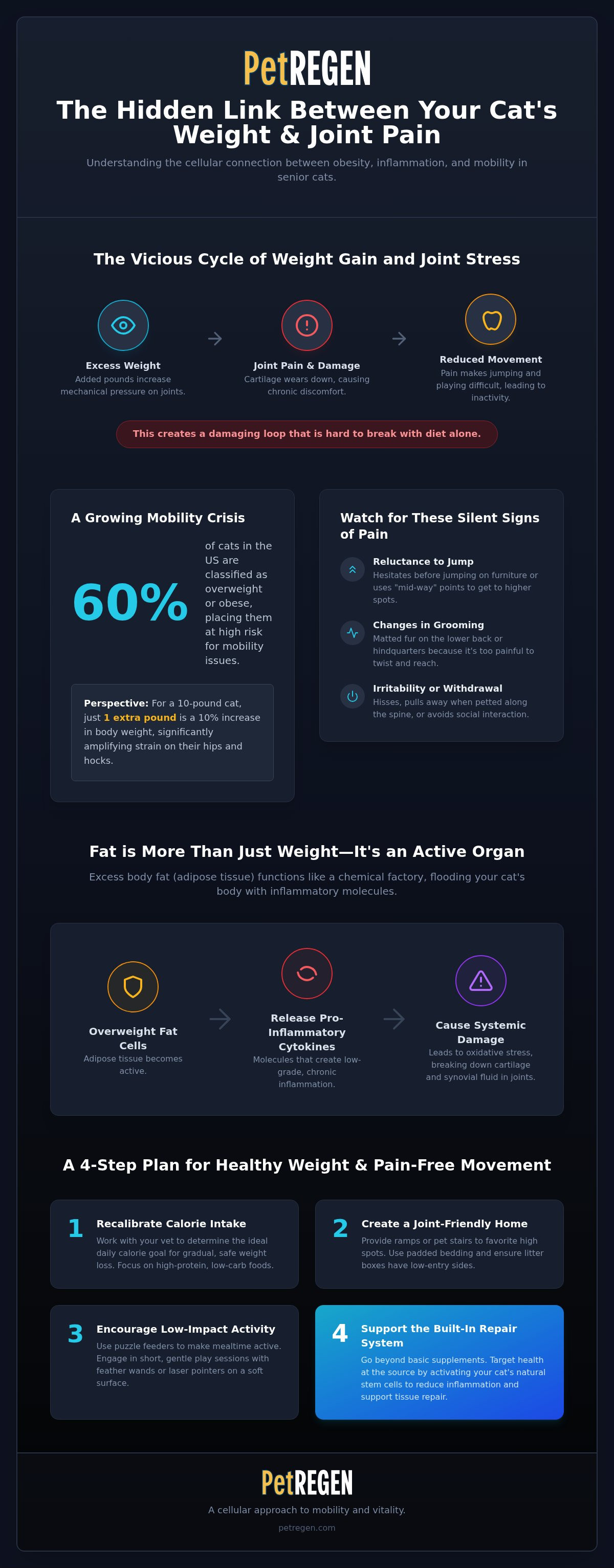
Weight and mobility exist in a delicate, often dangerous balance for our feline companions. When a cat carries extra weight, the mechanical pressure on their joints increases, leading to micro-tears in cartilage and chronic discomfort. This pain makes them less likely to move, which in turn leads to further weight gain. It's a vicious cycle that traps your fur-baby in a body that feels heavy and unresponsive. Breaking this loop requires more than just a smaller food bowl; it requires addressing the biological damage that excess weight causes at the cellular level.
Adipose tissue, or body fat, functions as an active endocrine organ that secretes pro-inflammatory cytokines, directly accelerating the degradation of joint cartilage and the progression of osteoarthritis. This means fat isn't just "extra luggage." It's an active source of inflammation that attacks your cat's joints from the inside out. Simply cutting calories often fails because it doesn't repair the oxidative stress or support the built-in repair system needed to restore lost vitality.
The Silent Signs of Joint Pain in Overweight Cats
Identifying the signs of joint pain in older cats is difficult because they are evolutionary masters of disguise. In the wild, showing vulnerability meant becoming a target, so your cat will likely suffer in silence. Instead of limping, look for these subtle behavioral shifts:
- Reluctance to jump: You might notice her hesitating before leaping onto the bed or using "mid-way" points like a chair to reach a countertop she used to clear in one bound.
- Grooming changes: If your companion has mats on her lower back or hindquarters, it's often because it hurts too much to twist and reach those areas.
- Irritability: A previously sweet cat might hiss or pull away when you pet her along the spine or try to pick her up.
The 2026 Stats: Why Feline Obesity is a Mobility Crisis
As we move through 2026, the data shows that feline obesity remains a critical health hurdle, with an estimated 60% of cats in the US classified as overweight or obese. For a ten-pound animal, even one extra pound represents a 10% increase in total body weight. This significantly amplifies the mechanical load on delicate feline hocks and hips, leading to premature wear and tear. This chronic strain doesn't just steal their ability to play; it shortens their lifespan and diminishes the quality of their golden years. Restoring their energy requires a strategy that pairs weight management with regenerative support to heal the damage caused by years of carrying that extra weight.
The Science of Inflammation: How Excess Weight Damages Feline Joints
Fat isn't just a layer of insulation or stored energy. It's an active endocrine organ that pumps chemicals into your cat's system. When a cat is overweight, their adipose tissue releases pro-inflammatory cytokines. These molecules travel through the bloodstream, creating a state of low-grade chronic inflammation. Research from Cornell on cat obesity and joint health highlights that this metabolic shift is a primary driver of osteoarthritis. It's why even joints that don't carry much weight, like those in the neck or front paws, can still ache and stiffen.
This systemic fire causes oxidative stress, a process where unstable molecules damage healthy cells. In the joints, oxidative stress breaks down the delicate cellular structure of cartilage and the synovial fluid that keeps movement smooth. It's a silent attack on your companion's mobility. If you've noticed signs of joint pain in older cats, like a stiff gait or difficulty getting comfortable, you're seeing the outward results of this internal cellular breakdown.
Adipose Tissue: The Hidden Driver of Arthritis
Fat cells are essentially chemical factories. The cytokines they produce accelerate the degeneration of collagen within the joint capsule. This isn't just mechanical wear; it's a biochemical erosion that eats away at the cushioning your cat needs to jump and play. Many pet parents focus solely on calorie counting, but losing weight is only half the battle. If the internal "fire" of inflammation remains, the joints continue to deteriorate even as the scale goes down. We must clear the chemical smoke so the body can begin to heal itself from within.
The Importance of Cellular Repair Systems
Every cat has a built-in repair system: their natural stem cells. These cells act as a biological maintenance crew, rushing to areas of damage to regenerate tissue and reduce discomfort. However, chronic inflammation acts like a roadblock. It prevents these repair cells from doing their job, leaving joints in a state of constant decay. This is where regenerative support becomes vital. By reducing oxidative stress and supporting the body's natural healing pathways, we can help a cat move with kitten-like ease again. Early signs of joint pain in older cats aren't just an inevitable part of aging; they're a signal that this repair system needs help. Many owners find that adding a science-based stem cell activator to a weight-loss plan is the key to seeing a real transformation in their fur-baby's vitality.
Beyond the Bowl: Comparing Weight Loss Diets and Regenerative Support
Helping your fur-baby lose weight is a noble goal, but the method matters just as much as the result. Many pet parents turn to standard calorie restriction, yet simply cutting back on kibble can be a double-edged sword for senior cats. While the scale might move down, strict dieting without proper nutritional support often leads to muscle wasting, or sarcopenia. When an older cat loses lean muscle mass, their joints actually lose the vital structural support they need to stay mobile. We don't just want a thinner cat; we want a stronger, more agile companion who can navigate their world with ease.
Traditional pain medications also play a role in many households, but they often focus on masking the symptoms rather than fixing the underlying cause. The FDA on osteoarthritis in cats highlights that weight loss is a primary non-drug treatment, but it's important to remember that masking pain can lead to overexertion. If a cat feels a temporary reprieve from discomfort but their joints are still biologically fragile, they may jump or run in ways that cause further cellular damage. A whole-body approach combines portion control with deep cellular nourishment to promote genuine healing.
The Pros and Cons of Traditional Joint Supplements
Glucosamine and chondroitin have been the "go-to" choices for decades. Think of these as the building blocks of cartilage. They provide the raw materials the body needs to maintain joint structure. However, they aren't "activators." For a cat struggling with high systemic inflammation, simply adding building blocks to a crumbling foundation isn't enough to spark a transformation. Additionally, not all supplements are created equal. Human-grade ingredients are essential for feline safety and bioavailability, ensuring your cat's body can actually absorb and use the nutrients you're providing.
Why Stem Cell Activation is the New Frontier
Until recently, stem cell therapy was synonymous with invasive, expensive veterinary procedures involving injections. While those treatments are powerful, natural oral activators represent a breakthrough in accessible care. Instead of adding external substances to the body, these supplements nourish your companion's own built-in repair system. It's a non-invasive way to address the signs of joint pain in older cats by clearing oxidative stress and encouraging the body to renew itself from within. These natural superfood formulas offer a safe, gentle profile for fragile seniors, helping them reclaim their vitality without the stress of clinic visits. By supporting the body's natural regenerative pathways, we help our pets get back to living their best lives, one comfortable step at a time.
A 4-Step Plan for Healthy Weight and Pain-Free Movement
Breaking the cycle of obesity and discomfort requires a proactive, structured approach. While it feels overwhelming to see your fur-baby struggle, a clear roadmap can turn guilt into action. By focusing on both the external environment and internal biology, you can help your companion reclaim their mobility. This plan isn't about rapid weight loss; it's about sustainable, healthy changes that support their vitality.
- Step 1: Calorie Calibration. Stop "free feeding." Measuring meals with a kitchen scale ensures precision that a measuring cup can't match. This simple shift prevents the accidental overfeeding that fuels weight gain.
- Step 2: Low-Impact Enrichment. Focus on movement that doesn't jar the joints. If you've noticed signs of joint pain in older cats, like hesitation before a jump, your goal is to make their daily "patrol" as smooth as possible.
- Step 3: Targeted Nutritional Support. Introduce regenerative superfoods. Providing a natural stem cell activator helps nourish the body's built-in repair system, clearing the oxidative stress that blocks healing.
- Step 4: Consistent Monitoring. Use the Body Condition Score (BCS) to track progress. Don't just look at the scale; feel for their ribs and look for a visible waistline to ensure they're losing fat, not muscle.
Safe Exercise for the Stiff Cat
Many owners use laser pointers to encourage movement, but these can actually be harmful. High-speed sprints and sharp, sudden turns put immense stress on pained joints. Instead, prioritize horizontal play and gentle "step-up" exercises. Use puzzle feeders to turn mealtime into a low-impact workout. You can also create a "Scent Trail" by hiding small pieces of high-quality protein around the house. This encourages your cat to move at their own pace using their natural hunting instincts without the risk of injury.
Environmental Tweaks for Mobility
Small changes in your home can significantly reduce daily strain. If your cat can no longer reach her favorite sunspot, provide ramps or pet stairs to eliminate the need for painful jumping. Low-entry litter boxes are also essential; many signs of joint pain in older cats are first noticed when they begin having accidents because stepping over a high rim has become too difficult. Finally, consider orthopedic bedding. Providing warmth and memory foam support can help manage morning stiffness, ensuring your companion wakes up feeling ready to move.
Revitalizing Your Cat with PetREGEN Stem Cell Support
Watching your fur-baby regain the spark in her eyes is one of the most rewarding experiences a pet parent can have. While weight management and environmental changes are vital, providing the right biological tools is the missing piece of the puzzle. The PetREGEN Stem Cell Activator Supplement is specifically formulated to help cats break free from the cycle of discomfort. Unlike traditional products that only provide building blocks, our proprietary formula works at a cellular level to clean out oxidative stress, nourish the body, and support the natural regenerative processes that keep your companion feeling young.
Every ingredient we use is human-grade, including high-quality collagen and real liver for a taste that even the pickiest cats love. These phytonutrients and proteins work together to revitalize your senior cat’s vitality from the inside out. By the time many owners notice the signs of joint pain in older cats, the systemic inflammation has already begun to dampen their energy. PetREGEN acts as a catalyst for recovery, helping to restore the energy levels your companion needs to stay active and healthy.
Backed by Science, Trusted by Pet Parents
Our approach to feline health isn't just about masking a single symptom; it's about whole-body wellness. This multi-system formula was developed with the guidance of a Health & Welfare Zoologist to ensure it meets the complex needs of the feline body. While symptom-focused chews might offer a temporary mask, PetREGEN supports the body’s built-in repair system for long-term healing. We hear stories every day of cats who are finally "living their best lives" again, jumping back onto the sofa and engaging in play that their owners thought was a thing of the past. It’s about more than just movement; it’s about restoring the emotional bond you share with a happy, active pet.
The PetREGEN Guarantee
We believe so strongly in the life-changing potential of our formula that we offer a 100% money-back guarantee. If you don't see a visible difference in your companion's mobility and happiness, we'll make it right. Incorporating this support into your daily routine is simple; just add the powder to their favorite wet food. It’s a small step that leads to a giant leap in quality of life. Don't let aging steal your cat's joy. You can help your cat regain their mobility with PetREGEN today and see the difference that cellular support can make.
Give Your Fur-Baby the Gift of Renewed Vitality
Helping your companion reach a healthy weight is about more than just numbers on a scale. It's about extinguishing the internal fire of inflammation that destroys cartilage and steals their joy. By recognizing the subtle signs of joint pain in older cats, you've already taken the most compassionate step toward their recovery. You can now combine portion control with a cellular approach to healing that supports the body's built-in repair system.
PetREGEN provides the missing piece in your weight management plan. Endorsed by Vets and Zoologists and made in the USA with human-grade ingredients, our formula nourishes your pet from within. We stand behind our regenerative support with a 100% money-back guarantee because we believe every cat deserves to live her best life. You don't have to watch her struggle to reach her favorite spots anymore.
Shop PetREGEN Stem Cell Activator for Cats
Your companion has so much more life to live. Supporting her cellular health today paves the way for a future filled with comfortable movement and playful moments. It's time to help her feel like a kitten again.
Frequently Asked Questions
How can I tell if my cat is overweight or just "fluffy"?
You can determine your cat's status by performing a simple rib check and looking at their silhouette from above. A healthy cat should have a visible waistline behind the ribs, and you should be able to feel their ribs with light pressure. If there's a thick layer of fat obscuring the ribs or a sagging pouch that doesn't swing freely, she's likely overweight rather than fluffy. Using a Body Condition Score chart helps provide a professional assessment.
Is weight loss really enough to stop my cat’s joint pain?
While reducing the mechanical load on hocks and hips is vital, weight loss alone often fails to address the underlying cellular damage. Chronic inflammation caused by previous excess weight can linger in the joint capsule long after the pounds are gone. To truly address the signs of joint pain in older cats, you must combine calorie control with regenerative support. This dual approach helps clear oxidative stress and allows the body's built-in repair system to begin healing.
What are the best ingredients for cat joint support in 2026?
Current 2026 standards prioritize bioavailable, human-grade ingredients that support whole-body wellness. Look for high-quality collagen to support connective tissue and real liver for essential vitamins and minerals. Modern formulas also include specific phytonutrients that act as stem cell activators. These natural superfoods are superior to basic glucosamine because they nourish the body's natural repair pathways rather than just providing building blocks. Always ensure ingredients are sourced from reliable, transparent facilities to protect your senior companion.
Can I give my cat joint supplements while they are on a weight-loss diet?
Yes, giving supplements during a diet is actually the recommended approach to ensure your cat doesn't lose vital muscle mass. While you restrict calories, your cat needs concentrated nourishment to support their immune function and joint integrity. Regenerative supplements provide the cellular support needed to keep them moving during their weight-loss journey. This prevents the lethargy trap where a dieting cat becomes too stiff to exercise, which only makes further weight loss more difficult for their aging body.
How much weight should a cat safely lose per week?
A safe rate of weight loss for felines is between 0.5% and 2% of their total body weight per week. Losing weight too quickly is extremely dangerous for cats and can lead to a serious liver condition called hepatic lipidosis. For a 12-pound cat, a healthy loss is only about one to four ounces weekly. Patience is key to ensuring their metabolism stays stable while their joints slowly adjust to the reduced mechanical pressure of a lighter body.
What is a stem cell activator, and is it safe for my senior cat?
A stem cell activator is a natural superfood formula designed to support the body's built-in repair system. Unlike invasive injections, these oral supplements use specific nutrients to signal your cat's own stem cells to migrate toward areas of inflammation and damage. They are very safe for senior cats because they work with the body's natural processes rather than introducing synthetic chemicals. This non-invasive support is a gentle way to address the signs of joint pain in older cats without clinic stress.
Are there any side effects to natural joint supplements for cats?
Most cats tolerate natural, human-grade joint supplements very well with minimal risk of side effects. The most common issue is mild digestive upset, such as soft stools, if a new supplement is introduced too quickly to their diet. You can easily avoid this by starting with a half-dose for the first week to let their system adjust. Because these formulas use natural superfoods rather than prescription drugs, they don't carry the same risks of kidney or liver strain.
How long does it take to see results in my cat’s mobility?
While every companion is unique, most pet parents notice a visible improvement in mobility and energy within four to six weeks of consistent use. This timeline allows the regenerative ingredients to reduce oxidative stress and support the repair of joint tissues at a cellular level. You might first see small changes, like your cat grooming more easily or choosing to sleep in a higher spot. Staying consistent with the daily routine is the best way to ensure long-term healing.


